
What Makes Apartment and Condo Builds Different
A multifamily project is large, but its defining feature is repetition. The same kitchen, bath and mechanical package is installed in dozens of units. That means a laydown yard may hold many identical appliances, fixtures and cabinet sets, which is attractive to anyone who wants to take a lot of one thing quickly.
The schedule is long and the work is staged by floor or by building. Different areas are in different phases at the same time. A single fixed camera cannot follow that, and the active area keeps moving. Coverage has to be planned the way the schedule is planned.
Fire Exposure in Wood-Frame Construction
In wood-frame buildings, the structure is combustible, and for much of the build it has no sheathing, fire-resistant finishes or working fire protection systems. Stored material adds to the load. Exact requirements and risk factors depend on the building type, local code and the insurer, so rely on your fire protection plan, your insurer and the authority having jurisdiction for specifics.
In general terms, the common concerns are:
- Hot work such as cutting, welding or torch-applied roofing that leaves smoldering material behind.
- Temporary heaters and electrical equipment left running overnight.
- Discarded smoking materials near stored lumber or debris.
- Intentional fires set by trespassers.
- Debris that accumulates in stairwells and unit interiors.
Most of these can be reduced by site rules, housekeeping and supervision, which is the first line of defense. Cameras add awareness when the site is empty. See the guides on construction site fire watch and fire and smoke detection cameras for how video fits next to required fire protection measures. Video should be treated as a supplement to a fire plan, never a substitute for it.
Material Theft Across the Build
Theft pressure changes with the stage of construction. The table gives a quick reference.
| Stage | Common targets | Coverage focus |
|---|---|---|
| Site work and foundations | Equipment, fuel, rebar, utility materials | Equipment staging and gate |
| Framing | Lumber, hand tools, power tools | Laydown area and perimeter |
| Rough-in | Copper wire and pipe, fixtures | Entry points to the building and stairwells |
| Interior finish | Appliances, cabinets, flooring, HVAC components | Loading area, laydown, entrances |
| Closeout | Punch-list items, unit keys, leftover materials | Access control and the main entrance |
Copper is its own problem during rough-in because it is easy to remove and easy to resell. The article on copper theft in 2026 covers how the pattern works, and the guide to jobsite tool theft prevention covers tool storage rules that carry over to multifamily sites.
Controlling Access in a Tall, Open Structure
Once a structure rises past the first floor, it becomes harder to see into from outside. Stairwells and open floors let someone work out of sight of the street. Perimeter coverage should therefore include the building entrances and stair access points, not only the fence line.
On a site with a crane, scaffolding or a hoist, those become unauthorized access routes after hours. Plan lockdown procedures at the end of each shift, such as removing ladders, locking the hoist and shutting gates, then use camera coverage to confirm the site stays quiet.
Neighbors, Trespass and Safety
Multifamily projects often sit in dense areas, close to occupied buildings, businesses or a street with foot traffic. That raises the chance of trespassers, graffiti and people taking shortcuts through the site. An open building is also a hazard to anyone who climbs into it.
Live talk-down is useful here. A trained operator who sees a person inside the fence can speak directly to them through a loudspeaker and tell them they are on a private construction site and being recorded. Many will leave once they know they have been seen, and police can be dispatched with video if they do not.
Insurance and Documentation
Builders typically carry coverage that has conditions tied to security and fire protection. The details vary, so speak with your broker and read the policy. The guide on construction site security cameras and insurance explains what to ask.
A dated video record also helps when a loss is disputed. Keep a clear process for preserving clips and sharing them with your insurer or police. Rules on recording differ by state, so confirm your approach with counsel.
Building a Daily Close-Out Routine
Technology works best when the site shuts down the same way every day. A short end-of-shift routine reduces both fire and theft exposure, and it gives the monitoring team a known starting point for the night.
A useful routine includes:
- A walk of each active floor to check for smoldering material, running heaters and open flames.
- Removal of ladders and locking of hoists, gates and stairwell doors.
- Locking of tool storage and appliance containers.
- Cleanup of debris in stairwells and near stored lumber.
- A message to the monitoring team that the site is clear, with the names of anyone still on site.
Record who performed the walk and when. If a problem appears overnight, that record shows what condition the site was in at close, and it helps your insurer and owner understand what happened.
How VDS Fits
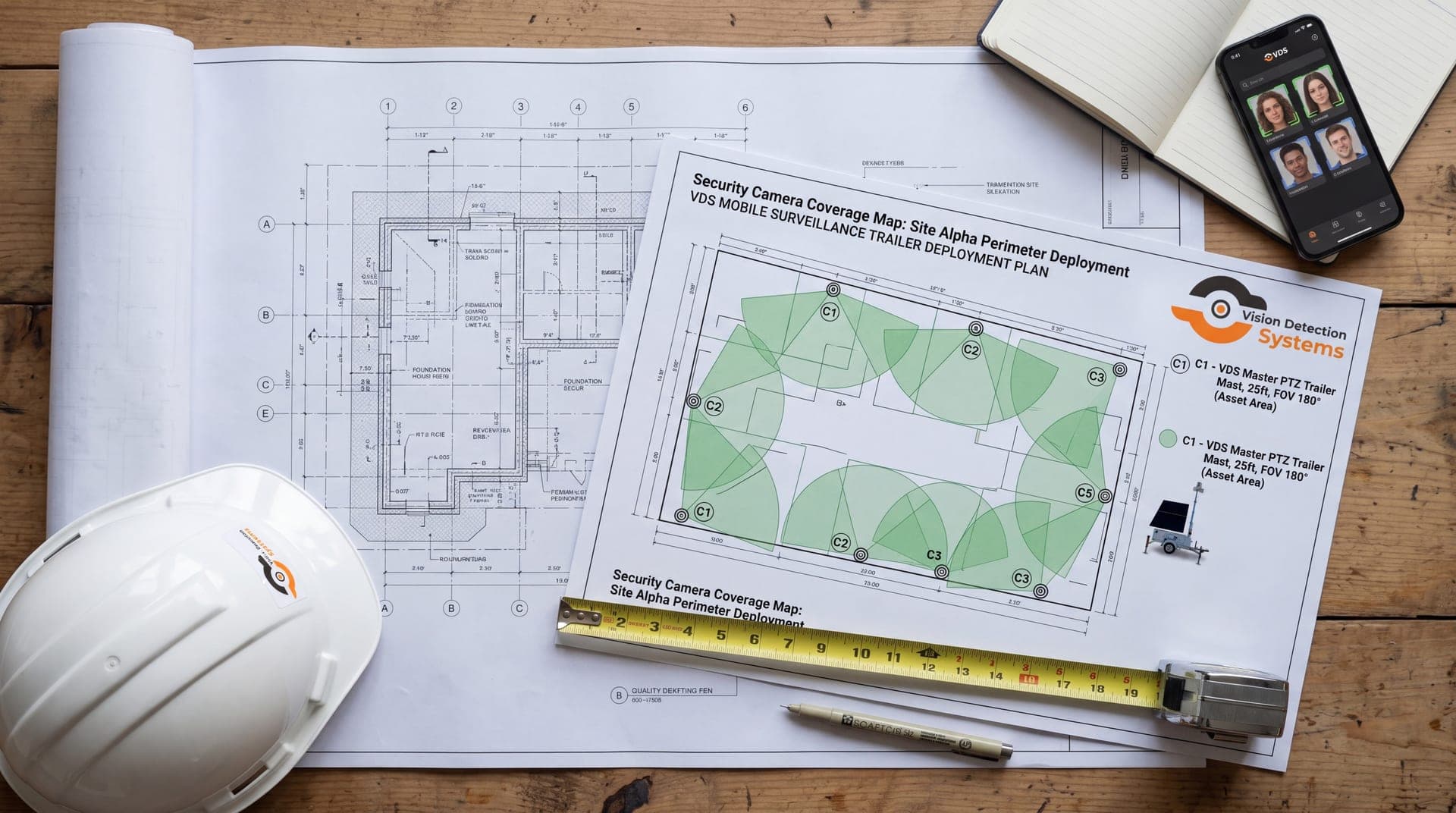
VDS mobile surveillance units run on solar power, so they do not need site electricity, internet or trenching, which matters in the early phases of a multifamily project. Each trailer carries a 5MP PTZ with 25x optical zoom and three 8MP wide-angle cameras on a 22 ft telescopic mast, with a 30 ft mast available. AI detection covers people, vehicles, loitering and objects, and the platform also has analytics pages for fire and smoke.
A 24/7 US-based security operations center verifies events, uses live talk-down through a loudspeaker, and sends police dispatch with video when needed. The goal is for people, yours or your security partner's, to handle verified incidents. Most deployments go live in about a week. For ongoing residential properties, see the related guide on apartment complex security cameras, or review the mobile surveillance unit and talk to our team.