
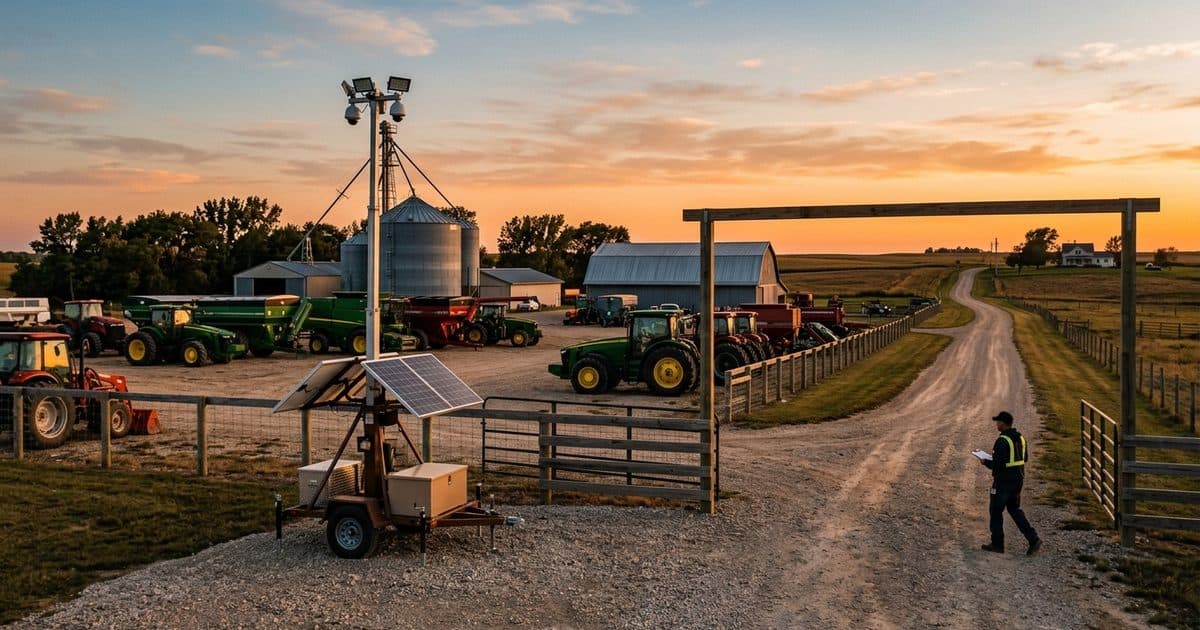
Five hundred acres, one gate —and everything between them, covered.
Farms and ranches sit miles from the nearest patrol. Equipment worth hundreds of thousands, fuel reserves, livestock, and crops are left exposed overnight — every night. VDS deploys solar-powered surveillance with wide-area thermal detection, LPR at gates, and a live SOC operator on every alert. No grid power. No internet. No problem.
Farm and ranch theft is a logistics crime, and the logistics favor the thief. Machinery is staged where the work is — at the field edge, near a county road, far from the farmhouse — and a tractor, combine, or ATV loads onto a gooseneck in less time than it takes a deputy to cover the distance to a rural address. Diesel tanks sit unattended between fill-ups, livestock and harvested crops hold value that moves easily, and organized rings scout properties precisely because open ground offers no natural observation.
The conventional answer — cameras on the barn, a light over the shop — protects the buildings and abandons the acreage, and footage reviewed after the trailer is gone recovers nothing. What actually shifts the outcome is detection across open ground paired with a person who acts on it: wide-area monitoring that flags a vehicle where no vehicle belongs, a live operator who verifies what tripped the alert, and license plate recognition at the gate that turns every entry into a searchable record. Monitored coverage multiplies what a farm family or ranch crew can watch, because nobody can be in every pasture at once.
Farm security cameras have historically stopped where the power lines stop. A solar-powered mobile surveillance unit removes that limit: it runs on its own array and battery, connects over cellular where there is no farm internet, and parks beside whatever needs protecting this season — the equipment yard at planting, high-value fields at harvest, the fuel tanks in between. When the SOC verifies an intruder, the voice warning and the law-enforcement call all land while the machinery is still on the property.
The sections below walk through the theft patterns working operations report — equipment, fuel, crops, and livestock — the detection and monitoring setup VDS deploys across open ground, outcomes customers report from farms and ranches, and the questions producers ask most often before a unit is placed.
Miles from the nearest patrol.
Thieves know the math.
Remote locations, high-value equipment, and response times measured in hours — not minutes — make farms and ranches uniquely vulnerable to organized theft rings.
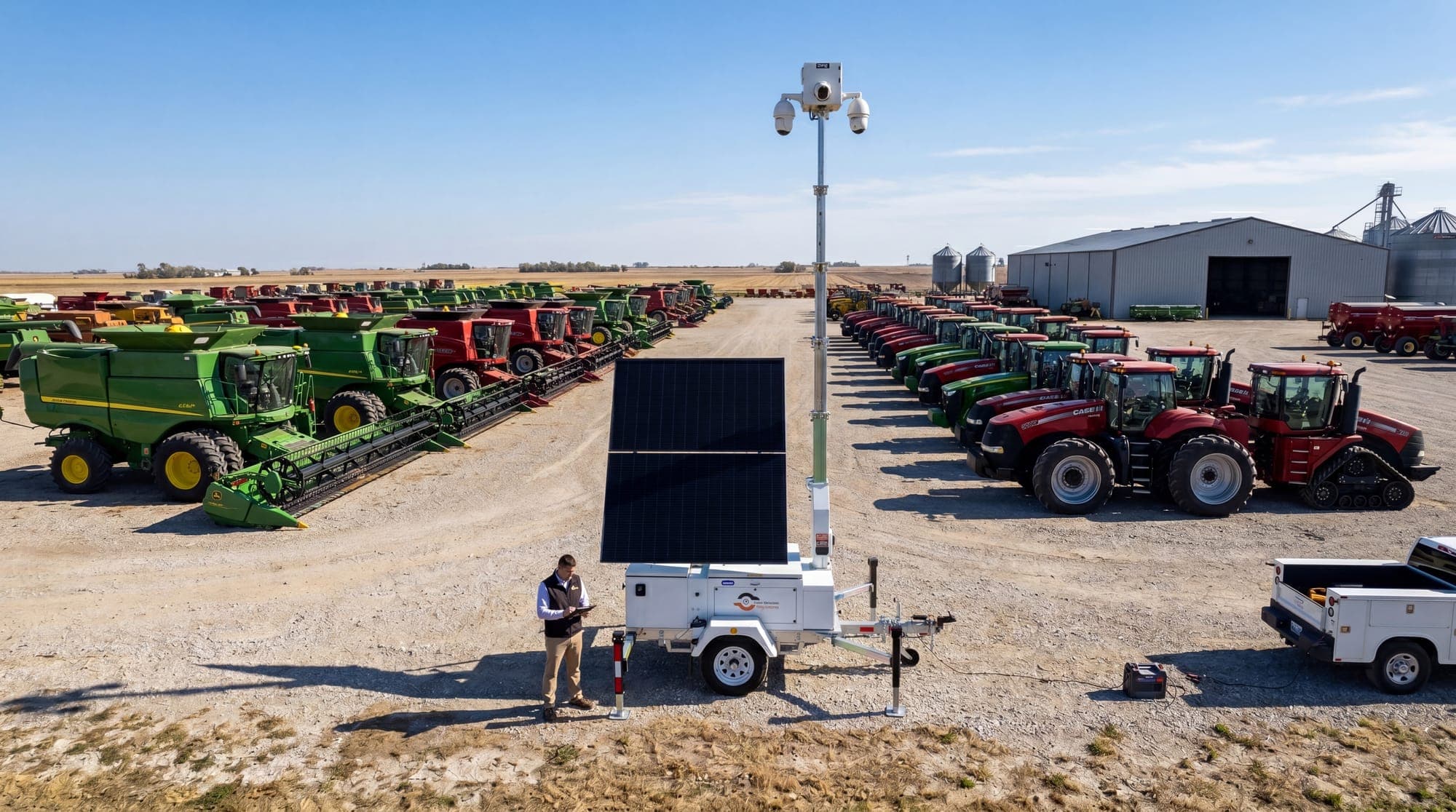
Equipment theft
Tractors, combines, ATVs, and implements worth $100K–$500K each sit in open fields and unlocked barns. Thieves arrive at 3 AM with trailers.
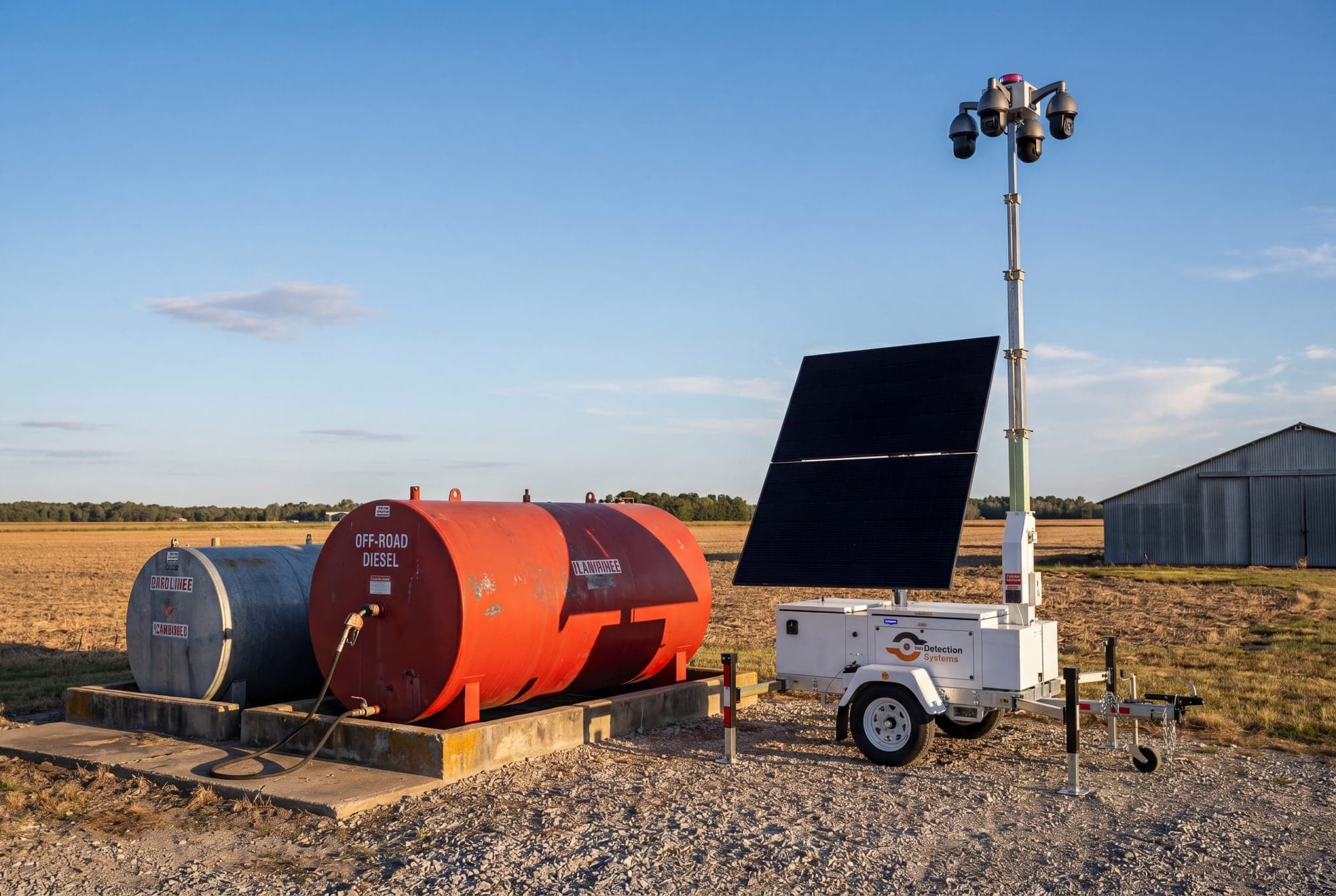
Fuel theft
Diesel tanks holding thousands of gallons sit unprotected. A single overnight fuel theft can cost $5,000+ and halt operations for days.
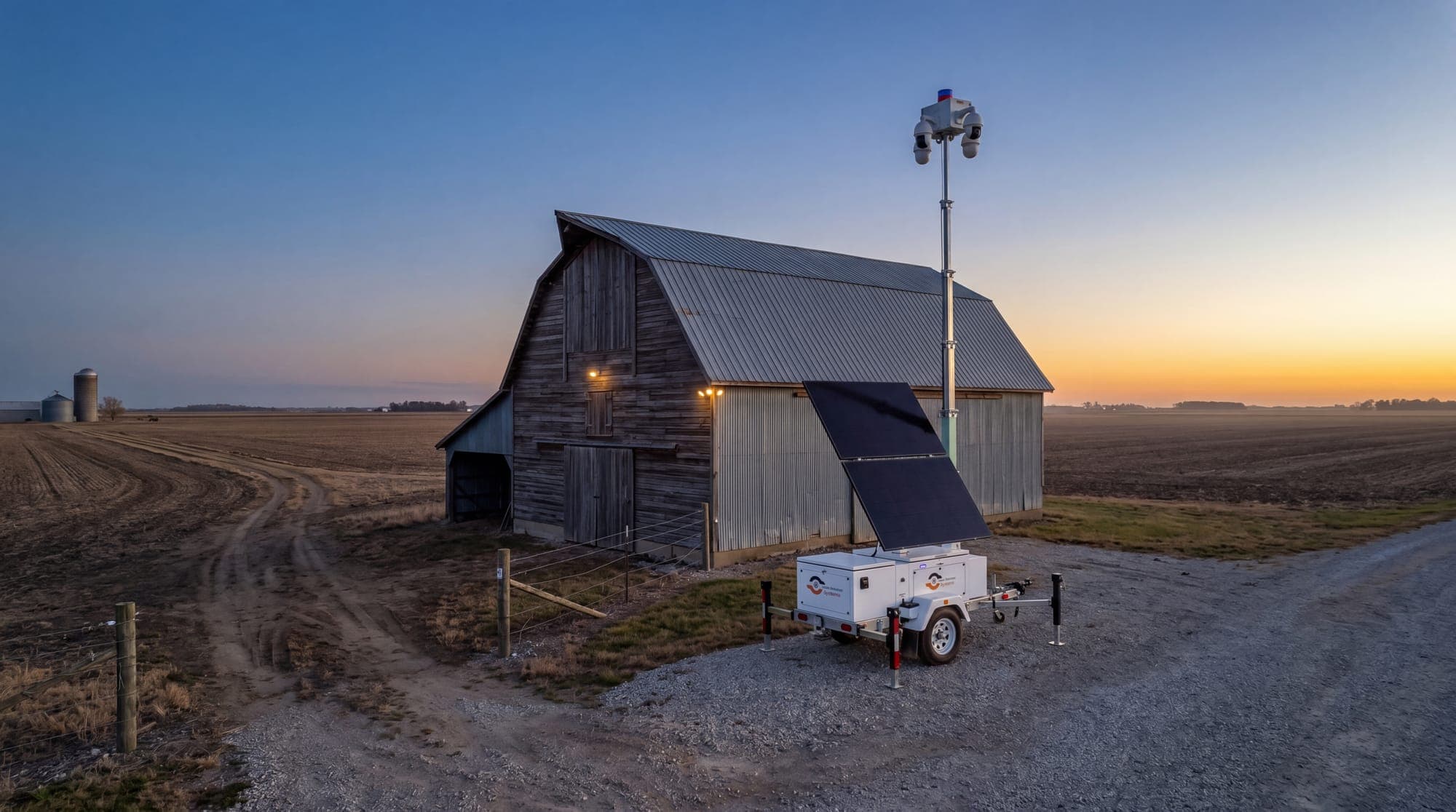
Crop & livestock theft
High-value crops, livestock, and harvested goods disappear overnight. Rural response times measured in hours make farms easy targets.
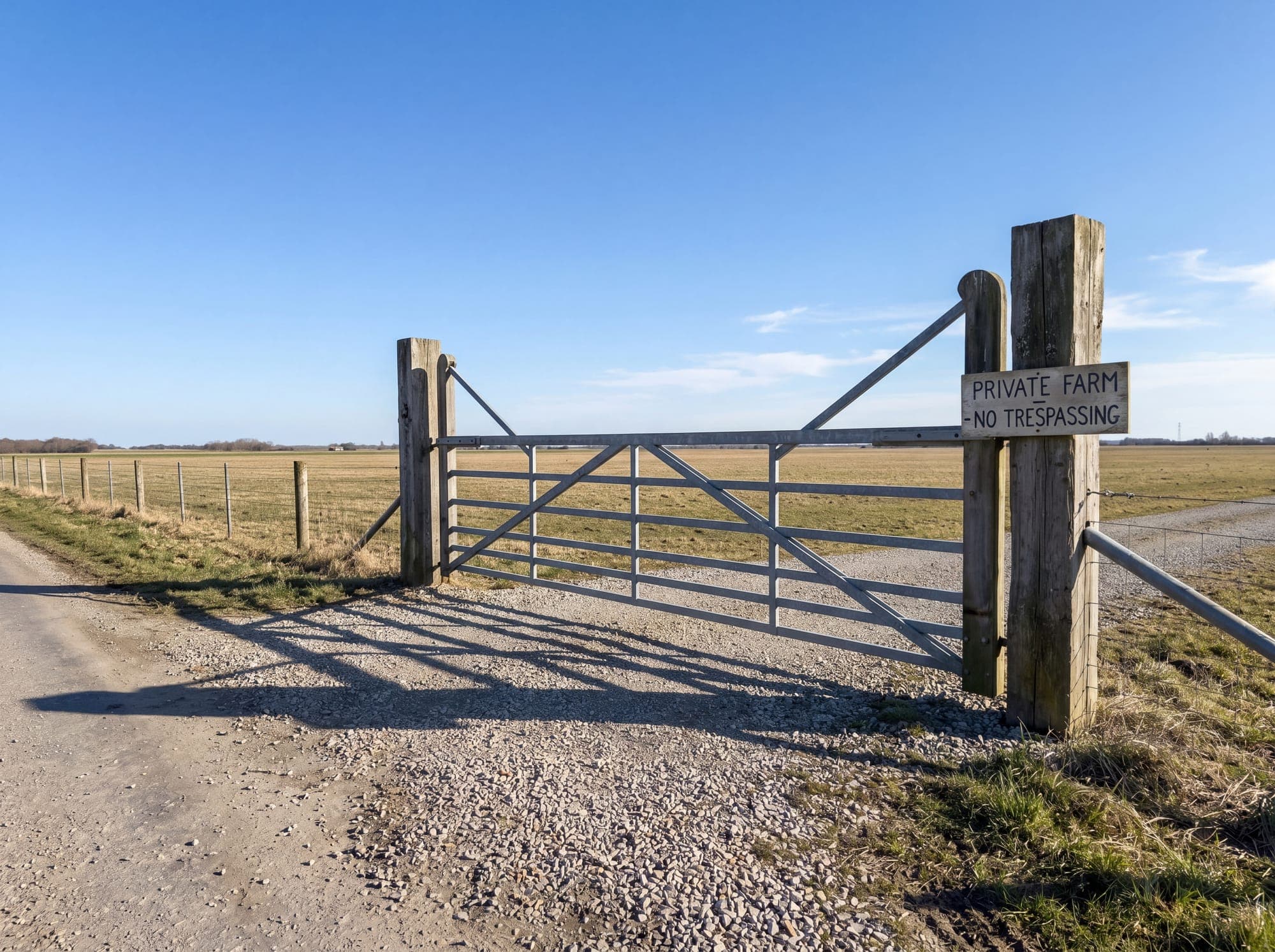
Trespassing & vandalism
Unauthorized entry damages crops, spooks livestock, creates liability, and signals to organized theft rings that the property is unmonitored.
Thermal sees the intruder.
The SOC scares them off.
Wide-area thermal detection spots intruders across open fields. The SOC verifies, activates lighting, issues voice warnings, and dispatches law enforcement — all before anything gets loaded on a trailer.
500 acres of coverage.
One trailer.
The MSU's LWIR thermal imaging detects human and vehicle-sized targets across hundreds of acres — day or night, in any weather. When something moves on your property at 3 AM, the SOC sees it instantly and responds.
- Wide-area thermal detection across open fields
- Human and vehicle classification at distance
- Works in zero-light, fog, rain, and dust
- SOC alert within seconds of detection
 STEP 01
Every vehicle. Every gate.
Every time.
License plate recognition at farm gates and access roads logs every vehicle entering or leaving the property. Known threats are flagged in real time. The SOC can activate talk-downs and lighting before intruders reach equipment or livestock.
- Automated plate capture at all gates
- Hot-list matching for known threats
- Time-stamped entry and exit logging
- Searchable vehicle history for investigations
 STEP 02
No grid. No generator.
No limits.
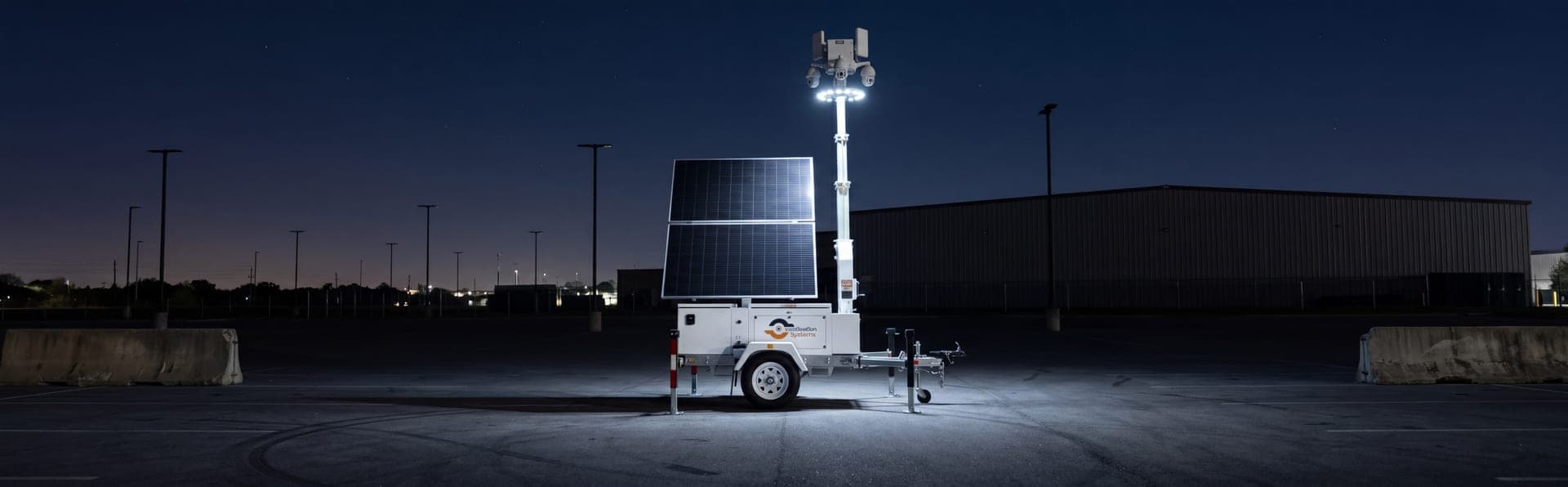
The MSU runs entirely on solar power with battery backup. Drop it in a field, a pasture, or at a gate — anywhere on the property. No electrical hookup, no fuel deliveries, no maintenance visits. It just runs.
- 900W solar array with battery storage
- Operates in complete grid-independent mode
- No fuel, no generator, no maintenance
- Relocatable between fields and barns
 STEP 03
Miles from town.
Connected to the SOC.
4G/5G cellular backhaul keeps the MSU connected from even the most remote locations. No farm Wi-Fi, no wired internet needed. The SOC receives live video, processes alerts, and dispatches response — all over cellular.
- 4G/5G cellular with failover
- No farm Wi-Fi or internet dependency
- Live video streaming to SOC
- Remote system management and updates
 STEP 04
Every acre of the operation.
One platform.
The MSU adapts to your specific agricultural operation. Here are the scenarios farm and ranch operators deploy for most often.
Equipment yards & barns
Centralized storage areas for tractors, combines, implements, and ATVs — the highest-value targets on any farm or ranch.
Fuel storage & tanks
Diesel and propane storage sites where thousands of dollars in fuel sit unprotected between fill-ups.
Livestock operations
Cattle, horse, and poultry operations where rustling, predation monitoring, and fence-line integrity matter around the clock.
High-value crop fields
Cannabis, hemp, orchard, and specialty crop operations with harvest-season theft risk and compliance monitoring requirements.
Farm gates & access roads
Entry points where LPR logging and two-way audio deter unauthorized access and document every visitor.
Remote irrigation & infrastructure
Pump stations, irrigation pivots, and utility infrastructure in distant fields vulnerable to theft and vandalism.
Real farms.
Real numbers.
Every metric below comes from a real VDS agriculture customer. Names protected per agreement.
Customer-reported outcomes from VDS deployments. Results vary by site conditions, monitoring configuration, and response protocols. How we measure →
We lost a $180K combine the year before. Since the VDS trailer went in, we haven't lost a single piece of equipment.
 MSU-A · FLAGSHIPSOLAR · THERMAL · LPR
The Mobile Surveillance Unit.
Built for the field.
Wide-area thermal detection, LPR at gates, two-way audio, and 24/7 SOC monitoring — all from a single solar-autonomous trailer. No grid power needed.
From assessment
to covered.
Most agriculture customers go from initial conversation to a live trailer on the property inside 7 business days.
Property assessment
We review property layout, equipment locations, high-risk areas, and cellular coverage. Fast quote turnaround.
System configuration
Thermal zones, LPR rules, gate monitoring, and alert protocols configured for your specific property layout and threat profile.
Delivery & commissioning
Trailer delivered, mast raised, sensors calibrated. SOC monitoring begins immediately. Drop it anywhere — no infrastructure needed.
Monitoring & repositioning
24/7 SOC coverage, monthly incident reports, and seasonal repositioning as operations shift between fields, barns, and yards.
Common questions.
How fast can VDS deploy at a agriculture & farms site?
A mobile surveillance unit is live in under 20 minutes once it arrives — most agriculture & farms sites go from first call to monitored coverage in days, not months. Most agriculture customers go from initial conversation to a live trailer on the property inside 7 business days.
Do the units need power or internet at the site?
No. VDS units are solar-autonomous with battery storage and connect over cellular (4G/5G), so there is no trenching, no generator refueling schedule, and no dependence on site IT. That is what makes them practical for sites where fixed infrastructure is missing or still under construction.
What happens when the system detects someone after hours?
AI detection classifies the event and filters routine motion before a person ever sees it. A SOC operator verifies the live feed, challenges intruders by voice through 120 dB speakers with strobes, and — when it escalates — dispatches police with live video of the scene.
Which agriculture & farms security problems does monitored surveillance address?
The most common incidents at agriculture & farms sites are equipment theft, fuel theft, crop & livestock theft, trespassing & vandalism — the same exposure areas covered in the sections above. Monitored coverage addresses them by making the site actively watched instead of just recorded.
Can VDS work alongside our existing guards or security partner?
Yes — that is the standard model. Monitored surveillance carries the perimeter and after-hours watch, so people — yours or your security partner's — handle verified incidents instead of standing watch over empty hours. The SOC can route verified alerts to your team, your guard provider, or police dispatch.
Secure your farm this week.
Tell us your acreage, equipment locations, and biggest threats — we'll quote the deployment — fast.