
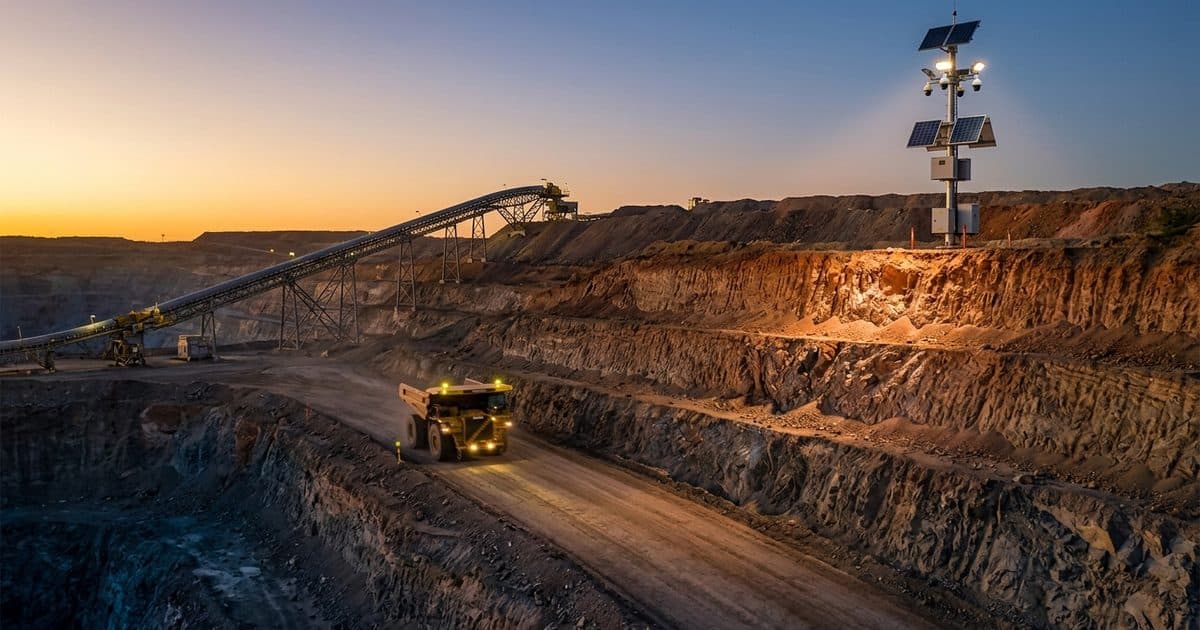
Remote pits, live blast zones, acres of iron —watched from a single mast.
Mining operations sit in remote locations with millions of dollars in heavy equipment, fuel reserves, and raw materials — exposed 24/7. Organized theft rings target these sites because response times are measured in hours. VDS deploys dust and weather-hardened surveillance with layered perimeter detection, LPR tracking, and a live SOC operator on every alert.
Mining operations concentrate exactly what organized theft crews want — heavy iron, bulk diesel, wire and consumables — in exactly the places help is slowest to reach. Staging yards hold machines a lowboy can load and haul long before any responder covers the distance from town; fuel farms drain quietly between deliveries; scrap scavengers work the idle corners of a lease that stretches beyond what any single set of eyes can hold. Remoteness, the thing that makes the resource minable, is also what makes the site a target — and it cuts the same way on compliance, where unwitnessed dumping or discharge on mine ground becomes the operator's problem to disprove.
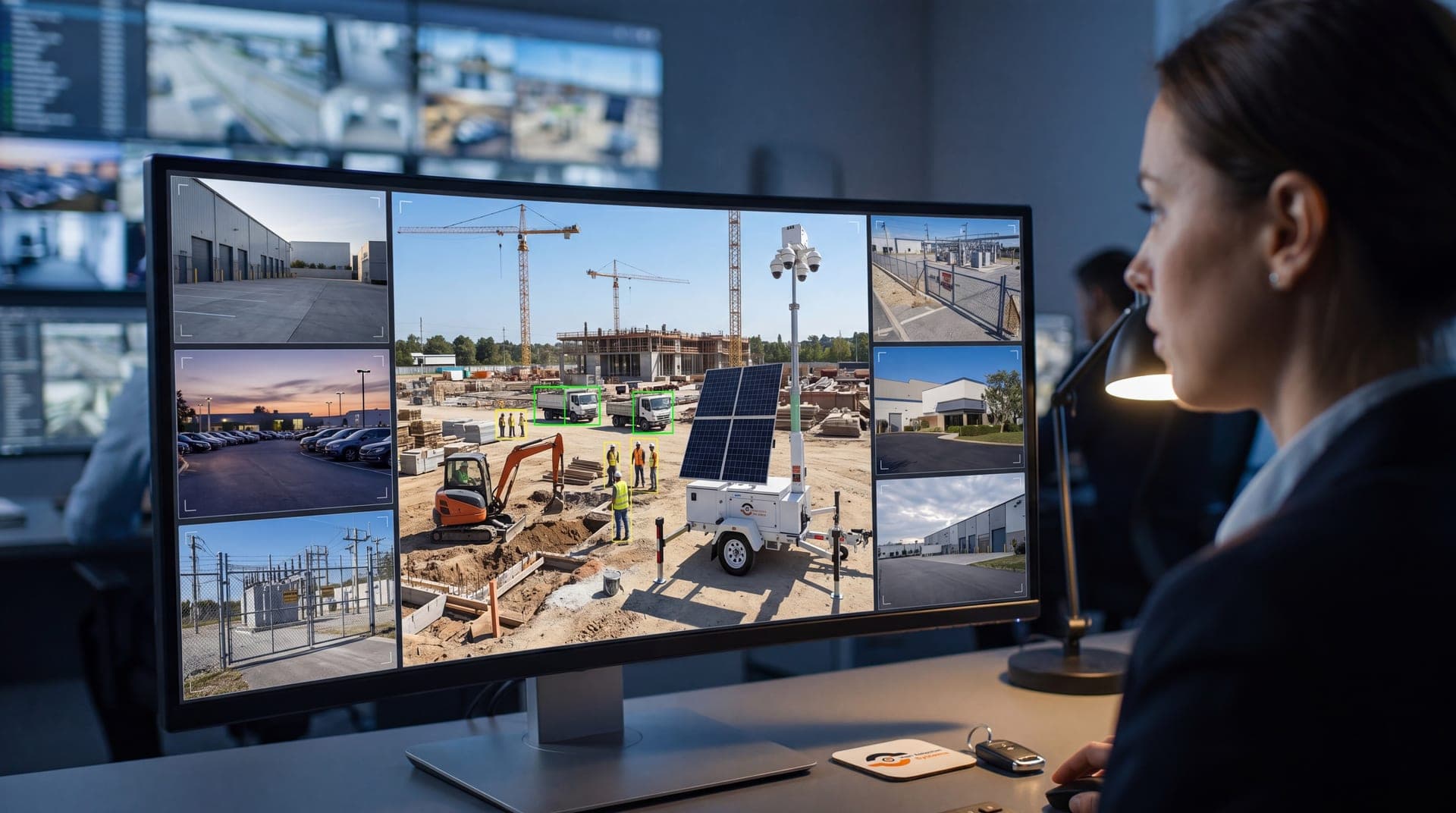
The terrain defeats conventional countermeasures. Fencing a working pit is impractical, and the pit will not stay put — benches advance, haul roads reroute, laydown areas migrate, so any hardwired installation ends up guarding last year's layout. Recorded-only video from a site visited between shifts is a forensic tool, not a defense. What changes the outcome is detection at the perimeter with a human verdict behind it: layered sensors flag the approach, a live operator confirms intent, activates deterrence, and gets response moving — multiplying what the operation's own people or its security partner can cover across that much ground.
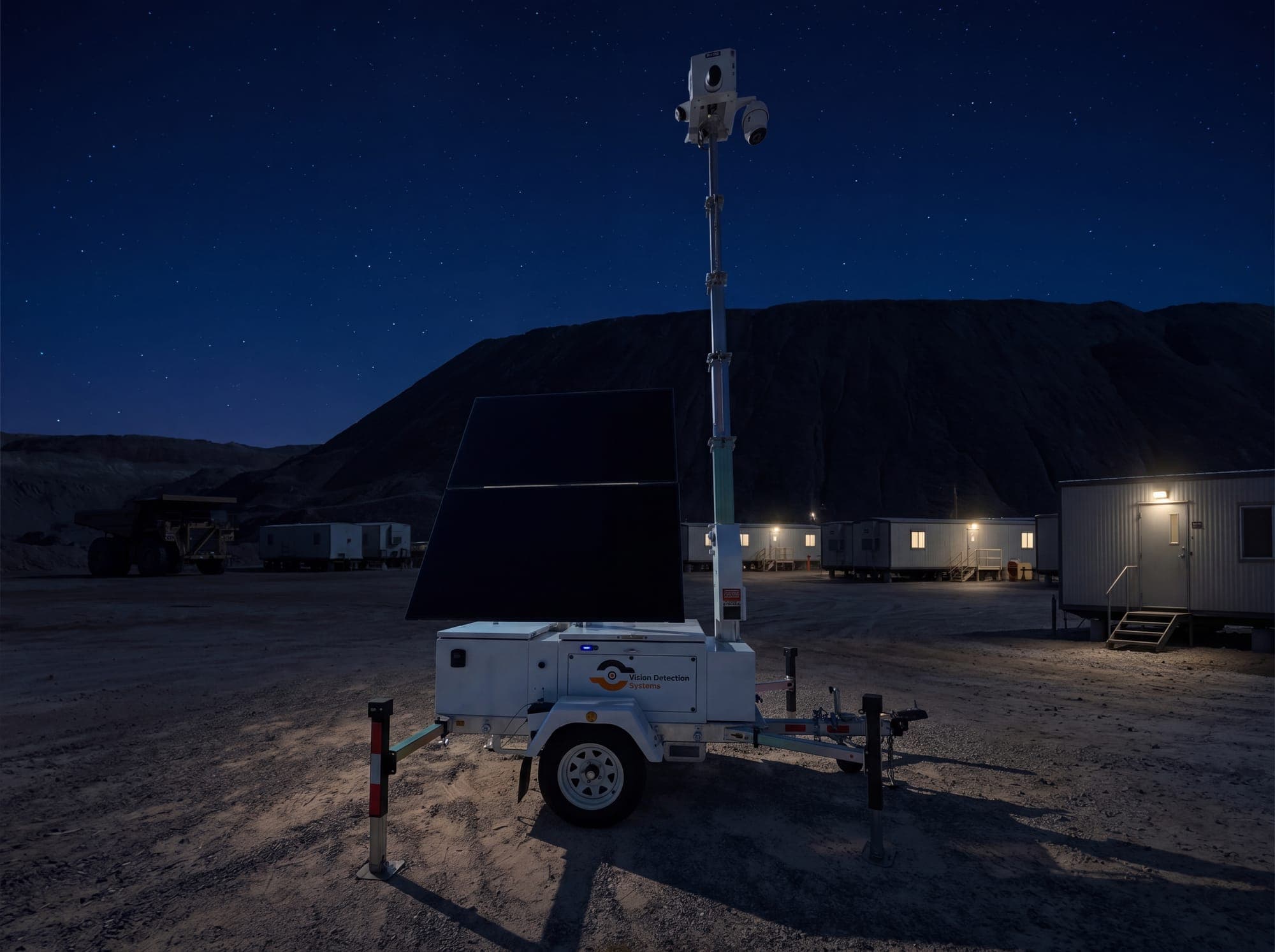
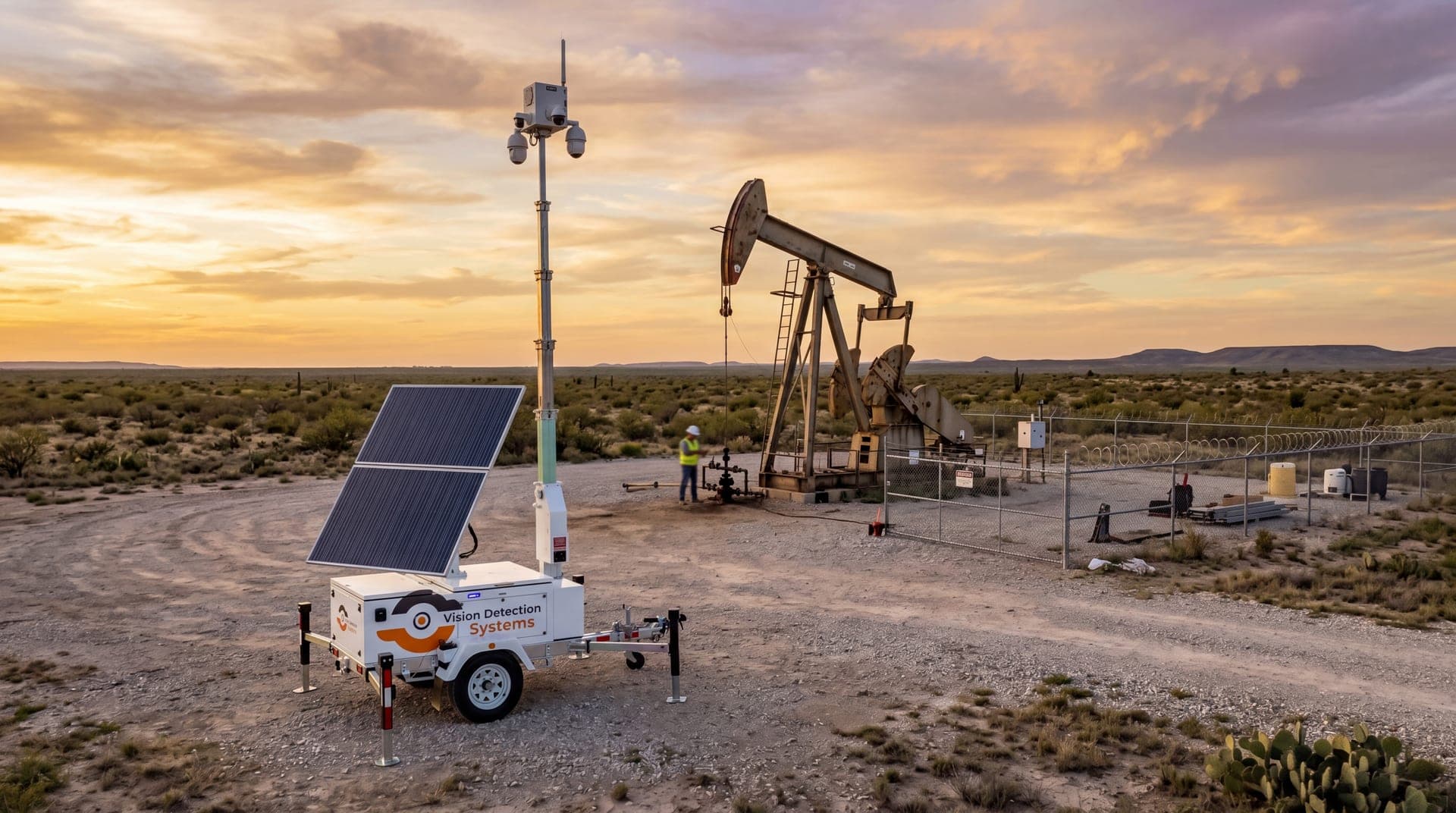
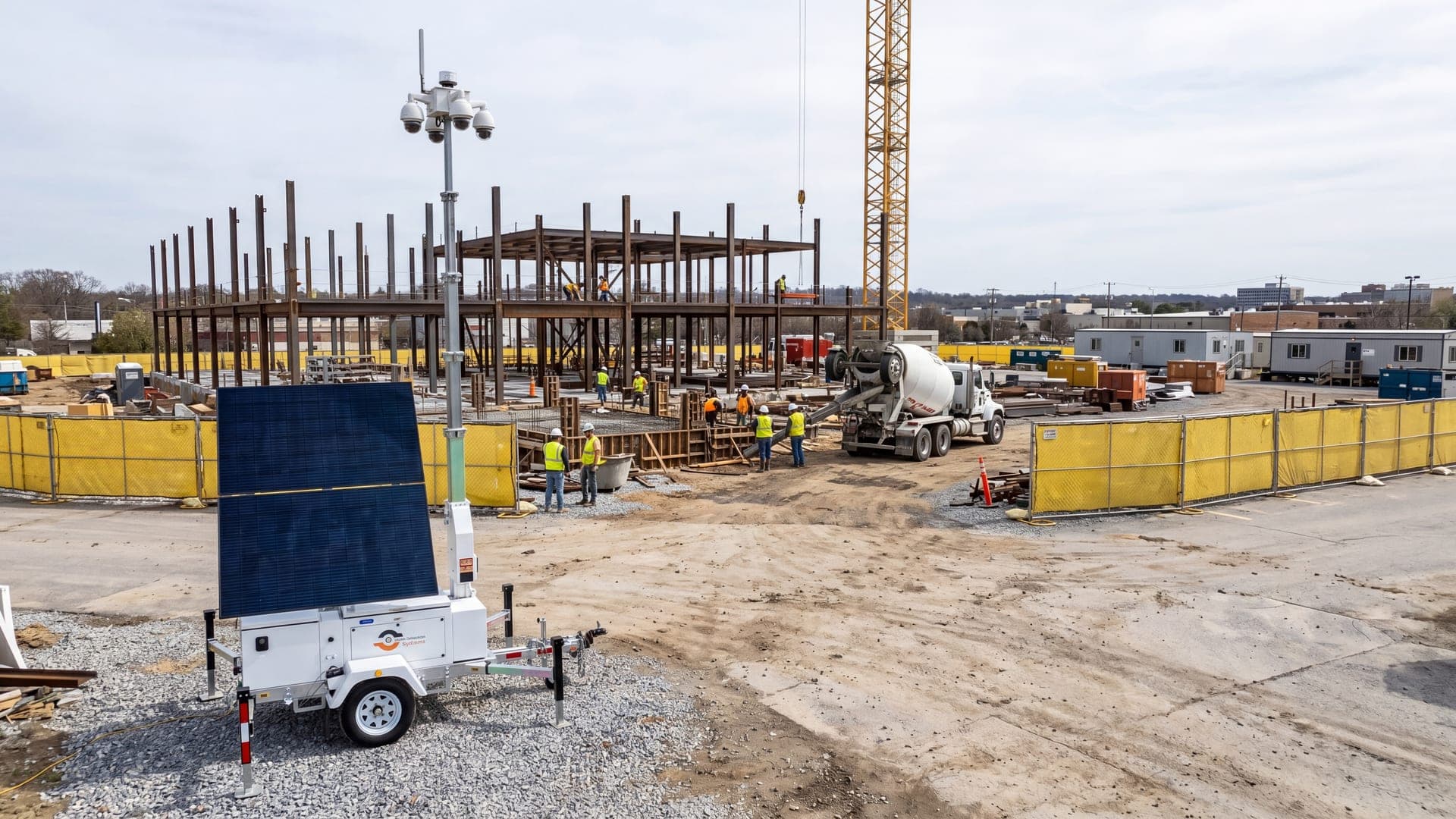
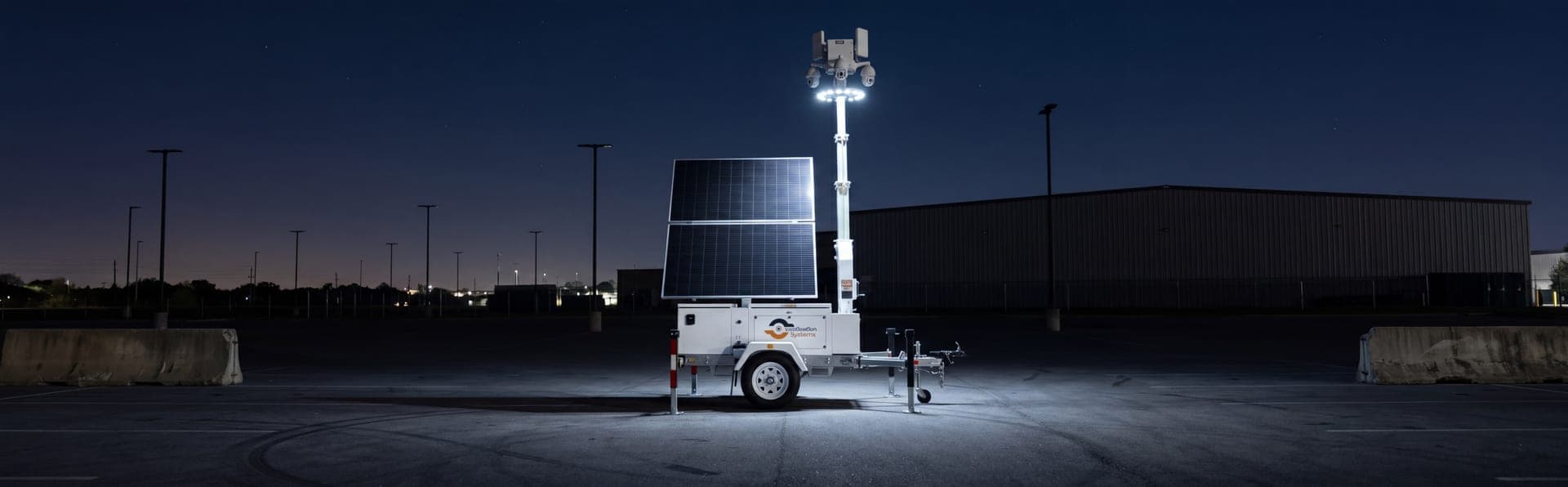
A solar-powered mobile surveillance unit matches the way a mine actually runs: dust-sealed, weather-hardened hardware on a trailer that tows to wherever operations sit this quarter, powered by its own array with no generator fuel runs, connected over cellular from leases far past the last utility pole. License plate recognition logs every contractor and haul vehicle at the access road, and the VDS SOC keeps watch around the clock, verifying alerts and coordinating law enforcement. For operators weighing mine site security options, the mobility is the point — coverage that advances with the pit.
Below, this page works through the threats extraction sites report most — equipment and fuel theft, unauthorized access, environmental-compliance incidents — the hardened, repositionable configuration VDS deploys against them, outcomes reported by mining customers, and a FAQ covering dust, weather, connectivity, and moving coverage as the operation develops.
Remote. High-value. Exposed.
Criminals love the combination.
Millions in heavy equipment, vast fuel reserves, and locations hours from the nearest patrol make mining sites a magnet for organized theft — and a nightmare for traditional security.
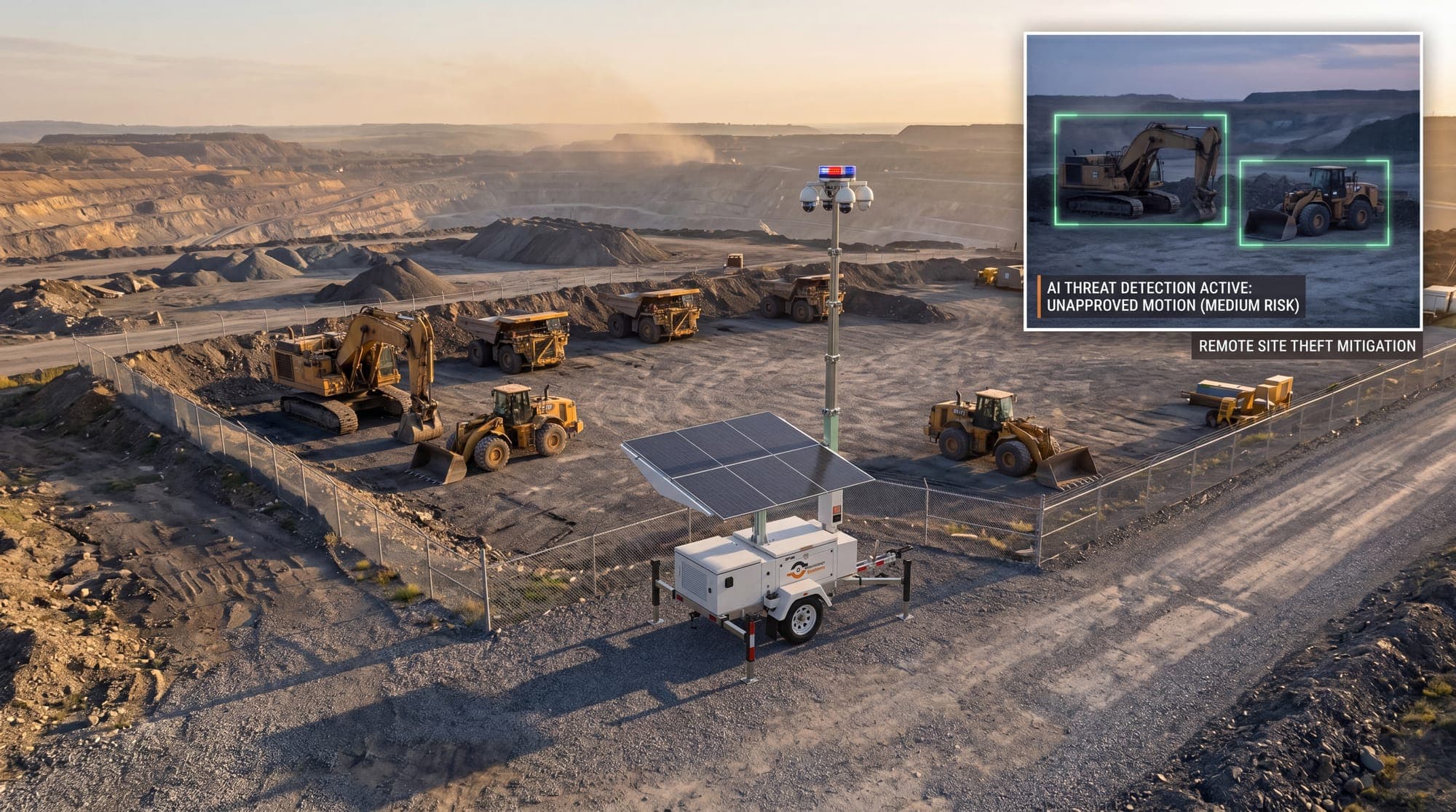
Equipment theft from remote sites
Excavators, haul trucks, and drilling rigs worth $200K–$2M sit in open pits and staging areas. Organized rings arrive with lowboys at 2 AM.
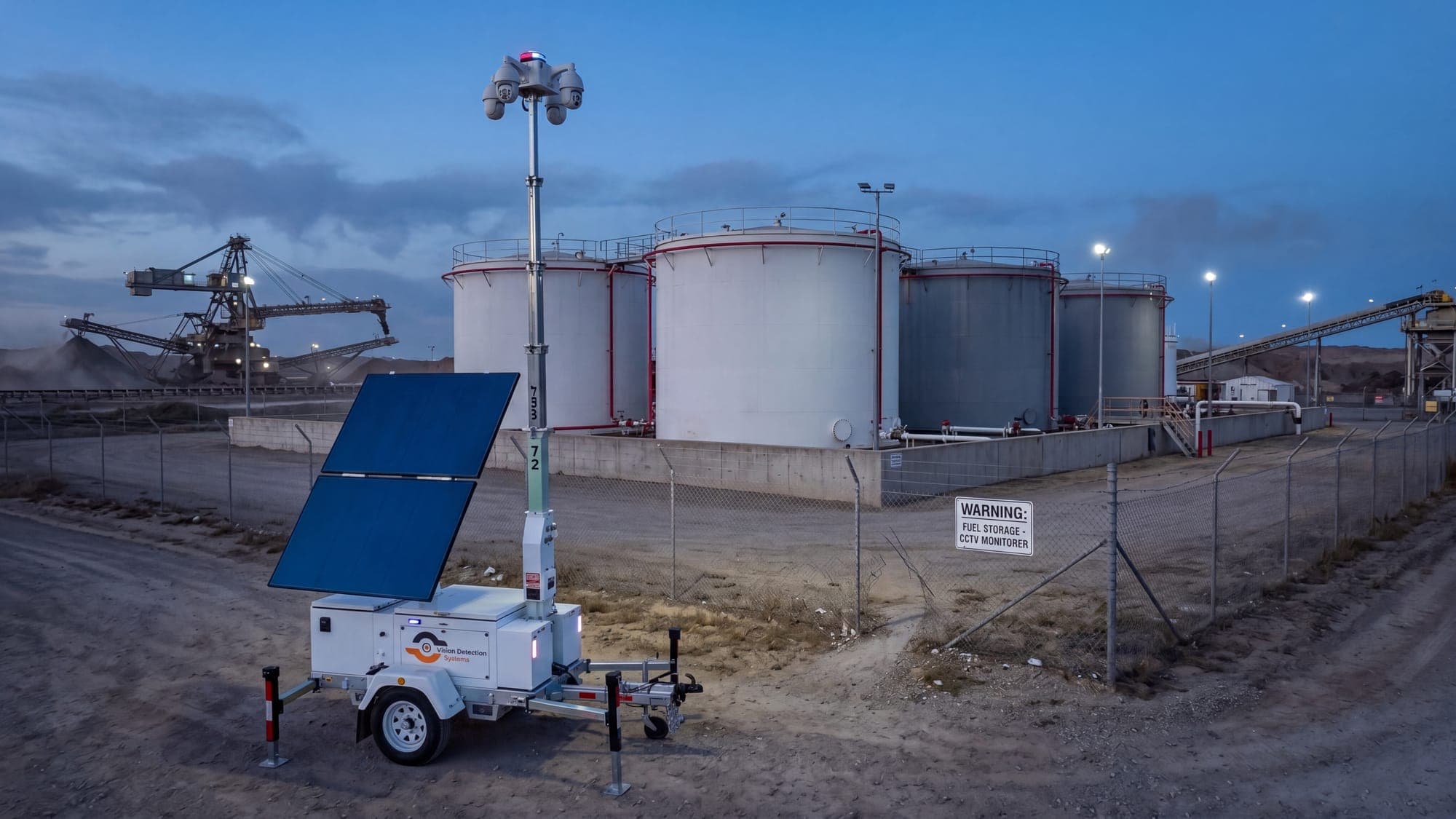
Fuel theft
Bulk diesel tanks holding tens of thousands of gallons fuel mining fleets. A single overnight theft can steal $20,000+ and halt production.
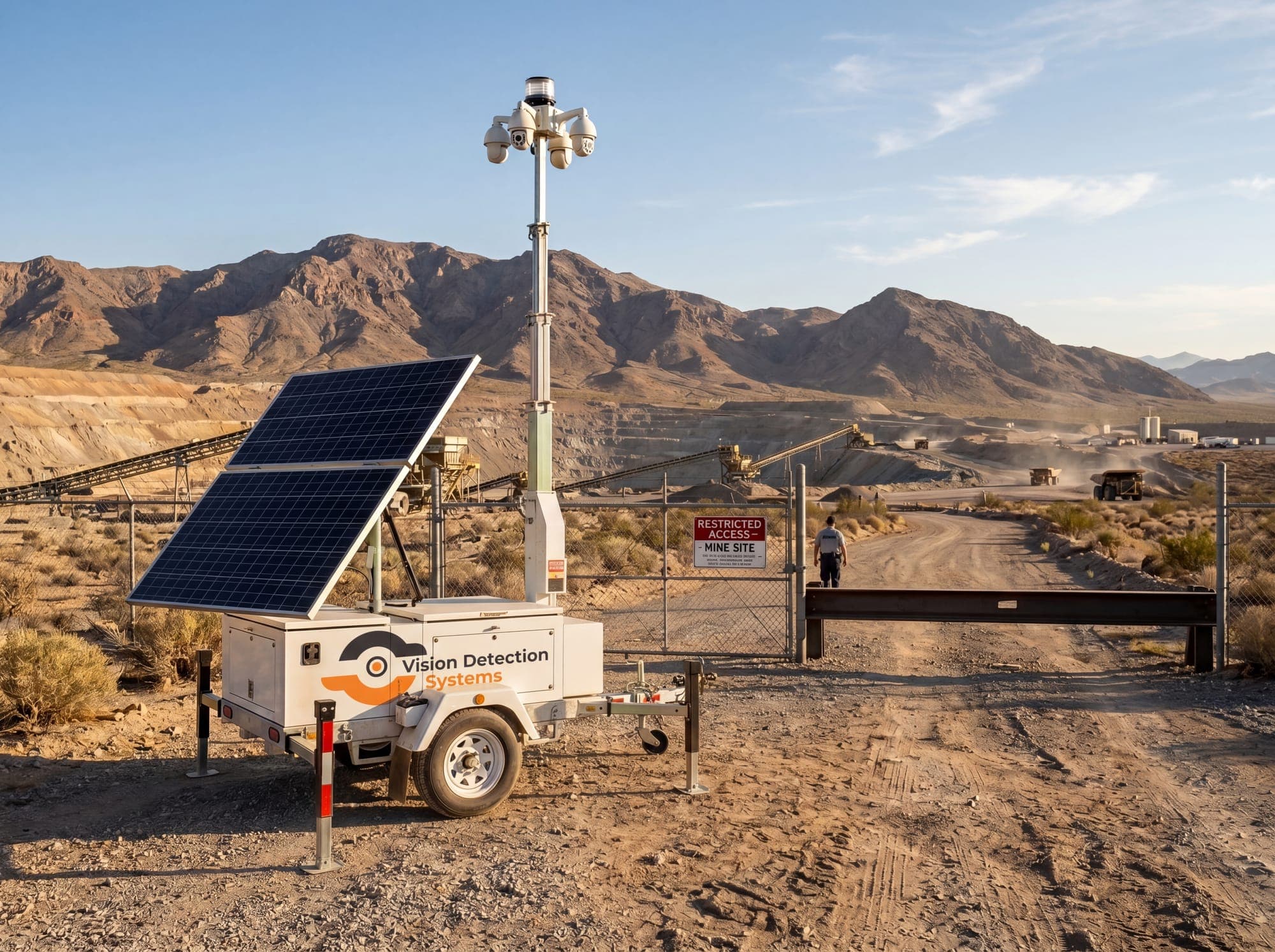
Unauthorized access
Former employees, scrap metal scavengers, and trespassers exploit remote locations and shift gaps to enter sites without authorization.
Environmental compliance monitoring
Illegal dumping, unauthorized discharge, and equipment tampering create environmental violations with six-figure penalties and operational shutdowns.
Detection happens at the perimeter.
The SOC responds in seconds.
Layered detection catches intruders before they reach equipment. The SOC verifies, activates deterrents, and dispatches response — all before a single bolt gets loosened.
See through dust, darkness,
and distance.
The MSU combines multiple sensor types — including thermal, visible-light, and motion-based analytics — to detect targets through dust clouds, rain, fog, and complete darkness. The SOC receives composite alerts before intruders reach the equipment yard.
- Multi-sensor perimeter coverage
- Thermal imaging through dust and fog
- All-weather, zero-light operation
- Automatic sensor-to-camera handoff
 STEP 01
Every truck. Every haul road.
Every shift.
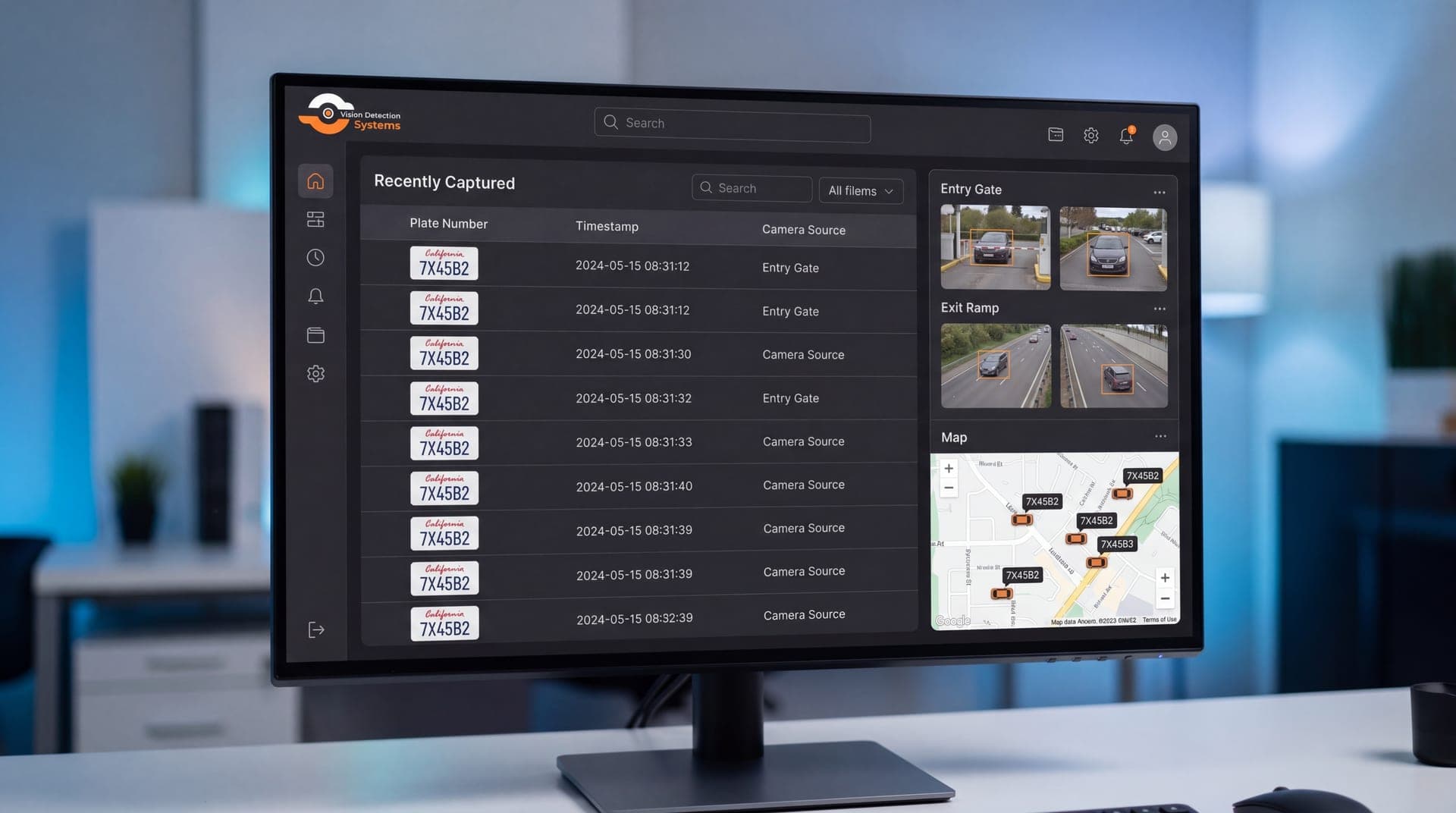
License plate recognition captures every vehicle entering and exiting the site. Contractor vehicles, delivery trucks, and unauthorized visitors are identified in real time. Shift-change traffic is logged for compliance and security auditing.
- Automated plate capture at all access points
- Contractor and vendor vehicle verification
- Hot-list matching for flagged vehicles
- Complete vehicle access audit trail
 STEP 02
Built for the harshest
environments on earth.
Mining sites aren't gentle on equipment. The MSU is engineered for extreme dust, temperature swings, high winds, and heavy precipitation. Sealed enclosures, hardened mounts, and industrial-grade components keep the system operational when conditions are at their worst.
- Sealed enclosures rated for extreme dust
- Operating range: -30F to 130F
- Wind-rated mast and mounting hardware
- Industrial-grade, field-replaceable components
 STEP 03
50 miles from town.
Connected to the SOC.
4G/5G cellular with satellite failover keeps the MSU connected from the most remote extraction sites. No site Wi-Fi, no wired infrastructure needed. Solar power means no generator fuel runs. The system is fully autonomous.
- 4G/5G cellular with failover options
- Solar-autonomous — no grid power needed
- No site network dependency
- Remote system management and firmware updates
 STEP 04
Every zone on the site.
One platform.
The MSU adapts to your specific mining operation. Here are the scenarios mining operators deploy for most often.
Open-pit operations
Large-scale surface mines with expensive heavy equipment, explosive storage, and vast perimeters difficult to secure with traditional methods.
Equipment staging areas
Centralized yards where excavators, haul trucks, drills, and support vehicles are parked between shifts — the highest-value theft targets.
Fuel farms & storage
Bulk diesel and fuel storage facilities where tens of thousands of gallons sit unprotected between scheduled deliveries.
Processing plants
Crushing, screening, and refining facilities with high-value product inventory and environmental compliance monitoring requirements.
Exploration & drilling sites
Remote prospecting and drilling operations with temporary infrastructure, expensive equipment, and minimal security presence.
Tailings & waste management
Tailings ponds and waste storage areas requiring 24/7 monitoring for unauthorized access, illegal dumping, and environmental compliance.
Real mining operations.
Real numbers.
Every metric below comes from a real VDS mining customer. Names protected per agreement.
Customer-reported outcomes from VDS deployments. Results vary by site conditions, monitoring configuration, and response protocols. How we measure →
We were losing equipment and fuel every quarter. VDS went live across three sites. Theft stopped completely within 60 days.
 MSU-A · FLAGSHIPMULTI-SENSOR · IP66
The Mobile Surveillance Unit.
Built for extraction sites.
Layered perimeter detection, dust-hardened hardware, and 24/7 SOC monitoring — all from a single solar-autonomous trailer.
From assessment
to covered.
Most mining customers go from initial conversation to a live trailer on-site inside 7 business days.
Site assessment
We review mine layout, equipment locations, access roads, and cellular coverage. Fast quote turnaround.
System configuration
Detection zones, camera presets, LPR rules, and alert protocols configured for your specific site topology and operational schedule.
Delivery & commissioning
Trailer delivered, mast raised, sensors calibrated. SOC monitoring begins immediately. No trenching, no utility hookup required.
Monitoring & repositioning
24/7 SOC coverage, monthly incident reports, compliance documentation, and repositioning as mining operations shift across the site.
Common questions.
How fast can VDS deploy at a mining site?
A mobile surveillance unit is live in under 20 minutes once it arrives — most mining sites go from first call to monitored coverage in days, not months. Most mining customers go from initial conversation to a live trailer on-site inside 7 business days.
Do the units need power or internet at the site?
No. VDS units are solar-autonomous with battery storage and connect over cellular (4G/5G), so there is no trenching, no generator refueling schedule, and no dependence on site IT. That is what makes them practical for sites where fixed infrastructure is missing or still under construction.
What happens when the system detects someone after hours?
AI detection classifies the event and filters routine motion before a person ever sees it. A SOC operator verifies the live feed, challenges intruders by voice through 120 dB speakers with strobes, and — when it escalates — dispatches police with live video of the scene.
Which mining security problems does monitored surveillance address?
The most common incidents at mining sites are equipment theft from remote sites, fuel theft, unauthorized access, environmental compliance monitoring — the same exposure areas covered in the sections above. Monitored coverage addresses them by making the site actively watched instead of just recorded.
Can VDS work alongside our existing guards or security partner?
Yes — that is the standard model. Monitored surveillance carries the perimeter and after-hours watch, so people — yours or your security partner's — handle verified incidents instead of standing watch over empty hours. The SOC can route verified alerts to your team, your guard provider, or police dispatch.
Secure your mine site this week.
Tell us your site count, equipment value, and biggest threats — we'll quote the deployment — fast.