
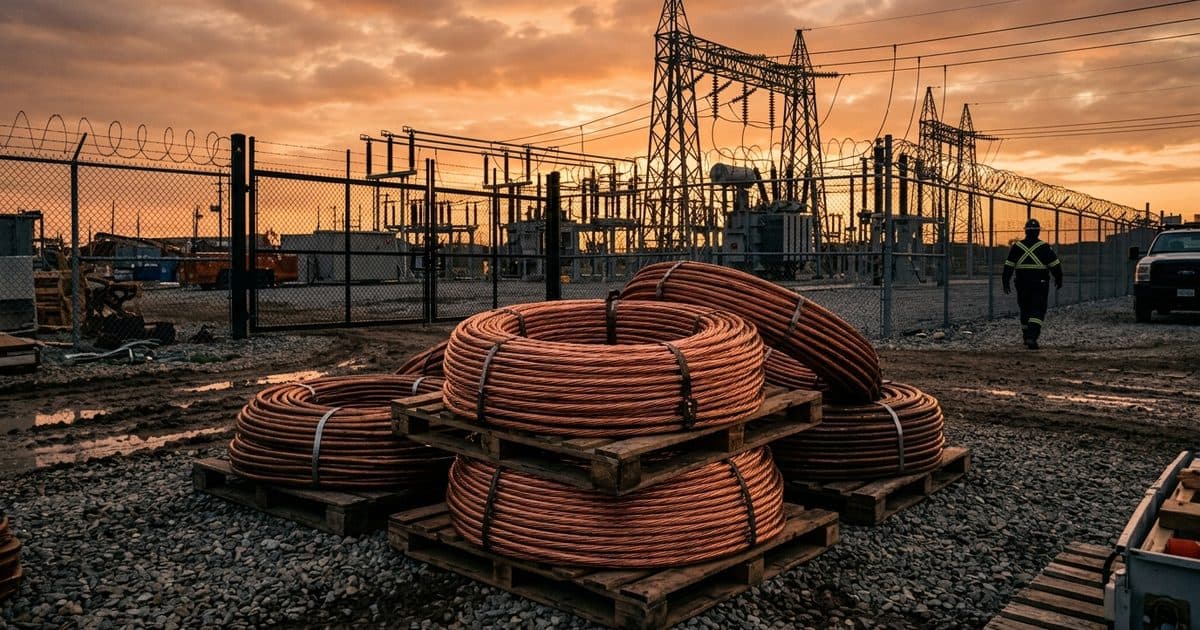
This page is the data pillar. For what to do about it, see copper theft prevention for substations and the substation physical security guide.
Why copper theft is structurally worse in 2026
Metal theft has always tracked metal prices, but 2026 is different in kind, not just degree. Three forces converged at once, and each one reinforces the other two.
Record copper prices raised the payout for every cut
COMEX copper set repeated records in 2025, trading above $6.70 per pound at mid-year (CNBC) and pushing past $12,000 per ton for the first time in December as tariff-driven trading upended the market (Bloomberg). Every dollar added to the spot price raises the payout on the same coil of grounding wire or spool of feeder cable. A haul that was barely worth the risk five years ago now funds a crew for a week, and the price signal reaches thieves as fast as it reaches traders.
Crews are organized, mobile, and equipped
The lone scrapper with bolt cutters still exists, but the losses that matter now come from coordinated crews. They arrive with trucks, cutting tools, and knowledge of which conductors are energized and which are safe to strip. They work across county and state lines, hit multiple sites in one night, and move material to scrap buyers far from the theft location. That mobility is exactly what makes single-jurisdiction policing and after-the-fact investigation so ineffective against them.
Enforcement has not caught up to the crime
Most copper theft is still charged as local property crime valued at the scrap price of the metal, not the replacement cost of the infrastructure or the cost of the outage it causes. A crew that knocks out fiber service to a neighborhood may face charges that reflect a few hundred dollars of stripped cable. That mismatch is what federal and state lawmakers are now trying to fix, and it is covered in detail below.
What AT&T's disclosure changed about the copper theft story
AT&T's numbers reframed copper theft from a scattered property-crime statistic into a critical-infrastructure story with a named victim and a national total. More than 10,000 incidents and $80 million in losses in a single year, from a single company, is not opportunistic scavenging. Independent industry coverage reached the same conclusion, pointing to organized crime behind the surge (Wireless Estimator).
Law enforcement activity in 2026 backs up the organized-crime framing. In one operation, the Cook County Sheriff's office recovered $1.3 million in stolen copper and data-center materials (Fortune). Recoveries at that scale do not come from individual scrappers. They come from theft networks with storage, transport, and resale channels.
The problem also extends beyond fixed sites. Copper has ranked among the top cargo-theft targets as prices climbed, according to Verisk's CargoNet analysis (Verisk CargoNet). Crews that steal copper in transit and crews that strip it from infrastructure are responding to the same price signal, and both treat it as a business.
For operators, the practical takeaway is that risk models built on occasional opportunistic theft are out of date. Organized crews scout targets, return to productive sites, and share information. A site that has been hit once should be treated as a site that will be hit again.
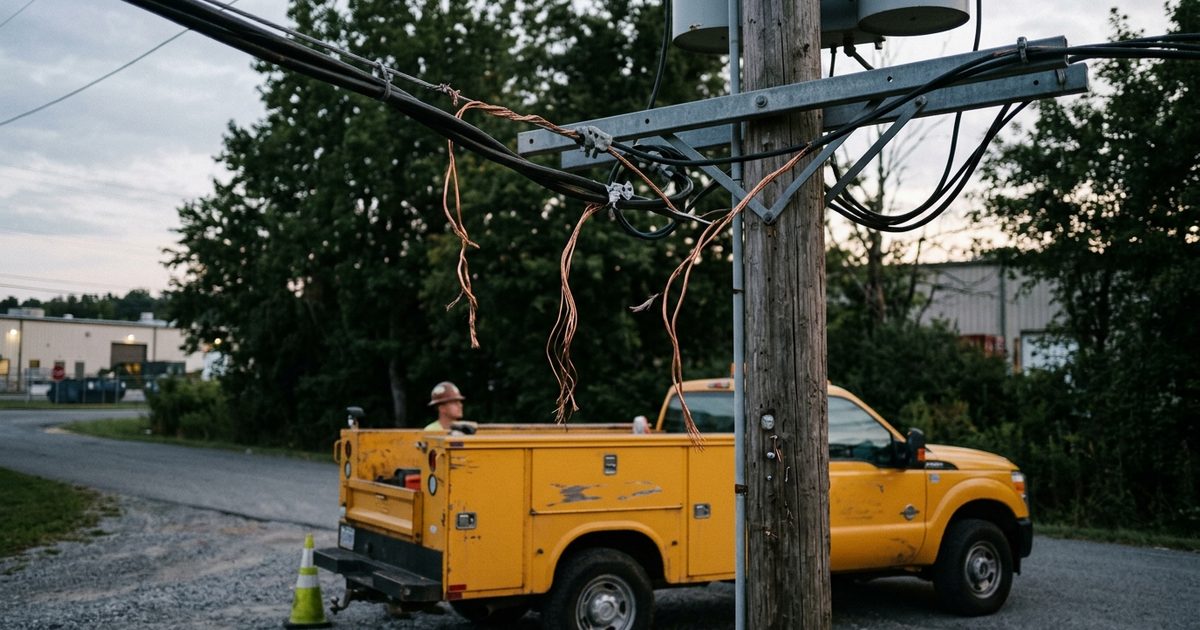
Where organized copper crews strike
Copper theft clusters around four site types that combine high metal value, low overnight staffing, and large perimeters. Each one has its own attack pattern and its own prevention playbook.
Electrical substations
Substations concentrate copper grounding grids, bus work, and control wiring inside a fence that is often unwatched between maintenance visits. The consequences go far beyond the metal, because a stripped grounding grid creates electrocution risk for thieves and workers and can force outages while repairs are made. Our guide to copper theft prevention at substations covers layout-specific tactics, and our utilities industry page outlines how monitoring programs scale across a fleet of remote sites.
Cell towers and telecom infrastructure
Tower compounds hold grounding systems, coax, and backup-power cabling, and the AT&T disclosure shows how heavily this sector is being hit. A single cut can take down service for thousands of customers, which is why telecom theft is the focus of the new federal bill discussed below. See our breakdown of cell tower security against copper theft for site-level countermeasures.
Rail yards and corridors
Railroads run signal and communications copper along corridors that are impossible to staff and easy to access. Theft from active rail infrastructure disables signaling and creates genuine safety hazards, not just replacement costs. Our post on rail yard security and copper theft looks at how yards and right-of-way segments are being targeted and monitored.
Cemeteries and public spaces
Thieves also strip bronze and copper from cemeteries, taking vases, plaques, and memorial fittings. The scrap value is modest, but the harm to families is severe and the reputational stakes for cemetery operators are high, which is why this deserves a measured, prevention-first response rather than blame. We cover the specifics in our guide to cemetery security and metal theft.
The laws catching up: H.R. 2784 and state scrap statutes
Legislation is moving on two tracks in 2026, one federal and one state, and both aim at the same weakness: the gap between the seriousness of the crime and the tools available to prosecute it.
At the federal level, H.R. 2784, the Stopping the Theft and Destruction of Broadband Act, would extend federal criminal penalties to theft from private telecommunications infrastructure (Congress.gov). That matters because much of the network copper being stolen today is privately owned, and theft from it has typically been prosecuted, if at all, as local property crime. Federal jurisdiction would also better match the multi-state footprint of organized crews.
At the state level, the legal framework already exists on paper. All 50 states maintain metals-theft statutes that include scrap-sale documentation requirements, such as recording seller identification and transaction details (ReMA state statute database). The persistent problem is enforcement. Documentation rules only work when scrap buyers follow them and when investigators have the time to trace transactions across jurisdictions, and organized crews exploit both gaps by selling far from where they steal.
The recycling industry itself is flagging the pace of theft. ReMA's ScrapTheftAlert system logged more than ten alerts in just the three weeks from April 24 to May 15, 2026, the majority involving copper-bearing material, according to a trade-press report (Recycling Today). Legitimate recyclers do not want stolen metal in their yards, and alert networks help, but alerts fire after the material is already gone.
The honest summary for 2026 is that the law is catching up, not caught up. H.R. 2784 is a bill, not yet an enforcement reality, and state documentation statutes are only as strong as their weakest scrap buyer. Operators should support the legislative push and plan as if it will take years to bite.
Why recovery after the fact rarely works
The economics of copper theft are brutally asymmetric. The thief collects scrap value; the owner pays for replacement conductor, skilled labor, outage time, and in telecom and rail cases, service restoration for downstream customers. Even a successful prosecution rarely makes the owner whole.
Recovery is the exception, not the rule. Stripped and cut copper is a commodity with no serial numbers, and once it is melted or blended into a scrap stream, tracing it back to a specific substation or tower site is close to impossible. Headline recoveries like the Cook County operation's $1.3 million seizure (Fortune) are newsworthy precisely because they are rare, and even then the recovered material represents a fraction of what networks lost that year.
That is why the practical dividing line in copper security is not "did we catch them" but "did they reach the metal." Everything before the cut is prevention; everything after it is loss accounting.
Detection at the fence beats recovery at the scrap yard
The sites that avoid repeat losses in 2026 share a common posture: they detect intruders at the perimeter, verify in real time, and escalate while the crew is still outside or just inside the fence.
A layered approach works best:
- Visible deterrence first. Lighting, signage, and clearly visible cameras push opportunists toward easier targets and force organized crews to weigh the risk of a monitored site.
- Detection at the perimeter. Analytics-driven cameras that flag people and vehicles at the fence line, at 2 a.m., before anyone touches a conductor.
- Human verification. Remote video monitoring puts trained operators on every alert, filtering out wildlife and weather so real intrusions get an immediate response, including live audio warnings and police escalation with verified video.
- A documented escalation path. Everyone should know who gets called, in what order, when an intrusion is verified.
This is where mobile surveillance fits the copper problem specifically. Substations, tower compounds, rail corridors, and cemeteries are exactly the kinds of sites that lack power, connectivity, and staff. Vision Detection Systems deploys solar-powered surveillance trailers with 24/7 monitored detection for these environments, so intrusions are verified and escalated in minutes and people, whether your own staff or your security partner's responders, handle verified incidents instead of chasing false alarms. For utilities running dozens of unmanned sites, that model scales in a way that after-hours patrols alone cannot; our utilities page covers typical deployments.
Copper prices are not coming down to 2019 levels, organized crews are not disbanding, and the laws will take time to catch up. The variable an operator actually controls in 2026 is how early an intrusion is detected. Move the security investment to the fence line, and the rest of the copper theft economics start working in your favor instead of the thief's.