
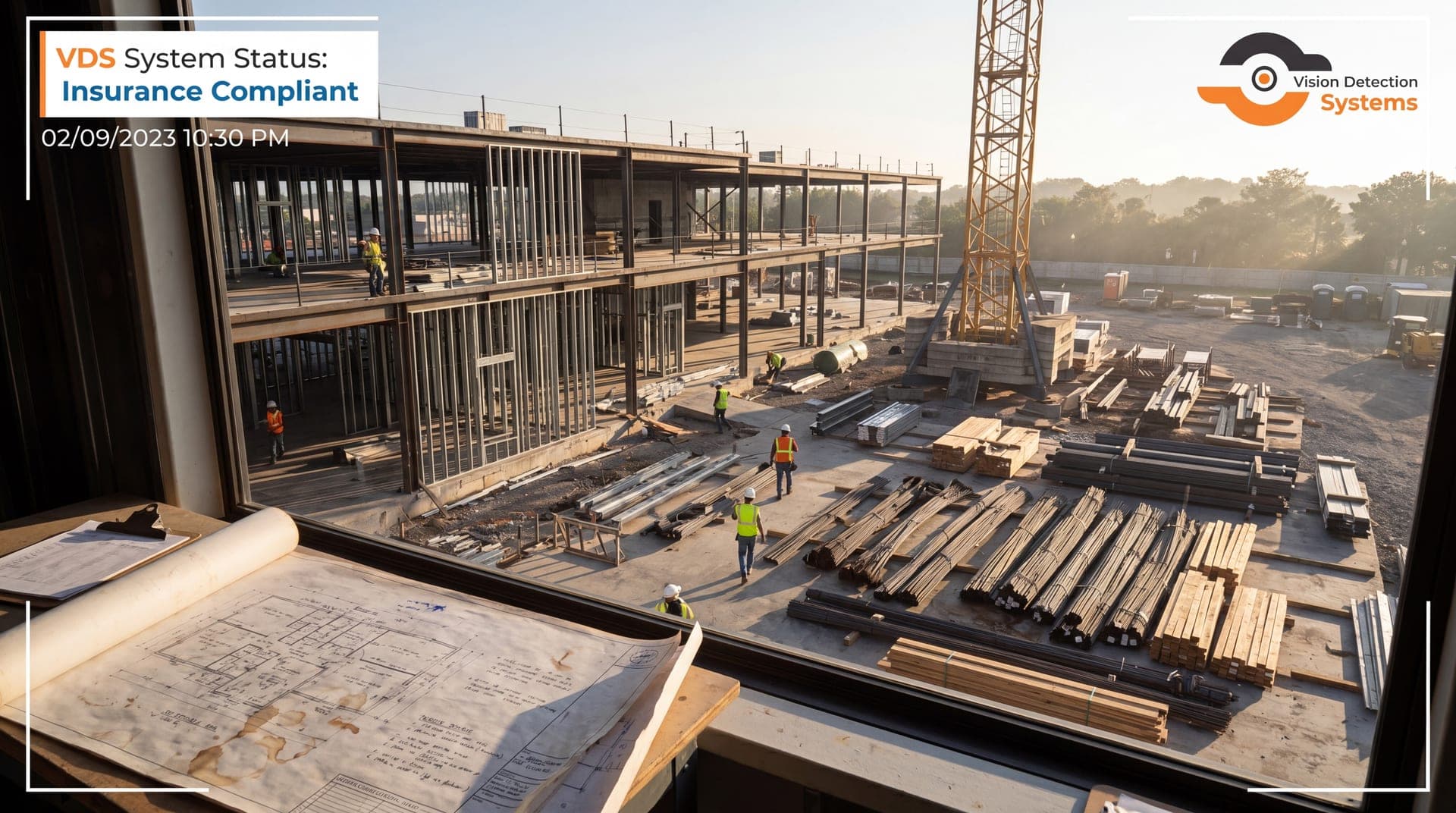
Construction sites face theft losses exceeding $1 billion annually according to the National Equipment Register, with individual incidents averaging $30,000 in equipment and materials. Insurers have responded by offering significant premium reductions for sites with verified monitoring systems — but only when specific requirements are met.
How Insurance Underwriters Evaluate Construction Site Surveillance
Insurance companies assess surveillance systems based on documented risk reduction, not just camera presence. Underwriters examine three core factors when determining premium discounts for construction site security cameras insurance coverage.
First, they require 24/7 verified monitoring with human oversight. Simple recording systems don't qualify for discounts because they provide evidence after incidents occur, not prevention or immediate response. Professional monitoring services that verify alerts and contact authorities within minutes demonstrate the proactive risk management insurers value.
Second, insurers demand documented incident response protocols. This includes escalation procedures, law enforcement notification timelines, and detailed incident reports. Sites with clear response workflows show insurers that threats are managed systematically, reducing the likelihood of major losses.
Third, evidence quality and retrieval capabilities matter significantly. Insurers need assurance that footage will be available and usable for claims investigation. This means proper lighting, adequate resolution, reliable storage, and established procedures for extracting video clips when incidents occur.
Typical Insurance Premium Reductions for Surveillance Systems
Premium discounts vary by policy type and coverage level, but documented savings are substantial across major insurance categories affecting construction projects.
- Builder's Risk Insurance: Sites with verified monitoring typically see 10-20% premium reductions. For a $2 million project with annual Builder's Risk premiums of $8,000, this represents $800-1,600 in annual savings.
- General Liability Coverage: Comprehensive surveillance can reduce premiums by 15-25% on liability policies. Projects with higher risk profiles (urban locations, valuable equipment storage) see the largest discounts.
- Inland Marine Insurance: Equipment and materials coverage shows some of the highest premium reductions, often 20-30%, because surveillance directly addresses the primary risk these policies cover — theft and vandalism.
Note: Actual discounts depend on location, project value, equipment inventory, and existing security measures.
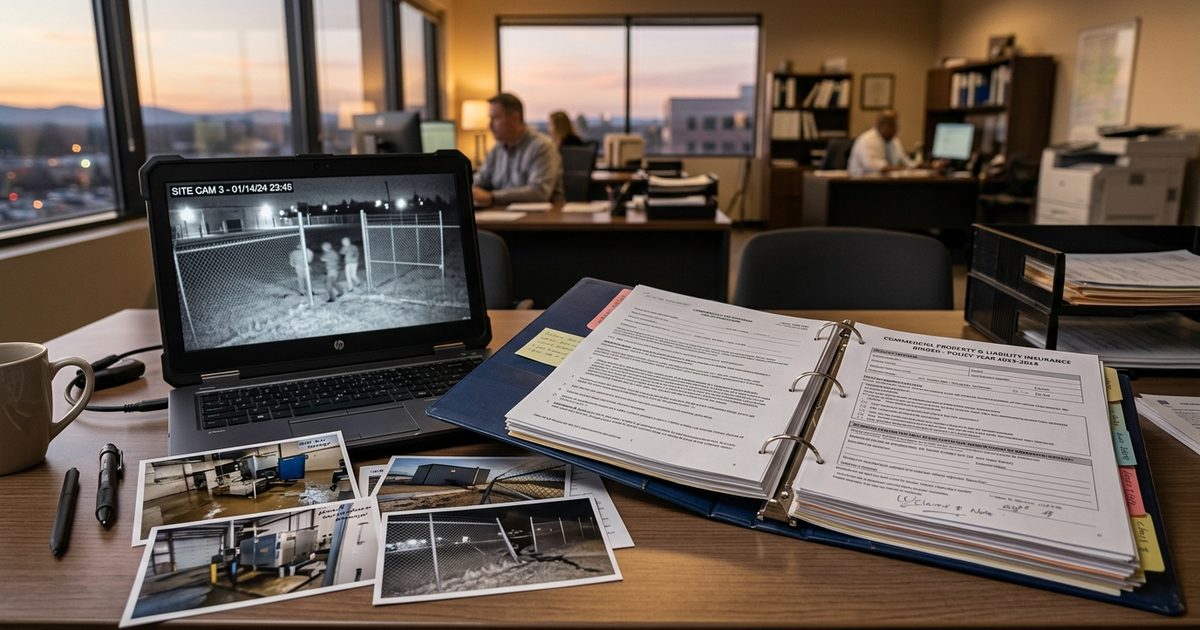
What Insurers Want to See in Surveillance Systems
Insurance companies have specific requirements that determine discount eligibility. Understanding these requirements helps project managers implement systems that qualify for maximum premium reductions.
Continuous monitoring coverage is essential. Insurers require 24/7 surveillance during all project phases, including nights, weekends, and between work shifts when most thefts occur. Gaps in coverage eliminate discount eligibility because risk exposure remains high during unmonitored periods.
Professional monitoring services with documented response protocols are mandatory. Insurance underwriters distinguish between passive recording systems and active monitoring with human verification. Systems that alert trained operators who can assess threats, contact authorities, and document incidents provide the risk mitigation insurers value.
Proper equipment positioning and environmental controls matter significantly. Cameras must cover entry points, equipment storage areas, and material stockpiles with adequate lighting for night visibility. Mobile surveillance trailers often meet these requirements more effectively than fixed cameras because they can be repositioned as project phases change.
Evidence retention and retrieval procedures are required for discount qualification. Insurers need assurance that footage will be available for claims investigation, typically requiring 30-90 days of storage with established procedures for extracting and providing video evidence.
Making the Business Case to Your Insurance Broker
Securing insurance discounts requires proactive communication with your broker about surveillance capabilities and documented risk reduction measures.
Document your monitoring service capabilities in detail. Provide your broker with specifications showing 24/7 human monitoring, response time guarantees, and incident reporting procedures. Insurance underwriters need this information to calculate appropriate discounts.
Request specific premium quotes comparing sites with and without surveillance. Many brokers can provide preliminary discount estimates based on surveillance system specifications, helping justify the investment before implementation.
Establish baseline metrics for theft prevention and incident response. Track and document prevented incidents, response times, and successful law enforcement coordination. This data supports renewal negotiations and can lead to increased discounts over time.
Tip: Submit surveillance system specifications during the initial quote process rather than after policy binding to maximize discount opportunities.
ROI Analysis: Surveillance Investment vs Insurance Savings
The financial justification for construction site security cameras insurance coverage extends beyond premium savings to include theft prevention and incident response benefits.
Consider a typical 18-month construction project with the following cost structure:
Compare this investment to potential savings and avoided losses:
This analysis shows a return on investment exceeding 200% over the project duration, with insurance savings representing just one component of the total value proposition.
Important: ROI calculations should include project-specific factors like location risk, equipment value, and existing security measures.
What Happens After a Theft Without Proper Documentation
Construction sites without comprehensive surveillance face significant challenges when filing insurance claims, often resulting in denied coverage or reduced payouts that can devastate project budgets.
Insurance companies require detailed documentation for theft claims, including incident timelines, evidence of forced entry, and proof of loss. Sites with inadequate surveillance struggle to provide this documentation, leading to claim disputes and delayed payments.
Law enforcement investigations depend heavily on evidence quality. Poor lighting, inadequate camera positioning, or missing footage significantly reduces the likelihood of recovering stolen items or prosecuting thieves. This creates ongoing security risks and potential repeat incidents.
Project delays from major theft incidents can exceed the value of stolen items. When critical equipment or materials are stolen, replacement lead times can extend project schedules, triggering penalty clauses and additional overhead costs that dwarf the original loss value.
Comprehensive construction site security addresses these risks proactively, providing the documentation and deterrent effect that keeps projects on schedule and within budget.
Common Mistakes That Eliminate Insurance Discounts
Installing cameras without professional monitoring: Passive recording systems don't qualify for most insurance discounts because they don't provide immediate threat response.
Inadequate lighting for night coverage: Cameras that can't capture usable footage during peak theft hours (nights and weekends) don't meet insurer requirements for risk reduction.
Missing documentation procedures: Systems without established protocols for incident reporting and evidence retrieval fail to provide the assurance insurers need for discount qualification.
Inconsistent coverage during project phases: Gaps in surveillance during site transitions, weather events, or equipment relocations eliminate the continuous monitoring insurers require.
Failure to communicate capabilities to brokers: Even comprehensive systems don't generate discounts if insurance underwriters aren't properly informed about monitoring capabilities and response protocols.
Get Professional Construction Site Surveillance That Qualifies for Insurance Discounts
Implementing construction site security cameras insurance-compliant surveillance requires expertise in both security technology and insurance requirements. The wrong system wastes money without delivering the premium reductions that justify the investment.
Vision Detection Systems provides comprehensive surveillance solutions designed to meet insurer requirements for premium discounts. Our managed deployment model includes the 24/7 monitoring, documented response protocols, and evidence management that underwriters look for when calculating risk reductions.