
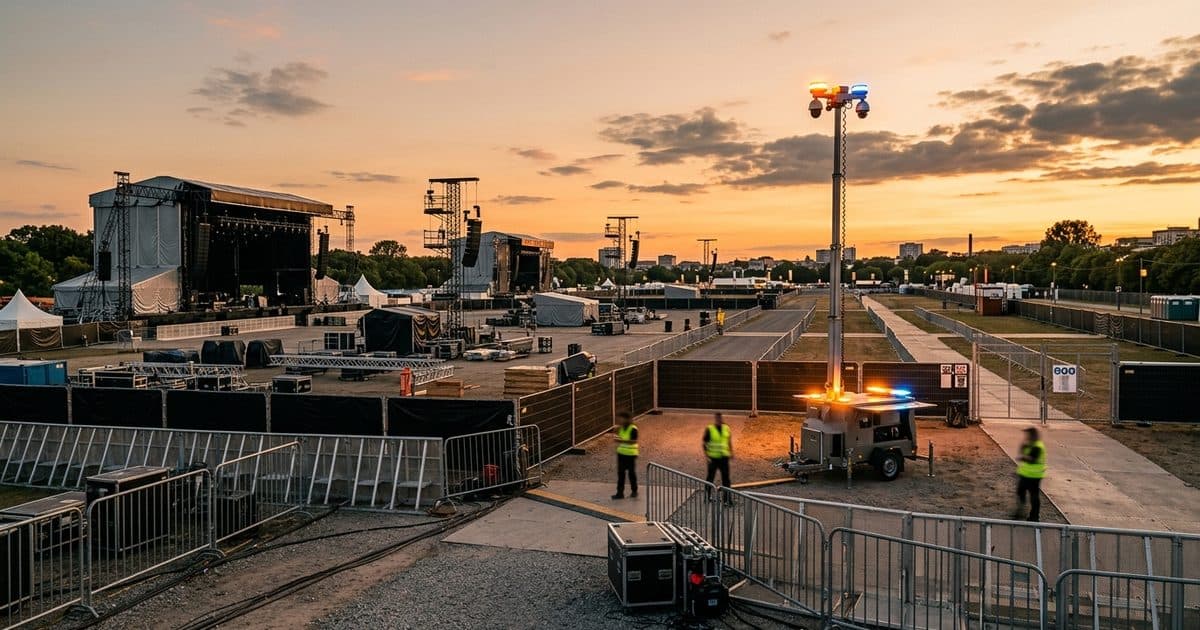
The venue is temporary.The security isn't.
Festivals, concerts, sporting events, and temporary venues need full-spectrum security for days or weeks — then nothing. Traditional security infrastructure can't flex that fast. VDS deploys mobile surveillance in under 20 minutes, covers crowds, parking, and perimeters with AI analytics, and removes the trailer when the event ends.
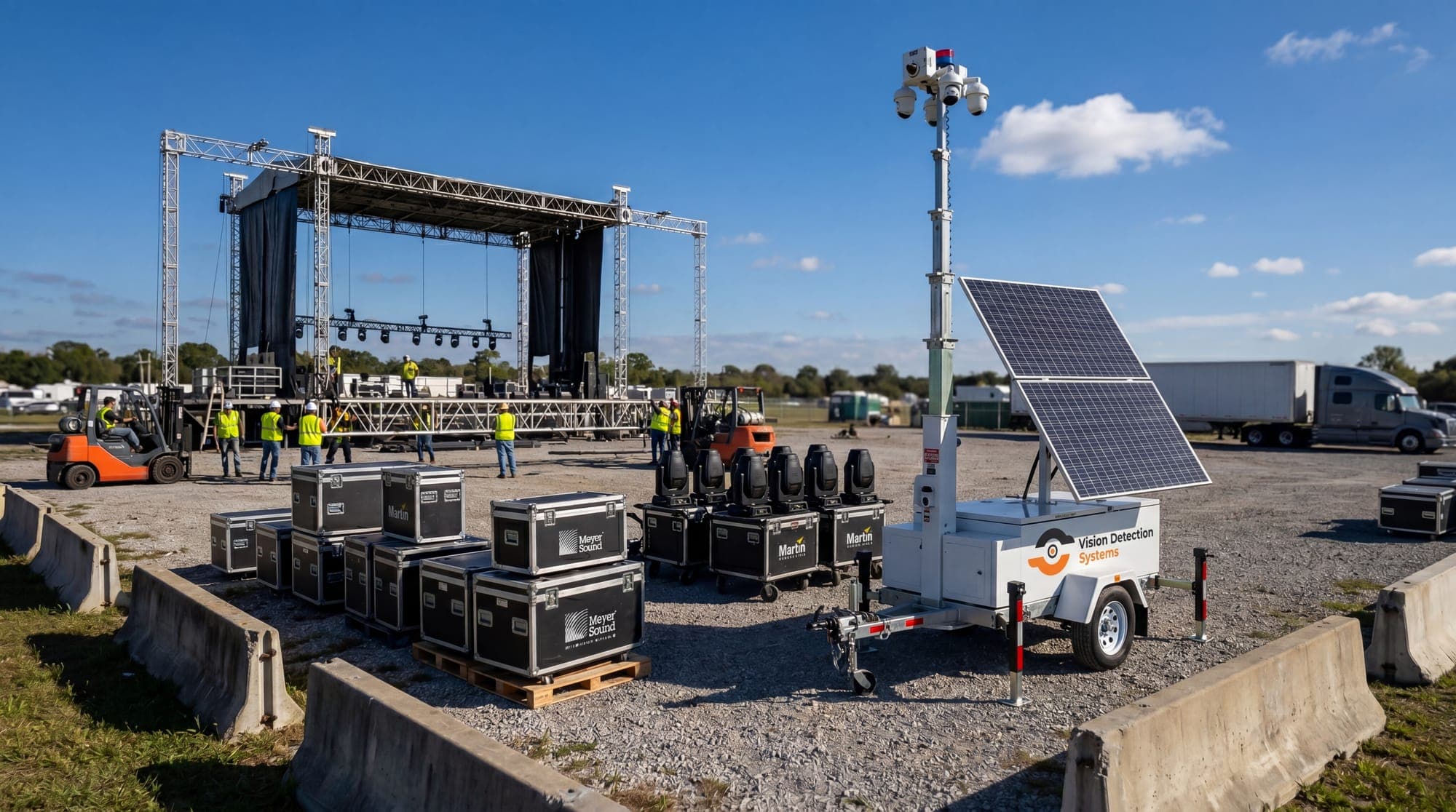
An event site is a city that exists for a weekend. Fencing goes up on Thursday, crowds and their parked cars arrive Saturday, and by Monday the field is empty again — which means every security asset has to be justified against a lifespan of days. The exposure runs the full cycle: staging and AV equipment sits in an open venue during load-in, temporary fencing invites jumpers and gate-crashers once doors open, the parking acreage fills with unattended vehicles far from the stage lights, and the teardown days after the crowd leaves are when vendor inventory is at its loneliest.
Permanent infrastructure cannot help a venue that has none, so event security defaults to people on foot, working at eye level in one direction at a time. The gaps are geometric: a posted position at the gate cannot also watch the far parking rows during the headliner, and the quiet nights between load-in and doors rarely get dedicated coverage at all. What closes those gaps is an elevated vantage no ground team can occupy, analytics that flag a fence-line crossing or a crowd-flow anomaly as it forms, and a monitoring operator who relays verified incidents to on-site security by radio, so the people working the event go where they are needed.
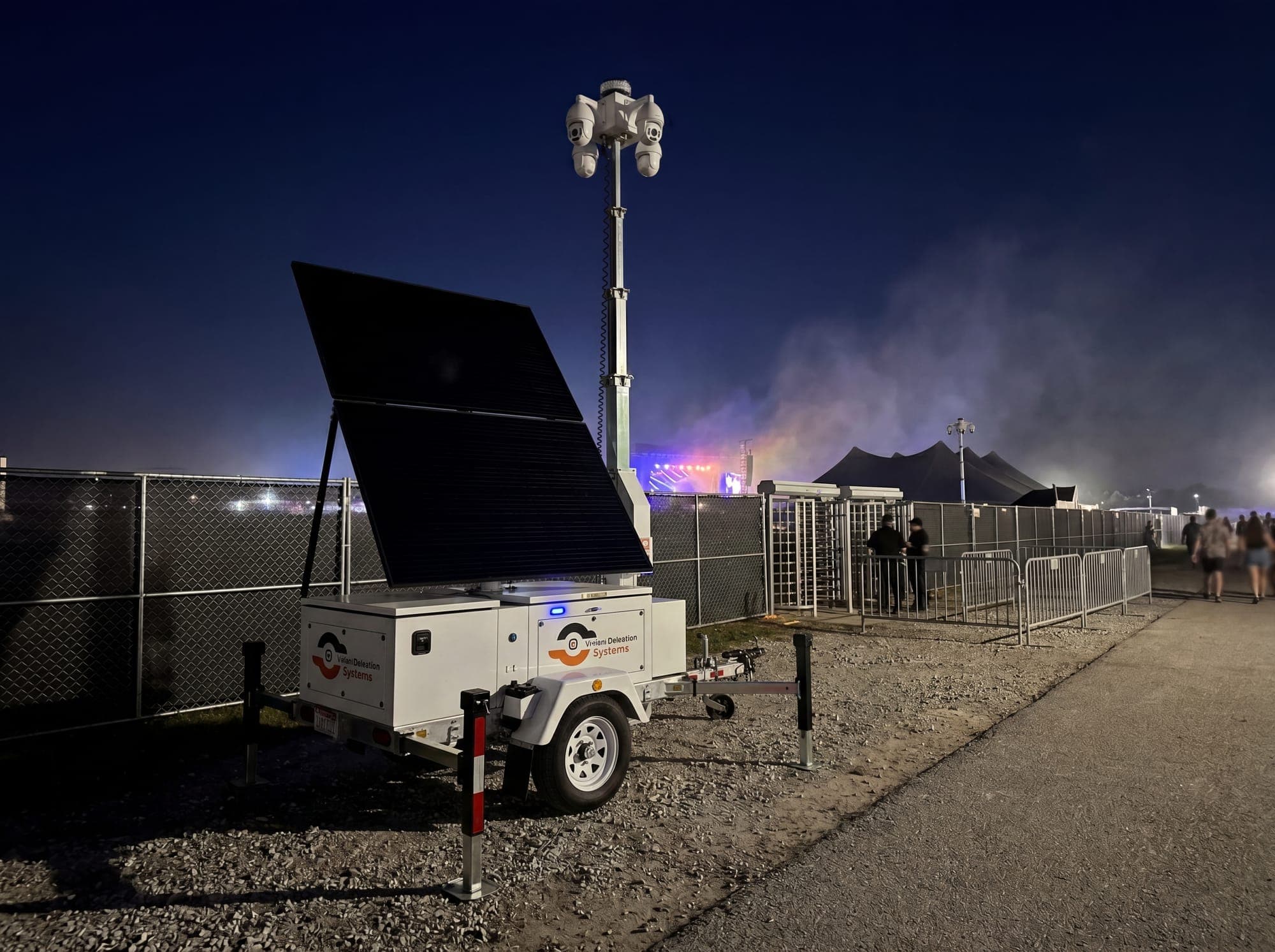
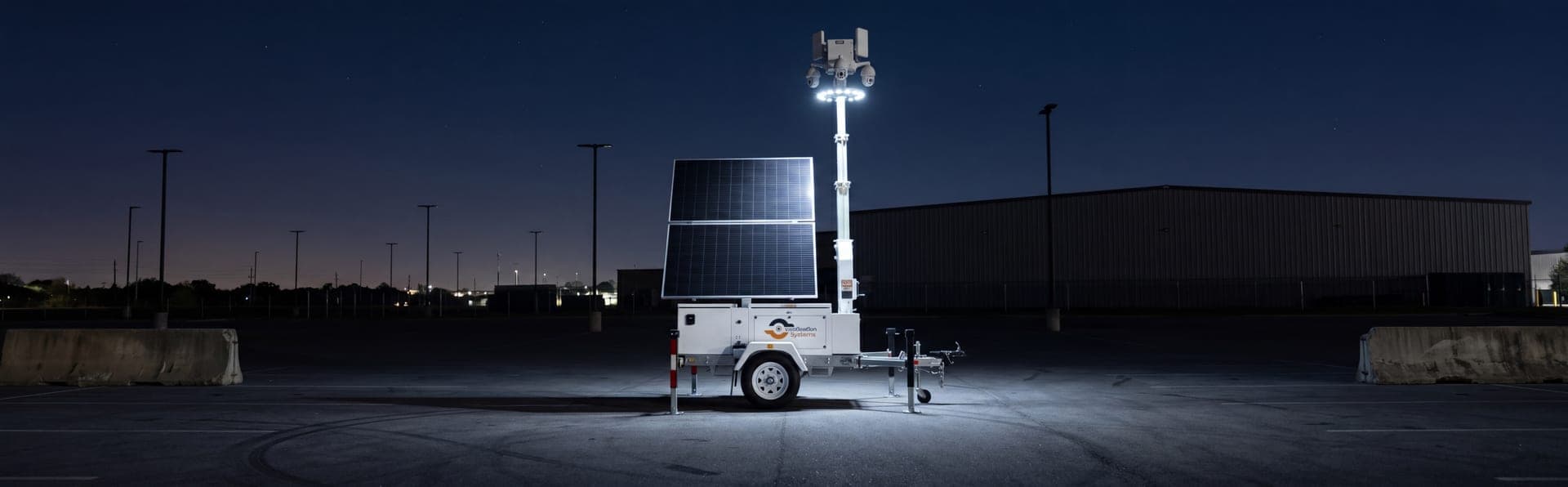
Temporary event surveillance has to arrive, work, and leave on the event's schedule, which is what makes the solar-powered mobile unit the right tool: it tows onto grass, gravel, or asphalt, lifts a mast over the grounds without a single cable run, and starts monitoring the same day the fence goes up. Coverage stays through the overnight gaps, license plate capture logs the lots, and the SOC watches around the clock from load-in to load-out. When the site reverts to a field on Monday, the unit is already gone — and available for the next date on the calendar.
Down the page: the incident patterns festivals, fairs, and temporary venues see across the cycle; the coverage VDS configures for crowds, gates, and parking; customer-reported outcomes from event deployments; and the questions promoters and event directors ask about timing, placement, and removal.
Thousands of people.
No permanent infrastructure.
Temporary venues, massive crowds, dark parking lots, and high-value staging equipment — all in a location with zero permanent security infrastructure.
Crowd safety incidents
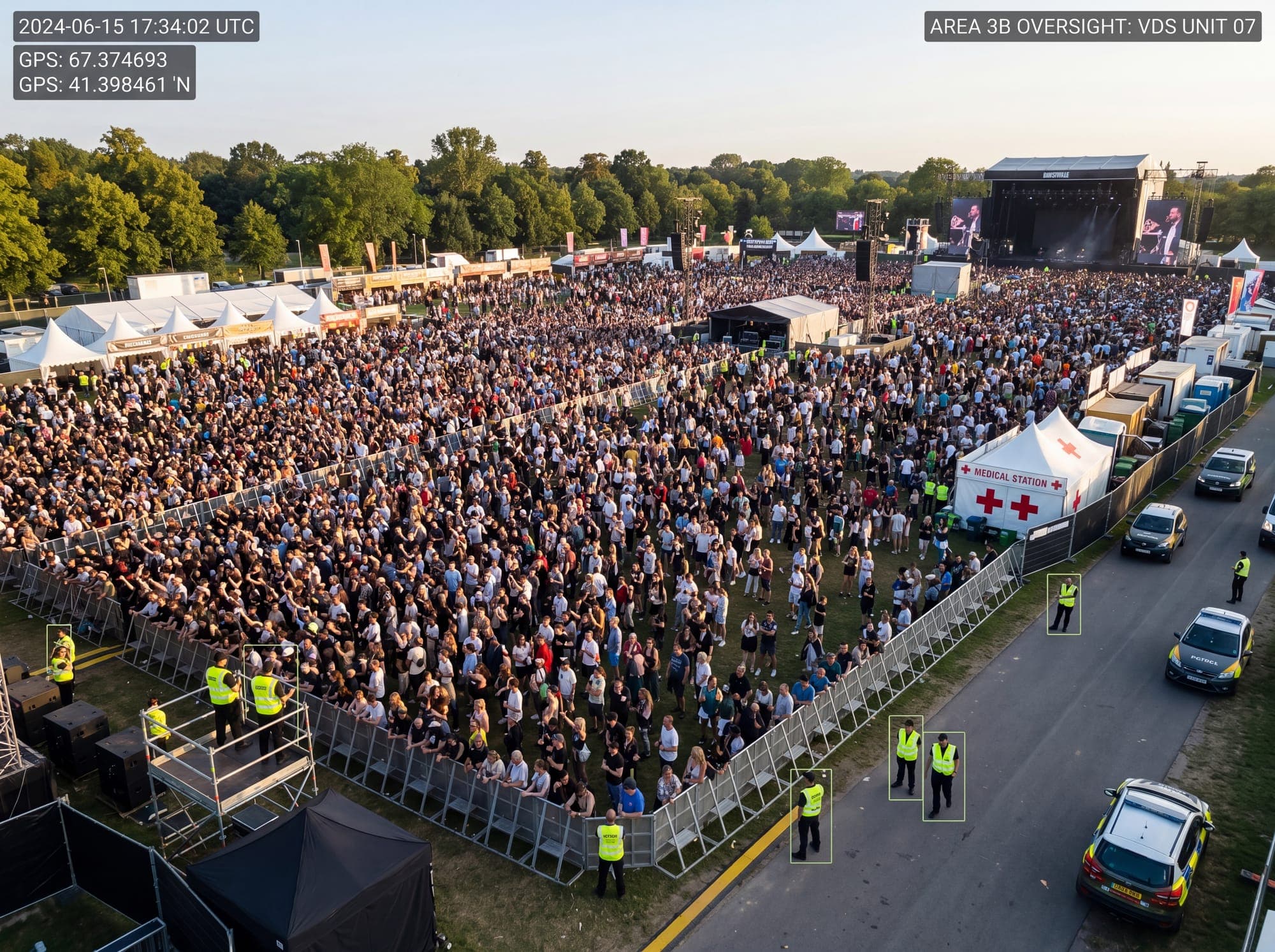
Crowd surges, bottlenecks, and disturbances that escalate before ground-level security can identify the source or scale.
Unauthorized entry
Fence jumpers, fake credentials, and vehicle-borne breaches at perimeter gates — especially at multi-day festivals with temporary fencing.
Parking lot crime
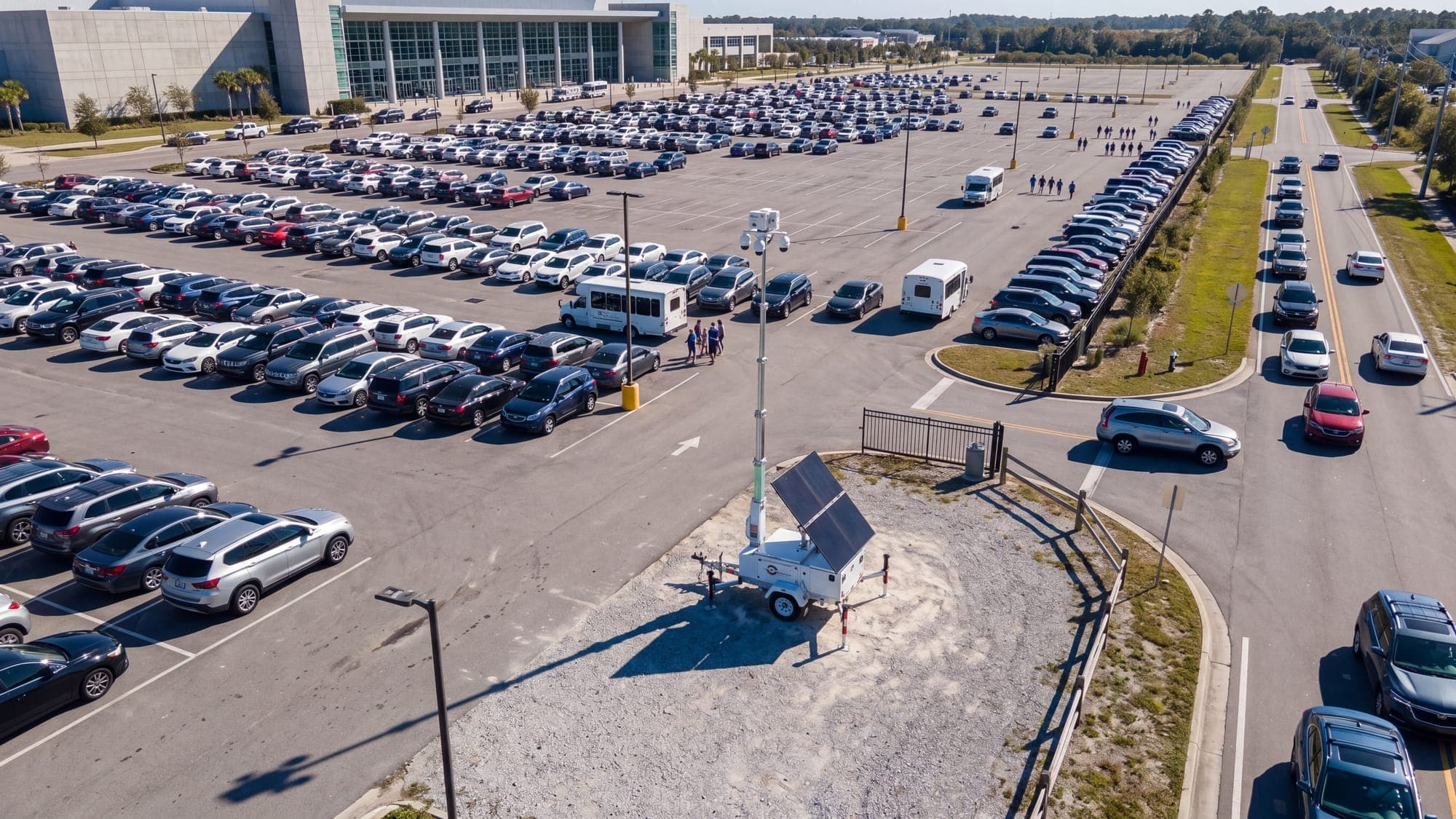
Vehicle break-ins, theft, and assaults in large temporary parking areas with poor lighting and no permanent camera infrastructure.
Equipment theft during setup/teardown
Staging equipment, AV gear, and vendor inventory left exposed during multi-day setup and teardown phases with minimal security.
Deploy in minutes.
Remove when you’re done.
Professional-grade surveillance that arrives with the event and leaves with it. No installation, no infrastructure, no long-term commitment.
Twenty minutes.
Fully operational.
The MSU arrives on a standard trailer hitch, mast raises in minutes, and cameras go live with pre-configured event profiles. SOC monitoring starts immediately. When the event ends, the trailer leaves with you.
- Sub-20-minute deploy on any surface
- Pre-configured event camera profiles
- No trenching, no utility hookup
- Same-day removal after event close
 STEP 01
See the crowd.
Before it becomes a problem.
Elevated 8MP cameras on the 22–30 ft mast provide a bird's-eye view of crowd density, flow patterns, and bottlenecks. The SOC monitors in real time and alerts event staff before disturbances escalate.
- Elevated 22–30 ft vantage point
- Real-time crowd density monitoring
- Bottleneck and flow pattern detection
- Direct radio link to event security staff
 STEP 02
Every plate in the lot.
Every incident documented.
License plate recognition logs every vehicle entering and leaving event parking. Stolen vehicle alerts fire in real time. Post-event evidence packages support law enforcement investigations.
- Automatic plate capture at parking entry/exit
- Stolen vehicle hotlist alerts
- Post-event evidence packages
- Parking lot surveillance with PTZ cameras
 STEP 03
The venue moves.
The security follows.
Solar-autonomous and cellular-connected, the MSU works anywhere there is cellular signal. Fairgrounds, parks, parking lots, open fields — the trailer goes where the event goes and provides professional-grade surveillance without infrastructure.
- Solar-autonomous — no generator needed
- 4G/5G cellular backhaul
- Works on any terrain: grass, gravel, asphalt
- Relocatable between venue zones mid-event
 STEP 04
Every venue. Every event.
One platform.
The MSU adapts to your specific event type. Here are the scenarios event operators deploy for most often.
Music festivals
Multi-day outdoor festivals with large crowds, temporary perimeters, and extensive parking areas requiring continuous monitoring.
Sporting events
Stadium overflow parking, tailgate areas, and temporary venue perimeters for games, tournaments, and racing events.
Corporate events
Large-scale corporate gatherings, conferences, and outdoor meetings with VIP areas and high-value equipment.
Political rallies
Campaign events and political gatherings with crowd safety concerns, perimeter security, and vehicle screening requirements.
Holiday and seasonal events
County fairs, holiday markets, and seasonal attractions with temporary infrastructure and high visitor volume.
Construction staging areas
Temporary project staging areas, equipment laydown yards, and construction site perimeters during active build phases.
Real events.
Real numbers.
Every metric below comes from real VDS event deployments across the United States.
Customer-reported outcomes from VDS deployments. Results vary by site conditions, monitoring configuration, and response protocols. How we measure →
VDS caught three vehicle break-ins in progress on the first night. We use them for every event now.
 MSU-A · FLAGSHIPRAPID DEPLOY · EVENT
The Mobile Surveillance Unit.
Built for temporary venues.
Rapid-deploy crowd monitoring, LPR parking surveillance, and 24/7 SOC monitoring — all from a trailer that deploys in under 20 minutes.
From call
to covered.
In-stock units ship out within 48 hours from our Pikesville plant — and once the trailer reaches the venue, setup takes under 20 minutes.
Event assessment
We review your venue layout, expected attendance, parking plan, and security concerns. Fast quote turnaround.
Profile configuration
Camera presets, crowd monitoring zones, LPR capture points, and alert rules configured for your specific event type and venue layout.
Deploy & activate
Trailer delivered and operational in under 20 minutes. SOC monitoring begins immediately. Repositioned between zones as needed during the event.
Report & remove
Incident report and evidence package delivered within 24 hours. Trailer removed same day. Ready for your next event on demand.
Common questions.
How fast can VDS deploy at a event & temporary site?
A mobile surveillance unit is live in under 20 minutes once it arrives — most event & temporary sites go from first call to monitored coverage in days, not months. In-stock units ship out within 48 hours from our Pikesville plant — and once the trailer reaches the venue, setup takes under 20 minutes.
Do the units need power or internet at the site?
No. VDS units are solar-autonomous with battery storage and connect over cellular (4G/5G), so there is no trenching, no generator refueling schedule, and no dependence on site IT. That is what makes them practical for sites where fixed infrastructure is missing or still under construction.
What happens when the system detects someone after hours?
AI detection classifies the event and filters routine motion before a person ever sees it. A SOC operator verifies the live feed, challenges intruders by voice through 120 dB speakers with strobes, and — when it escalates — dispatches police with live video of the scene.
Which event & temporary security problems does monitored surveillance address?
The most common incidents at event & temporary sites are crowd safety incidents, unauthorized entry, parking lot crime, equipment theft during setup/teardown — the same exposure areas covered in the sections above. Monitored coverage addresses them by making the site actively watched instead of just recorded.
Can VDS work alongside our existing guards or security partner?
Yes — that is the standard model. Monitored surveillance carries the perimeter and after-hours watch, so people — yours or your security partner's — handle verified incidents instead of standing watch over empty hours. The SOC can route verified alerts to your team, your guard provider, or police dispatch.
Secure your event this week.
Tell us your event dates, venue, and expected attendance — we'll quote the deployment — fast.