
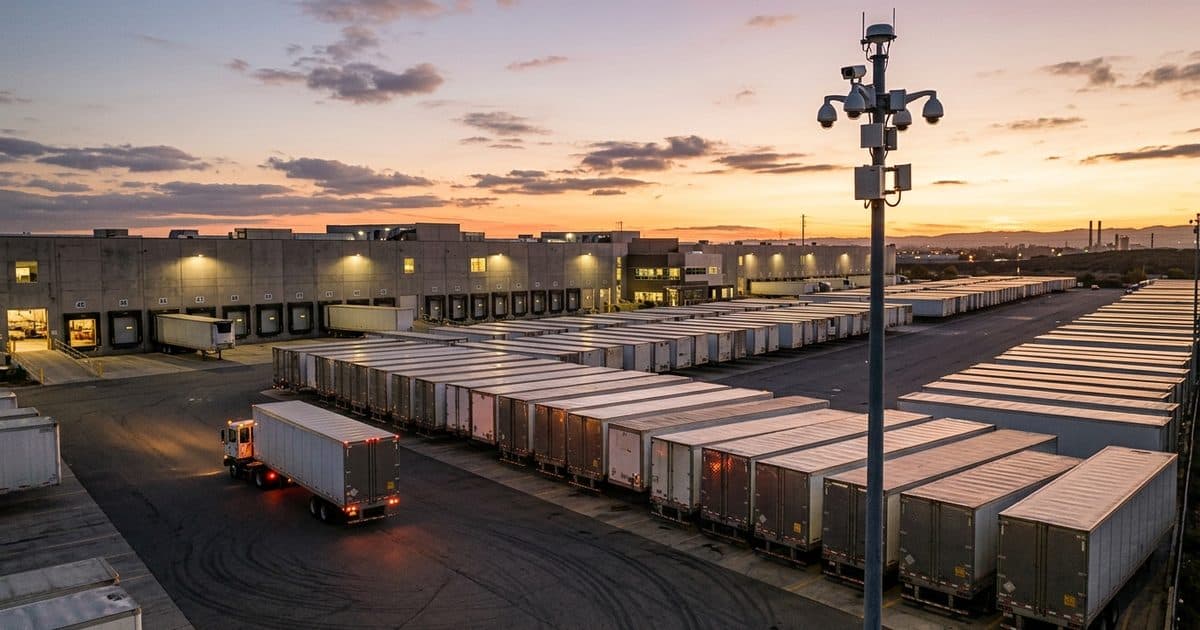
Every dock door is a doorway.Watch all of them at once.
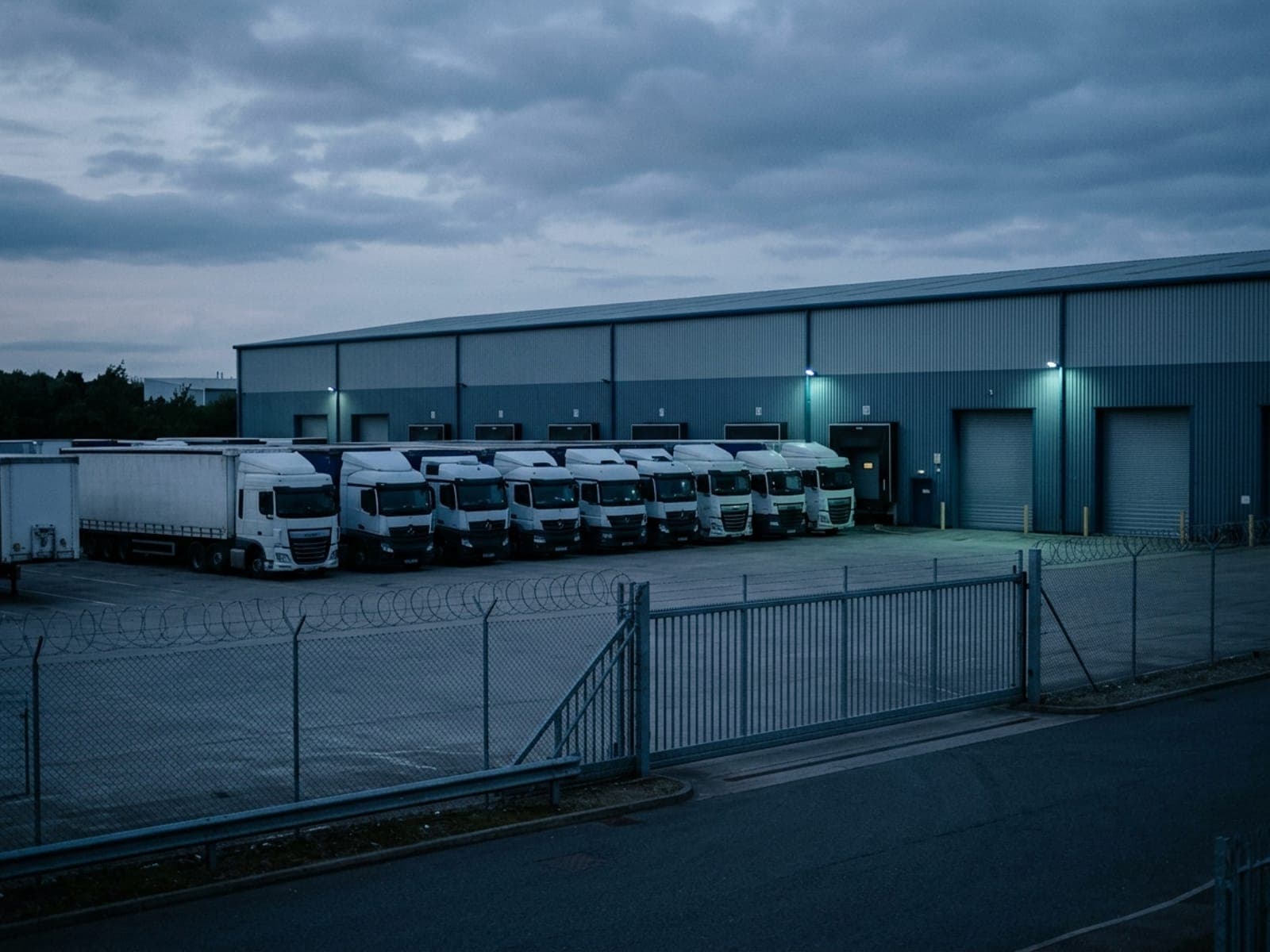
Cargo theft costs the U.S. freight industry billions annually. Distribution yards, loading docks, and trailer staging areas are sprawling, high-value, and chronically under-monitored. VDS covers the entire yard perimeter, every dock door, and every trailer row — 24/7, without a guard force.
Cargo crime is professional, and it is aimed at exactly the ground a distribution operation finds hardest to watch: the yard. Loaded trailers stage overnight between runs; the fence line runs a half-mile around pavement nobody stands on; the dock doors cycle through third-party drivers all day. Strategic theft crews exploit that scale — a tractor hooks a loaded trailer and is gone in minutes, pilferage disappears cartons from staged loads a few at a time, and fictitious pickups walk freight out the front gate with paperwork that looked right at the window.
The operational failure is almost never that nothing was recorded — it is that nothing was watched while it mattered. A yard camera that files footage away produces evidence for a claim that has already been denied or a load that is already in another state. The security model that works in freight is verification at the moment of the event: gate-level control of what tractor, trailer, and plate combination entered; elevated coverage of the staging rows; and a live operator on every after-hours detection, deciding in real time whether the movement at row six is a yard jockey or a theft in progress.
Mobile surveillance units fit yards because yards change. Peak season doubles the trailer pool into an overflow lot; a new contract adds a second shift; a construction phase relocates the staging area. Solar-powered units redeploy as the yard reshapes, LPR ties every gate event to a plate, and the SOC's verified-response loop — talk-down, dispatch with live video, incident documentation — runs on the schedule freight actually runs: nights, weekends, and holidays. One contract covers the fleet of units across every yard, which is how multi-site logistics operators need it to work.
The sections that follow break down cargo-theft patterns at the yard, dock, and gate; the configuration VDS deploys against each; customer-reported results from distribution operations; and the questions yard and security managers ask most — including how coverage flexes through peak season.
Billions in cargo.
Sitting in the yard.
Distribution yards are massive, open, and staffed thinly overnight. Cargo theft crews know the shift schedule better than your team does.
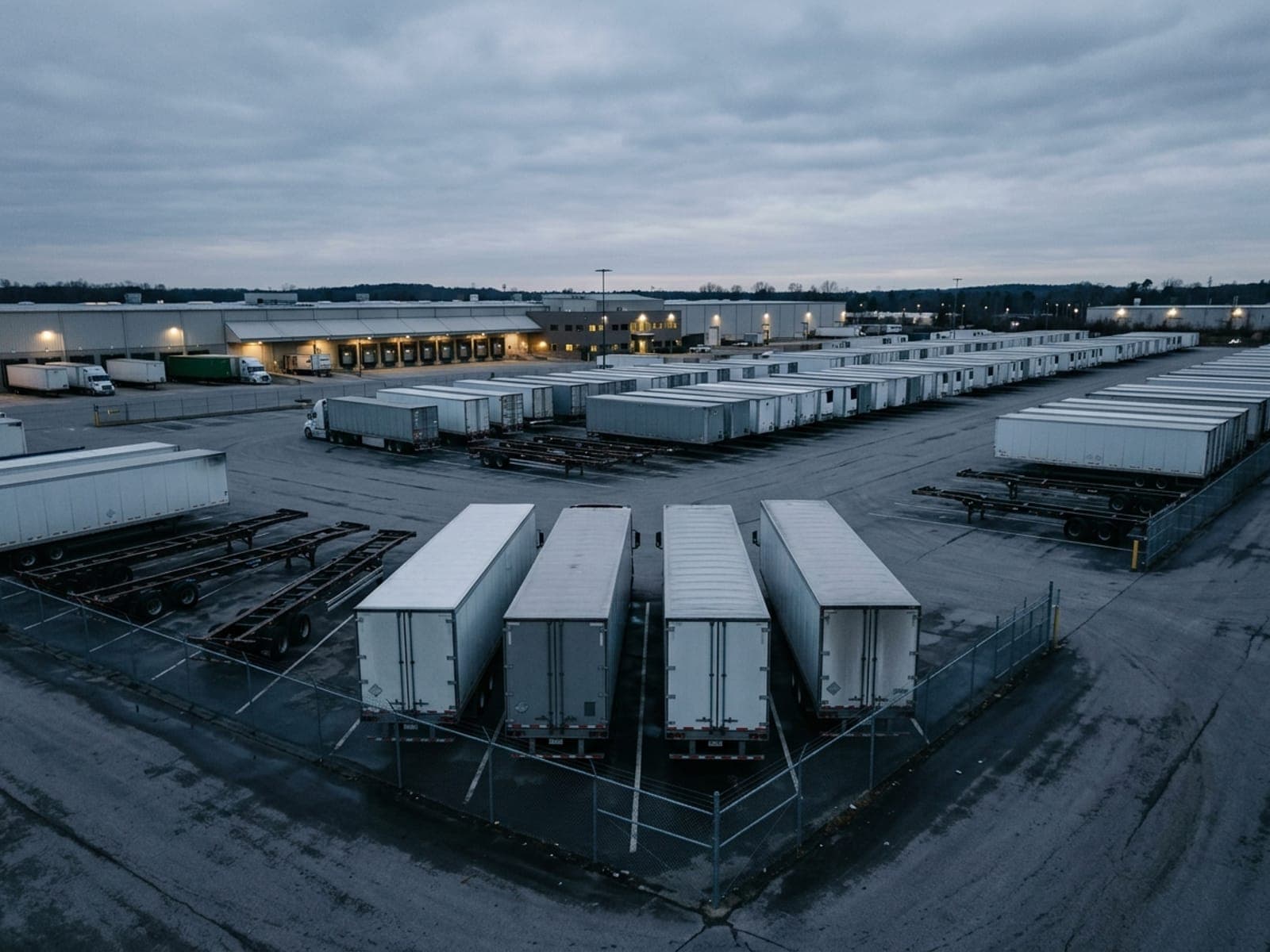
Cargo theft
Full-trailer theft, strategic pilferage, and identity fraud targeting high-value loads. Average loss exceeds $200K per incident.
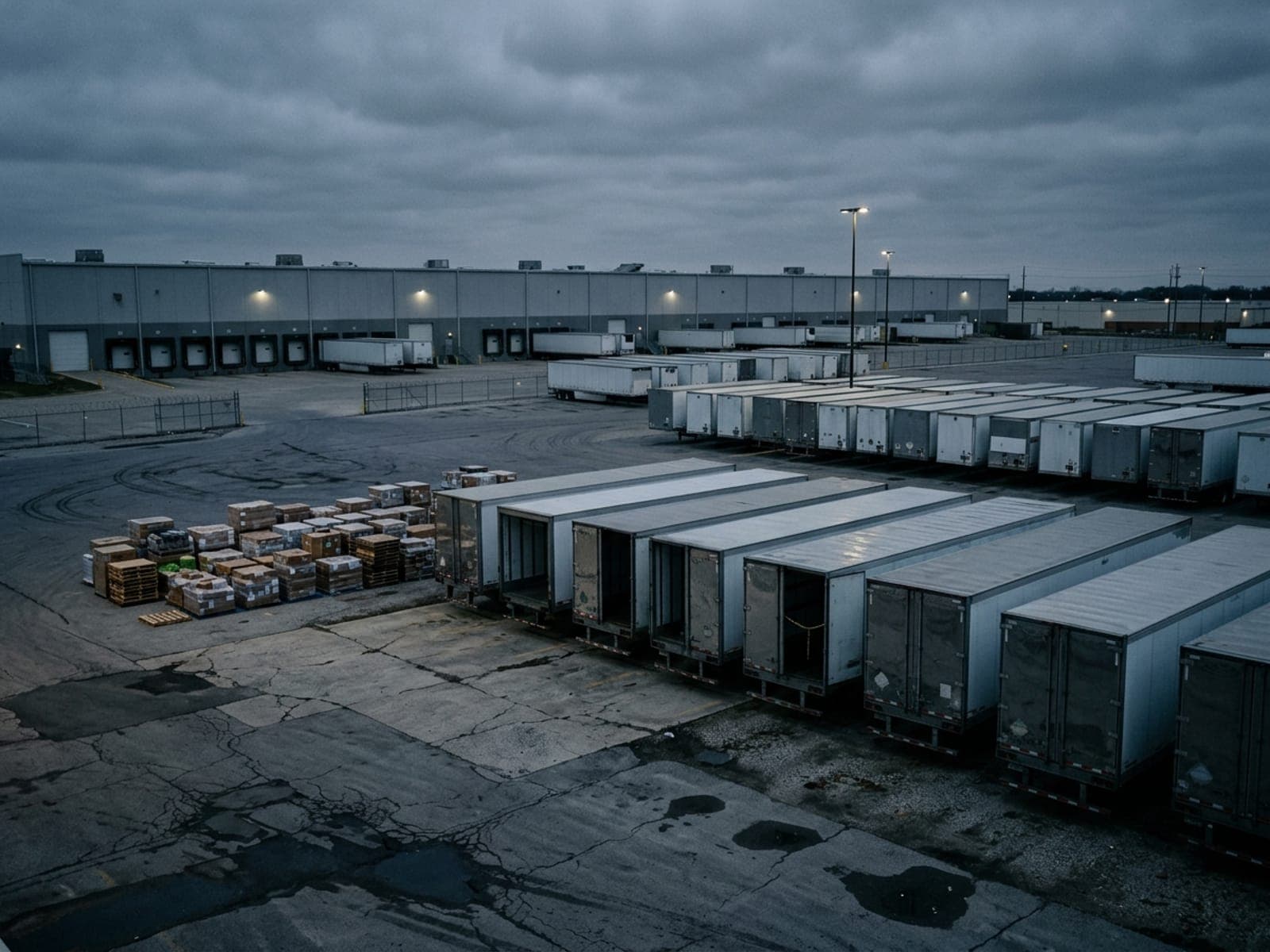
Yard pilferage
Opportunistic theft from unsealed trailers, staged pallets, and overflow inventory parked in the yard overnight.
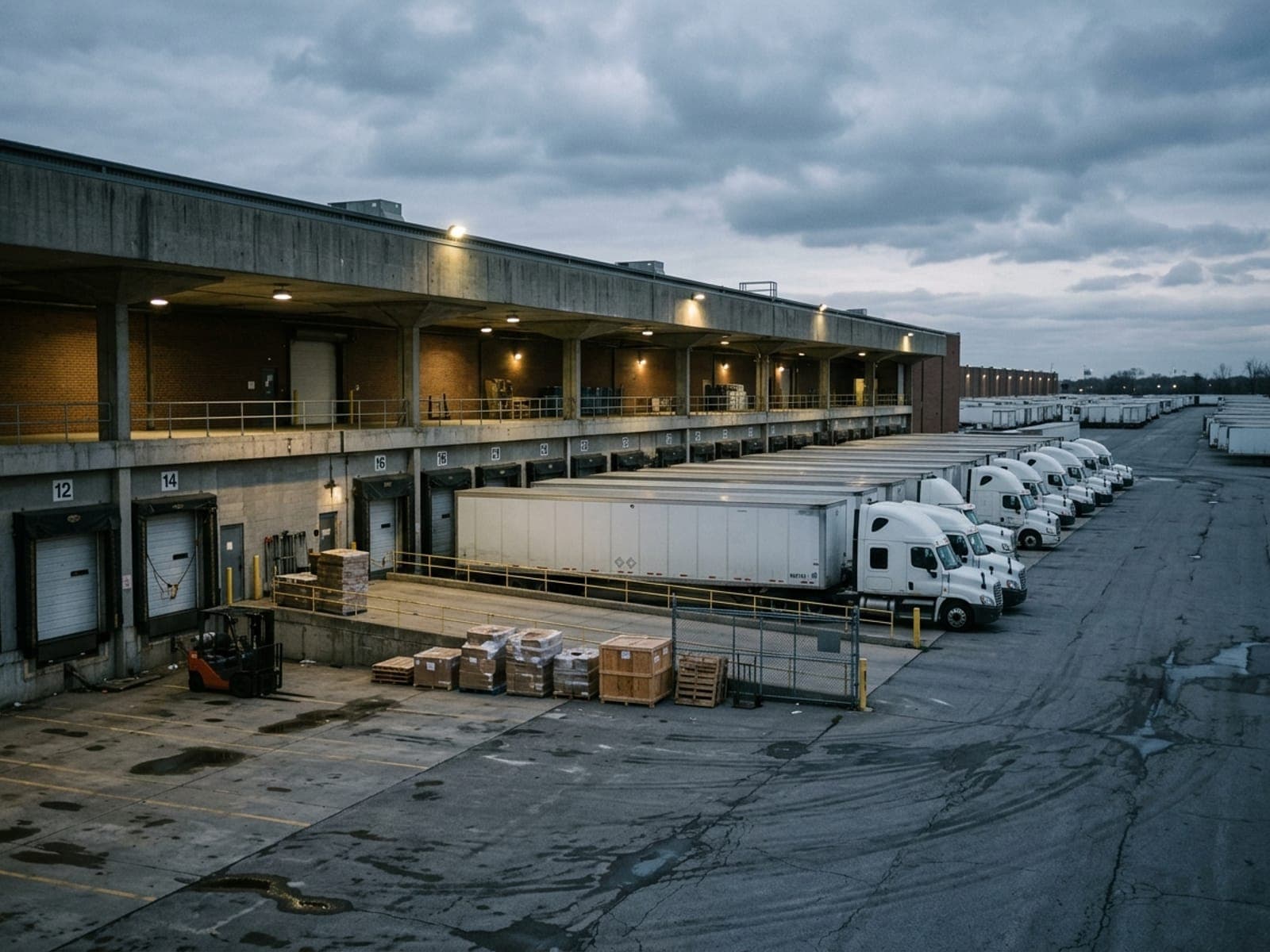
Dock theft
Unauthorized access during shift changes, phantom pickups, and inside jobs at the loading dock. The busiest — and blindest — spot on the property.
After-hours trespass
Fence cuts, gate rams, and walk-in trespass during overnight hours when staffing is minimal or nonexistent.
Perimeter to dock.
Every inch covered.
Sensors detect at the fence line. LPR logs at the gate. AI monitors the dock. The SOC responds in real time. Your cargo stays where you put it.
Fence line to fence line.
Every acre covered.
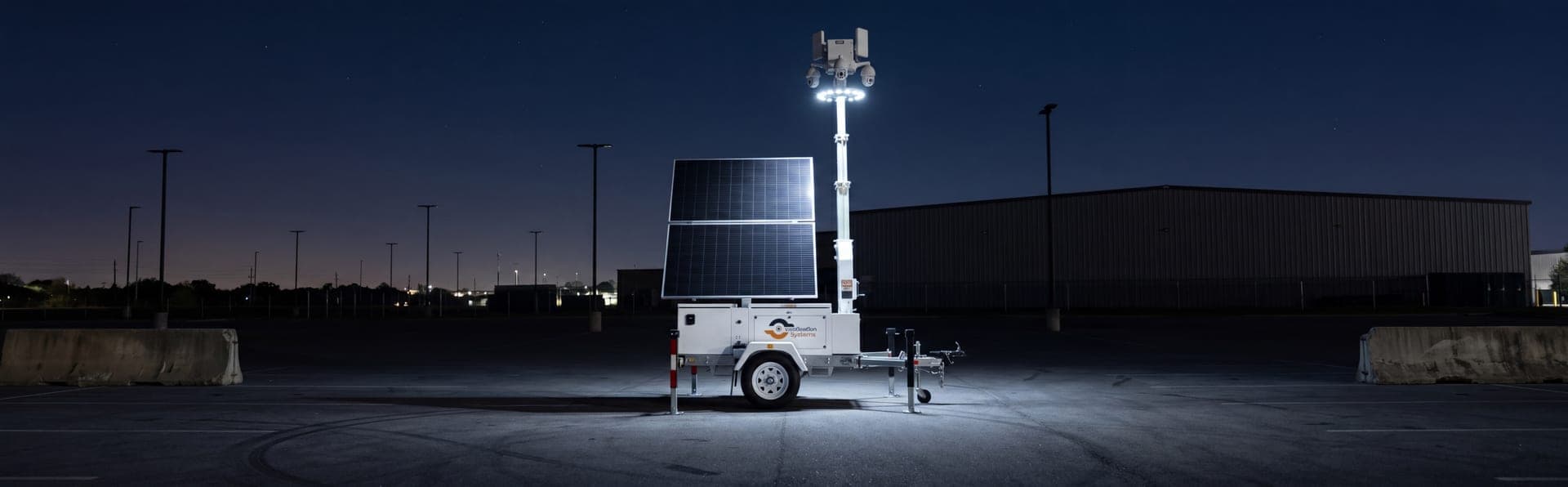
Distribution yards span dozens of acres. The MSU's telescoping 22–30 ft mast and multi-sensor stack covers the full perimeter from strategic positions. Sensors detect and classify approaching targets. PTZ identifies. The SOC responds.
- 30-ft mast covers multi-acre yards
- Multi-sensor perimeter detection
- Fence-line breach and gate-ram alerts
- Multi-unit coordination for large footprints
 STEP 01
Every door. Every pickup.
Every discrepancy.
VDS monitors loading dock activity around the clock. Unauthorized vehicles, phantom pickups, and off-schedule activity trigger immediate SOC alerts. Every dock event is logged with video, plate capture, and timestamp.
- 24/7 dock door monitoring
- LPR capture of every dock visitor
- Unauthorized and off-schedule alerts
- Video-linked BOL verification support
 STEP 02
Staged cargo.
Secured cargo.
High-value loads staged for morning dispatch sit exposed all night. VDS maintains continuous coverage of cargo staging areas, cross-dock zones, and overflow lots — with AI-triggered alerts for any unauthorized approach.
- Cargo staging area monitoring
- Cross-dock zone coverage
- AI person/vehicle detection near loads
- Evidence-grade recording for claims
 STEP 03
Two hundred trailers.
Zero break-ins.
Trailer yards are sprawling and impossible to guard on foot. VDS covers every row from elevated mast positions, detecting unauthorized approach, door-open events, and trailer movement outside of scheduled windows.
- Full trailer yard row coverage
- Door-open and seal-break detection
- Unauthorized trailer movement alerts
- SOC audio deterrence + PD dispatch
 STEP 04
Every yard. Every dock.
One platform.
The MSU adapts to your logistics operation. Here are the scenarios supply chain teams deploy for most often.
Distribution centers
Yard perimeter, dock monitoring, and cargo staging coverage for high-throughput distribution operations.
Freight terminals
LTL and TL terminals with constant trailer movement, high-value loads, and multi-shift staffing gaps.
3PL warehouses
Third-party logistics facilities handling client inventory with contractual security obligations and liability exposure.
Cold storage & food
Temperature-controlled facilities with high-value perishable inventory and strict regulatory chain-of-custody requirements.
Intermodal yards
Container and chassis yards with large footprints, limited fencing, and high-value containerized cargo.
Last-mile hubs
Urban and suburban delivery hubs with package staging, vehicle fleets, and after-hours vulnerability.
Real operators.
Real numbers.
Every metric below comes from a real VDS logistics customer. Names protected per agreement.
Customer-reported outcomes from VDS deployments. Results vary by site conditions, monitoring configuration, and response protocols. How we measure →
We had three cargo theft incidents in the quarter before VDS. Zero in the twelve months since. The yard is a different place at night now.
 MSU-A · FLAGSHIPPERIMETER + LPR · 4G LTE
The Mobile Surveillance Unit.
Built for yard-scale operations.
Perimeter detection, integrated LPR, dock monitoring, and 24/7 SOC coverage — from a single solar-autonomous platform that sets up in under 20 minutes.
From assessment
to covered.
Most logistics customers go from initial conversation to live yard coverage inside 7 business days.
Yard assessment
We review yard layout, dock count, trailer capacity, and threat history. Fast quote turnaround.
Configuration
Multi-unit placement plan, dock zone mapping, LPR configuration, after-hours arming rules, and alert routing set up.
Delivery & commissioning
Trailers delivered and positioned. Sensors calibrated. Dock cameras aligned. SOC monitoring begins immediately.
Account management
Dedicated account manager. Monthly incident reports, dock analytics, and quarterly security reviews.
Common questions.
How fast can VDS deploy at a logistics site?
A mobile surveillance unit is live in under 20 minutes once it arrives — most logistics sites go from first call to monitored coverage in days, not months. Most logistics customers go from initial conversation to live yard coverage inside 7 business days.
Do the units need power or internet at the site?
No. VDS units are solar-autonomous with battery storage and connect over cellular (4G/5G), so there is no trenching, no generator refueling schedule, and no dependence on site IT. That is what makes them practical for sites where fixed infrastructure is missing or still under construction.
What happens when the system detects someone after hours?
AI detection classifies the event and filters routine motion before a person ever sees it. A SOC operator verifies the live feed, challenges intruders by voice through 120 dB speakers with strobes, and — when it escalates — dispatches police with live video of the scene.
Which logistics security problems does monitored surveillance address?
The most common incidents at logistics sites are cargo theft, yard pilferage, dock theft, after-hours trespass — the same exposure areas covered in the sections above. Monitored coverage addresses them by making the site actively watched instead of just recorded.
Can VDS work alongside our existing guards or security partner?
Yes — that is the standard model. Monitored surveillance carries the perimeter and after-hours watch, so people — yours or your security partner's — handle verified incidents instead of standing watch over empty hours. The SOC can route verified alerts to your team, your guard provider, or police dispatch.
Secure your yard this week.
Tell us the yard acreage, dock count, and trailer capacity — we'll quote the deployment — fast.