
An important limit up front
Video-based detection is not a fire alarm system. Smoke detectors, heat detectors, sprinklers, fire alarm panels, extinguishers and any required fire watch exist because codes and inspectors require them. A camera does not satisfy those requirements, and no camera should be treated as a substitute for them.
What video detection can do is add another layer: an extra set of eyes on areas and hours where conventional protection is thin. Confirm what your site must have with your fire marshal, insurer or authority having jurisdiction, and treat video as an addition to that baseline.
How video fire and smoke detection works
Conventional detectors sense smoke, heat or gas at the device. Video detection sees the event from a distance. The analytics look at each frame, and across frames, for patterns that suggest fire:
- Flame cues. Color, flicker and the way a bright area changes shape over time.
- Smoke cues. Gray or dark plumes that rise, spread and drift in a way that differs from fixed objects.
- Change over time. Fire and smoke move and grow, which helps distinguish them from static lights.
When the software finds a match it raises an alert, ideally with a clip or image so a person can verify it. Because the camera sees outdoors and across large spaces, it can notice a fire that has not yet reached any point detector.
Where it adds value
| Place | Why video can help |
|---|---|
| Construction sites | Hot work, temporary power and material piles in open areas |
| Yards and lots | Stored goods, pallets, vehicles and equipment spread over a wide space |
| Recycling and scrap sites | Piles that can smolder, outdoors where detectors do not reach |
| Large buildings | Areas with high ceilings or open spans |
| Remote or vacant sites | No one nearby to notice smoke |
| Perimeters and vegetation edges | Fire approaching from outside the site |
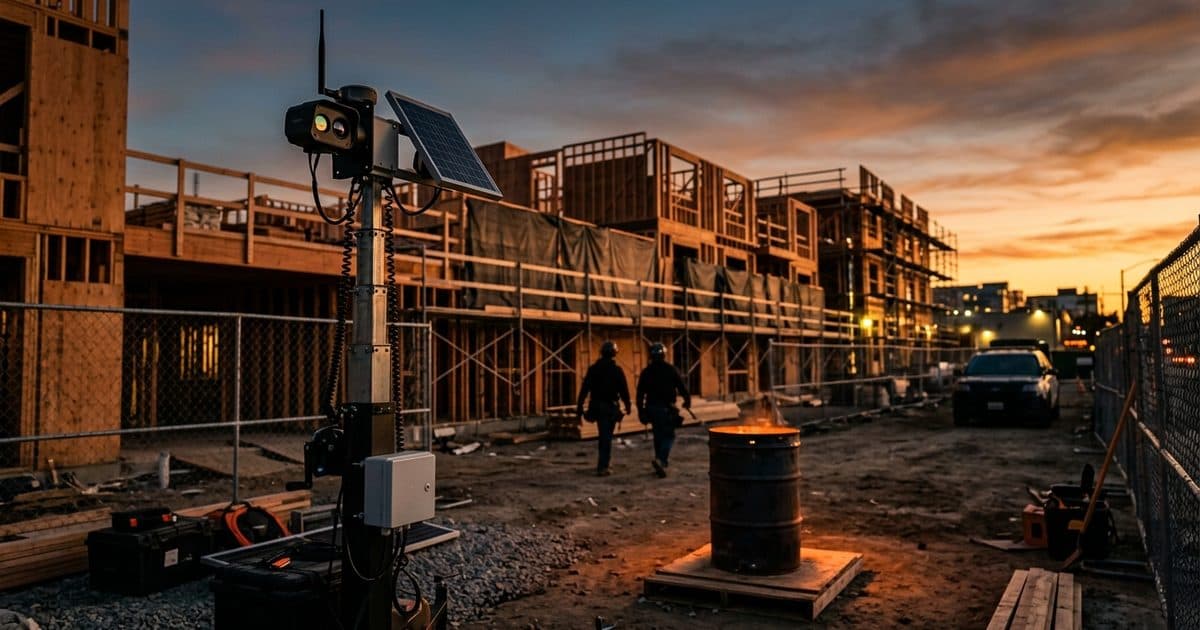
On construction sites in particular, fire protection systems may not be fully installed yet, and temporary conditions raise risk. Our guide to construction site fire watch covers that setting in more detail.
What video detection cannot do
An honest view of limits is more useful than a sales claim.
- It can miss a fire. Smoke or flame outside the camera's view, blocked by objects, or too small and far away may not be seen.
- Conditions matter. Rain, fog, glare, darkness and distance all affect what a camera sees and what the software can judge.
- It cannot detect everything. A smoldering fire inside a wall, or one that produces little visible smoke, may not appear on camera at all.
- It cannot fight a fire. It can only help someone notice sooner.
- It does not meet code. It does not stand in for required alarms, sprinklers or fire watch.
False alarms
Software that watches for smoke and flame has to avoid mistaking harmless things for fire. Common triggers include:
- Steam from vents and equipment
- Dust from vehicles and demolition
- Exhaust plumes from generators and trucks
- Fog, mist and low cloud
- Sun glare and reflections
- Welding, flashing lights and brake lights at night
Good systems reduce these with tuning, defined zones and a person who verifies the video before anyone is called. Ask a provider how they handle false positives, and read our piece on reducing false alarms in video analytics. An alert that no person reviews can wake people for steam, and over time teams stop trusting it.
What happens after an alert
The alert matters only if the response is clear. Before you rely on video detection, decide:
- Who sees the alert, and at what hours?
- How is it verified, and how fast?
- Who is called, in what order, and with what information?
- When does verification lead to a call to emergency services?
- What is the on-site procedure, including safe evacuation?
Write the procedure down and rehearse it. Video can shorten the time to notice, but the response plan determines what happens next.
Why camera placement and lighting matter
Video detection depends on the camera seeing the right area, so placement is part of the design. Some points to consider:
- Cover the risk areas. Aim cameras at storage piles, hot work areas, electrical equipment and fuel or chemical storage, not just at fences and gates.
- Allow for distance. A fire or smoke plume far from the camera appears small, and small signs are harder to judge. Mounting higher widens the view but reduces fine detail.
- Think about night. Flames are bright and easy to see in the dark, but smoke is hard to see without light, and a camera may rely on infrared in low light.
- Avoid known confusers. If a vent, chimney or exhaust sits in the view, mask it or place the zone around it.
- Plan for wind and weather. Wind can push smoke out of frame, and rain or fog can hide it.
Review the camera views regularly. A tree that has grown, a stack of material or a parked trailer can quietly block the view that detection depends on.
Questions to ask a provider
- What conditions is the detection tested for, and where does it struggle?
- Does a person verify alerts, and where are they located?
- How are steam, dust and glare handled?
- What do I receive with an alert: image, clip, location?
- How does this fit with the fire protection my site is required to have?
- Can it run at a site with no power or internet?
How VDS fits
VDS's platform has a fire and smoke analytics page alongside its AI detection for people, vehicles, loitering, objects and license plates. Alerts are verified by the 24/7 US-based security operations center, so cameras do the watching and people, yours or your security partner's, handle verified incidents.
A solar-powered mobile surveillance unit needs no site power, internet or trenching and uses dual-SIM 4G/5G cellular, which suits construction and remote sites where conventional detection is limited. Video detection from VDS supplements the fire protection your site is required to have. See remote video monitoring or talk to our team.