
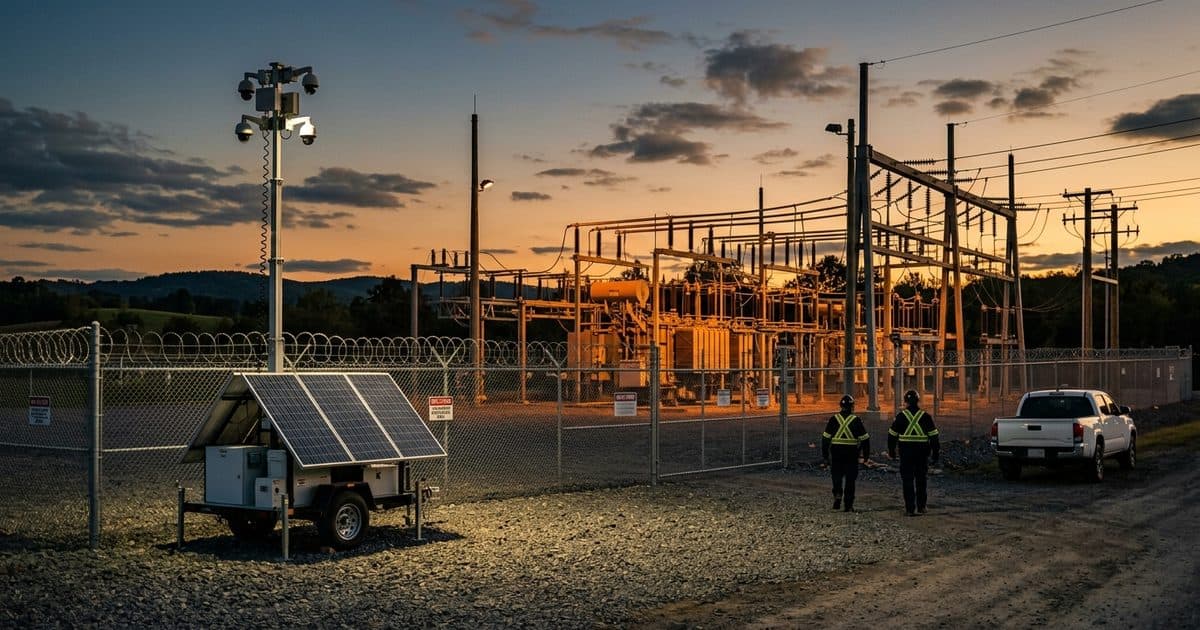
Substations don't have guards.They have trailers.
Remote substations and utility infrastructure sit exposed around the clock. Copper theft alone costs U.S. utilities hundreds of millions per year. VDS deploys layered perimeter surveillance, documents NERC CIP-014 compliance, and puts a live SOC operator on every alert — no shift gaps, no dark hours.
Substation security has a geometry problem before it has a technology problem. A regional utility might operate dozens of substations spread across hundreds of miles, most of them unmanned, many of them at the end of an access road nobody drives after dark. Copper thieves know this — ground grid, bus bar, and conductor cable can be stripped in under an hour, and the scrap value that motivates the theft is trivial next to the outage it causes and the switchgear damage left behind. Fencing and signage document the perimeter; they do not watch it.
The regulatory layer makes passive recording insufficient on its own. NERC CIP-014 asks owners of critical transmission stations to assess threats, harden perimeters, and document that the protection actually operates. A camera that nobody monitors produces footage for the post-incident report; a monitored perimeter produces an intervention — detection at the fence line, a live operator verifying the approach, a talk-down before the cut, and an audit trail that shows the program working. That difference — response versus retrieval — is what a compliance reviewer and an insurance underwriter both look for.
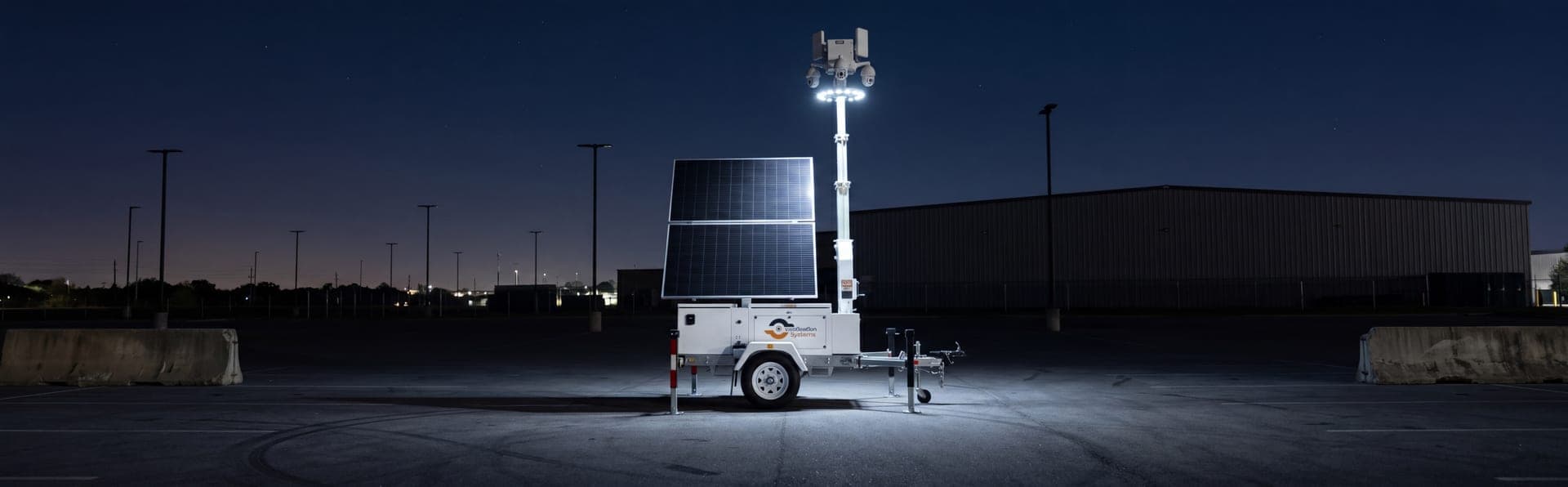
This is the deployment profile mobile surveillance was built for. A solar-powered unit needs no station power tap, no trenching inside the energized yard, and no construction window — it arrives on a trailer, the mast goes up, and coverage starts the same day. Optional thermal imaging and ground radar extend detection past the fence line for CIP-014 sites. And because the units relocate, a utility can rotate hardened coverage across its most-targeted stations as threat patterns move, instead of buying a permanent installation for every site at once.
The sections below map the specific threat surfaces — conductor theft, transformer vandalism, CIP-014 documentation gaps — to the sensor and monitoring configuration VDS deploys against each, along with customer-reported outcomes from utility deployments and the questions substation-security teams most often ask before a first unit lands.
One substation hit
can black out an entire region.
Remote locations, unmanned facilities, high-value copper, and 12–18 month transformer lead times make substations uniquely attractive — and uniquely vulnerable.
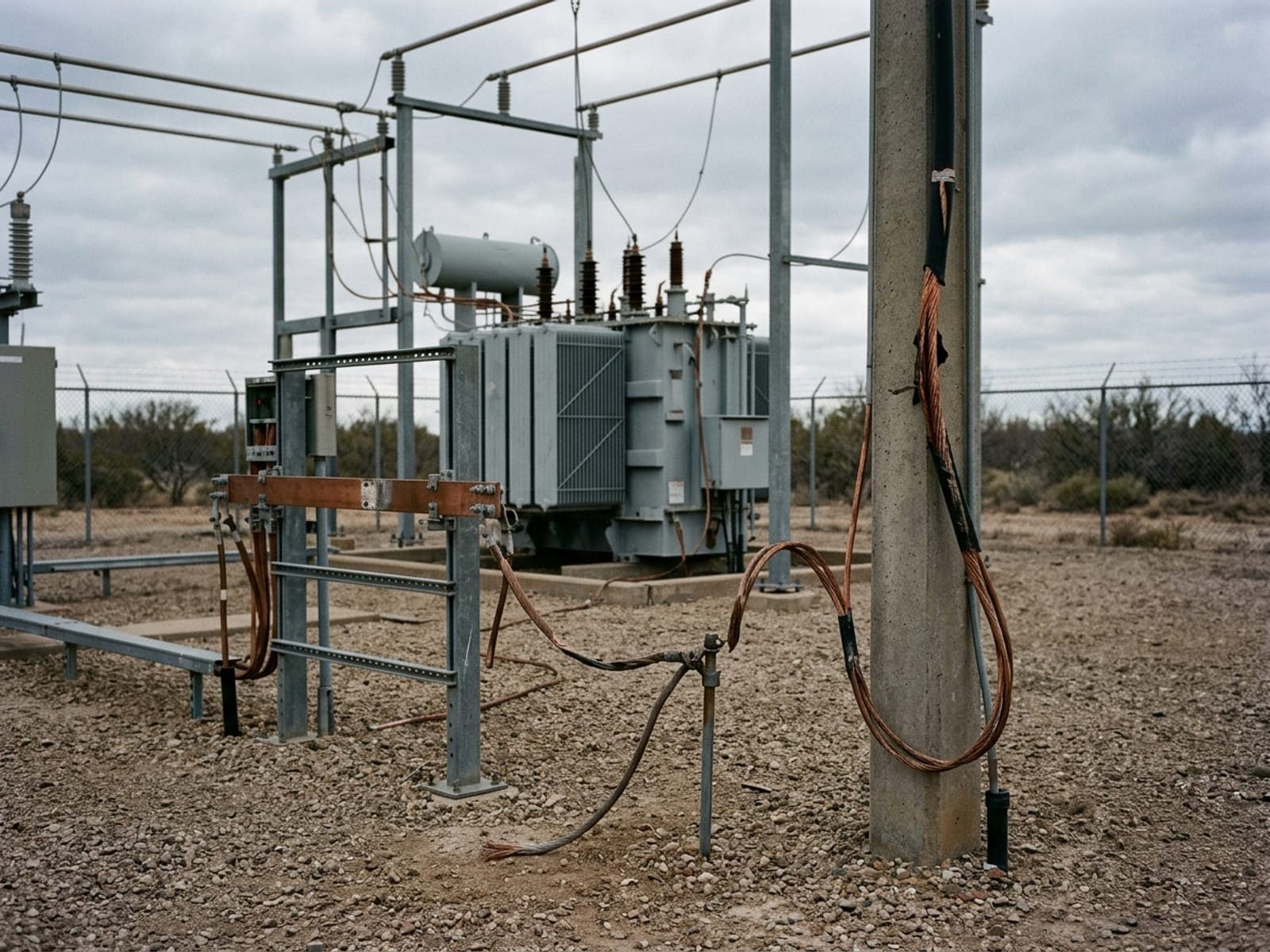
Copper & conductor theft
Ground wire, bus bar, and conductor cable stripped for scrap. A single incident can black out thousands.
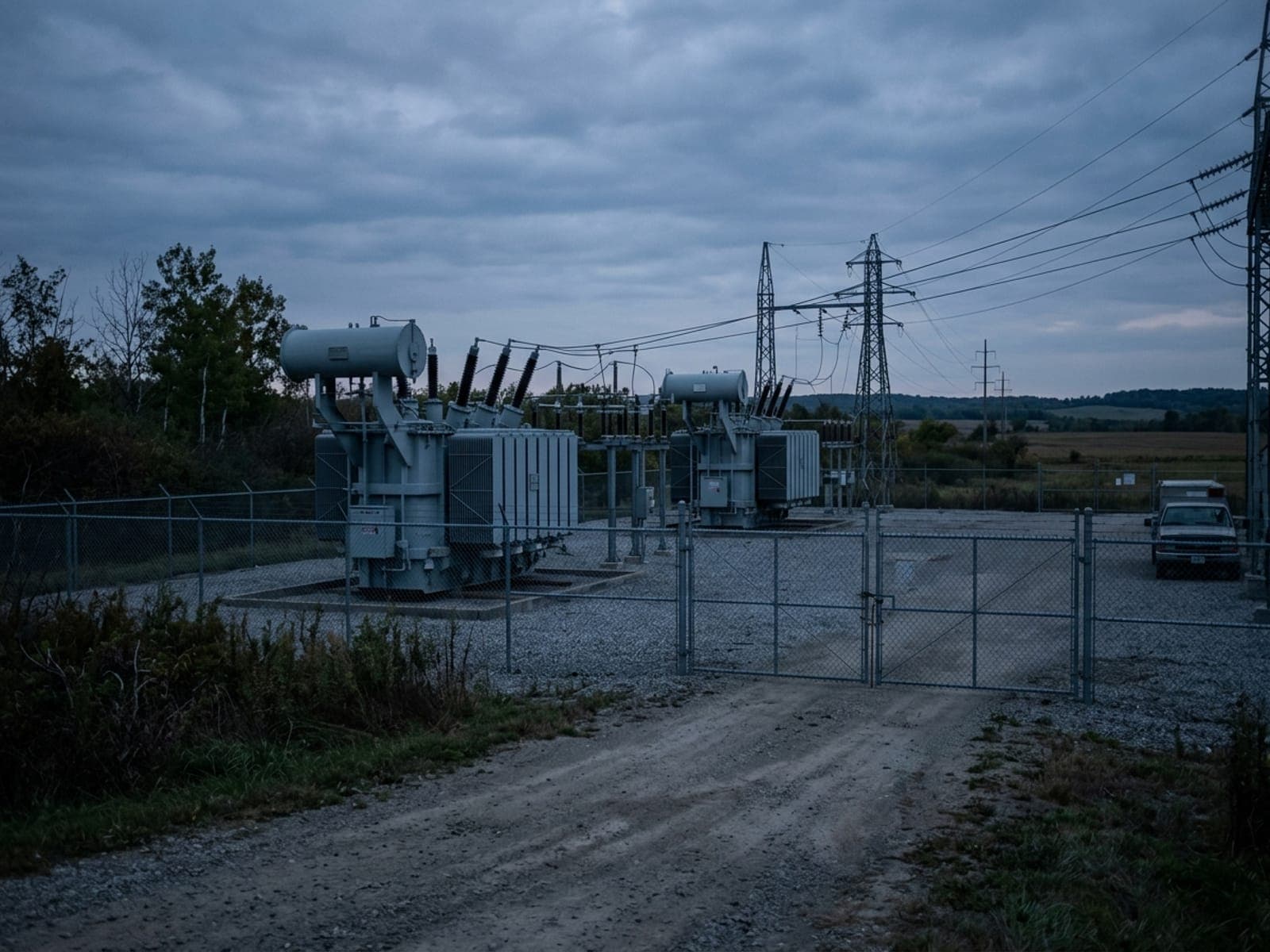
Transformer vandalism
Gunfire, forced entry, and intentional damage to HV transformers — 12–18 month replacement lead times.
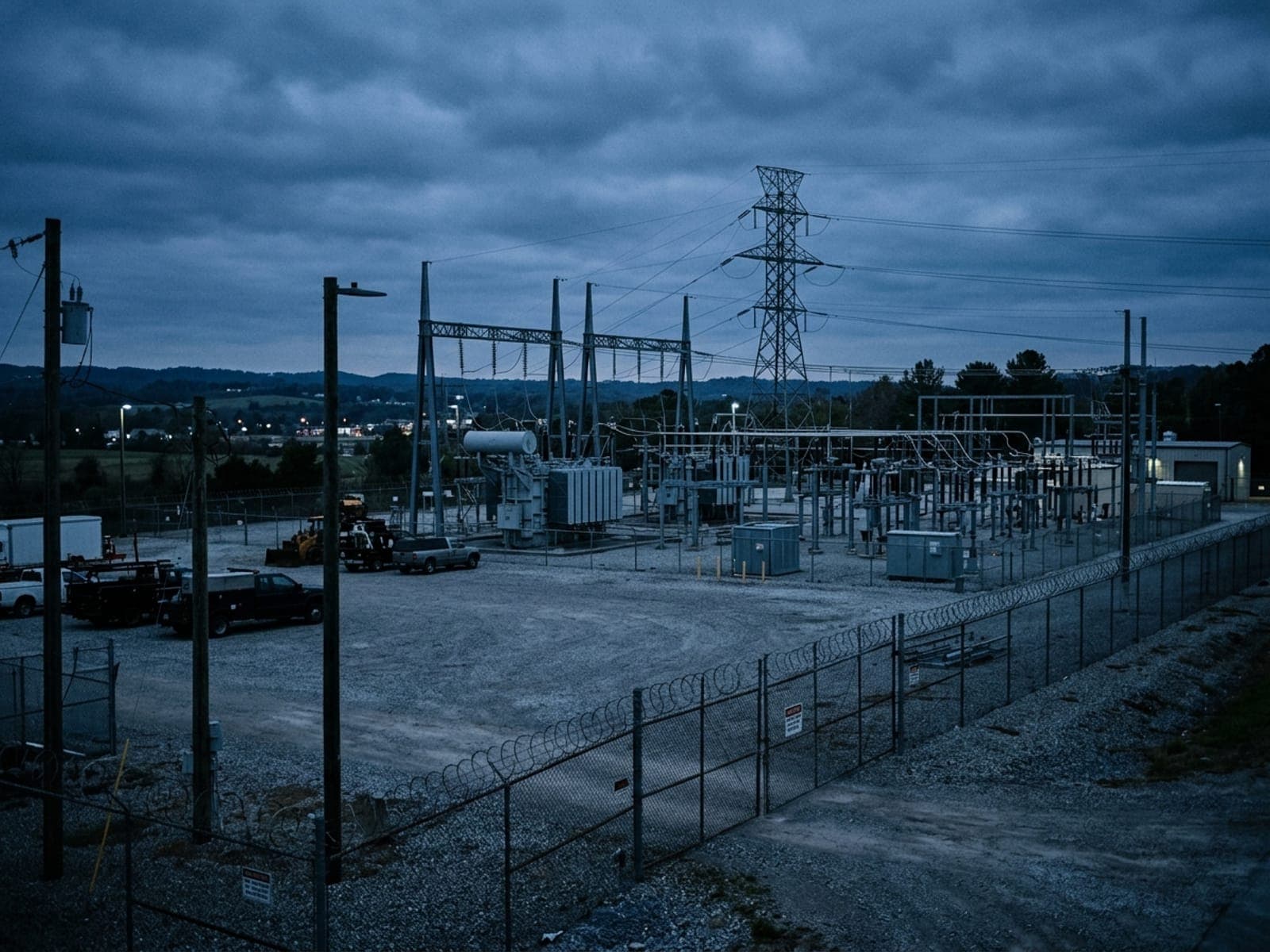
NERC CIP-014 gaps
Physical security plans require documented threat assessment, monitoring, and response — or face six-figure penalties.
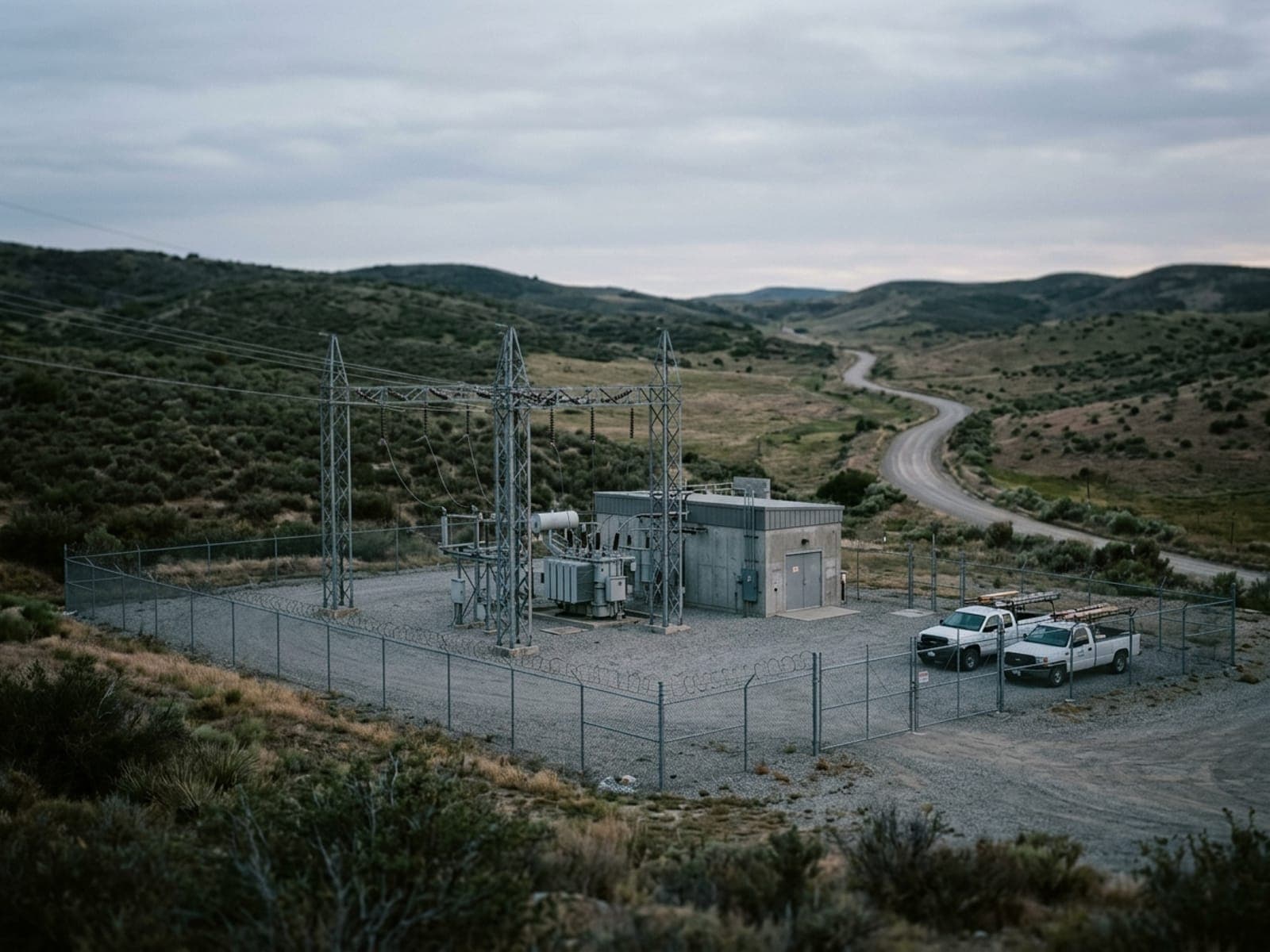
Remote location vulnerability
Miles from the nearest PD. Response times measured in hours, not minutes. Criminals know the math.
Detection happens at the perimeter.
The SOC stops them cold.
Multi-sensor fusion detects, classifies, and tracks targets before they breach the perimeter. The SOC verifies every alert and escalates in real time.
See through darkness,
fog, and foliage.
The MSU combines multiple sensor types — including optional thermal, radar, and the 25× PTZ camera — to detect and classify targets before they reach the fence line. The SOC sees intruders while they're still outside the perimeter.
- Multi-sensor detection and classification
- Works in zero-light, fog, rain, and dust
- Automatic sensor-to-camera handoff
- Optional sensors include thermal, radar; 25× PTZ standard
 STEP 01
Compliance isn't a checkbox.
It's a deliverable.
VDS provides the physical security monitoring, documentation, and audit trail required by NERC CIP-014. Incident logs, response records, and system health reports are generated automatically and stored immutably.
- Physical security plan documentation
- Immutable incident and response logs
- Quarterly compliance reporting
- Audit-ready evidence retention
 STEP 02
Fence line to control room.
In real time.
When sensors detect a target approaching the perimeter, the SOC receives a composite alert — detection track, thermal image, and 25× PTZ lock-on. Operators verify and escalate before the intruder breaches the fence.
- Multi-sensor alert fusion
- Real-time SOC verification
- Live talk-down via amplified speakers
- Direct PD dispatch with streaming video
 STEP 03
No shift gaps. No dark hours.
No overtime.
Substations are unmanned by design. VDS keeps them monitored 24/7/365 without hiring, scheduling, or managing a guard force. Solar power and cellular connectivity mean zero infrastructure dependency.
- Solar-autonomous — no utility power needed
- 4G/5G cellular backhaul
- Zero staffing overhead
- Relocatable as grid topology changes
 STEP 04
Every asset on the grid.
One platform.
The MSU adapts to your specific infrastructure. Here are the scenarios utility operators deploy for most often.
Transmission substations
CIP-014 critical substations with high-voltage transformers, conductor bus, and ground wire at risk of theft or sabotage.
Distribution substations
Smaller, more numerous, and often in semi-rural locations. Copper theft is the primary threat vector.
Solar & wind farms
Perimeter monitoring for renewable generation assets spread across hundreds of acres with limited physical access control.
Switching stations
Critical grid junctions where unauthorized access or vandalism can cascade into regional outages.
Transmission corridors
Right-of-way monitoring along high-value transmission lines for conductor theft and tower tampering.
Battery storage sites
Emerging BESS installations with high-value lithium assets and fire risk from unauthorized entry.
Real utilities.
Real numbers.
Every metric below comes from a real VDS utility customer. Names protected per agreement.
Customer-reported outcomes from VDS deployments. Results vary by site conditions, monitoring configuration, and response protocols. How we measure →
We have bought standard trailers in the past that ended up sitting in storage because they were too complicated to maintain. The VDS units are the exact opposite. They are rugged, easily integrated directly into our existing VMS, and the proactive hardware support ensures they actually stay deployed in our high-risk zones. It is a true force multiplier for our understaffed team.
 MSU-A · FLAGSHIPMULTI-SENSOR · CIP-014
The Mobile Surveillance Unit.
Built for unmanned substations.
Layered perimeter detection, NERC CIP-014 documentation, and 24/7 SOC monitoring — all from a single solar-autonomous trailer.
From assessment
to covered.
Most utility customers go from initial conversation to a live trailer at the substation inside 7 business days.
Threat assessment
We review substation layout, NERC classification, perimeter geometry, and existing security measures. Fast quote turnaround.
Sensor configuration
Detection zones, camera presets, alert rules, and CIP-014 documentation templates configured for your specific substation topology.
Delivery & commissioning
Trailer delivered, mast raised, sensors calibrated. SOC monitoring begins immediately. No trenching, no utility power hookup required.
Compliance reporting
Monthly incident reports, quarterly compliance summaries, and annual CIP-014 audit packages delivered automatically.
Common questions.
How fast can VDS deploy at a utility site?
A mobile surveillance unit is live in under 20 minutes once it arrives — most utility sites go from first call to monitored coverage in days, not months. Most utility customers go from initial conversation to a live trailer at the substation inside 7 business days.
Do the units need power or internet at the site?
No. VDS units are solar-autonomous with battery storage and connect over cellular (4G/5G), so there is no trenching, no generator refueling schedule, and no dependence on site IT. That is what makes them practical for sites where fixed infrastructure is missing or still under construction.
What happens when the system detects someone after hours?
AI detection classifies the event and filters routine motion before a person ever sees it. A SOC operator verifies the live feed, challenges intruders by voice through 120 dB speakers with strobes, and — when it escalates — dispatches police with live video of the scene.
Which utility security problems does monitored surveillance address?
The most common incidents at utility sites are copper & conductor theft, transformer vandalism, nerc cip-014 gaps, remote location vulnerability — the same exposure areas covered in the sections above. Monitored coverage addresses them by making the site actively watched instead of just recorded.
Can VDS work alongside our existing guards or security partner?
Yes — that is the standard model. Monitored surveillance carries the perimeter and after-hours watch, so people — yours or your security partner's — handle verified incidents instead of standing watch over empty hours. The SOC can route verified alerts to your team, your guard provider, or police dispatch.
Secure your substations this week.
Tell us how many substations, their NERC classification, and your compliance timeline — we'll quote the deployment — fast.