
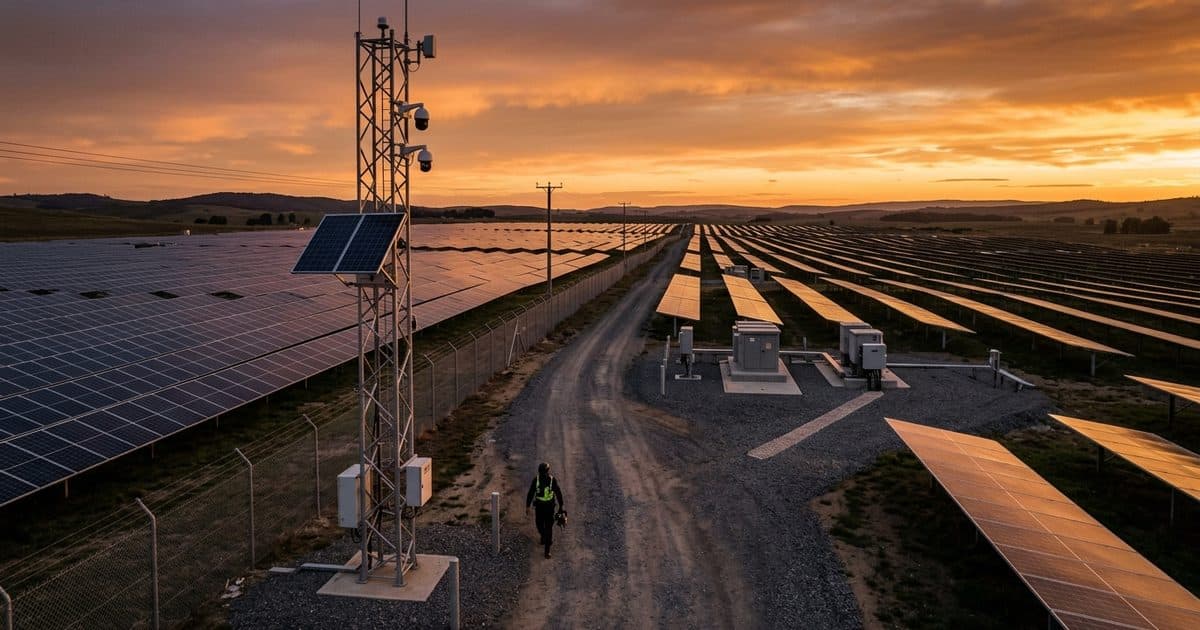
A solar farm defends itselfwhen the security runs on sun too.
Solar farms, wind sites, and battery storage facilities sprawl across hundreds of acres with minimal fencing and zero on-site staff. Panel theft, copper wire stripping, and construction-phase vandalism cost renewable developers millions per project. VDS deploys solar-autonomous surveillance at the perimeter and puts a live SOC operator on every alert.
A utility-scale solar farm is a security contradiction: hundreds of acres of high-value electrical equipment, financed to the megawatt-hour, protected in most cases by an agricultural fence. Copper feeder runs between inverter pads are the recurring target — stripped conductor stops production, and the replacement labor costs multiples of the metal. Panel theft hits during the construction phase while pallets sit staged; battery storage sites add equipment whose loss is measured in interconnection deadlines, not just replacement cost. And every incident lands on an asset whose revenue model assumed uptime.
Renewable sites have a security constraint most industries don't: almost nobody is supposed to be there. A substation crew visits; an O&M tech drives the rows monthly; otherwise, any human presence after dark is an anomaly by definition. That makes these sites unusually good candidates for AI-verified monitoring — the baseline is quiet, so detection is clean, and a live operator can treat every verified person on site as an event worth a response. It also makes them poor candidates for staffing-based coverage: the acreage is too large, the location too remote, and the schedule too empty to post a person against.
During construction, mobile surveillance units secure the laydown yard and staging rows from the first delivery, then redeploy across the energized array as the site transitions to operations — no trenching through the array, no dependence on the site's own power during commissioning. Elevated masts see down the rows; optional thermal and radar extend detection across open ground; and the SOC's verified response — talk-down through the unit, dispatch with live video — reaches a fence line no patrol economically could. Asset owners get the incident and uptime documentation their financing and insurance reviews ask for.
The rest of the page maps construction-phase and operations-phase threats to the deployed configuration, covers customer-reported outcomes from renewable-energy sites, and answers the questions asset managers and EPCs most often ask about coverage across large arrays, power independence, and interconnection-deadline risk.
Hundreds of acres.
Millions in copper lying in the sun.
Remote locations, minimal fencing, high-value copper wiring, and zero on-site staff make solar and wind farms a growing target for organized theft crews.
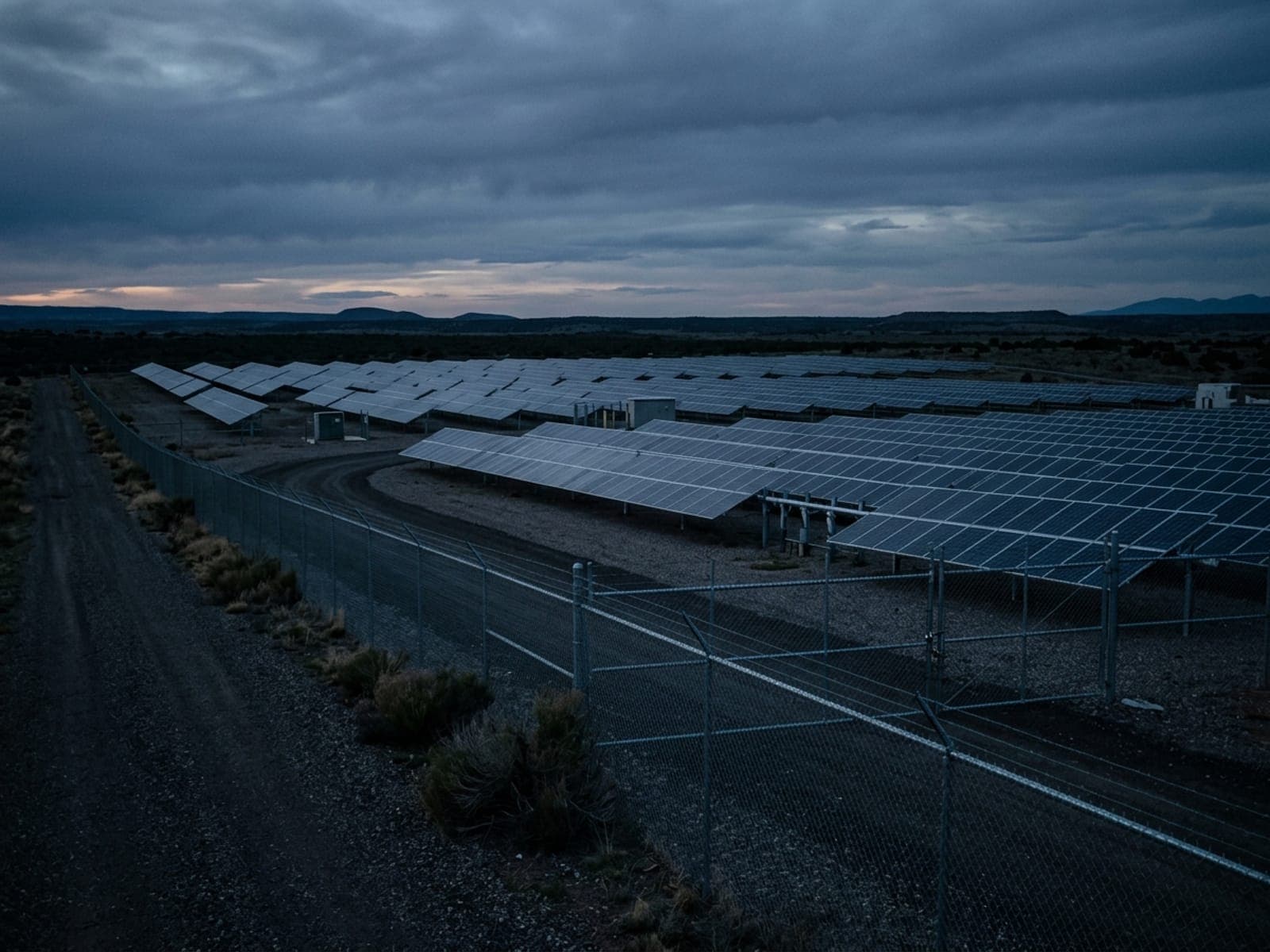
Panel theft from solar farms
Organized crews back trucks up to the fence line and strip entire rows of panels overnight. Each panel is worth hundreds; a row is worth tens of thousands.
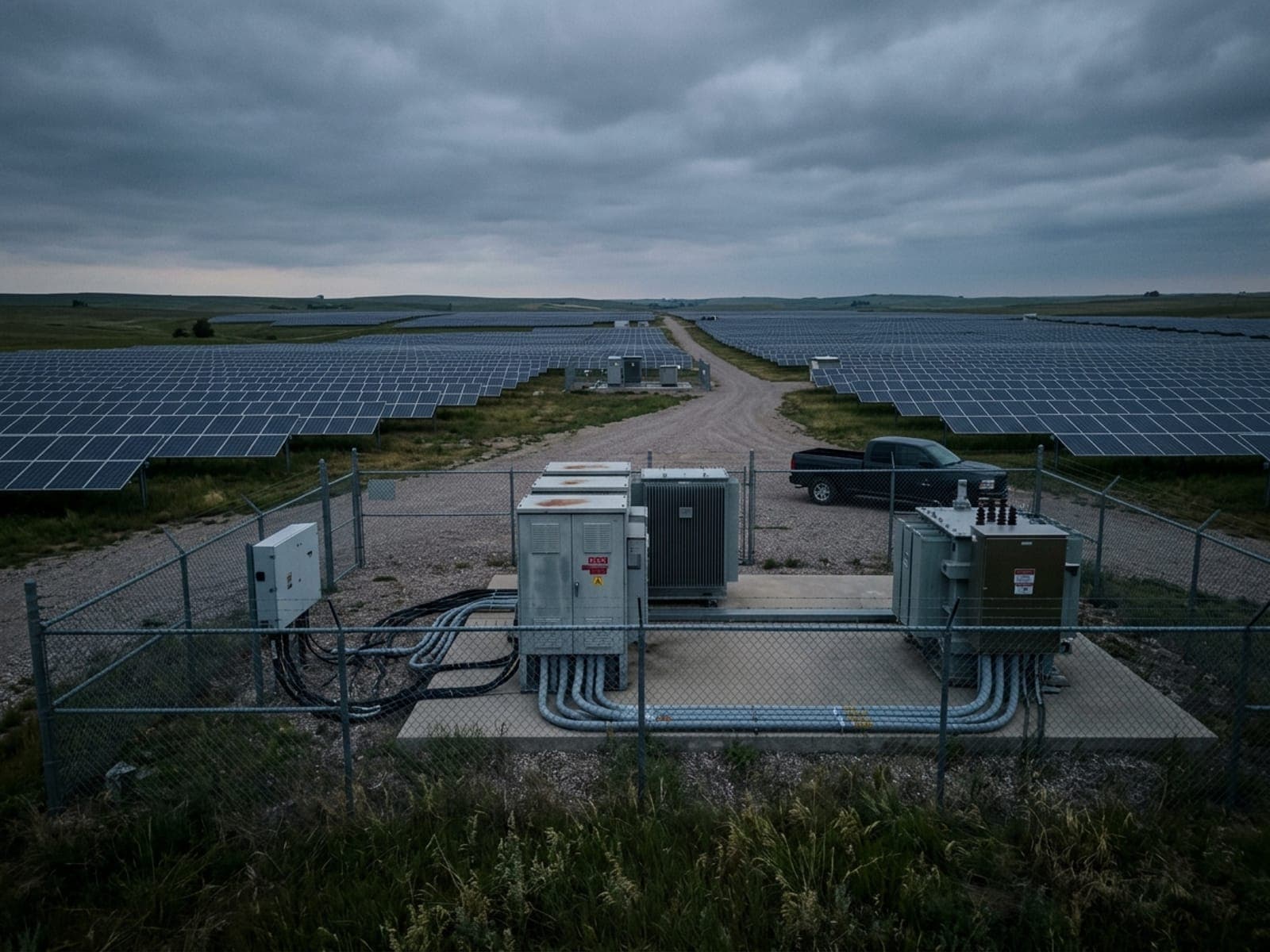
Copper wire theft from inverters
Inverter stations and combiner boxes contain high-value copper wiring. A single hit can take an entire string offline for weeks.
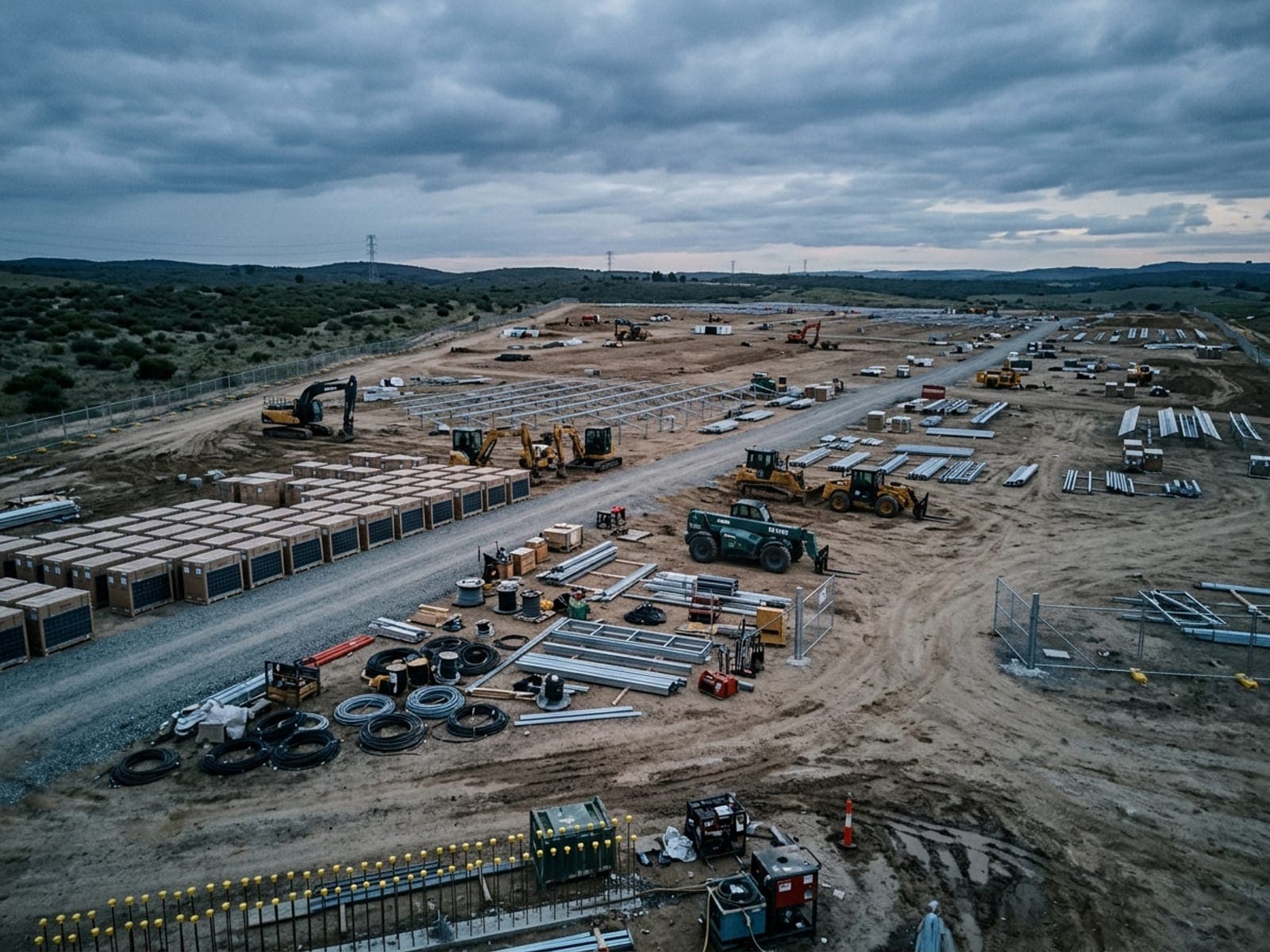
Vandalism during construction
Construction-phase sites are wide open with millions in staged equipment, incomplete fencing, and temporary access roads.
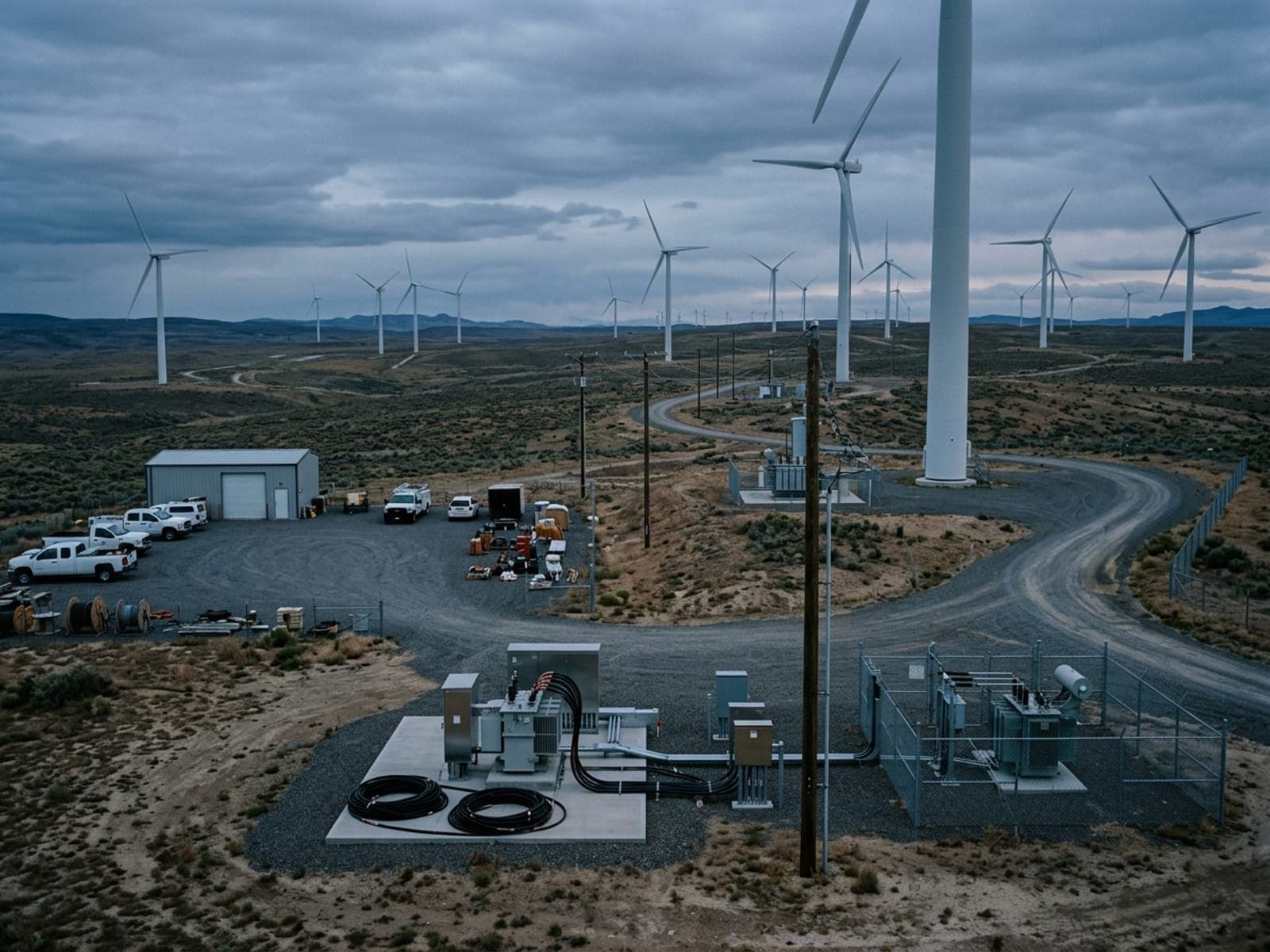
Equipment theft from wind sites
Remote wind turbine sites with copper cabling, transformer pads, and maintenance equipment spread across miles of open terrain.
Solar protects solar.
The SOC protects everything.
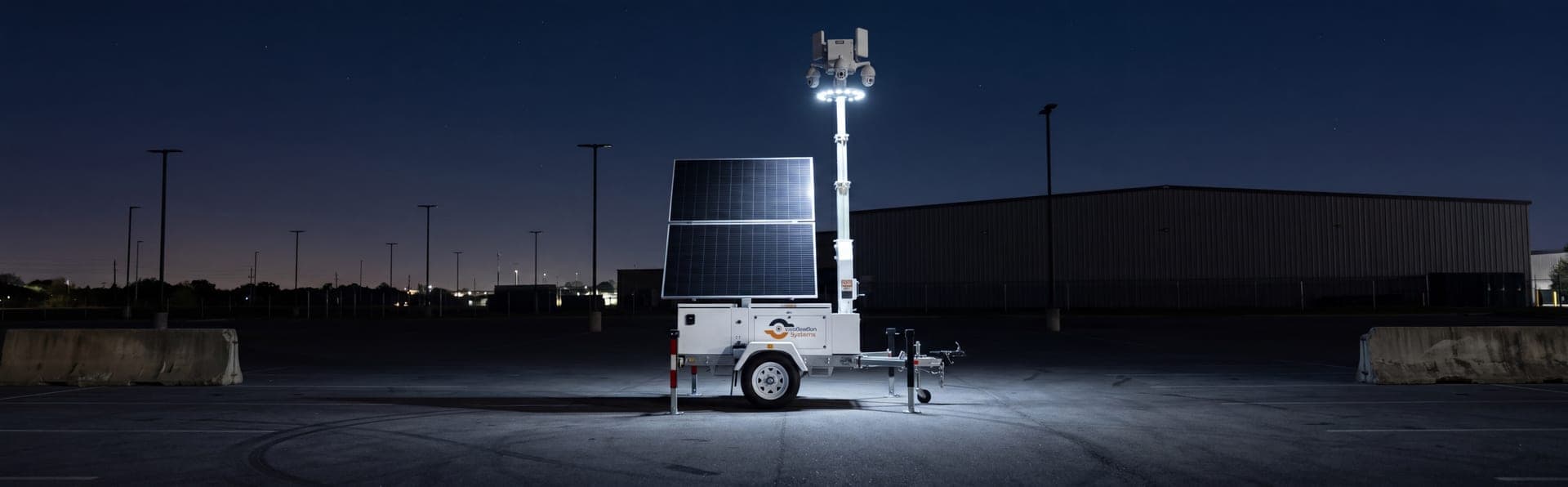
A solar-powered trailer watching a solar farm. No irony — just the most efficient way to protect renewable assets without adding infrastructure.
Hundreds of acres.
One trailer.
The MSU covers the perimeter of large-scale solar and wind installations from a single position. AI analytics detect vehicles and humans approaching the fence line, alerting the SOC before they breach.
- 360-degree coverage from 22–30 ft mast
- AI-powered vehicle and human detection
- Covers perimeters up to 2,000+ ft radius
- Instant SOC notification on approach
 STEP 01
Darkness doesn't help them.
Thermal sees everything.
LWIR thermal imaging detects body heat and vehicle engines through total darkness, dust, and ground fog. Thieves who wait for nightfall are the easiest to catch.
- LWIR thermal imaging for nighttime detection
- Cuts through dust, fog, and ground haze
- Automatic thermal-to-optical camera handoff
- Evidence-grade recording for prosecution
 STEP 02
Every truck. Every plate.
Every visit logged.
License plate recognition captures every vehicle entering and leaving the site. Hotlists flag known offenders. Pattern analysis identifies pre-operational surveillance before the theft happens.
- Automatic plate capture at entry points
- Hotlist alerts for flagged vehicles
- Pattern-of-life analysis across sites
- Law enforcement evidence packages
 STEP 03
Catch them at the fence.
Not at the pawn shop.
When the SOC detects an intrusion, operators activate amplified speakers for live talk-down, trigger high-intensity LED floods, and dispatch law enforcement with streaming video. Most intruders flee before touching a panel.
- Live two-way audio talk-down
- High-intensity LED flood activation
- Direct law enforcement dispatch
- Streaming video to responding officers
 STEP 04
Every asset on the site.
One platform.
The MSU adapts to your specific renewable installation. Here are the scenarios developers deploy for most often.
Utility-scale solar farms
Large-scale PV installations spanning hundreds of acres with thousands of panels, inverters, and miles of copper cabling.
Construction-phase sites
Active construction sites with staged equipment, incomplete perimeters, and temporary workforce access points.
Wind turbine farms
Remote wind generation sites with transformer pads, copper cabling, and maintenance equipment spread across open terrain.
Battery storage (BESS)
Emerging battery energy storage systems with high-value lithium assets, fire risk, and environmental compliance requirements.
Inverter and substation pads
Centralized inverter stations and step-up substations with concentrated copper and electrical equipment.
Transmission interconnects
Grid interconnection points where generation assets tie into the transmission network with high-value switchgear.
Real developers.
Real numbers.
Every metric below comes from a real VDS renewable energy customer. Names protected per agreement.
Customer-reported outcomes from VDS deployments. Results vary by site conditions, monitoring configuration, and response protocols. How we measure →
We lost $400K in panels during construction. VDS deployed in a day. We haven't lost a single panel since.
 MSU-A · FLAGSHIPTHERMAL + LPR · SOLAR
The Mobile Surveillance Unit.
Built for open sites.
Thermal detection, LPR vehicle tracking, and 24/7 SOC monitoring — all from a solar-powered trailer that blends right in on a solar farm.
From assessment
to covered.
Most renewable energy customers go from initial conversation to a live trailer on-site inside 7 business days.
Site assessment
We review your site layout, perimeter geometry, access roads, and threat profile. Fast quote turnaround.
Sensor configuration
Camera presets, thermal zones, LPR capture points, and alert rules configured for your specific site topology and construction phase.
Delivery & commissioning
Trailer delivered to the site perimeter, mast raised, cameras calibrated. SOC monitoring begins immediately. No utility power required.
Monitoring & reporting
Monthly incident reports, vehicle logs, and system health reports delivered automatically. Trailer relocated as construction phases shift.
Common questions.
How fast can VDS deploy at a solar & renewable energy site?
A mobile surveillance unit is live in under 20 minutes once it arrives — most solar & renewable energy sites go from first call to monitored coverage in days, not months. Most renewable energy customers go from initial conversation to a live trailer on-site inside 7 business days.
Do the units need power or internet at the site?
No. VDS units are solar-autonomous with battery storage and connect over cellular (4G/5G), so there is no trenching, no generator refueling schedule, and no dependence on site IT. That is what makes them practical for sites where fixed infrastructure is missing or still under construction.
What happens when the system detects someone after hours?
AI detection classifies the event and filters routine motion before a person ever sees it. A SOC operator verifies the live feed, challenges intruders by voice through 120 dB speakers with strobes, and — when it escalates — dispatches police with live video of the scene.
Which solar & renewable energy security problems does monitored surveillance address?
The most common incidents at solar & renewable energy sites are panel theft from solar farms, copper wire theft from inverters, vandalism during construction, equipment theft from wind sites — the same exposure areas covered in the sections above. Monitored coverage addresses them by making the site actively watched instead of just recorded.
Can VDS work alongside our existing guards or security partner?
Yes — that is the standard model. Monitored surveillance carries the perimeter and after-hours watch, so people — yours or your security partner's — handle verified incidents instead of standing watch over empty hours. The SOC can route verified alerts to your team, your guard provider, or police dispatch.
Secure your solar site this week.
Tell us your site size, phase, and biggest threat — we'll quote the deployment — fast.