
What goes wrong on idle parcels
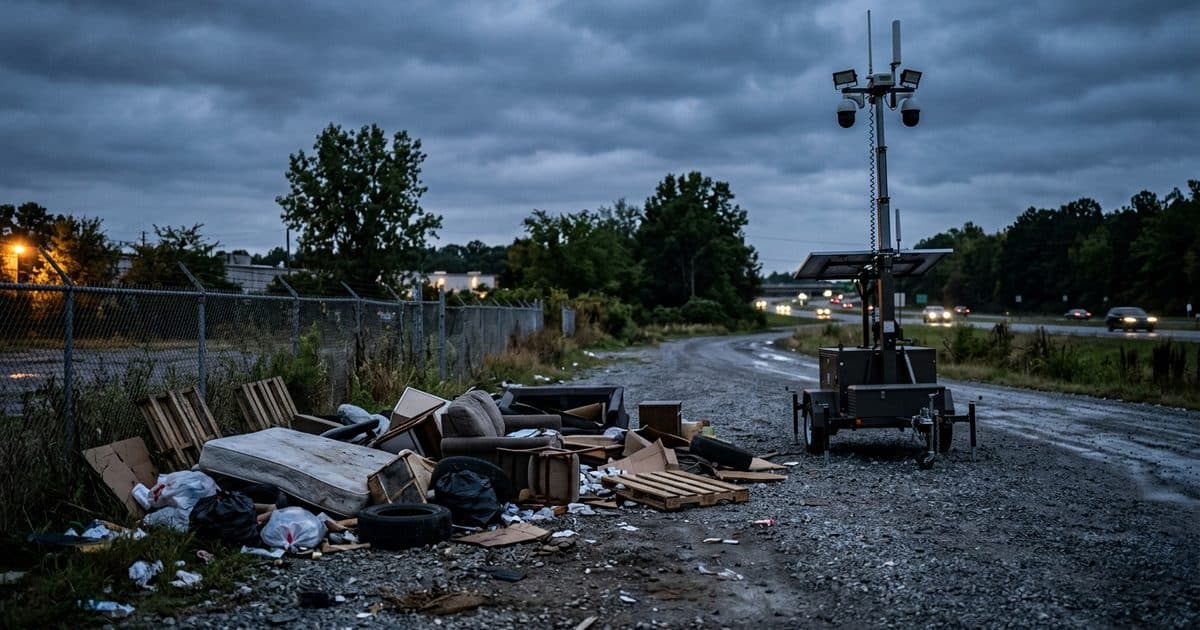
Most problems on raw land start small and grow. A few bags of trash become a pile. A path through a fence becomes a shortcut. A parked vehicle becomes a campsite. Each step signals that nobody is checking, which invites the next.
Common issues include:
- Illegal dumping, from household waste to construction debris
- Trespass, including camping, partying and informal shortcuts
- Off-road vehicle use that damages the ground and fences
- Theft of survey stakes, fencing, signs and any stored materials
- Fires, either set or accidental, in dry vegetation
- Contamination and cleanup liability when dumped material is hazardous
Dumping deserves special attention because the owner of the land often inherits the cleanup. Our guide to illegal dumping cameras covers detection and evidence for that case.
The entitlement-stage problem
A parcel in the entitlement stage may sit for months or years while approvals move forward. During that time, the owner wants to spend little, avoid permanent installations that complicate the project, and still keep the land from becoming a problem. That is a different situation from an active construction site, where security can be built into the project budget and schedule.
The goal is simple. Keep the parcel from developing a history of dumping and trespass, since a dirty or contested site can slow approvals, upset neighbors and add cleanup cost before work even begins. A property that looks maintained and watched tends to stay that way.
Start with the basics
Several low-cost steps do real work before any technology is added.
- Walk the boundary. Note fence gaps, informal paths, gates and anywhere vehicles can enter.
- Document conditions. Take dated photos of the whole parcel, including any existing dumping, so you have a baseline.
- Clean up and repair. Remove debris and fix fencing. Fresh dumping on a clean parcel is easier to spot and respond to.
- Block vehicle access. Boulders, berms, gates and cable barriers cut off the easiest dump points.
- Post signs. Clear no-trespassing and no-dumping signs help in later enforcement. Sign wording and placement rules vary by state and locality, so confirm with counsel.
- Visit on an irregular schedule. Unpredictable checks are more useful than a fixed pattern.
Keep a simple log of each visit, including the date, what you saw and any photos. A pattern of repeat dumping at the same spot, or visits at the same time of night, tells you where to point coverage and gives you records if you later need to show that you acted promptly.
Pair this with the broader guidance in vacant property security, which covers buildings as well as land.
Why remote coverage fits raw land
Raw land lacks the things most cameras need, which are power and a network. Running either to an idle parcel is expensive and may be wasted if the plans change. A self-contained unit that carries its own power and connectivity avoids that problem. Our post on security cameras without WiFi or power explains how solar and cellular setups work.
Placement matters. Put the unit where it sees the main entry points and the most likely dump spots, with a view down the access road if there is one. The camera's range and the mounting height determine how much of the parcel is covered, so for large acreage plan on covering the access points and the high-risk edges and not every corner.
What monitoring adds
A camera that only records can show you what happened last week. That is useful for evidence, but the pile is already there. Monitoring adds detection while the activity is happening. AI flags a vehicle or person on the parcel, an operator verifies it, and a response follows, which may be a spoken warning through a loudspeaker or a call to police with video.
For a trespass or dumping problem, that early response is the difference between turning someone away and cleaning up afterward. Published research supports the point. A 2019 systematic review of 76 studies found that actively monitored systems were associated with about a 15% crime reduction, while passive recording-only systems showed no significant effect. For the response side, see stopping trespassing on commercial property.
Matching the approach to the stage
| Stage | Main risk | Practical approach |
|---|---|---|
| Acquisition and due diligence | Existing dumping and trespass | Baseline photos, boundary walk, cleanup plan |
| Entitlements and approvals | Long idle periods, neighbor complaints | Fencing, signage, flexible remote coverage |
| Pre-construction and grading | Equipment arrival, new access routes | Move coverage to the work area |
| Active construction | Materials, tools, equipment | Project security plan and monitored units |
| Model homes and early sales | Vandalism, after-hours visitors | See subdivision and model home guidance |
For subdivisions that reach the model home stage, our guide to new subdivision and model home security picks up where this one leaves off.
Flexible terms and moving coverage
Land projects rarely follow a straight line. Approvals slip, financing changes and plans get revised. That favors coverage you can start and stop. Rental and short-term arrangements fit an entitlement timeline better than a fixed installation. When construction begins, the same unit can often be repositioned to cover the work area.
Legal and liability notes
Rules about trespass enforcement, posting land, recording video and responding to dumping vary by state and locality. Landowner responsibility for dumped material and for injuries to trespassers also varies. Confirm your signage, camera placement and response steps with counsel, and talk to your insurance broker about what a vacant parcel needs.
Where VDS fits
VDS builds solar-powered mobile surveillance units that need no site power, internet or trenching. Each has a 900W bifacial solar array charging an 11.8 kWh LiFePO4 battery bank with reserve for 3-5 consecutive cloudy days, dual-SIM 4G/5G cellular and a 22 ft telescopic mast, with a 5MP PTZ camera with 25x optical zoom and three 8MP wide-angle cameras. AI detects people, vehicles and loitering, and a US-based 24/7 security operations center verifies events and responds with live talk-down through a loudspeaker, then police dispatch with video. Rental, month-to-month and term subscriptions are available. See remote monitoring or talk to our team.
Sources
- Piza, E. L., Welsh, B. C., Farrington, D. P., & Thomas, A. L. (2019). CCTV surveillance for crime prevention: A 40-year systematic review with meta-analysis. Criminology & Public Policy, 18(1). onlinelibrary.wiley.com