
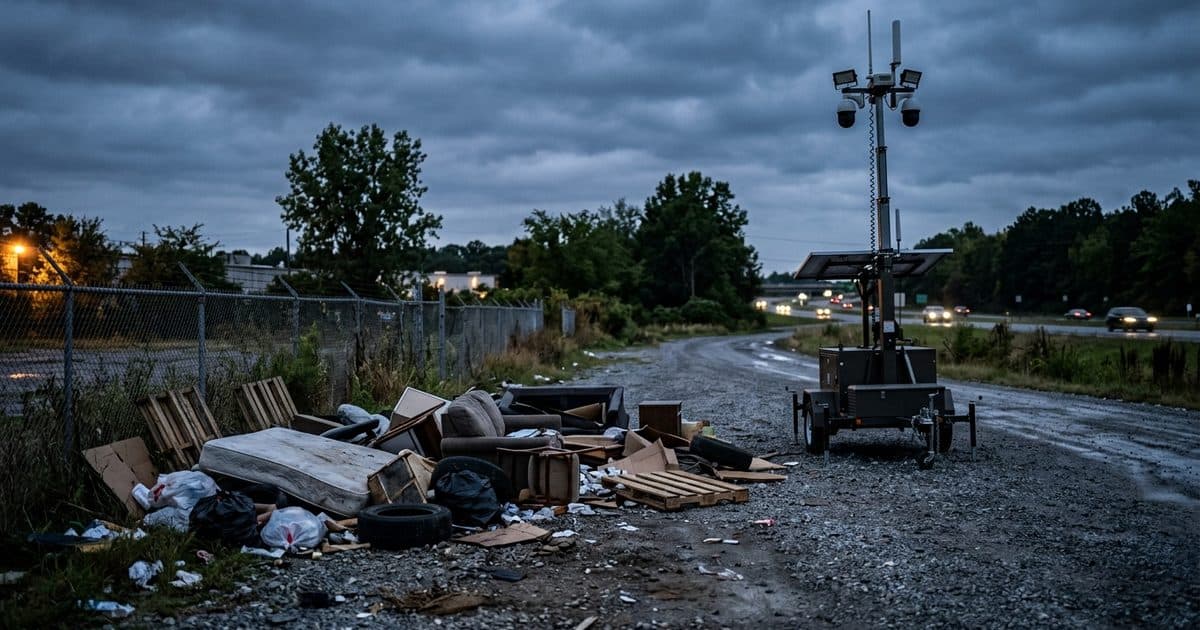
Why illegal dumping concentrates at predictable hotspots
Dumping is not random. It clusters at locations that offer three things: easy vehicle access, low odds of being seen, and evidence that others have dumped there before. Dead-end streets, alleys behind vacant properties, unfenced lots, underpasses, rural road pull-offs, and the approaches to transfer stations show up again and again in 311 data and code-enforcement logs.
Two dynamics keep hotspots active. First, a visible pile signals that a location is "safe" to dump at, so a single unaddressed load attracts more. Second, a meaningful share of volume comes from repeat actors: unlicensed haulers who collect disposal fees from customers, then dump the load rather than pay tipping fees at a legal facility. Those haulers return to the same spots on a schedule, often at night, in trucks and trailers.
Both dynamics are good news for enforcement. Repeat behavior at a known location is exactly the problem cameras solve well. You do not need to watch an entire city; you need to watch a short list of hotspots, and you need equipment that can move when the hotspot does.
What illegal dumping actually costs cities and property owners
Cleanup-only budgets treat the symptom, and the symptom is expensive. Beyond Philadelphia's estimated $48 million annual litter and dumping burden cited above, a LA City Controller audit found Los Angeles spent roughly $53 million on cleanup crews in fiscal year 2019-20, plus similar amounts on hazardous-waste contracts. Those figures cover picking material up, not preventing the next load.
Private owners carry the same math at smaller scale. On private land, the property owner, not the dumper, is typically responsible for removal, and code enforcement can cite the owner if piles sit. Tires, construction debris, and household hazardous waste each carry their own disposal costs, and a lot that gets dumped on once tends to get dumped on monthly until something changes.
The recurring nature of the cost is the strongest argument for shifting some budget from cleanup to enforcement. Every hauler identified and cited is a stream of future loads that never arrives, and every hotspot that goes quiet is a cleanup line item that stops repeating.
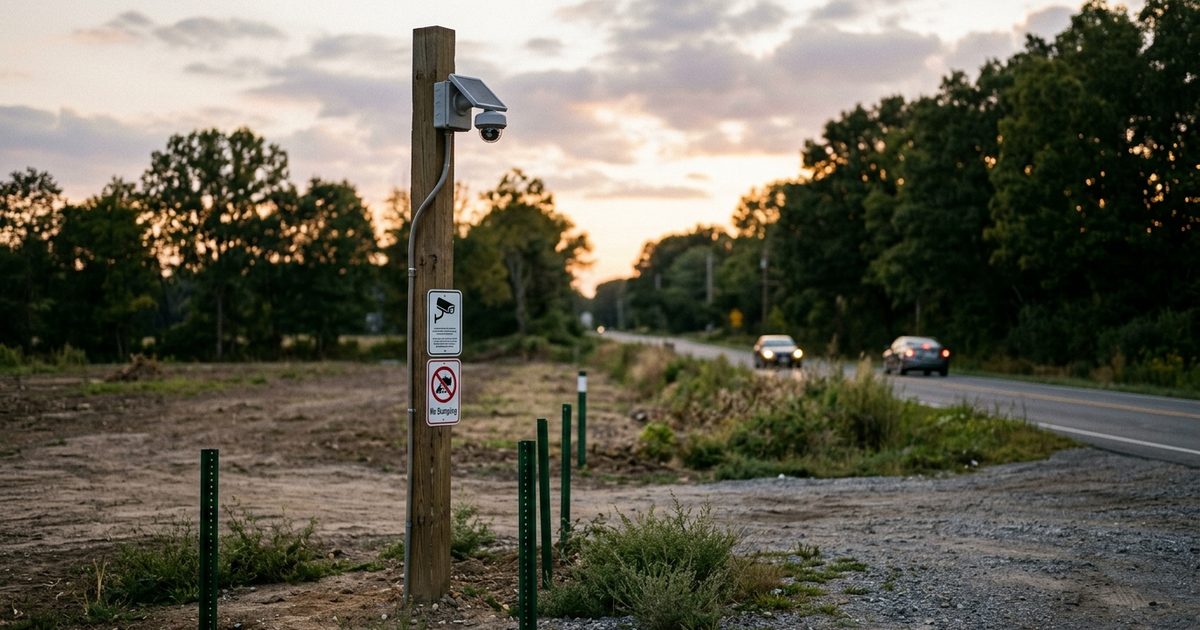
What public-sector camera programs show
Two public proof points stand out for anyone building a business case.
Seattle's enforcement-camera pilot
Seattle Public Utilities ran a motion-activated enforcement-camera pilot at known dumping locations and reported reduced dumping around camera sites. That aligns with what hotspot logic predicts: when the odds of being identified rise at a specific location, the location cools off. Pilots are limited in scale, so results should be read as directional, but the direction is consistent with field experience.
Philadelphia's camera-evidence prosecution
Deterrence is only half the value. In 2022, the City of Philadelphia announced its first major illegal-dumping prosecution, a case built on camera evidence. The lesson for other cities is less about the single case and more about the workflow behind it: cameras positioned at hotspots, footage good enough to identify the actor, and a handoff to prosecutors who were prepared to use it.
The common thread in both programs is that the cameras were tied to enforcement, not just recording. A camera that quietly fills a hard drive changes nothing. A camera that feeds citations changes hauler behavior.
What evidence a dumping citation or prosecution actually needs
Before choosing equipment, work backward from what your code enforcement office or city attorney needs to act. Requirements vary by jurisdiction, but most cases turn on the same elements:
| Evidence element | What the camera system must deliver |
|---|---|
| The act itself | Motion-triggered video of material leaving the vehicle, not just a vehicle parked nearby |
| Date, time, location | Accurate embedded timestamps and a documented camera position |
| Vehicle identification | A readable license plate, plus make, model, and distinguishing marks |
| The responsible party | Plate lookup tied to the registered owner or hauling business |
| Chain of custody | Secure storage, export logs, and a clear retrieval process |
The hardest element is the plate. Most dumping happens at night, and standard surveillance cameras struggle with headlight glare and fast-moving vehicles in darkness. Purpose-built license plate recognition cameras use infrared illumination and fast shutter settings to solve exactly this problem; our license plate recognition camera guide covers how LPR differs from general-purpose video and what capture rates to expect.
One more evidentiary note: post signage where local law requires it, and confirm rules for recording public rights-of-way with your city attorney. Clean legal footing makes footage more useful, not less.
How relocatable surveillance trailers fit the hotspot playbook
Dump sites are usually the last places with power and network infrastructure, which is why fixed camera installs rarely fit. Solar-powered mobile surveillance trailers carry their own power, batteries, multi-camera masts, and cellular connectivity, so they deploy at a vacant lot or dead-end street in hours, with no trenching or permits for electrical work.
Relocatability matters because enforcement pressure moves hotspots. When a watched location goes quiet, haulers probe the next unwatched one. A trailer follows: cool one site, tow the unit to the next entry in the 311 data, repeat. Cities already use this rotation model for other public-safety work; our overview of mobile surveillance trailers for law enforcement shows the same rotate-to-the-hotspot pattern applied to crime hot spots and event coverage.
Height and visibility do double duty. A camera head 20-plus feet up sees over fences and parked vehicles and captures approach angles for plates, while the trailer itself is an unmissable signal that the location is watched. For dumping, where the offender is choosing among locations, that visible signal alone redirects a share of loads before any footage is needed.
Deterrence before the dump: monitoring and live audio talk-down
The best dumping incident is the one that never happens, because nobody budgets for cleaning up a load that was never dropped. Motion-triggered remote video monitoring makes that possible: when a vehicle enters the zone after hours, trained operators see it live, verify what is happening, and act while the material is still on the truck.
The most effective single tool is live audio talk-down. A real voice stating that the vehicle is on camera and that its plate has been recorded interrupts the calculation that brought the hauler there, and the load usually leaves with the truck. If dumping proceeds anyway, the operator packages the clip, plate read, and timestamp for code enforcement and escalates in real time so people, yours or your security partner's, handle the verified incident rather than chasing alarms.
Human verification is what separates this from a passive recorder. An unmonitored camera documents the tenth dump at your site. A monitored one prevents most of them and turns the rest into evidence packets, which is the difference between owning a recording system and running an enforcement program.
A practical playbook for cities and property owners
- Map your hotspots. Pull 311 complaints, cleanup work orders, and code-enforcement logs from the last 12 months. A handful of locations will account for a disproportionate share of volume.
- Clean the site fully before cameras go up. Existing piles invite more dumping and bury your before-and-after metrics.
- Post signage per local law. Notice requirements vary; signage also adds deterrence.
- Deploy relocatable units at the top locations. Prioritize plate-capture angles at the vehicle approach, not just wide shots of the pile area.
- Define the enforcement handoff before the first incident. Agree with code enforcement or the city attorney on the evidence format, retrieval process, and who issues citations.
- Rotate and measure. When a site stays clean for 60 to 90 days, move the unit to the next hotspot and track incidents and cleanup spend at both.
Two situations deserve extra care. Parks and greenways combine dumping with vandalism and after-hours access issues; our guide to park security cameras covers layouts for open public land. And where dumping occurs near homeless encampments, lead with respect and coordination: much of the heavy debris comes from outside haulers rather than residents, and CalRecycle publishes cleanup guidance for property owners. Work with outreach services and the city before any cleanup or camera deployment, and keep the enforcement focus on the dumping, not on people in crisis.
The same watched-perimeter approach extends to other unstaffed public sites. Remote utility properties face a parallel problem of after-hours vehicle access with no one on site, which is why water treatment facilities use similar camera strategies for their perimeters.
This is the problem Vision Detection Systems builds for: solar-powered surveillance trailers with LPR-capable cameras, monitored around the clock by a security operations center that can talk down a dumper in the moment and hand code enforcement a court-ready evidence packet the next morning. For a city or a property owner, the goal is simple: stop paying to clean the same corner every month, and make the hotspot stop being one.