
How fuel gets stolen
Fuel theft takes several forms. Thieves siphon fuel from the tanks of parked equipment and trucks, drain bulk tanks and portable fuel trailers, and use unattended pumps or fuel cards. Insiders can also take fuel in small amounts over a long time, or fuel personal vehicles. Many losses are not noticed until a month-end report or a machine that runs dry.
Construction sites and fleet yards face the same exposure for similar reasons. Large tanks are easy to reach, equipment sits for hours or days without a person nearby, and fuel is difficult to trace once it has left the tank. Prevention therefore needs both a physical barrier and a way to see losses in the numbers.
Lock every tank and fill point
Start with the equipment itself. Use locking fuel caps on every machine and truck, and keep keys under control. Where a cap can be forced, ask the supplier about options such as anti-siphon screens or inserts, and whether they work with your equipment and do not slow fueling. Hydraulic and DEF tanks are sometimes forgotten; check each point where a fluid can be reached.
For bulk and portable tanks, lock the fill point, the dispensing pump and the nozzle or hose, and lock the electrical switch or pump control. Secure the tank itself to the ground or place it within a locked fence. Fuel trailers and skid tanks should be locked, parked in the same controlled area as the equipment they serve, and ideally immobilized with a hitch or wheel lock.
Control who fuels and when
Fueling should be a controlled activity, not an open one. Decide who is authorized, which pump or tank each person may use and in what hours. Keep a log, either on paper or in a system, that records the date, the machine, the amount and the person. Where fuel cards are used, set limits and review the transactions against the equipment each card is assigned to.
Rotate keys and codes when someone leaves, and avoid sharing them. Controlling access also makes the log more reliable, because fewer people can pull fuel without a record.
Reconcile what comes in and what goes out
This is the step most yards skip, and it is how you find a loss that no one saw. At regular intervals, compare:
- Fuel delivered to the yard or site
- Fuel recorded as dispensed to equipment and vehicles
- Fuel remaining in the tanks, measured by gauge or dip
- Machine hours, miles or work performed for each unit
A bulk tank that is losing more than the log can explain points to theft, leaks or recording errors. A single machine that burns far more than similar units doing similar work deserves a look. Fuel level sensors and tank monitors can help, and some report to a dashboard. If you use them, ask the provider how alerts work and who receives them. Our construction site security checklist can help you fit fuel checks into your wider routine.
Secure the yard and the approach
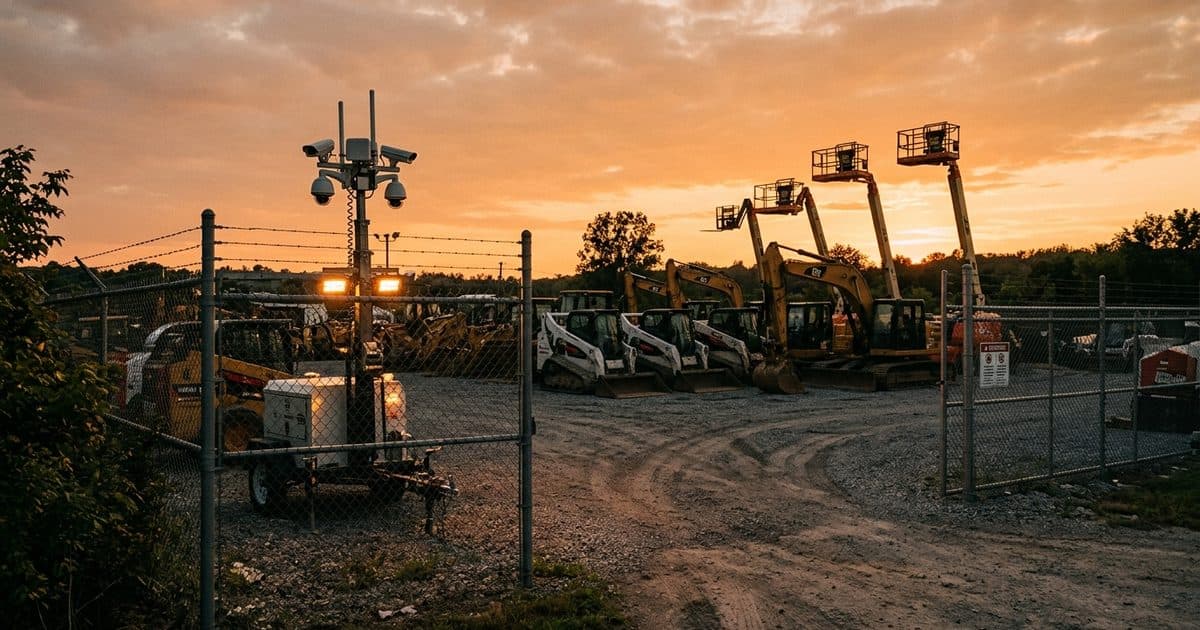
Fuel moves when someone can get a vehicle or a container to it. A fenced yard with a locked gate and one controlled entrance is a strong start. Check the fence line for gaps and keep vehicles and containers away from it. Park equipment so that fuel tanks face inward, toward the lit area and the cameras, and not toward the fence. Keep the bulk tank and pump close to the building or office, where there is more chance of being seen.
Close gates at the end of the shift and record who has keys. Our article on equipment rental yard security covers a yard with a similar layout.
Light the fueling area and the equipment line
A thief working at night needs time and cover. Light the tanks, the pump and the parking rows evenly, and avoid shadows behind equipment where a person could work unseen. Protect the fixtures from tampering and check them regularly. Light that is sufficient for a person is also what a camera needs to give a usable picture.
Add monitored video
Cameras should see the tanks, the pump and nozzle, the gate and the rows of equipment. Check at night that you can identify people and vehicles, and that the equipment line is covered from more than one angle. A 2019 systematic review of 76 studies found that actively monitored camera systems were associated with a crime reduction of about 15%, while recording-only systems showed no significant effect. Programs combining cameras with several other measures were associated with a reduction of about 34%. For fuel, that points to the same combination described here, which is locks, records, lighting and someone watching.
Detection that picks out people and vehicles in a defined zone after hours reduces the amount of video to review. A person watching can verify the event, speak through a loudspeaker and call police with live video. Reading license plates at the gate gives you a record of which vehicles came and went, as explained in our license plate recognition camera guide.
Report and document
If you discover a loss, record what you know right away: the date and time you found it, the amount, the location and the evidence of tampering. Photograph damaged caps, cut locks and fuel on the ground, and export video. Report the theft to police, and notify your insurer. Our article on security camera footage as evidence explains how to preserve and share video. Rules on reporting and on any environmental duty after a spill vary by state and locality, so confirm details with counsel and your local authorities.
Quick reference
| Measure | What it does | Common gap |
|---|---|---|
| Locking caps and anti-siphon hardware | Slow siphoning from equipment | Keys shared, cap not fitted to every unit |
| Locked bulk tank, pump and nozzle | Stop drain and unauthorized fueling | Pump switch left accessible |
| Fueling log and authorization | Creates accountability | Log kept but never reviewed |
| Reconciliation | Finds losses early | Done only at month end |
| Fencing, gate, lighting | Limits access and cover | Dark pockets near tanks |
| Monitored cameras | Interrupt and document theft | Recording with nobody watching |
Where VDS fits
Fuel tanks are often on the edge of a yard or site where there is no power or network. A VDS mobile surveillance unit is a solar-powered trailer with a 5MP PTZ camera with 25x optical zoom and three 8MP wide-angle cameras on a 22 ft telescopic mast. It runs on dual-SIM 4G/5G cellular with no site power, internet or trenching. AI detects people, vehicles, loitering and license plates, and a 24/7 US-based security operations center verifies events, speaks through a loudspeaker and dispatches police with video. That is remote video monitoring so people, yours or your security partner's, handle verified incidents. Talk to our team about your yard.
Sources
- Piza, E. L., Welsh, B. C., Farrington, D. P., & Thomas, A. L. (2019). CCTV surveillance for crime prevention: A 40-year systematic review with meta-analysis. Criminology & Public Policy, 18(1). onlinelibrary.wiley.com