
A Site That Changes Every Day
Most construction sites grow. A demolition site shrinks. Walls, roofs and floors disappear, fences get moved to follow the work, and the building that offered cover and mounting points on Monday may be gone by Friday.
That makes security harder to plan once and forget. Entry points change, sightlines open up as walls fall, and the places where people can hide shift with the debris piles. The plan has to be reviewed against the actual state of the site, not the drawings, on a regular basis.
It also means that cameras fixed to the structure are unreliable. Anything mounted on a wall that is scheduled to come down must be moved or lost. An independent, mobile unit stays where it is placed.
Salvage Metal Is the Main Target
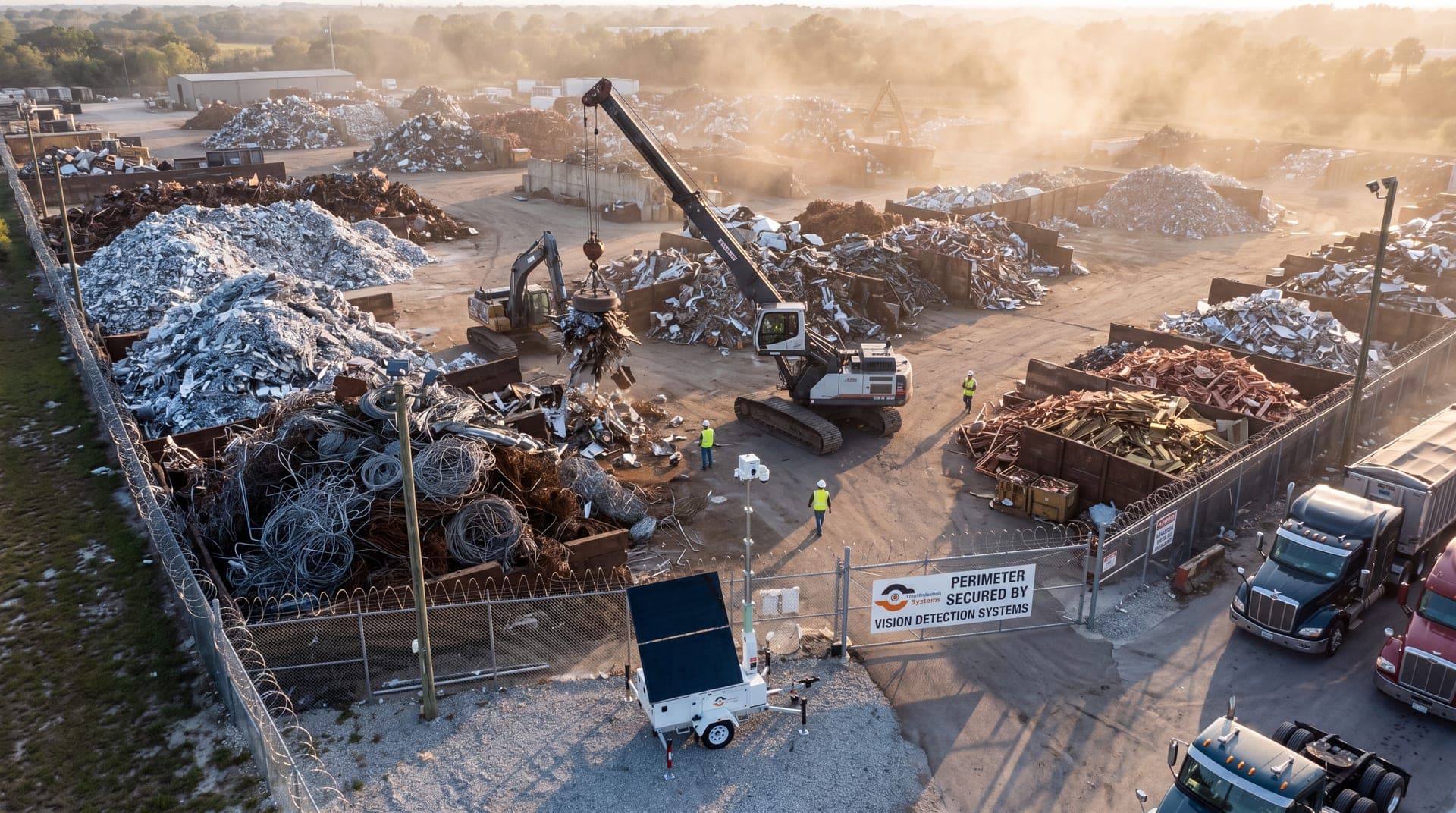
Buildings contain a lot of resalable metal. Copper wire and pipe, aluminum, brass fittings and structural steel all have value. During strip-out, the contractor pulls these materials and stages them for removal, which concentrates value in a pile that thieves can see.
Thieves also go after metal that is still in place. Wire in walls, plumbing in basements and equipment on roofs are all targets, and removal can damage the structure in ways that cause delays and safety problems. The article on copper theft in 2026 describes how the market works, and the guide to scrap yard security cameras shows what happens at the other end of the chain.
Ownership of the salvage matters too. Depending on the contract, it may belong to the owner, the demolition contractor or someone else. Confirm the arrangement with counsel and document the handling of salvage so that a missing pile can be explained quickly.
Hazards and Trespass
An open demolition site is dangerous in ways that are easy to underestimate. Floors may be weakened, stairs may be missing, and openings are common. There may be hazardous materials in the building until abatement is complete. A person who enters at night, especially a young person, can be badly hurt.
That creates a duty to take trespass seriously. Fencing, signage and lighting are the baseline. Monitoring adds the ability to see someone approaching and speak to them before they enter. A trained operator can tell a person through a loudspeaker that the site is dangerous and being recorded, and can dispatch police with video if they continue. The guides to stopping trespassing on commercial property and vacant property security explain the principles. Liability rules differ by state, so confirm them with counsel.
Dust, Debris and Weather
Demolition produces dust, and dust gets on lenses. Rain, snow and wind add their own problems. A camera that works well on a clean site may produce poor images when the air is full of particles or the lens is dirty.
Practical steps:
- Place cameras upwind and away from the main demolition activity where possible.
- Schedule regular lens cleaning during active demolition.
- Ask the provider how the system handles heavy dust, rain, fog and snow.
- Check that night coverage works in low visibility. See the comparison of infrared and thermal night vision.
- Plan for cold-weather operation if the project runs through winter, as covered in surveillance trailers in winter.
These steps keep the evidence usable and the monitoring team able to see what is happening.
Phase-by-Phase Quick Reference
| Phase | Main risk | Coverage focus |
|---|---|---|
| Mobilization and fencing | Equipment, early trespass | Entrances, equipment staging |
| Abatement and strip-out | Metal theft, hazardous material areas | Staged salvage, building entrances |
| Structural demolition | Trespass into hazards, equipment theft | Full perimeter, fuel and attachments |
| Debris removal and sorting | Resalable metal and equipment | Sorting area and haul route |
| Site clearing and grading | Equipment, fuel, open excavations | Gate and equipment yard |
Review the plan at each transition, because the site layout that justified the previous camera position may no longer exist.
Haul Routes and Equipment
Demolition uses heavy equipment, attachments and fuel, all of which attract theft. Trucks and haul routes also create a flow of vehicles that complicates gate control. Keep a record of who enters with what, and use license plate capture at the gate where it is useful. The platform's license plate recognition analytics page describes that capability.
Log the equipment on site at the end of each day. A quick count and a photograph make it much easier to establish what was there when something goes missing. Remove keys from machines, drain or lock fuel access where practical, and park equipment in a lit, visible area rather than at the back of the lot.
Documenting Conditions Before and After
Photographs and video of the site before work begins protect the contractor later. They show the building's condition, what salvage was in place and what existed outside the fence line. During the job, a dated record of what came out and what left the site makes it much easier to separate a theft from a normal haul.
Keep a daily log of salvage staged on site, equipment present and any unusual events. When the monitoring team reports a verified event, add it to the log with the time and the response. If a dispute with the owner, a hauler or an insurer arises, a consistent record is far more persuasive than recollection.
How VDS Fits
VDS mobile surveillance units stand on their own, so they keep working as the building around them comes down. Each solar-powered trailer carries a 5MP PTZ with 25x optical zoom and three 8MP wide-angle cameras on a 22 ft telescopic mast, with dual-SIM 4G/5G cellular and no need for site power, internet or trenching.
AI detection covers people, vehicles, loitering, objects and license plates. A 24/7 US-based security operations center verifies events, uses live talk-down through a loudspeaker and dispatches police with video when needed, so that people, yours or your security partner's, handle verified incidents. Most deployments go from signed quote to live monitoring in about a week, and rental, month-to-month and term subscriptions are available to fit the length of the demolition schedule. Review the mobile surveillance unit or talk to our team.