
Why winter is harder on solar
A solar array produces power only while light reaches the panels. In winter three things work against it at once.
- Shorter days. There are fewer hours of usable light to refill the battery.
- Lower sun. The sun is low in the sky, so the light is weaker and shadows from buildings, trees and stacked materials stretch farther across the site.
- More cloud and weather. Overcast days and storms cut production further, sometimes for days in a row.
Meanwhile, the trailer's demand does not fall. Cameras, infrared illumination, cellular, lights and electronics run all night, and nights are longer. Winter is the season when the gap between what the panels make and what the unit uses is smallest, and that is why battery reserve matters so much.
Snow and ice on the panels
Snow on a panel blocks light almost completely, so charging can stop until it clears. A few factors help.
- Panels set at a tilt shed snow more readily than panels lying flat.
- Dark panels warm in sunshine and snow often slides off once the sun appears.
- Placement away from drifting snow, roof runoff and snow piles from plowing keeps the array from being buried.
None of this removes the need for a reserve. A heavy snowfall followed by cloud can leave panels covered for a while, and the battery carries the unit through the gap. Ask a provider how it tells that a unit is running low, and what the plan is for clearing panels or moving the trailer when needed.
Cold and batteries
Batteries are chemical devices, and temperature affects them. In general terms, cold reduces the energy a battery can deliver, and many lithium chemistries should not be charged when they are below freezing unless the system manages temperature, for example with heating or protective cutoffs. Details vary by chemistry and design, so this is a question for the provider rather than something to assume.
Useful questions include what temperature range the battery is rated for, how the system behaves when charging is unsafe, whether the unit reports battery state remotely, and what is done to keep the unit running through a cold snap. Our article on solar security camera battery life goes deeper on how to read battery claims.
What reserve days really mean
Battery reserve, sometimes called autonomy, is the number of consecutive cloudy days a unit can run on stored energy with little or no charging. It is a better measure of winter resilience than panel wattage alone. A big array with a small battery can still go dark in a gray week, while a well-matched battery carries through.
When you see a reserve figure, ask how it was calculated, what loads it assumes, and whether it holds in winter or only in mild weather. Snow cover is not the same as a cloudy day, because a covered panel produces nothing, so reserve and panel clearing work together. For more on how uptime claims should be tested, see surveillance trailer uptime.
Before the season starts, ask for a short winter plan in writing. It should say what the unit is expected to do on the shortest days, who watches its battery state, what triggers a visit to the site, and what happens to coverage if power does run out. A provider that has thought this through will answer quickly. One that has not will tend to repeat summer numbers, which is a warning sign worth taking seriously.
Placement and panel angle
A few placement choices make a large difference in winter.
- Open sky to the south. In the northern hemisphere, keep the south side clear of buildings, trees and material stacks that shade the array on short days.
- Mind the low sun. A shadow that does not touch the panels in summer may cover them all day in December.
- Adjust the angle. If the panels can be tilted, a steeper angle in winter catches the low sun better and sheds snow.
- Keep it reachable. Choose a position where crews can get to the trailer after a storm.
More general guidance is in our solar surveillance trailer guide.
Winter theft and monitoring
Cold-season risks are real. Long dark evenings, holiday shutdowns and unattended sites give thieves time and cover, and a site that is empty for a week is an attractive target. Coverage that goes down in a storm is coverage you do not have when conditions make theft easier. Active monitoring adds value in these conditions because a trained operator can verify an alert, speak to someone on site and call police with video. The cameras do the watching, so people, yours or your security partner's, handle verified incidents. See remote video monitoring for how that works.
What to ask a provider
| Question | Why it matters |
|---|---|
| How many cloudy days of reserve, and how was it tested? | Shows resilience through gray weeks |
| Is the figure valid in winter at my location? | Summer numbers do not carry over |
| How does the battery handle freezing temperatures? | Cold limits charging and capacity |
| How do panels shed or clear snow? | Covered panels produce nothing |
| Will I be alerted if power runs low? | Early warning avoids blind spots |
| Can the trailer be moved if the position is shaded? | Low sun changes where shadows fall |
| What happens to video if the unit loses power? | Defines what you can recover |
How VDS fits
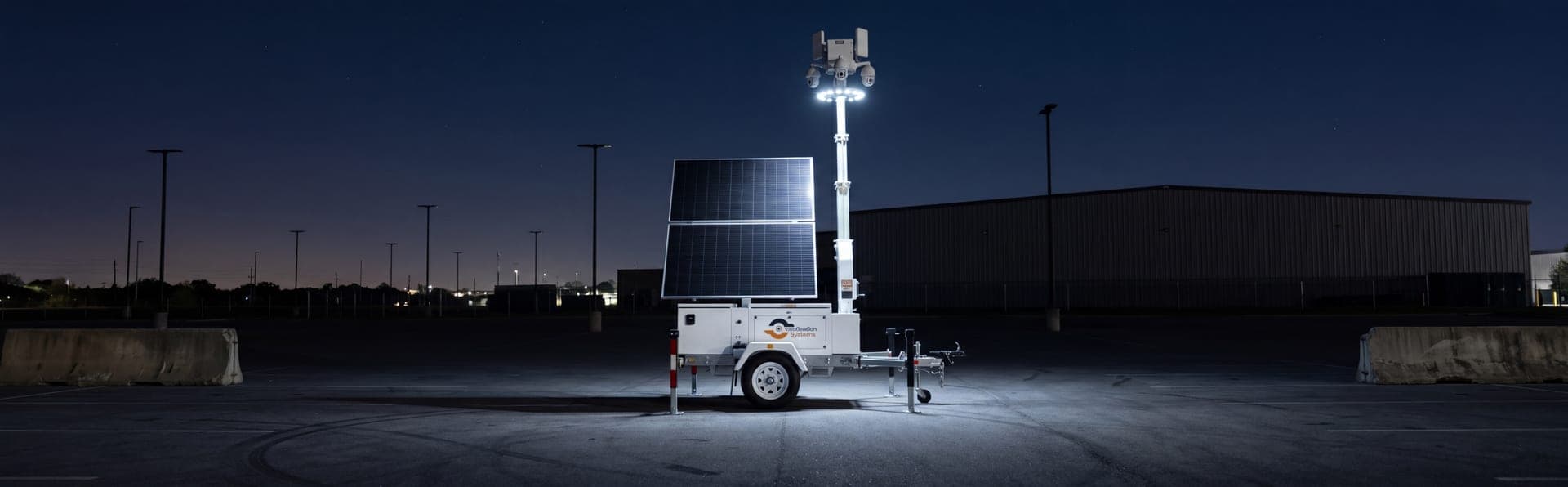
The VDS mobile surveillance unit pairs a 900W bifacial solar array with an 11.8 kWh LiFePO4 battery bank, with reserve for 3-5 consecutive cloudy days. It uses dual-SIM 4G/5G cellular and needs no site power, internet or trenching. A 5MP PTZ with 25x optical zoom and three 8MP wide-angle cameras sit on a 22 ft telescopic mast (30 ft available). A 24/7 US-based security operations center verifies events and responds with live talk-down, then police dispatch with video. For any specific location, we will talk through the expected winter performance before you commit. Contact our team or call (410) 401-1986.