
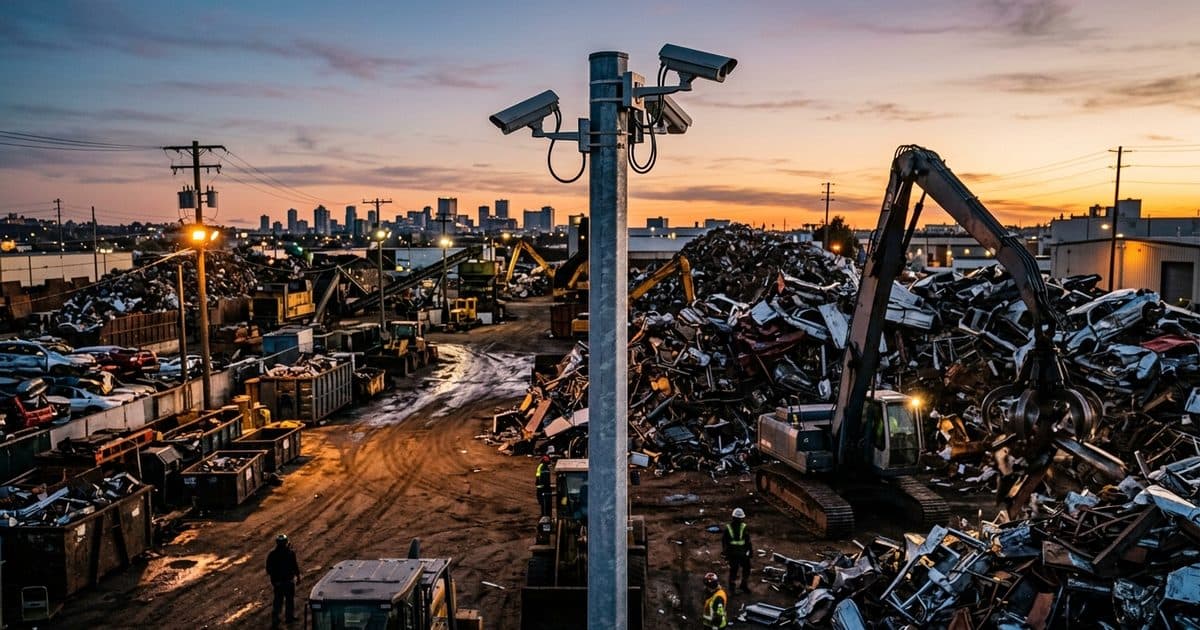
Why metal thieves are targeting scrap yards right now
Record commodity prices have changed the math for thieves. Copper's run past $12,000 a ton on the COMEX means the same pile of stripped wire that was worth stealing five years ago is worth considerably more today, and thieves respond to price signals faster than most security budgets do. Aluminum, brass, and catalytic converter cores follow the same pattern: when values climb, theft attempts climb with them.
The pressure is visible across the whole supply chain. Copper ranks among the top commodity targets for cargo theft, according to a Verisk CargoNet analysis that found cargo theft overall surged to record levels in 2024. Crews that target copper in transit do not stop at the loading dock. A scrap yard is, by definition, the place where a region's recoverable metal concentrates in one fenced lot.
Scrap operations also sit at the receiving end of a much wider theft economy. The same crews stripping bronze fittings from cemeteries or pulling copper from rail corridors need somewhere to sell, and yards that tighten intake documentation push stolen material out of the local market entirely. That is good citizenship, and in every state it is also the law, which we cover below.
Repeat victimization is the norm rather than the exception. A crew that gets away with a fence cut and two hundred pounds of copper tends to come back, often within days, and often with a truck. The window right after a first incident is when monitored coverage pays for itself fastest.
Where scrap yards actually get hit
Most scrap yard losses cluster in three zones. Walk your own site with this list and note where existing lighting and cameras actually reach, because intruders will do the same survey from the outside.
Perimeter and after-hours intruders
Yards tend to be large, irregular, and lit for operations rather than security. Fence lines back up to rail spurs, drainage ditches, and vacant lots that give intruders cover, and a bolt cutter defeats most chain link in seconds. After-hours intrusion is the classic pattern: climb or cut in the dark, work a pile near the fence, and pass material back through the gap. Cameras with thermal or low-light capability watching the fence line and the dark corners between light poles close the coverage gaps that intruders scout for.
Inventory piles and processed material
Processed nonferrous material is the prize. Stripped copper, insulated wire, aluminum sheet, brass, and catalytic converter cores are dense, valuable, and staged for loading, which makes them convenient for the next truck out and for thieves alike. Piles also move constantly as material is processed and shipped, so fixed cameras aimed at last month's layout end up watching empty ground. Coverage needs to move with the inventory.
Equipment, fuel, and batteries
Loaders, balers, shears, and rolloff trucks carry their own theft exposure: fuel, equipment batteries, attachments, and in some cases the machines themselves. The playbook for protecting heavy iron is well established in quarry and aggregate operations, and it applies directly to scrap. Stage equipment inside camera coverage, remove keys, and make sure someone is actually watching overnight.
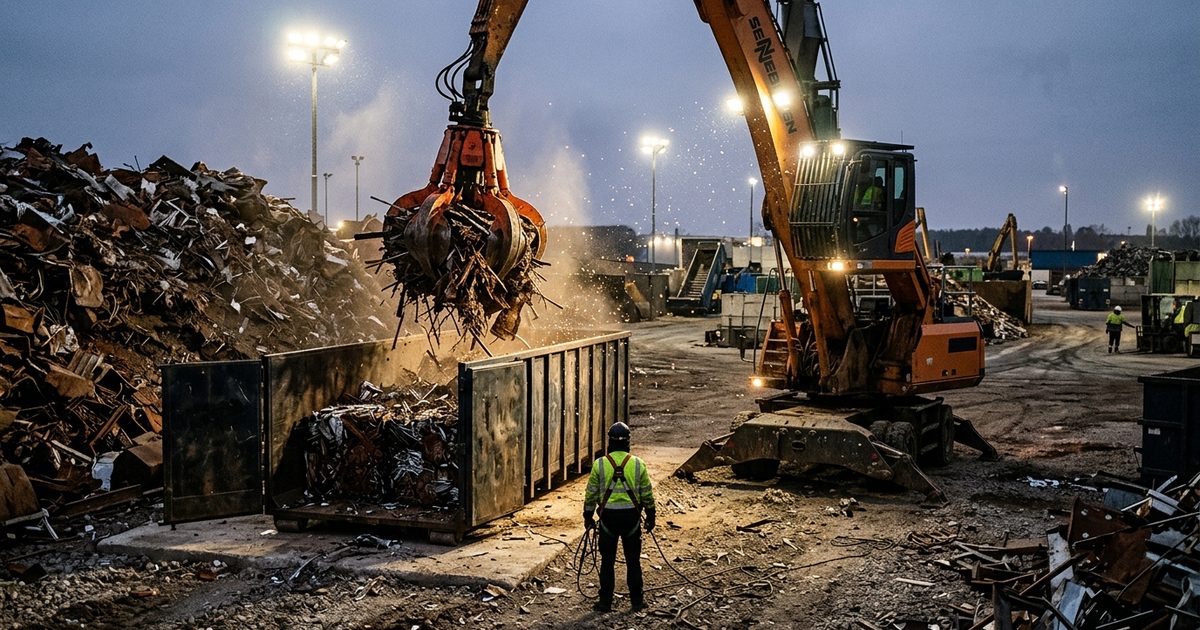
Gate cameras, LPR, and scrap-sale documentation laws
Every US state regulates scrap metal purchases. All 50 states maintain metals-theft statutes that impose documentation requirements on scrap transactions, per the ReMA state statute database. The details vary by state, but the common elements are seller identification, a record of the vehicle used, transaction records available to law enforcement, and in many states hold periods or payment restrictions for specific materials such as copper and catalytic converters.
Camera systems at the gate and scale house turn that compliance burden into an asset. License plate recognition captures every inbound and outbound plate automatically and stamps it with time and date, so each weighmaster transaction can be tied to a specific vehicle without relying on a busy employee to transcribe plates correctly. When a detective calls about material stolen from a job site the night before, a yard that can produce plate records, transaction timestamps, and gate video in minutes is a yard that stays on the right side of that relationship.
LPR also works in the other direction. Plates associated with prior incidents, rejected loads, or law enforcement bulletins can be flagged so the scale operator knows before the truck reaches the window. That protects the yard from unknowingly buying stolen material, which in most states carries real liability for the purchaser.
For municipal transfer stations and landfills, the gate camera earns its keep beyond compliance. Public-facing facilities process a steady stream of unfamiliar vehicles, and gate video with plate capture resolves disputes over illegal dumping, contaminated loads, and after-hours drop-offs that would otherwise turn into unwinnable arguments.
The fire problem: lithium-ion batteries in the waste stream
Fire is now the threat that keeps facility operators up at night. 2024 was the worst year on record for fires in the waste and recycling industry, with lithium-ion batteries a leading driver, as reported by Waste360. The Fire Rover data cited above tells the same story in numbers: 430 reported facility fires in 2024, a 58% increase since 2016.
The mechanics are ugly. Batteries arrive hidden inside e-scrap, appliances, and mixed loads, then get punctured or crushed by loaders, balers, and shredders. A damaged cell can enter thermal runaway hours after the impact, which means the pile that looked fine at the 5 p.m. walkthrough can be smoldering by midnight, when nobody is on site to smell it. By the time a pocket deep inside a pile produces visible flame, the fire has a head start that ceiling sprinklers and a 2 a.m. 911 call may not overcome.
The risk is not limited to shredder yards. Materials recovery facilities, transfer stations, and municipal landfills all receive batteries buried in loads they never asked for, and a hot load can arrive already smoldering. Continuous thermal coverage of the tip floor and active face gives operators a chance to isolate a hot load early, while it is still one bucket's worth of material instead of a building.
Thermal-capable cameras change that timeline. A thermal sensor watching the piles reads surface temperature continuously and can flag an abnormal hot spot while it is still a warming pocket rather than an open flame. Paired with 24/7 human monitoring, that detection becomes a monitored fire watch: an operator verifies the anomaly on camera, wakes the on-call manager, and escalates to the fire department with a precise location instead of a vague address. A documented monitored fire watch is also worth raising with your property insurer at renewal.
One system, two missions: monitored theft and fire detection
The economic case for scrap yard security cameras gets stronger when one deployment serves both missions. The same trailer-mounted unit carrying optical and thermal sensors watches the fence line for intruders and the piles for heat anomalies, on the same power, connectivity, and monitoring service. There is no second system to buy, mount, or maintain.
Human verification is what makes either mission work. A busy yard full of dust, steam, birds, and swing-shift traffic is a hostile environment for unattended analytics, and unverified alerts get ignored fast. We cover the mechanics in our guide to reducing false alarms in video analytics, but the short version is that detection should trigger a trained human, not just a siren. With 24/7 remote monitoring, an operator reviews the alert live, uses audio talk-down on verified intruders, and escalates real incidents so people, yours or your security partner's, handle verified situations instead of chasing false alarms.
Fire and intrusion need separate escalation paths, and both should be in writing. An intrusion escalation runs from talk-down to police dispatch with live camera intelligence. A thermal alert runs from operator verification to the on-call site manager and the fire department. Define both before the first alert, not during it.
What a scrap yard camera deployment should include
For most scrap yards, MRFs, transfer stations, and municipal landfills, a workable deployment checklist looks like this:
- Self-powered, movable units. Piles shift and footprints change, so solar-powered mobile surveillance units that reposition without trenching or electrical work beat fixed poles in most yards.
- Thermal plus optical sensors. Optical for identification and evidence, thermal for after-hours detection of both intruders and hot spots.
- LPR at the gate and scale. Automated plate capture tied to weighmaster transactions supports state documentation compliance and law enforcement requests.
- 24/7 human monitoring. Detection without verified response is documentation, not deterrence.
- Written escalation plans. One path for intrusion, one for fire, with named contacts and current phone numbers.
- Evidence retention. Confirm how long video and plate records are held and how fast they can be pulled for police or insurance claims.
This dual-mission model is how Vision Detection Systems approaches scrap and recycling sites: solar-powered mobile surveillance trailers with thermal-capable cameras, monitored around the clock by our security operations center, positioned to cover the fence line, the nonferrous piles, and the gate, and repositioned as your yard changes. The unit that deters the metal thief in January is the same unit that catches the battery fire in July.
Metal prices and battery volumes are both moving in the wrong direction for unmonitored yards. The operators who treat theft and fire as one surveillance problem, with one monitored system, are covering both without paying twice.