
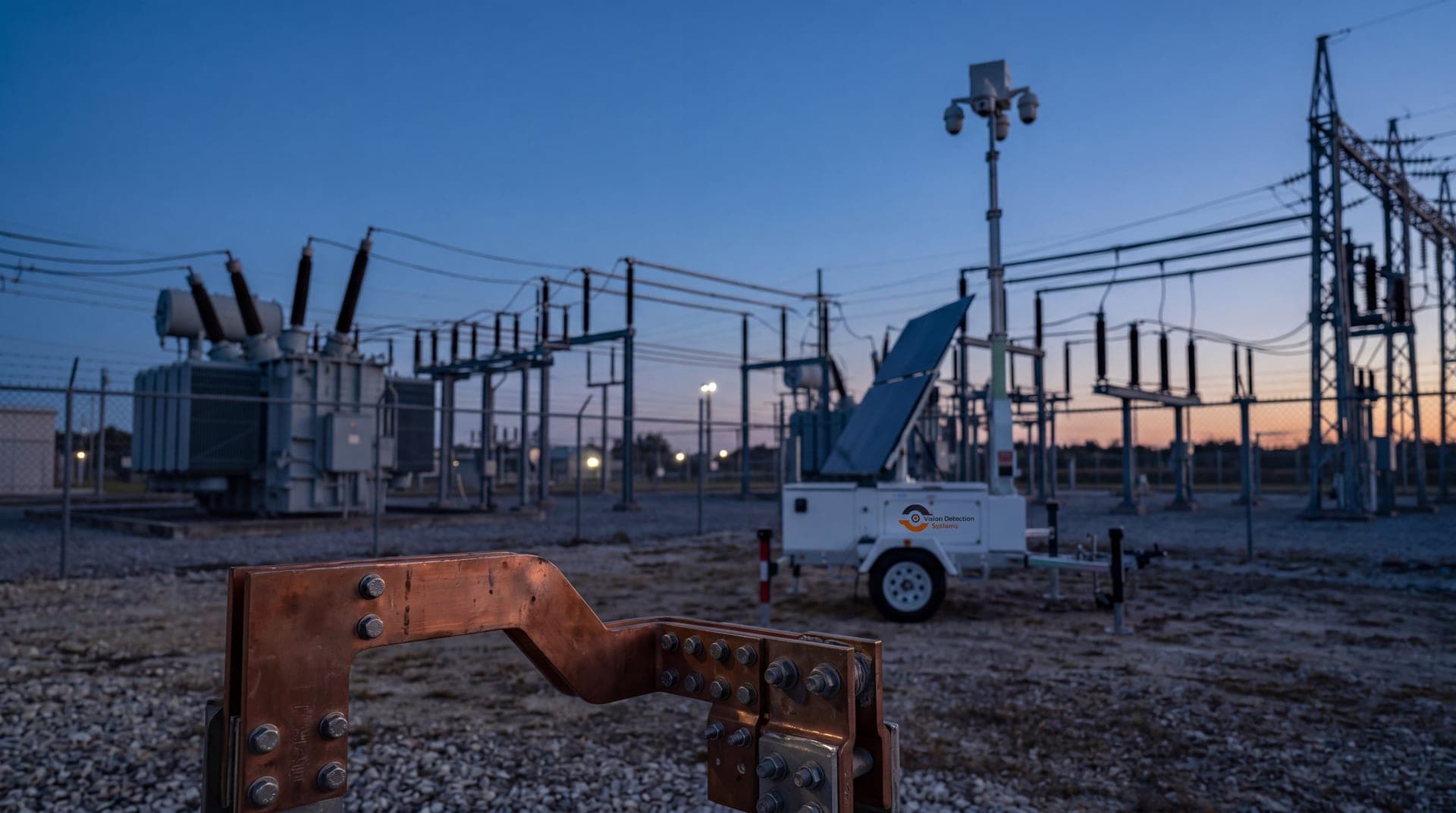
The asymmetry is stark: thieves gain hundreds or thousands of dollars. Utilities absorb losses measured in tens or hundreds of thousands. This economics is why copper theft is persistent, organized, and increasingly sophisticated—and why it demands a security response engineered specifically for the problem.
This is the prevention how-to. For NERC CIP-014 obligations and the facility-security program around them, see substation physical security; for current incident data, see the 2026 copper theft outlook.
How Copper Theft at Substations Actually Happens
Understanding theft patterns is the foundation of effective prevention. Substation copper theft typically follows a consistent pattern:
Target identification: Experienced theft crews identify substations through reconnaissance, sometimes conducted weeks in advance. They assess perimeter security, camera coverage, lighting, and proximity to law enforcement response. Substations perceived as poorly monitored are prioritized.
Approach timing: Most theft occurs between midnight and 4 AM—lowest traffic, greatest darkness, furthest point from day-shift guard presence. Thieves are aware that alarm calls get lower-priority police response during these hours in many jurisdictions.
Execution speed: Practiced theft crews complete a copper removal operation in 10–20 minutes. The short execution window is specifically designed to beat typical law enforcement response times. This is why detection-and-intervention speed is the most critical variable in copper theft prevention.
Exit staging: Vehicles are staged near but not at the site to avoid triggering vehicle-detecting cameras. Thieves carry cut material to the staging vehicle and leave, often through a different route than they entered.
Organized operations: Many copper theft events are not solo opportunists—they're organized teams with specific roles (cutter, hauler, spotter, driver) who have done this before. Some operations work circuits of substations in a region before moving on.
The Security Failure Modes That Enable Theft
Several common security approaches fail against this pattern:
Passive recording documents the theft but doesn't prevent it. Unless footage is reviewed in real time and a response is initiated during the theft window, the camera is a documentation tool, not a security tool.
Scheduled guard patrols are predictable. Experienced theft crews learn patrol schedules and time their operations accordingly. A patrol that visits a substation every two hours leaves a 110-minute window between presence checks.
Perimeter fencing alone is defeated by bolt cutters, fence climbing, or digging under. Physical barriers slow theft operations but don't stop determined crews.
Motion-activated lighting signals to the theft team that they've been detected—but if no monitoring response follows, it's not a deterrent. Experienced thieves have observed that motion lights often trigger without any human response.
The common failure mode across all of these is the detection-response gap: something detects a threat but nothing responds to it fast enough to interrupt the theft.
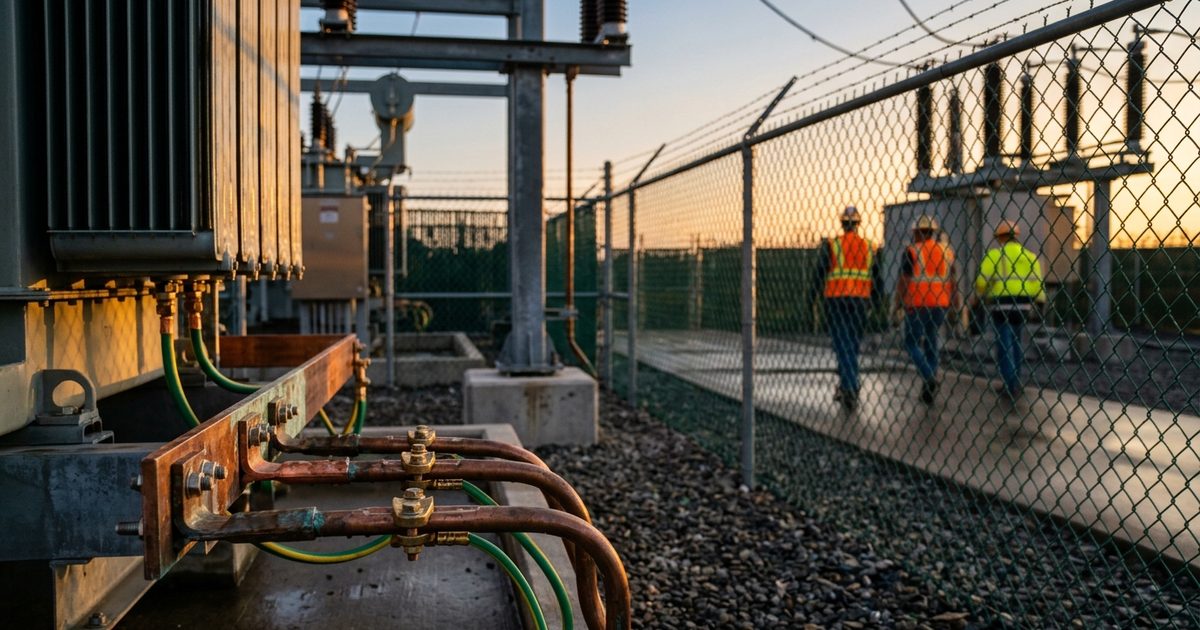
Thermal Camera Perimeter Detection
Thermal cameras are particularly well-suited for substation perimeter security and offer advantages that standard visible-light cameras don't provide:
Night performance: Thermal cameras detect body heat regardless of ambient light. Total darkness, overcast conditions, and even light fog don't reduce detection performance.
Visual noise immunity: Substations are complex visual environments—equipment, conduit, transformers, and lighting create visual patterns that challenge AI object detection on standard cameras. Thermal cameras cut through this visual complexity because they're only responding to heat signatures, not visual patterns.
Longer detection range: A properly specified thermal camera can detect a human body heat signature at 200–500 feet, compared to 50–150 feet for IR cameras in practical deployment.
Covert operation: Unlike visible-light cameras, thermal cameras don't require illuminators that reveal camera positions to thieves conducting reconnaissance.
Note: Thermal cameras are detection tools, not identification tools. They detect that a person is present but don't provide the visual detail for facial identification or fine physical description. The best utility security deployments combine thermal cameras for long-range detection with standard cameras for close-range documentation and identification.
AI Video Analytics for Perimeter Intrusion Detection
Modern AI analytics configured for utility perimeter security add intelligence to thermal and standard camera feeds:
Virtual perimeter lines trigger alerts when any object classified as "person" or "vehicle" crosses the boundary, regardless of lighting or time.
Fence-line detection identifies contact with fence structures that may indicate climbing or cutting before a breach is complete.
Behavior pattern analysis flags patterns associated with reconnaissance—repeated slow approaches to the perimeter, vehicles stopping near access points, individuals moving along the fence line.
Multiple-subject detection handles the organized team scenario—flagging when more than one person enters a restricted zone simultaneously, which is a stronger threat indicator than single-person entry.
| Detection Technology | Night Performance | Range | False Alarm Risk | Best Application |
|---|---|---|---|---|
| Standard camera + motion | Poor | 50–100 ft | High | Supplemental, not primary |
| IR camera + AI | Good | 75–150 ft | Low-Medium | General perimeter |
| Thermal + AI | Excellent | 150–500 ft | Low | Primary perimeter detection |
| Fence-mounted sensors | N/A | Perimeter only | Medium | Hardened perimeter supplement |
Response Speed: The Decisive Variable
All detection technology is only as valuable as the speed of the response it enables. For copper theft prevention at substations, the response must reach the site within the theft window—which can be as short as 10–15 minutes from initial breach to completion.
The response chain at a professional monitoring center optimized for utility security:
- Thermal or AI detection flags perimeter event
- Monitoring operator reviews event within 15–30 seconds
- Audio challenge issued via site speakers: 30–60 seconds from detection
- If no compliance: law enforcement contacted within 60–90 seconds with live camera access
- Law enforcement dispatched with confirmed-intrusion call status (higher priority than unverified alarm)
A 30–60 second audio challenge interrupts most theft operations. Even experienced crews that intended to complete a theft typically abandon the operation when they realize the site is actively monitored. The audio challenge doesn't need to result in apprehension to succeed—deterrence (the crew leaves without completing the theft) is a successful outcome.
Tip: Establish a pre-existing relationship with local law enforcement before an incident occurs. Brief them on your monitoring setup, share that confirmed intrusion calls will come with live video access, and confirm their expected response time. This preparation improves response quality significantly during actual events.
Physical Hardening as a Complement to Monitoring
Physical security measures that slow theft crews give monitoring systems more time to respond:
Anti-climb fencing with concertina or razor wire increases the time required to breach the perimeter, extending the intervention window.
Secured grounding straps and cable armor make specific copper targets more time-consuming to access, reducing the practical yield of a theft attempt.
Selective lighting at entry points and high-value copper locations helps cameras capture better footage without providing thieves with clear visibility of the work area.
Marked and tagged copper components with UV-visible markings and GPS-embedded trackers have both deterrent value and evidence value—making stolen material traceable to the source and creating risks for thieves who attempt to sell it.
Establishing a Copper Theft Prevention Program
A complete utility substation copper theft prevention program combines technology, response, and administrative layers:
- Remote video monitoring with thermal camera perimeter detection
- AI analytics configured for intrusion, loitering, and behavior patterns
- Physical hardening of high-value copper targets
- Documented response protocols with monitoring center and law enforcement
- Post-incident investigation support with complete video documentation
- Regular security audits to identify new vulnerabilities as site conditions change
VDS has deployed security programs at utility infrastructure including substations, transmission facilities, and renewable energy sites. Our mobile surveillance systems deploy at remote utility sites without requiring grid power, and our AI VisionStream analytics are configured for the specific detection requirements of utility perimeter security. Contact the team to discuss a program for your facility.