
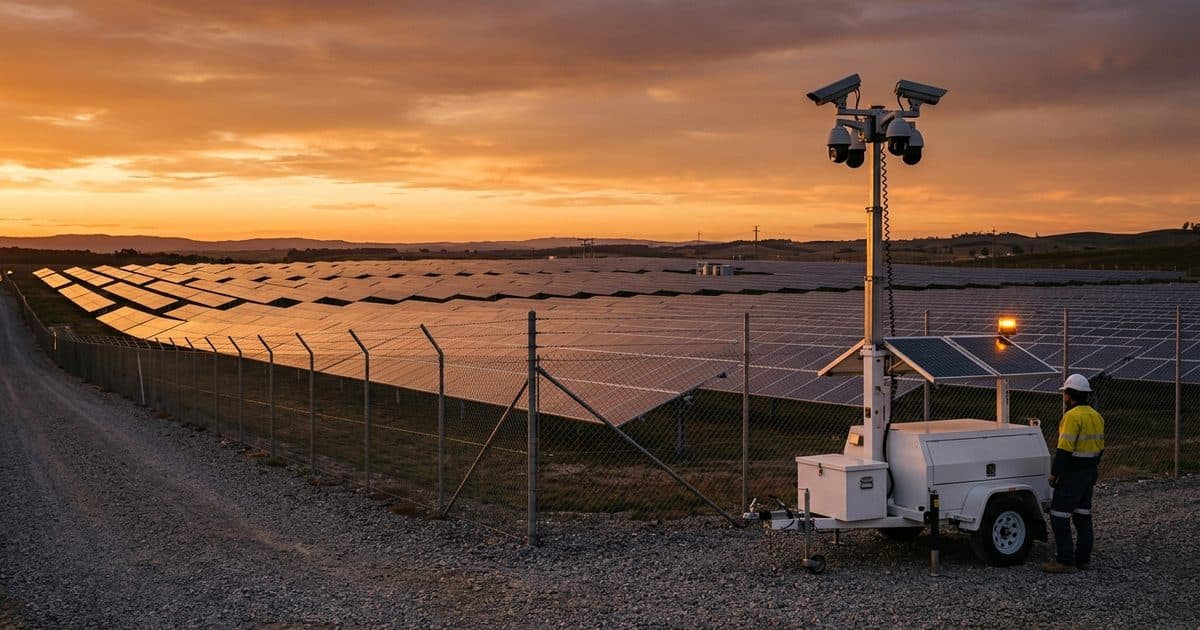
Why solar farms have become a prime theft target
Solar farms concentrate three things thieves want: valuable metal, isolation, and predictability. A utility-scale plant contains long runs of copper conductor connecting rows of panels to combiner boxes, inverters, and the substation, and those runs follow layouts that are easy to learn. Most sites sit far from population centers, behind chain-link fence, with nobody present between the last O&M truck leaving and the first one arriving.
The market has made that copper more attractive than ever. COMEX copper traded above $12,000 per ton for the first time in December 2025, a record, as reported by Bloomberg. When scrap value climbs, metal theft follows, and solar sites hold some of the most accessible copper in the energy sector.
Meanwhile the number of targets keeps multiplying. Utility-scale solar alone set a record with 41.4 GWdc installed in 2024, per the same SEIA/Wood Mackenzie report, and the EIA projected that solar and battery storage together would account for 81% of new US generating-capacity additions in 2024. Every one of those projects passes through a vulnerable construction phase and then becomes a lightly staffed operating asset. Security programs designed for fenced substations or staffed plants do not stretch across this footprint, which is why purpose-built utility security approaches have emerged for renewables.
The real cost of a breach: downtime dwarfs the stolen copper
The scrap value of stolen wire is usually the smallest line on the loss report. When thieves rip conductor out of trenches or combiner runs, they take sections of the plant offline, and every day of lost generation is revenue that never comes back. In a January 2024 breach at a California solar site described by Raptor Maps, a vendor-reported case, thieves stole over $100,000 in copper wire, but the estimated downtime cost reached $2.8 million. Replacement conductor has lead times, repair crews have backlogs, and re-energizing damaged sections requires testing before the plant can export at full capacity again.
The pattern also tends to repeat. In Fresno County, California, sheriff's detectives arrested a suspect accused of returning to the same solar farm for repeated copper thefts. In a separate Fresno County case, KMPH Fox 26 reported two people arrested after a solar-farm copper theft that inflicted millions of dollars in damage. A site that has been hit once has proven itself to be an easy target, and offenders come back until something changes.
This is not only an American problem. In Spain, police arrested 23 people in a theft ring targeting solar plants and recovered 21 tons of stolen material, including 7 tons of copper, according to pv magazine. Organized crews treat solar plants as inventory, which means operators should plan for professional, repeat offenders rather than opportunists.
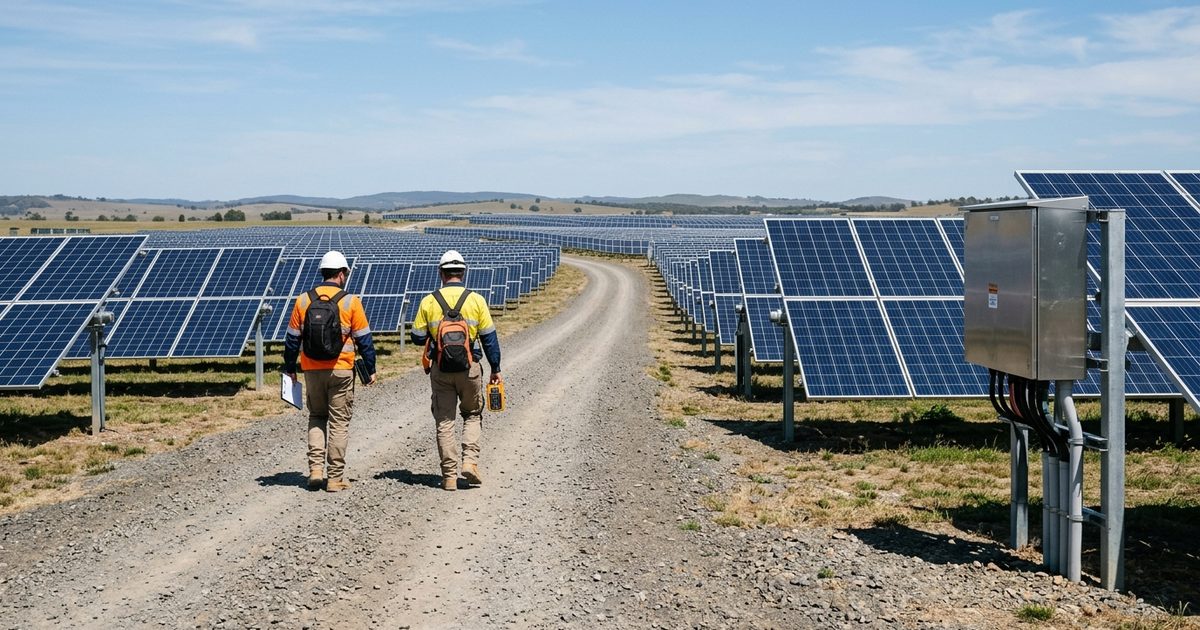
Securing the construction phase: trenches, laydown yards, and no grid power
Construction is the most exposed period in a solar project's life, and it happens before the site has any power of its own. Cable reels staged in laydown yards, conductor pulled into open trenches but not yet terminated, inverter and transformer skids waiting on foundations, and fleets of construction equipment all sit inside a temporary fence on a site the grid has not reached yet. Subcontractor traffic makes it hard to know who belongs, and a stripped trench discovered on a Monday morning can push back commissioning milestones that carry contractual penalties.
Because there is no grid power, the security system has to bring its own. This is where solar-powered surveillance works on home turf: a mobile surveillance unit carries its own panels, battery bank, and cellular uplink, so it can stand watch over a laydown yard the day mobilization starts. Our solar surveillance trailer guide walks through how these units are specified, and a properly sized system delivers multi-day battery autonomy through cloudy stretches, a topic we cover in detail in our post on solar security camera battery life.
Practical construction-phase coverage usually means:
- A unit overlooking the laydown yard and staged cable reels, the highest-value concentration on site
- Coverage of gates and access roads to capture vehicles and plates entering after hours
- Repositioning units as trenching and terminations progress across the array
- Escalation contacts that match the construction schedule, including the GC's superintendent
Securing operating solar farms against copper harvesting
Once a plant is energized, the threat shifts from opportunistic construction theft to what investigators often call copper harvesting: crews cutting fence in a back corner, working row by row along feeder runs, and returning across multiple nights. The Fresno County cases above show exactly this pattern of repeat visits. Operating sites also lose panels themselves, which have street value, and inverter components, where the damage cost again far exceeds what the thief gains.
The security challenge at an operating site is scale. A perimeter measured in miles cannot be watched by a person, and unmonitored cameras only document losses after the fact. Effective systems concentrate detection where intrusions actually begin: perimeter segments near road access, gates, inverter skids, and the substation yard. Analytics that distinguish a person or vehicle from a coyote or wind-blown vegetation keep alerts meaningful, and license plate capture at gates gives law enforcement something to work with. Many of the same principles apply across the utility footprint, as we describe in our guide to copper theft prevention at substations.
Matching coverage to the project phase
| Phase | Primary targets | Camera priorities |
|---|---|---|
| Construction | Cable reels, open trenches, equipment, laydown yard | Self-powered units at laydown and gates, frequent repositioning |
| Commissioning | Terminated runs, inverters, tools | Perimeter detection plus access-road plate capture |
| Operations | Feeder runs, panels, inverters, substation | Fixed detection zones, night-capable analytics, live monitoring |
Do wind farms face the same problem?
Largely, yes. Wind farms share the traits that make solar plants attractive: remote locations, long construction timelines, laydown yards full of staged components, and substantial copper in collection systems, turbine bases, and substations. The distances are even greater, with turbines strung across miles of ranch or farm land and access roads that see little traffic between maintenance visits.
The same off-grid playbook applies. Self-powered camera units can cover a wind project's laydown yard and substation during construction, then consolidate around the operations and maintenance building and substation once the project is running. Renewable operators who manage mixed portfolios often standardize one monitored-camera approach across solar, wind, and even conventional energy sites; the overlap with oil and gas site security is significant, since those sites face the same combination of remoteness, valuable metal, and thin staffing.
From detection to response: cameras as a force multiplier
A camera only prevents a loss if someone acts on what it sees. That is the difference between recorded video, which helps an insurance claim, and live remote monitoring, which interrupts the theft. When a monitored system detects an intrusion, trained operators verify what is happening in real time, use audio talk-down to warn intruders they are being watched, and escalate to the right people with a verified, in-progress incident rather than a guess.
That verification step is what makes monitored cameras a force multiplier for the humans responsible for the site. O&M technicians are not security responders, and no operator can afford to staff every plant overnight. Guard and patrol companies, for their part, cover far more ground when cameras filter thousands of empty hours down to confirmed events. The goal is not fewer people; it is verified information, so people, yours or your security partner's, handle verified incidents instead of chasing false alarms across empty acreage.
This is the model Vision Detection Systems builds for renewable sites: solar-powered surveillance trailers that run where the grid has not arrived yet, watched 24/7 by a monitoring center that verifies events and escalates per your site's response plan, then repositioned as the project moves from trenching to commissioning to commercial operation. The buildout numbers say thousands of new sites will need this kind of protection; the theft cases say the cost of waiting is measured in megawatt-hours, not just missing wire. Deploy coverage when the first cable reel arrives, keep it through operations, and make sure every alert ends with a person who can act on it.