
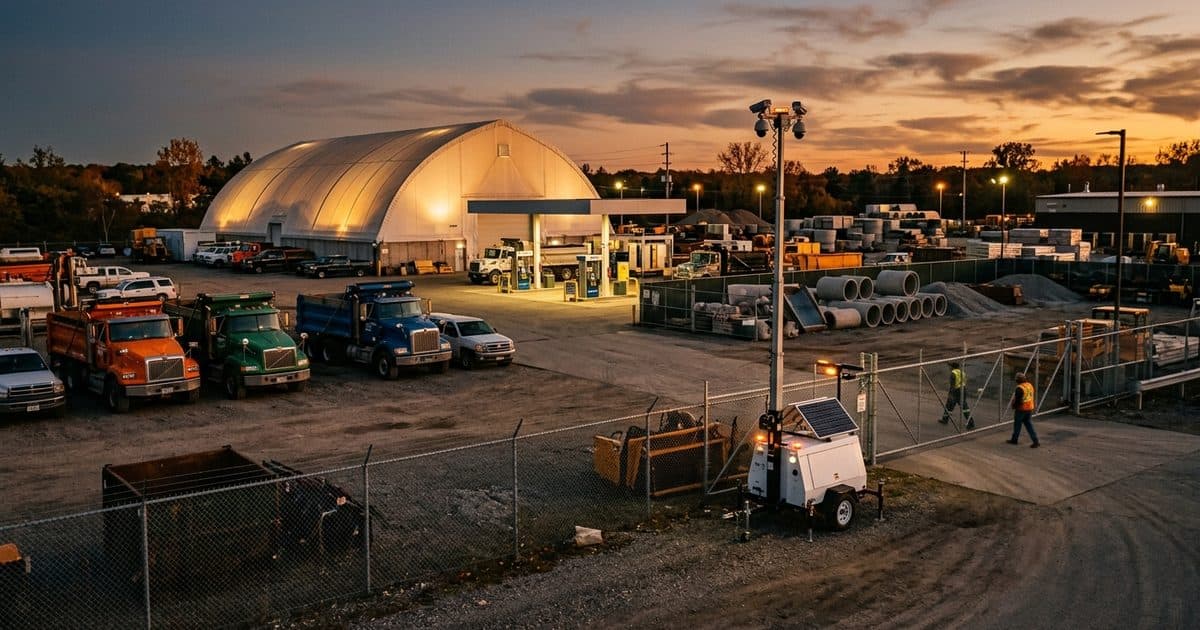
Why are public works yards targeted after hours?
Public works yards offer predictable schedules and high-value, easily resold materials. Crews leave at a known hour, vehicles park in the same rows every night, and many yards sit in industrial areas with little evening foot traffic. That combination makes them a recurring stop for opportunistic and organized theft alike.
Catalytic converters are a prime example. Claims at one major insurer peaked at roughly 45,000 in 2022 before falling about 37 percent in the first half of 2023, according to an NBC News analysis of State Farm data. Even with the national decline, municipal fleets remain attractive targets. Trucks and vans with high ground clearance are quick to cut, and a row of identical vehicles lets a thief work down the line in one visit. A single night can sideline a meaningful share of a city's fleet.
Diesel and metals round out the target list. Fuel islands and slip tanks invite siphoning when prices climb. Copper wire, brass fittings, and pipe stock staged for utility work resell easily as scrap. Machine attachments, small equipment, and hand tools disappear into pickup beds in minutes. Because recovery rates for stolen equipment are so low, prevention is worth far more than any after-the-fact investigation.
What do theft and vandalism cost municipal budgets?
The direct loss is only the first line item. When a vactor truck, plow, or backhoe is stolen or stripped, the city absorbs repair or replacement costs, rental fees for substitute equipment, overtime to catch up on deferred work, and, over time, higher insurance premiums. Service interruptions are the cost residents actually notice: a missed plow route or a delayed water repair is a visible failure, even when the cause was a theft the public never hears about.
Vandalism carries its own recurring price tag. Los Angeles spends roughly $7 million per year on graffiti removal and prevention, according to Western City, the League of California Cities magazine. Austin spends roughly $500,000 a year on graffiti cleanup, per local-news reporting from KXAN. Those figures cover whole cities, not just public works facilities, but they illustrate the pattern facility managers know well: unaddressed vandalism is not a one-time cost. It is a budget line that grows until deterrence improves.
For a fleet or facility manager preparing a budget request, the honest framing is avoided cost. Every prevented converter theft, siphoned tank, or stripped copper spool is money that stays in the operating budget instead of leaking out of it.
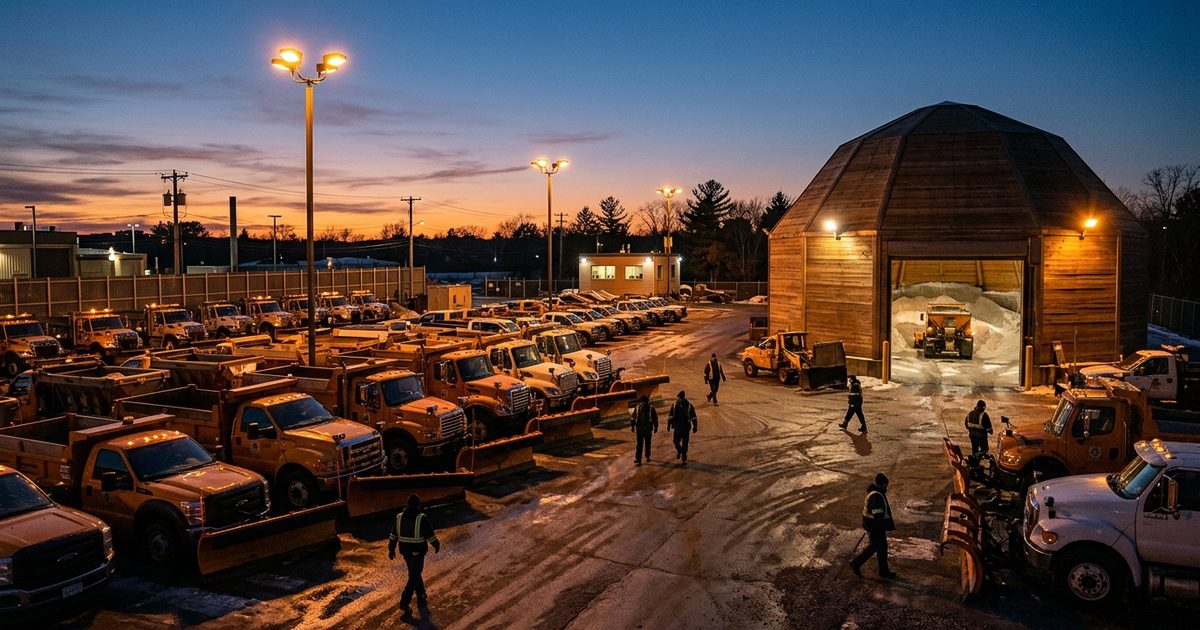
How to secure the main equipment yard
Start with physical measures, and know their limits
Fencing, gates, and lighting are the foundation, and most yards already have them. Practical upgrades include locking fuel caps and anti-siphon devices on fleet vehicles, caged or indoor storage for copper and brass stock, keyed-alike padlock programs so staff actually lock what they should, and parking plans that block high-value machines behind larger vehicles.
The limit of physical measures is that they only slow a determined intruder. A fence line in an industrial district after midnight buys minutes, not a response. Cameras that merely record have a similar weakness: they produce footage of a crime that already happened, often of a hooded figure no one can identify, and low recovery rates mean the loss usually stands.
Add monitored surveillance for live response
The layer that changes outcomes is human-verified monitoring. With 24/7 remote video monitoring, analytics flag after-hours motion, trained operators verify what is actually happening, and verified intrusions trigger an immediate response: audio warnings over on-site speakers, followed by escalation to your on-call staff, your contracted security provider, or police dispatch with a live description of the activity in progress.
That verification step matters to municipalities for two reasons. First, it interrupts crimes rather than documenting them, and most intruders leave when a loudspeaker addresses them directly. Second, it produces credible calls for service. A dispatcher hearing "verified break-in in progress, two subjects at the fuel island" treats the call very differently than an unverified alarm from a facility with a history of false activations.
Coverage beyond the yard: project sites, parks, and rights-of-way
Public works security rarely stops at the main yard, and this is where redeployable coverage earns its keep. The same trailer protecting the fleet yard in winter can cover a utility project in spring and a park venue over event season.
| Municipal site | Common after-hours risks | Coverage approach |
|---|---|---|
| Equipment and fleet yard | Catalytic converter theft, fuel siphoning, copper and attachment theft | Fixed trailer positions covering gates and equipment rows |
| Water and sewer project sites | Theft of pipe, wire, tools, and staged materials from laydown areas | Trailer redeployed as the project moves through phases |
| Parks, pools, and event venues | Vandalism, graffiti, damage to restrooms and playgrounds | Seasonal rotation during peak-use and peak-damage months |
| Rights-of-way and remote lots | Illegal dumping, theft of stockpiled materials | Trailer moved to active hotspots as complaints come in |
Water and sewer projects deserve particular attention because open trenches and laydown yards full of pipe and wire sit exposed for weeks; the same monitoring principles covered in our guide to water treatment facility security cameras apply to distribution and collection projects in the field. Parks departments face a different profile, where the goal is deterring the vandalism and graffiti that drive those seven-figure cleanup budgets; see our companion piece on park security cameras and vandalism prevention. And for the rights-of-way problem that plagues nearly every city, cameras for illegal dumping enforcement both deter dumping and capture the vehicle and plate evidence code enforcement needs to actually cite offenders.
Why mobile surveillance trailers fit municipal procurement
Capital construction is the enemy of timely security. Trenching conduit, setting poles, and extending network infrastructure across a yard means engineering, bids, and a project that lands in next year's capital plan, if it survives prioritization at all. A mobile surveillance unit sidesteps all of it: the trailer arrives on a hitch, runs on solar power with battery reserve, connects over cellular, and is operational the day it is positioned.
That deployment model maps cleanly onto how municipal budgets actually work:
- Operating expense, not capital outlay. A monitored trailer service is a line item like any other contracted service, which is typically a faster approval path than a capital project.
- No stranded investment. If the yard is reconfigured, the depot consolidates, or priorities shift, the coverage moves. Nothing is bolted to a building the city might repurpose.
- One asset, many sites. Redeployment across yards, parks, project sites, and dumping hotspots lets a single budget line serve multiple departments' needs across the year.
- Fast response to emerging problems. When a council member's district develops a dumping or vandalism problem, coverage can be on site in days rather than after a design-and-build cycle.
A force multiplier for city staff and security partners
Monitored surveillance works best as a force multiplier, not a substitute for people. Many cities pair public works coverage with contracted security patrols, and the two are stronger together: instead of a patrol officer checking a quiet yard on a fixed loop, monitoring watches every camera continuously and directs people, yours or your security partner's, to verified incidents where they are actually needed.
The same coordination applies to law enforcement. Police departments already use this technology themselves, as covered in our look at mobile surveillance trailers for law enforcement, so they are familiar with verified-alert workflows. A city that gives its police partner verified, real-time information from the yard gets faster response and better case outcomes than one handing over grainy footage the next morning.
Planning a public works yard security deployment
A practical sequence for facility and fleet managers:
- Inventory the targets. List fuel storage, metals stock, fleet rows, attachments, and small equipment, and rank them by loss cost and recovery difficulty.
- Walk the yard at night. Note dark zones, blind corners, low fence sections, and lines of sight from public streets. After-hours conditions, not daytime ones, define your risk.
- Fix the cheap physical gaps first. Locking fuel caps, caged metals storage, and disciplined parking plans cost little and shrink the target surface immediately.
- Position monitored coverage for verification, not just recording. Cameras should see gates, fuel islands, and equipment rows well enough for an operator to describe what is happening to a dispatcher.
- Write the escalation plan down. Define who gets called for a verified intrusion, in what order, before the first incident, and include your security partner and police non-emergency contacts.
- Plan the redeployment calendar. Map the year's project sites, event seasons, and known hotspots so the same coverage serves more than one department.
Vision Detection Systems builds its municipal deployments around exactly this model: solar-powered surveillance trailers with live, human-verified monitoring, positioned at yards and project sites without construction, and redeployed as the city's needs move through the year. For public works directors, the practical result is simple. The yard is watched every night, incidents are interrupted rather than discovered at shift start, and the people involved, city staff and security partners alike, spend their time on verified events instead of routine checks of an empty lot.