
Here are ten practices, in the order a program usually meets them.
1. Start from incident data
Choose locations from calls for service and reported incidents, mapped by place and time of day. Complaints and intuition are useful inputs, but data shows which corners, lots and corridors account for a disproportionate share of problems, and when.
2. Concentrate coverage
A 2011 Urban Institute evaluation of programs in Baltimore, Chicago and Washington, D.C. found significant effects where cameras were concentrated and routinely monitored. One camera on a long block gives an operator little to work with. Enough cameras to follow an event through an area is the goal.
3. Plan for monitoring from the start
A 2019 review of 76 studies found that actively monitored camera systems were associated with about a 15% reduction in crime, and recording-only systems showed no significant effect. Decide who will watch, during which hours, and how they reach dispatch, before choosing equipment.
4. Match the camera to the job
Use fixed wide-angle cameras to keep a constant view of the whole scene and pan-tilt-zoom cameras for detail when an operator needs it. Where vehicle identification matters, add a dedicated plate camera; a general camera rarely reads plates reliably. Our explainer on what an ALPR system is covers the difference.
5. Get height and angle right
Mount high enough to resist tampering and to see over vehicles and crowds. Check each view for obstructions through the seasons, since tree canopy that is bare in winter can block a view in summer. Pair a high overview with a lower or zoomed view where faces matter.
6. Account for lighting
Check every location at night. Streetlights behind a subject create silhouettes, and headlights and signage cause glare. Infrared illumination helps, and so does working with public works on lighting. The 2019 review found the largest effects where cameras were combined with other measures, and lighting is one of the most common.
7. Secure power and network
Urban installs depend on pole access, power and backhaul, and those take time to arrange. Plan for outages with backup power and local recording so footage survives a dropped connection. Treat every camera as a network device: change default credentials, encrypt traffic, and keep firmware current.
8. Use mobile units where fixed ones do not fit
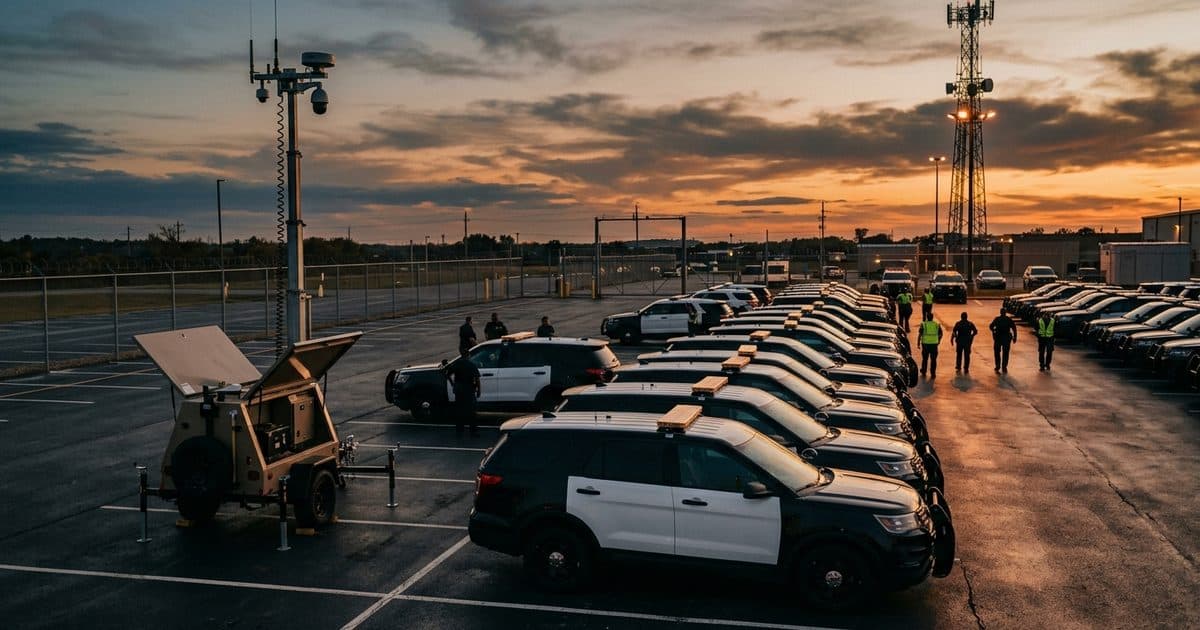
Some needs are temporary: an event, a construction detour, a hot spot that appeared last month. Self-contained mobile surveillance trailers with solar power and cellular connection can be in place quickly and moved when the pattern shifts, without waiting on utilities.
9. Set policy and tell the public
Before go-live, adopt a written policy covering purpose, who may view and export footage, retention periods, and audit logging. Post signage and publish the policy. Engage the community early; programs that explain themselves meet less resistance and last longer. Laws on recording and specific technologies vary by state, so review with counsel.
10. Maintain and measure
Clean lenses, check views, and confirm recording on a schedule; our video surveillance maintenance tips apply here too. Measure results by comparing incidents before and after, and against similar areas without cameras. Move or add cameras based on what the numbers show.
A note on procurement
If federal grant funds are involved, Section 889 of the National Defense Authorization Act restricts the use of covered video surveillance equipment from certain manufacturers. Ask vendors for written NDAA compliance documentation covering cameras, recorders and communications components.
How VDS helps
Vision Detection Systems builds mobile surveillance units for locations without power or network: a 5MP PTZ and three 8MP wide-angle cameras on a 22 ft telescopic mast (30 ft available), solar power, and 4G/5G cellular. Agencies can view the cameras directly or use the 24/7 US-based security operations center. For more, see how police security cameras enhance public safety, our article on cameras in high-crime areas, or the VDS page for public safety agencies.
Sources
- Piza, E. L., Welsh, B. C., Farrington, D. P., & Thomas, A. L. (2019). CCTV surveillance for crime prevention: A 40-year systematic review with meta-analysis. Criminology & Public Policy, 18(1). onlinelibrary.wiley.com
- La Vigne, N. G., Lowry, S. S., Markman, J. A., & Dwyer, A. M. (2011). Evaluating the Use of Public Surveillance Cameras for Crime Control and Prevention. Urban Institute. urban.org