
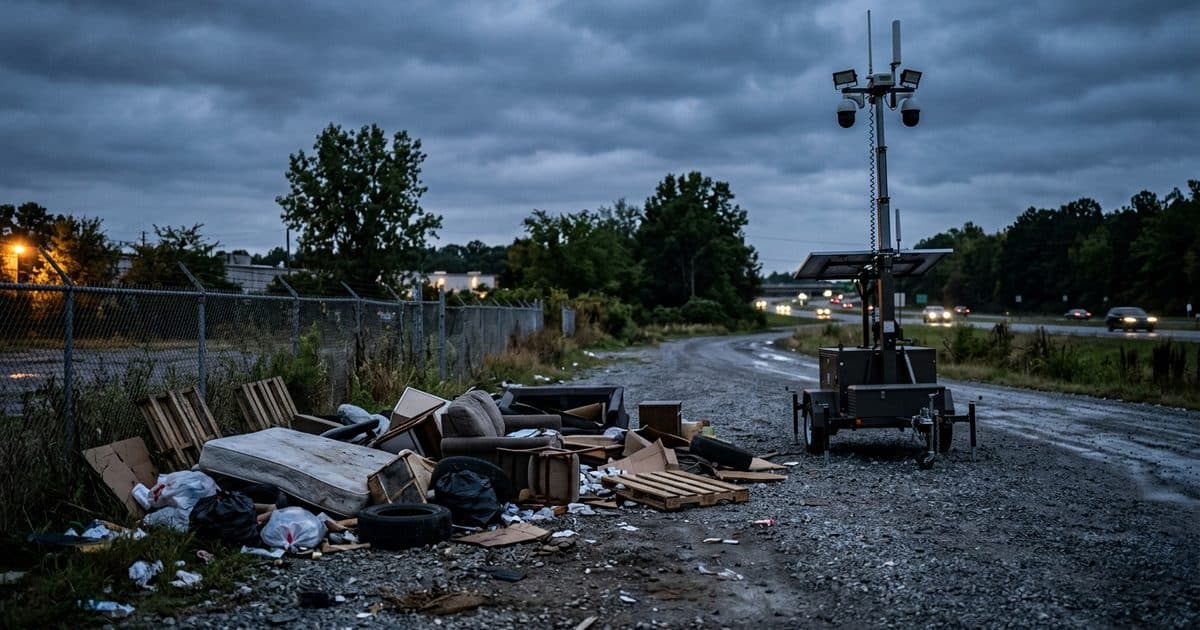
The problems are predictable
Waste sites are large, open and often at the edge of town. They have long fence lines, rough roads and areas with no lighting. Staff leave at closing and the site is quiet until morning. That makes a few problems common.
After-hours dumping. Drivers arrive when the gate is closed, either to avoid fees or to dump material the site does not accept. Some leave it at the gate. Others cut a fence.
Scavenging. People enter to pick through material, remove metal or take items they think have value. Scavenging near moving equipment is dangerous for them and creates liability for the operator.
Fires. Waste can ignite from heat, reactions, equipment sparks or deliberate acts. Fires that start overnight can grow before anyone sees them.
Equipment and fuel theft. Loaders, compactors, trucks and fuel tanks sit in the yard. Batteries, catalytic converters and tools are easy to take.
Trespass. Off-road vehicles, curiosity seekers and people looking for a quiet place to dump or loiter.
Start at the gate
Almost everything enters through one place. Control it.
- Keep entry points to a minimum and lock the rest.
- Light the entrance so people, vehicles and plates are visible.
- Post clear signs about hours, prohibited material and monitoring.
- Capture vehicles and plates with correctly aimed cameras. Our license plate recognition camera guide lists setup values that make plates readable.
Plate capture does not stop a first offense, but it gives a record that can be shared with local authorities. It also supports gate logs if you need to resolve disputes about who brought what.
Illegal dumping needs a response, not just footage
Dumping often happens at the same entrances and the same hours. That repetition is useful. Aim a camera at the usual spot, make the lighting good, and monitor the area at the hours you know the problem occurs. Our article on illegal dumping cameras covers placement and evidence in more detail.
A loudspeaker message can end a dumping attempt before it starts. A driver who hears a person say that the site is monitored and the police have been notified will often leave. If they do not, the monitoring team can contact police with video that shows the vehicle, the plate and the activity. How your jurisdiction handles evidence and enforcement varies by state and by local rules, so confirm procedures with counsel.
Fire detection and watching
Fire risk at waste sites is operational as well as security-related. Your permit, insurer and local fire authority will set requirements, and those vary by state and by locality. A camera plan does not replace them.
What cameras can add is a view of the site during hours when nobody is there. Cameras with fire and smoke analytics can flag visible smoke or flame so that a person looks at it quickly. Our guide to fire and smoke detection cameras explains the strengths and limits, including how dust, steam and exhaust can resemble smoke on video. Ask any provider who reviews fire alerts, how fast, and who they call.
Quick reference
| Problem | When it tends to happen | Practical coverage |
|---|---|---|
| After-hours dumping | Nights, weekends, holidays | Gate lighting, plate capture, talk-down |
| Scavenging | After closing, near working face | Wide view with detection and verified response |
| Fires | Any time, often overnight | Fire and smoke analytics plus live review |
| Equipment theft | Overnight and weekends | Yard coverage and fuel area views |
| Fence cutting | Dark stretches away from the road | Perimeter detection and lighting |
Cover a changing site
A landfill working face moves. Cells open and close, access roads change and equipment shifts. Fixed cameras cover the gate and the scale house well, but they do not follow the work. A trailer with its own power and cellular connection can sit near the active area and be moved when the footprint changes. For other large industrial yards, see scrap yard security cameras, which share many of the same problems with metal and equipment.
Large sites also need a plan for dead zones. Walk the property after dark and note where light is poor, where the terrain blocks the view and where vehicles can leave the road unseen.
Protect staff and equipment during the day
Security at a waste site is also a safety issue. People wandering into the working area are at risk from moving equipment. Keep visitors on marked routes, keep equipment locked and keys secured, and make sure operators know who is authorized to be on site. After hours, a monitored system tells you when someone is where they should not be, before a safety incident occurs.
Use monitoring to focus people
An actively monitored system keeps your staff from having to check every alert. A systematic review of closed-circuit television studies found that actively monitored systems were associated with a larger crime reduction than passive recording-only systems, which showed no significant effect. The point is not more cameras. It is a person who sees the event and can act.
A clear plan names who is called first, who authorizes police dispatch and how footage is shared. Our article on after-hours security for businesses and the guide to stopping trespassing on commercial property cover related steps.
How VDS fits
VDS builds solar-powered mobile surveillance trailers. Each unit carries a 5MP PTZ camera with 25x optical zoom and three 8MP wide-angle cameras on a 22 ft telescopic mast (30 ft available). A 900W bifacial solar array charges an 11.8 kWh LiFePO4 battery bank with reserve for 3 to 5 consecutive cloudy days, and dual-SIM 4G/5G cellular carries the video. No site power, internet or trenching is needed.
AI detection covers people, vehicles, loitering, objects and license plates, and the platform includes analytics pages for fire and smoke. Our 24/7 US-based security operations center verifies events, uses live talk-down through a loudspeaker, then dispatches police with video. Hardware is NDAA Section 889 compliant. Most deployments go from signed quote to live monitoring in about a week, and on-site setup takes one person under 20 minutes. Learn how remote monitoring works, contact our team, or call (410) 401-1986.
Sources
- Piza, E. L., Welsh, B. C., Farrington, D. P., & Thomas, A. L. (2019). CCTV surveillance for crime prevention: A 40-year systematic review with meta-analysis. Criminology & Public Policy, 18(1). onlinelibrary.wiley.com