
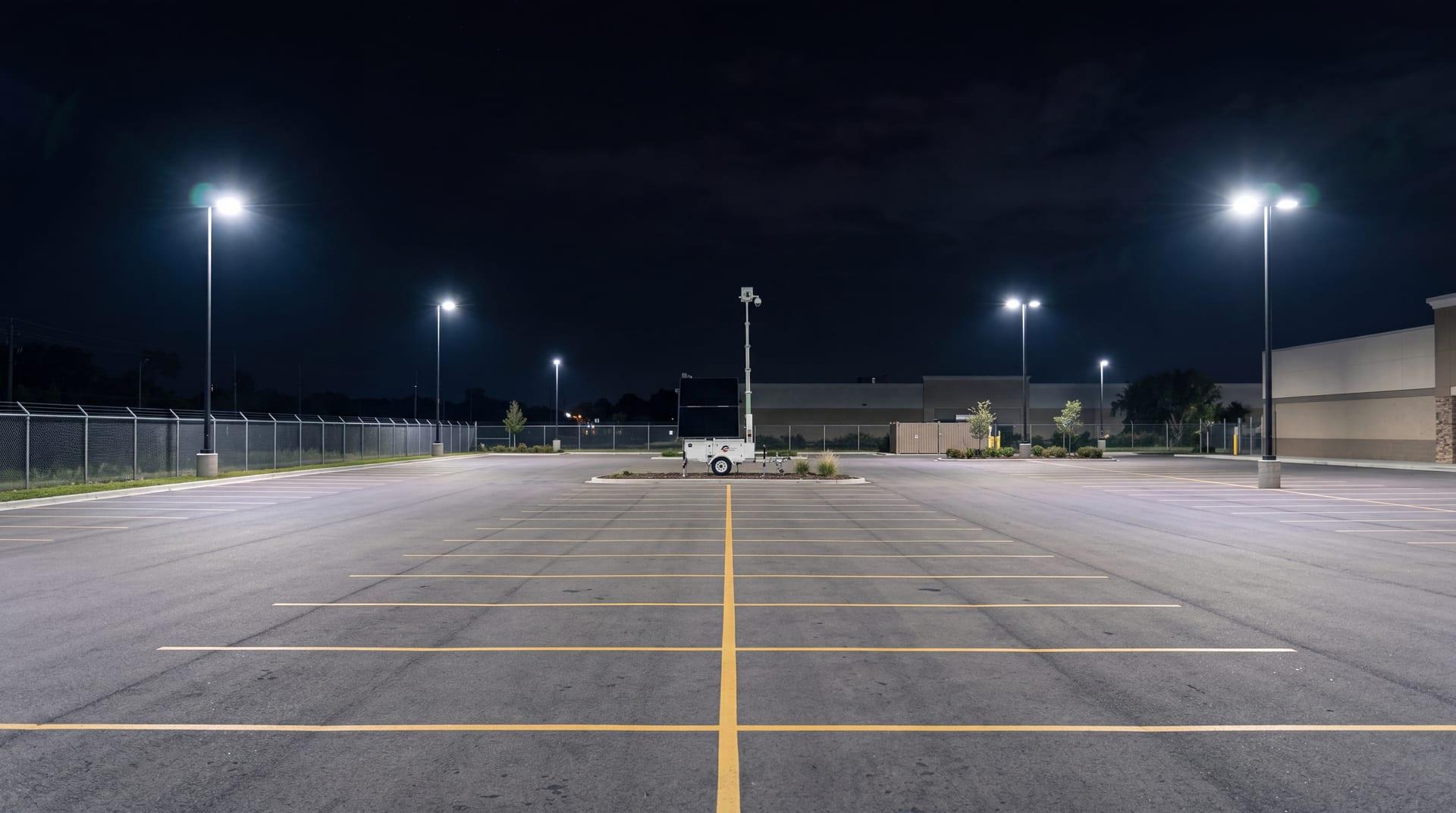
Why hotel lots are exposed
A hotel lot is full at night, which is the opposite of most commercial parking. Guests arrive late, park, and leave their vehicles until morning. Luggage, electronics and other items may be left in cars. Staff are concentrated at the front desk and may not see the far side of the property.
At the same time, the lot is open to anyone who can drive in. Non-guests can wander through, park for hours or look into vehicles without drawing attention. Break-ins, loitering and vehicle theft are the usual concerns. Our broader guide to parking lot security covers general principles that apply here as well.
Common issues and responses
| Issue | Pattern | What helps |
|---|---|---|
| Vehicle break-ins | Overnight, in dim or hidden rows | Lighting, camera coverage, monitoring |
| Vehicle theft | Entrances with no record of who enters | Entry and exit cameras, plate capture |
| Loitering | Non-guests staying in the lot | Analytics, verbal warnings, consistent policy |
| Guest safety | Dark walking routes to entrances | Even lighting, clear sightlines, monitored cameras |
| Disputes and claims | No record of what happened | Retained, organized video |
Liability and what to confirm
Liability for guest vehicles varies. State law, the type of parking, signage, valet arrangements and the facts of each incident can all affect who is responsible. Some properties post notices that limit what they promise. Others provide formal services such as valet or gated parking that carry different expectations.
Because of that variation, do not rely on general advice for legal questions. Confirm your obligations, signage wording, insurance coverage and recording notices with counsel and your insurer. Our overview of business security camera laws explains the kinds of issues to raise, but it is not legal advice. When an incident occurs, good records help. See our guide to security camera footage as evidence for how to preserve and share video.
Lighting and sightlines
Lighting is the first fix. Aim for even coverage across the lot, walking routes and entrances, and avoid bright spots next to dark gaps. Guests who arrive late should be able to see their route from the car to the door. Fixtures that go out should be replaced quickly, and a simple after-dark walkthrough catches problems that daytime checks miss.
Sightlines matter as much as light. Landscaping, dumpsters and equipment storage can create hiding places. Keep walking routes visible from the lobby or from camera positions where possible.
Camera coverage that fits a hotel
A good camera plan reflects how guests move through the property.
- Entrances and exits. Record vehicles and plates entering and leaving.
- Parking rows. Cover each section, especially the far side and any rows out of sight of the lobby.
- Walking routes. Watch paths from the lot to the entrance.
- Entrances to the building. Include exterior doors and side access points.
- Loading and service areas. These are often forgotten and often quiet.
Higher mounting widens the view but reduces facial detail, so many properties combine a tall camera for the lot with closer cameras at entrances. Privacy matters too. Cameras should not look into guest rooms, and recording rules vary by state.
Handling loitering
Loitering in a hotel lot may involve people who look suspicious but are doing nothing wrong, such as a rideshare driver waiting or a guest taking a call. A fair, consistent process protects guests and staff.
- Define what behavior requires action and who responds
- Use polite, verbal contact first
- Record each incident with time, location and outcome
- Involve police for safety concerns or refusal to leave
- Review patterns to see if lighting or layout is contributing
Detection analytics can flag people who stay in an area longer than expected. See our guide to loitering detection cameras for details. Rules on trespass and removal vary by state.
Monitoring overnight
The overnight hours are when hotel lots are most active and least supervised. Cameras that only record show what happened after the guest discovers a broken window. Monitored cameras can stop activity in progress.
A 2019 systematic review of CCTV research found that actively monitored systems were associated with about a 15% reduction in crime, while passive recording-only systems showed no significant effect. Parking lots showed an effect of about 37% in the studies reviewed. For a hotel, that means the combination of cameras and active monitoring is more promising than cameras alone. See our piece on 24/7 parking lot surveillance with monitoring and our remote monitoring page for how this works.
The cameras and analytics do the watching so people, yours or your security partner's, handle verified incidents. Front desk staff keep focusing on guests, and a monitoring team handles lot activity.
Overflow lots and busy periods
Hotels near event venues or airports often rely on overflow parking, sometimes on a lot nearby or a temporary field. Those areas have no existing cameras and may have no power. A mobile surveillance trailer can cover them during busy periods without construction and move when the need changes.
Communicating with guests
Guests notice security more than most owners expect. Clear communication builds trust and reduces claims.
- Remind guests at check-in not to leave valuables visible in vehicles
- Post signs that explain the lot is monitored, with wording reviewed by counsel
- Give guests a number to call if they see something concerning or discover damage
- Respond quickly to reports and record what was done
- Train front desk staff to take incident reports consistently
When a guest reports a break-in, a fast and organized response matters. Staff can pull the relevant video, note the time window and help the guest contact police and their insurer. Handled well, the incident becomes a demonstration of care rather than a complaint.
How VDS fits
VDS builds solar-powered mobile surveillance trailers. Each carries a 5MP PTZ camera with 25x optical zoom and three 8MP wide-angle cameras on a 22 ft telescopic mast, with 30 ft available. A 900W bifacial solar array charges an 11.8 kWh LiFePO4 battery bank with reserve for 3-5 consecutive cloudy days, and dual-SIM 4G/5G cellular means no site power, internet or trenching is needed.
AI detection covers people, vehicles, loitering, objects and license plates. A 24/7 US-based security operations center verifies events, responds with live talk-down through a loudspeaker, then dispatches police with video. The hardware is NDAA Section 889 compliant. Most deployments go from signed quote to live monitoring in about a week, and setup takes one person under 20 minutes. Rental, month-to-month and term subscriptions are available. Talk to our team about your property.
Sources
- Piza, E. L., Welsh, B. C., Farrington, D. P., & Thomas, A. L. (2019). CCTV surveillance for crime prevention: A 40-year systematic review with meta-analysis. Criminology & Public Policy, 18(1). onlinelibrary.wiley.com