
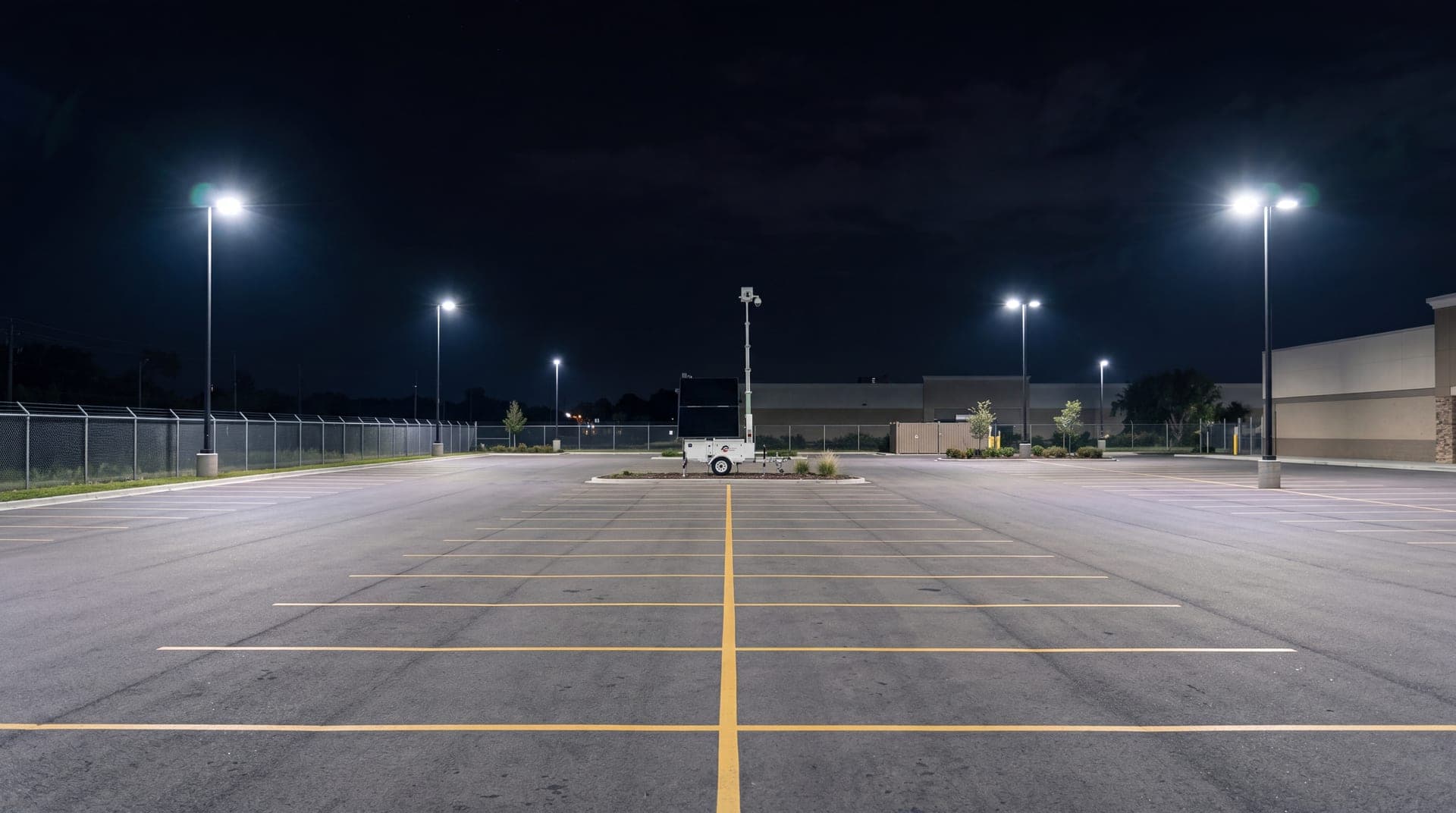
This guide breaks down what 24/7 monitoring actually means, how to design coverage that works in real parking lot environments (including malls and shopping centers), and what to prioritize if you’re upgrading or deploying a system.
This guide covers the monitored-service side — what 24/7 monitoring adds over cameras alone. For budgeting numbers, see parking lot security camera cost; for shopping-center specifics, see mall parking lot security.
Why Parking Lot Surveillance Cameras Matter For Commercial Properties
Parking lots are uniquely exposed: large footprints, mixed vehicle/pedestrian traffic, and incidents that often occur at night. A properly designed commercial surveillance setup supports three outcomes:
Deterrence: Visible coverage at entrances, lanes, and high-risk zones
Evidence: Footage that’s clear enough to be used for investigations and claims
Response: A workflow that reduces time-to-awareness during incidents
If your current system isn’t producing those outcomes, the issue is rarely “you need more cameras.” It’s almost always coverage design + lighting + operations.
Parking Lot Surveillance Cameras vs “Parking Lot Cameras”
Buyers searching for “parking lot cameras” are usually not asking for consumer hardware. They’re looking for a commercial surveillance program that includes:
Coverage planning (what must be seen and from where)
Retention and retrieval (footage exists and can be exported quickly)
Role-based access (who can view, export, and share clips)
Optional monitoring workflows (alerts, escalation, reporting)
If your parking lot has repeated incidents, the most effective upgrade is often operational: pairing cameras with remote video monitoring and a defined escalation path.
Learn more about our remote video monitoring services.
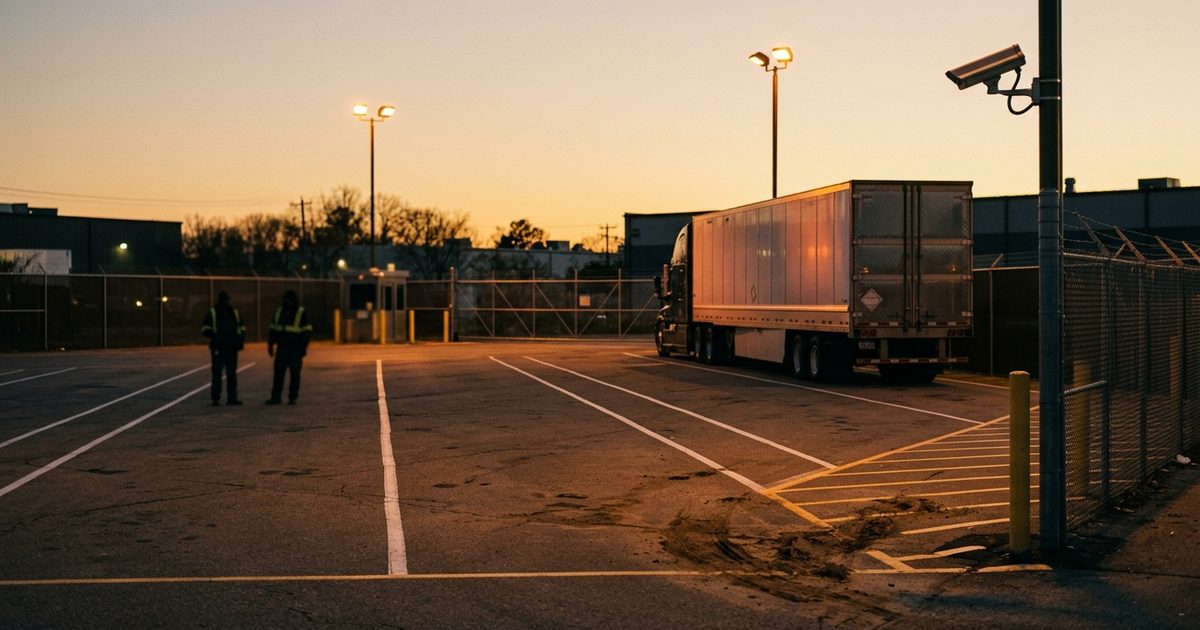
What “24/7 Monitoring” Really Includes
“24/7” can mean different things. Clarifying this avoids buying the wrong solution.
Recording Vs Live Monitoring Vs Verified Response
24/7 recording: Cameras record continuously, footage is reviewed after the fact
Live monitoring (staffed): Humans review feeds in real time (always or during key hours)
Verified response: Activity triggers alerts, an operator verifies what’s happening, then escalates based on site rules
For many lots, verified response is the best balance—fewer false alarms, faster action when it matters.
Alerting, Escalation, And Incident Reporting
A functional monitoring workflow answers:
What triggers an alert (motion zones, loitering rules, entry points)?
Who is notified (on-site security, property manager, law enforcement)?
What is the escalation path (call, dispatch, on-site response)?
How is the incident documented (clips, time stamps, report)?
If you can’t answer those questions today, you don’t have “monitoring”—you have “footage.”
Best-Fit Environments for Parking Lot Surveillance Cameras
Parking lot surveillance cameras are most valuable where risk, traffic, and liability overlap.
Mall Parking Lot Security Cameras: What Changes
Malls and shopping centers add complexity:
Higher pedestrian volume and liability
Multiple entrances and outparcel edges
Loading zones and service corridors
Incidents concentrated in specific corners/rows during peak hours
In these environments, coverage design should prioritize:
Entrances/exits + main drive lanes
Pedestrian corridors and storefront approaches
High-risk zones (outparcel edges, dim corners, loading areas)
If you’re securing a shopping center, this is where monitoring and reporting create real operational value.
Explore Shopping Center Remote Monitoring services.
Coverage Plan That Prevents Blind Spots
A parking lot surveillance system only works if it’s designed around how incidents actually happen—in motion, at night, and at the edges of visibility.
The goal of a coverage plan is to remove the predictable gaps criminals exploit and to make sure your footage is usable for identification, not just “nice to have.” Start by mapping risk zones (where incidents occur) and travel paths (how people and vehicles move), then align camera placement to capture approach, action, and exit with overlapping views.
Map the lot into zones: entrances/exits, drive lanes, pedestrian corridors, loading areas, and low-visibility corners
Prioritize “approach + action + exit” coverage for each zone (so you can see what led up to an incident and where someone went after)
Use overlapping camera views to reduce single-point-of-failure gaps (blocked by trucks, glare, weather, or crowds)
Validate evidence readiness by testing real clips (day and night) from critical cameras and adjusting placement/settings until details hold
Entrances, Drive Lanes, Pedestrian Corridors, Loading Zones
These areas are highest-leverage because they capture identifiable movement and repeat traffic patterns.
Entrances and exits: Cover plate capture and vehicle entry/exit paths; ensure you can tie a vehicle to a direction of travel.
Drive lanes: Cover main lanes connecting entrances to rows and storefronts; these are common for collisions, suspicious loops, and hit-and-runs.
Pedestrian corridors: Cover sidewalks, crosswalks, cart returns, and paths between stores and parking rows; these zones often drive incidents and disputes.
Loading zones and service alleys: Cover approach to docks and activity at doors; these areas are frequent targets for theft and unauthorized access.
Avoid relying on a single wide camera: wide shots help context, but you still need detail coverage for faces, plates, and actions.
Plan for obstructions: Assume trucks, tall vehicles, signage, and seasonal displays will block views and design around it.
Lighting And Nighttime Evidence Readiness
Night is where most parking lot systems fail—footage is too dark to identify anyone, or headlights and fixtures wash out details.
Audit lighting conditions by zone: Identify dark corners, uneven lighting, broken fixtures, and high-contrast areas.
Reduce glare and washout: Avoid aiming directly into headlights or bright fixtures; position cameras to preserve usable detail.
Confirm identification detail at night: Review real nighttime clips and check whether faces, clothing, and vehicle identifiers are clear enough for investigations
Run a simple monthly night check: Review 30–60 seconds from each critical camera and note any drift, blur, glare, or blocked views.
Adjust as the lot changes: Seasonal darkness, weather, and new signage can reduce visibility, so refresh the plan quarterly
LPR and Access Control Support
If your risk includes repeat offenders, unauthorized access, or vehicle-related incidents, consider adding license plate recognition at lot entrances/exits or chokepoints. LPR is most effective when:
Plates are captured at predictable angles/speeds
Lighting is controlled or compensated
the workflow is defined (watchlists, alerts, reporting)
Explore license plate recognition camera options.
Deployment Options For Temporary Risk Periods
Some lots don’t need a permanent buildout to solve a temporary spike (construction nearby, seasonal traffic, recent vandalism, tenant changes). In those cases, rapid deployment can deliver coverage quickly without waiting on infrastructure.
If you need fast coverage without permanent installation, start with mobile surveillance security trailers.
What Affects Cost And Scope For Parking Lot Surveillance Cameras
Cost is driven by operational requirements more than hardware. Key drivers include:
Lot size + coverage complexity: entrances, lanes, perimeter edges, obstructions
Identification vs general coverage: what detail level you need (faces/plates)
Night performance requirements: lighting constraints and camera configuration
Monitoring needs: hours covered, escalation rules, reporting
Multi-site oversight: standardization, user roles, centralized visibility
Parking Lot Surveillance Camera FAQ
1) What are parking lot surveillance cameras?
Parking lot surveillance cameras are commercial-grade cameras and recording/monitoring systems designed for large outdoor lots, built to deter incidents, capture usable evidence, and support response workflows.
2) Do parking lot surveillance cameras need 24/7 monitoring?
Not always. Some lots only need 24/7 recording. Monitoring is most valuable for after-hours incidents, repeat problems, and properties that need faster response and documented escalation.
3) What should mall parking lot security cameras cover first?
Entrances/exits, main drive lanes, pedestrian corridors, storefront approaches, and known high-risk zones (dim corners, outparcel edges, loading areas).
4) How do you prevent blind spots in parking lots?
Start with a coverage plan built around movement and chokepoints (lanes, entrances, crosswalks), then validate with test footage—especially at night.
5) Are mobile surveillance trailers a good fit for parking lots?
Yes when you need rapid deployment, temporary coverage during elevated risk periods, or when permanent infrastructure isn’t ready.
6) Can license plate recognition work in parking lots?
Yes, especially at entrances/exits or chokepoints, when placement and lighting are designed for plate capture and the alert/reporting workflow is defined.
Parking Lot Surveillance Cameras: Get a Coverage Plan and Quote
If you’re dealing with repeat incidents, blind spots, or after-hours risk, the fastest way to improve outcomes is to start with a coverage plan—not just a camera list. We’ll map your entrances, drive lanes, pedestrian corridors, and high-risk zones, then recommend the right deployment approach based on your site conditions and timeline.
If you need coverage fast, a mobile surveillance trailer can be deployed without permanent installation; if you n