
Understand the pattern before you spend money
Vandalism is rarely random at a single property. The same wall, door, window, sign or gate tends to be hit again, often at the same time of night. Start with a simple map of every incident for the past year. Mark where it happened, what was damaged, what time it was found and what it cost to fix. If you do not have records, start now, and photograph every incident.
Look for what the targets have in common. A long blank wall facing an alley, a dark corner behind a dumpster, a fence line that nobody can see from the road and a side entrance that is never lit are typical. Those are the places to fix first.
Remove the opportunity through design
Property design affects behavior. The idea behind crime prevention through environmental design is that clear boundaries, good visibility and active use make misconduct less comfortable. Some practical applications:
- Keep sight lines open between the street, the entrances and the walls most often hit
- Trim shrubs and trees that screen walls, and avoid planting where it hides people
- Use thorny or dense plantings along the base of blank walls to make them hard to reach
- Break up long blank surfaces with texture, panels or windows where that is possible
- Remove climbing aids, such as dumpsters, stacked pallets or low roofs, near walls
Not every change is practical for an existing building, so choose the ones that fit the incidents you have recorded.
Light the problem areas
Lighting does two jobs. It makes it more likely that someone will see the activity, and it makes video from any camera clearer. Concentrate on the walls, alleys, loading areas and entrances that suffer repeat damage. Avoid glare and deep shadow, and protect fixtures from being smashed. Make a person responsible for checking that lights work, because a single failed fixture can bring a trouble spot back. Our guide to parking lot security has more on lighting levels and layout, and many of the same principles apply to building exteriors.
Treat surfaces so cleanup is quick
Surface choices change how long damage lasts. Anti-graffiti coatings, whether sacrificial or permanent, make paint and marker easier to remove without harming the wall. Smooth, sealed surfaces are generally easier to clean than rough, porous ones. Ask a supplier how a coating performs on your specific material, how it is cleaned and when it needs to be reapplied, because that varies.
Murals and community art are another option for a wall that keeps being tagged. Results depend on the neighborhood, the quality of the work and whether it is looked after, so treat it as one tool and not a guarantee.
Clean up and repair fast
Quick removal is one of the most consistent pieces of advice in this area, and for a good reason. Graffiti that stays up gives the writer lasting credit and signals that no one is watching. Broken windows, bent fences and damaged signs invite more of the same.
Set up a routine so that cleanup does not wait for someone to notice. Decide who photographs the damage, who files the report, who removes or repairs it and the target time for each step. Keep materials that match your paint on hand. Photograph first, remove second, because the photographs are your evidence.
Add cameras that someone is watching
Cameras work best on a known problem. Put them where the incidents happen and where a person would have to approach, and check at night that the picture is usable. A 2019 systematic review of 76 studies found that parking lots, one of the settings covered, were associated with a reduction in crime of about 37%. It also found that actively monitored systems were associated with a reduction of about 15%, while systems that only recorded showed no significant effect. Camera programs that were combined with several other interventions showed a reduction of about 34%. That fits the approach in this article. Cameras help most as part of a set of measures, and monitoring matters.
Our article on whether security cameras deter crime goes into the evidence.
Graffiti is often done quickly and in small groups, so the useful response is early. Detection that flags a person lingering at a wall after hours, a verified alert and a voice from a loudspeaker telling them that police are on the way can end an incident in progress. For public and recreation sites the same principles apply, as in our article on park security cameras and vandalism.
Document and report every incident
Even when no one is caught, a record helps. For each incident keep:
- Dated photographs of the damage, taken before cleanup
- Video of the event, if any, exported and labeled
- A short written description with the time found and the area affected
- The cost of repair, with invoices
- The report number, if a report was filed
Patterns across reports can persuade police to prioritize your property, and insurers and landlords usually expect the same paperwork. Rules on reporting, restitution and the use of cameras vary by state and city, so confirm requirements with your local department and counsel. Our guide to security camera footage as evidence covers export and chain of custody.
Quick reference
| Measure | What it does | Common gap |
|---|---|---|
| Design and sight lines | Removes hidden, blank targets | Overgrown plantings |
| Lighting | Increases visibility and footage quality | Failed or smashed fixtures |
| Coatings and murals | Cut cleanup effort or reduce appeal | No maintenance plan |
| Fast cleanup | Denies lasting visibility | Photos not taken first |
| Monitored cameras | Interrupt and document incidents | Recording with nobody watching |
| Reports and records | Support police, insurance, restitution | Missing dates and invoices |
Where VDS fits
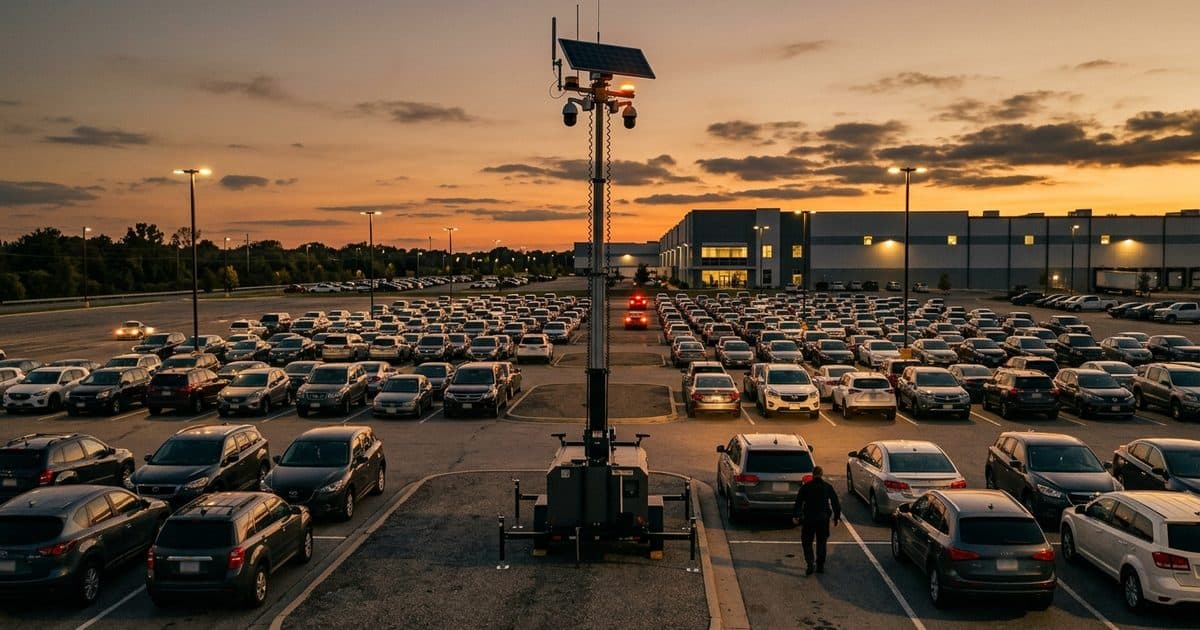
Walls that get hit are often at the edge of a property, with no power or network nearby. A VDS mobile surveillance unit is a solar-powered trailer with a 5MP PTZ camera with 25x optical zoom and three 8MP wide-angle cameras on a 22 ft telescopic mast, with dual-SIM 4G/5G cellular and no trenching. AI detects people, vehicles and loitering. A 24/7 US-based security operations center verifies events, uses a loudspeaker for live talk-down, and dispatches police with video, which is remote video monitoring so people, yours or your security partner's, handle verified incidents. Talk to our team about the areas that keep getting hit.
Sources
- Piza, E. L., Welsh, B. C., Farrington, D. P., & Thomas, A. L. (2019). CCTV surveillance for crime prevention: A 40-year systematic review with meta-analysis. Criminology & Public Policy, 18(1). onlinelibrary.wiley.com