
What burglars themselves say about cameras
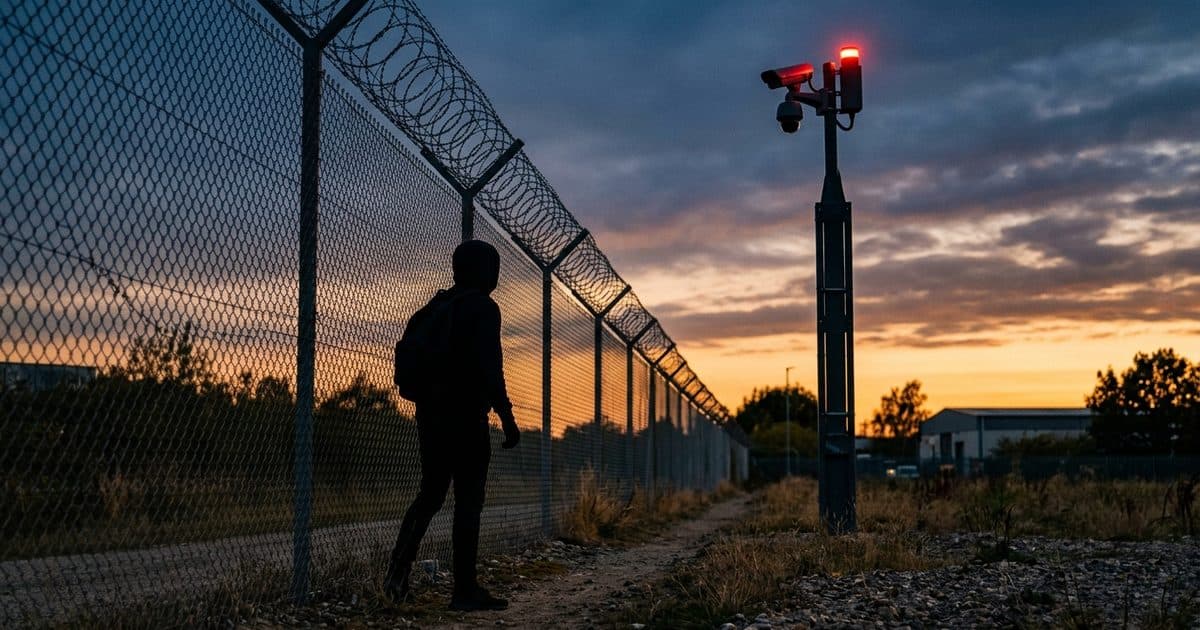
The most direct evidence on deterrence comes from asking offenders how they choose targets. In 2012, researchers at UNC Charlotte surveyed 422 incarcerated burglars about their decision-making. The results, published in the "Understanding Decisions to Burglarize" study, showed that security measures factor into target selection far more than most business owners assume.
Three findings stand out. First, about 60% of the burglars said that if they detected an alarm or camera, they would look for an alternative target entirely. Second, roughly half said that discovering an alarm or camera mid-burglary would make them abandon the attempt. Third, about 83% said they would try to determine whether an alarm was present before attempting a burglary at all, according to the same study as summarized by ScienceDaily.
That last number is the one worth sitting with. Most offenders are not charging in blind. They scout, they look for cameras and alarm signage, and they weigh the odds of getting caught before they commit. A security measure they can see changes that calculation before anything is stolen, which is exactly what deterrence means.
Two caveats apply. The study is self-reported, and incarcerated burglars are, by definition, the ones who got caught. It also dates to 2012, before modern connected camera systems were common. Even so, it remains one of the largest direct surveys of offender decision-making, and its core logic, that visible security shifts target selection, has held up.
Monitored vs. unmonitored cameras: the evidence gap
The research draws a consistent line between cameras that someone is watching and cameras that simply record. The Urban Institute's 2011 evaluation of public surveillance camera programs found that actively monitored cameras reduced crime by up to roughly 20% in some of the areas studied, while passive installations, where footage was only reviewed after incidents, showed weaker effects.
The mechanism is straightforward. A recording camera changes what happens after a crime. A monitored camera changes what happens during one. When a trained operator sees an intrusion as it starts, they can verify it is a real threat, issue a live audio warning, and escalate to a response before the offender loads a single item. The difference shows up clearly when you compare the two side by side:
| Capability | Record-only cameras | Actively monitored cameras |
|---|---|---|
| Primary output | Evidence after the fact | Intervention in the moment |
| Deterrence signal | Visual presence only | Visual presence plus live audio talk-down |
| False alarm handling | None, every alert looks the same | Human verification before escalation |
| Response | Footage review the next morning | Escalation to people while the incident is happening |
| Typical outcome | A clip of the theft | An interrupted or abandoned attempt |
This is why "do cameras deter crime" is really two questions. Record-only systems still contribute, since visible hardware alone screens out some of the 60% of offenders who avoid protected targets. But the stronger, research-supported effect belongs to systems where detection leads to verification and a live response. Remote video monitoring is the layer that converts a camera from a witness into a participant.
Why falling crime averages don't mean falling risk
National statistics might suggest deterrence is becoming less necessary. The FBI's early release of 2025 crime data shows property crime fell 12.4% in 2025. That is genuinely good news, but averages hide targeting.
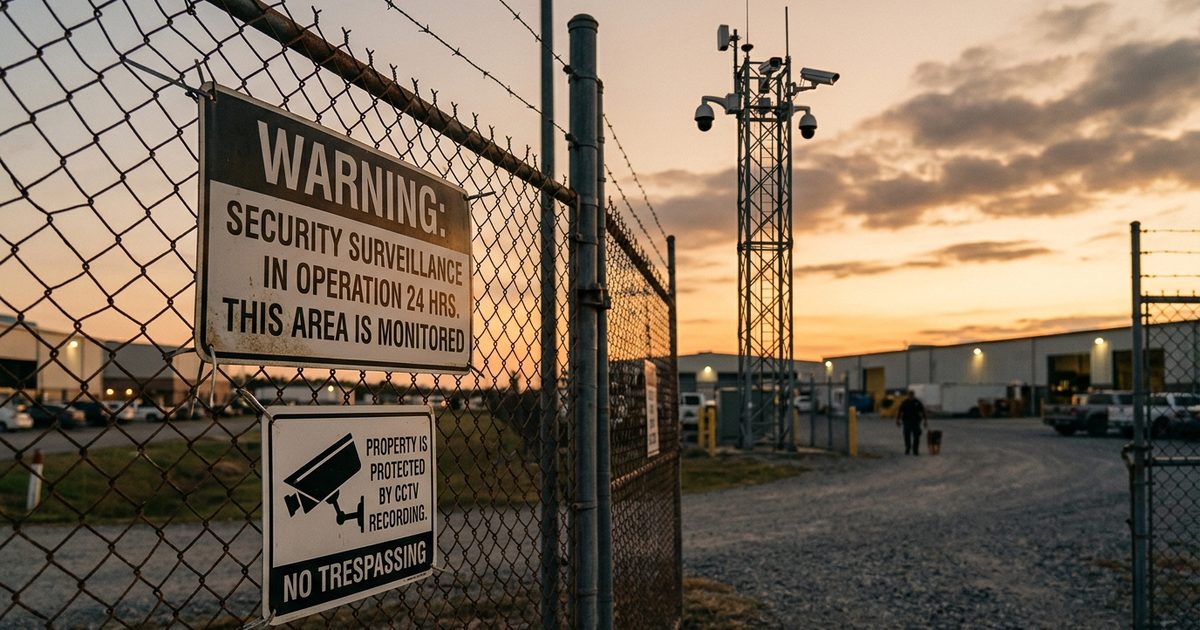
While overall property crime declined, organized commercial theft set records. Verisk CargoNet's analysis estimates cargo theft losses surged to roughly $725 million in 2025, a record figure. Organized crews are not spread evenly across the economy. They concentrate on soft commercial targets: equipment yards, distribution sites, construction projects, and vacant properties where cameras are absent or obviously unwatched.
For a business owner, the practical takeaway is that your risk is set by how attractive your specific site is, not by the national trend line. A laydown yard full of copper wire and skid steers is a target in a falling-crime year and a rising-crime year alike. We break down what the incident data means for commercial operators in our review of business theft statistics for 2026.
The honest limits of camera deterrence
Cameras are not a force field, and the research is candid about the gaps. Three limits deserve attention before you build a security plan around deterrence alone.
Displacement
Deterrence often redirects crime rather than erasing it. If an offender skips your protected site, they may simply move to a softer target nearby. Researchers flag displacement as a persistent limitation when evaluating surveillance programs. From a pure public-policy view that is a real critique. From the view of the person responsible for one specific property, moving the attempt off your site is still the outcome that protects your people, inventory, and schedule.
Study vintage
The strongest widely cited studies are older than the technology now in the field. The UNC Charlotte burglar survey dates to 2012 and the Urban Institute evaluation to 2011, before AI-assisted analytics, cellular-connected trailers, and modern talk-down speakers were standard. The direction of the findings, that visible and monitored beats hidden and passive, is unlikely to have reversed, but the exact percentages should be treated as historical estimates, not guarantees.
Offender awareness
Deterrence only works on offenders who notice the camera and believe it is active. A dome hidden under an eave deters no one. An impulsive offender may not scout at all. And experienced crews sometimes test a site, tripping a sensor and watching whether anything happens. If the answer is nothing, the deterrent evaporates. This is the strongest practical argument for systems that respond audibly and visibly the moment someone crosses a boundary.
What makes a camera actually deter crime
Pulling the research together, deterrence depends on four conditions working in sequence.
- Visibility. The camera must be seen during the scouting phase, when about 83% of burglars say they check for security. Elevated masts, signage, and lighting all raise the odds the offender's target-selection math includes your cameras.
- Credibility. The system has to look and act live. Clean equipment, status lighting, and audible responses signal an active system rather than abandoned hardware.
- Monitoring. A human or verified detection layer has to be watching, because that is what separated the stronger results from the weaker ones in the Urban Institute's evaluation.
- Response. Verified incidents must lead somewhere: a live audio warning first, then escalation so people, yours or your security partner's, handle the incident while it is still in progress.
The sequence is detect, verify, warn, respond. Most intrusions at monitored sites end at the warning step, because an offender who hears a live voice naming their clothing and location has just learned the cameras are real and someone is watching. That is deterrence operating in real time rather than on a sign.
Note what is not on the list: resolution alone, camera count alone, or storage capacity. Those matter for evidence quality, but the deterrent effect comes from the offender's belief that detection leads to consequences. For a closer look at how live-monitored cameras and on-site personnel complement each other, see our comparison of remote video monitoring vs. security guards. The short version is that monitored cameras are a force multiplier, not a substitute, giving on-the-ground responders verified incidents instead of blind patrols.
Deterrence on jobsites, yards, and vacant properties
Commercial and industrial sites are where the monitored-vs-passive distinction matters most, because these properties sit empty at exactly the hours offenders prefer. A construction site after 6 p.m. has no employees, no witnesses, and high-value materials staged in the open. The same profile fits equipment yards, substations, and buildings between tenants.
The good news is that these sites also give deterrence the most room to work. Offenders targeting commercial property tend to be planners rather than opportunists, which places them squarely in the majority who scout for security and avoid protected targets. A visible surveillance unit at the gate line, backed by live monitoring, addresses both the scouting phase and the intrusion phase. We cover the full layered playbook, fencing, lighting, inventory control, and cameras together, in our guide to preventing construction site theft, and the special considerations for unoccupied buildings in our vacant property security guide.
Where monitored mobile surveillance fits
This is the problem Vision Detection Systems builds for. VDS deploys solar-powered mobile surveillance trailers with elevated, clearly visible camera masts, paired with 24/7 live monitoring from a security operations center. When the system detects an intrusion, operators verify the threat, deliver a live audio talk-down, and escalate verified incidents to the right responders, whether that is your site team, your security partner, or local police. The design maps directly onto what the research says works: visible enough to change target selection, monitored enough to intervene when someone tries anyway, and mobile enough to sit wherever the risk is this month.
So, do security cameras deter crime? The evidence says yes, meaningfully, when offenders can see them and someone is watching. Cameras that only record will help you after a loss. Cameras that are visible, credible, and actively monitored help make sure the loss never happens.