
Why are thieves cutting EV charging cables?
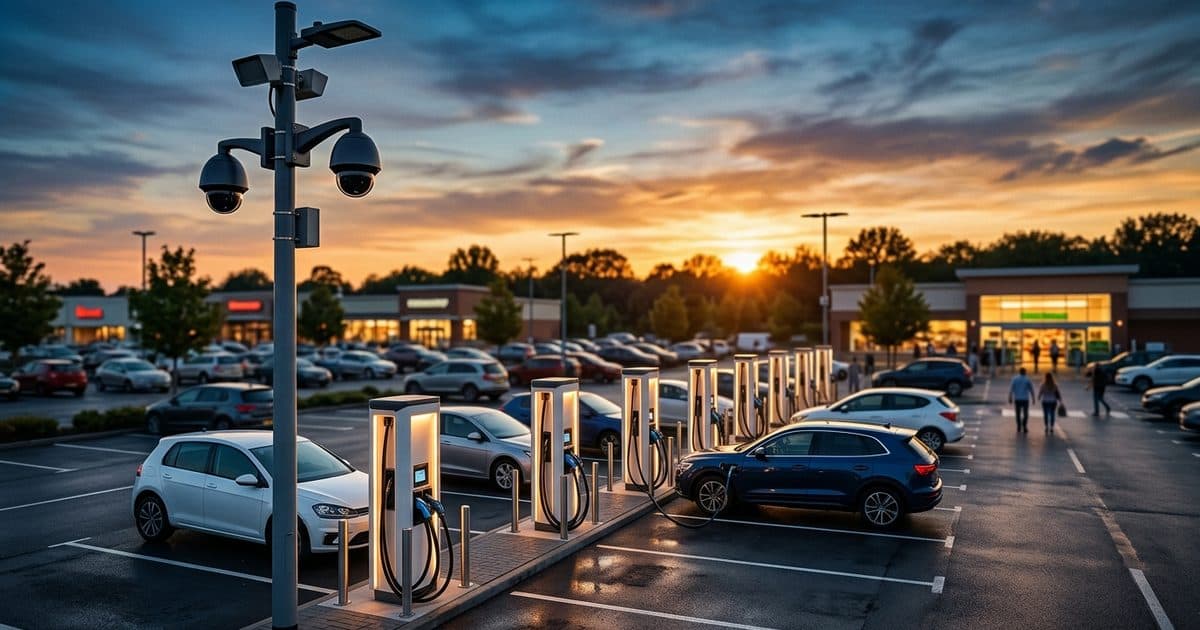
Copper is the whole story. COMEX copper crossed $12,000 per ton for the first time in December 2025, a record, as Bloomberg reported, and charging cables are one of the most exposed pieces of copper infrastructure in any parking lot. Unlike wiring inside a building or a locked utility cabinet, a charging cable hangs in the open, unattended, usually at night.
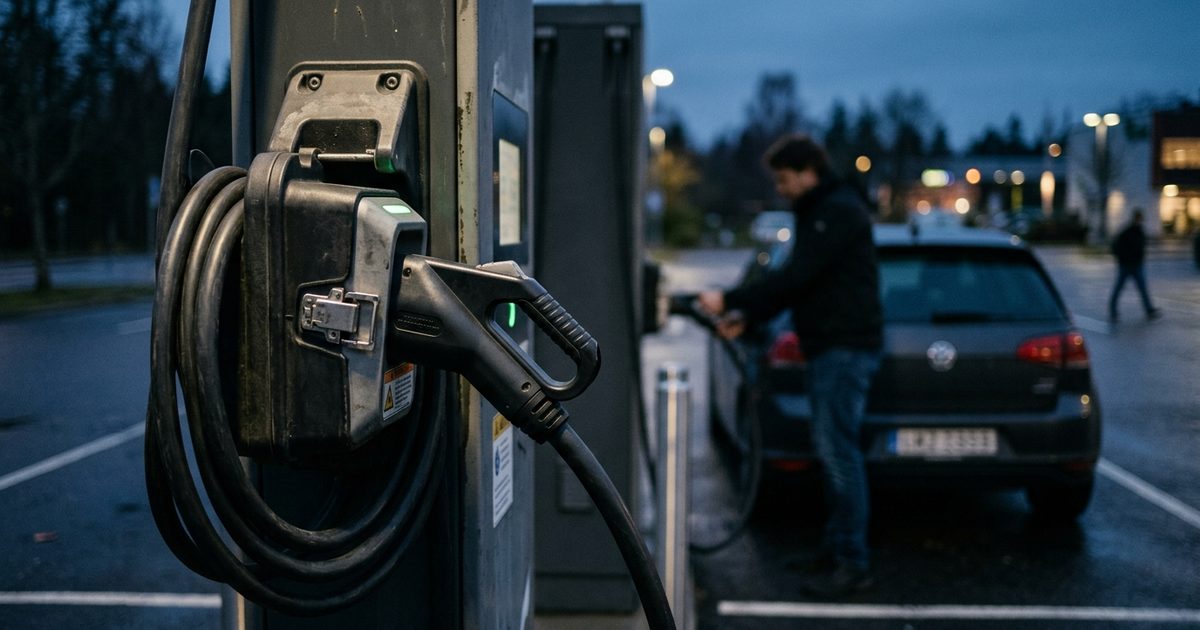
The economics are badly asymmetric, and hosts sit on the wrong side of them. A stolen cable yields roughly $15 to $20 of copper at a scrapyard, per PBS NewsHour / AP, while the host or network pays $2,000 to $4,000 for the replacement, plus the service call and the days or weeks the port sits dark.
It's also a low-skill, fast crime. A pair of bolt cutters and under a minute per cable is enough, which is why one visit often takes out every dispenser in a row. The pattern mirrors what utilities have fought for years at remote infrastructure; our guide to copper theft prevention at substations covers the same offender logic in a different setting.
How widespread is charging cable theft?
The trend line is steep. Beyond the 215 Electrify America cables cut from January through September 2024 versus 79 the year before (Insurance Journal, from Bloomberg reporting), the PBS NewsHour / AP reported that 129 of the network's cables were cut in just the first five months of 2024, more than in all of 2023, which saw 125.
Municipal chargers are getting hit just as hard. Seattle City Light saw theft at 8 of its 13 public charging stations between March 2023 and January 2024, with repairs averaging about $2,500 each, per GeekWire. One Georgetown-area site was hit nine times and lost 51 cables. That repeat-victimization pattern matters: once a site proves to be an easy, unwatched target, thieves come back.
The federal government now treats this as more than petty theft. CISA issued a cross-sector alert warning that copper wire theft from EV charging stations threatens both transportation and energy infrastructure. When a critical-infrastructure agency flags parking lot crime, site hosts should take the hint.
What cable theft actually costs site hosts
The replacement invoice is only the visible cost. A cut cable takes the port out of service until a technician arrives with parts, and multi-cable hits can idle an entire station for weeks. For a retail center, a dealership, or a fleet depot, that downtime lands three ways at once.
- Lost charging activity and dwell time. Drivers who planned to shop or eat while charging go somewhere else, and fleet vehicles that depended on depot charging need a backup plan.
- Reputation with drivers. Charging apps and map listings flag broken stations quickly. A site that shows offline for weeks trains EV drivers to route around it, and that habit outlasts the repair.
- Repeat targeting. As the Seattle experience shows, sites that get hit and simply repair the cable often get hit again. Paying $2,500 per repair nine times at one location is a security failure, not bad luck.
There are also insurance consequences: deductibles, premium pressure after repeated claims, and the documentation burden of proving each loss. Hosts weighing prevention spend against these recurring losses can use our parking lot security camera cost breakdown as a benchmark.
Why charging stations are hard to secure
Chargers usually sit exactly where surveillance is weakest. Site planners place them at the edges of lots where conduit runs are cheapest, which often means the far corner a building-mounted camera can't resolve at night. The lot may be lit for driving, not for identifying a person crouched at a pedestal.
The install base is also growing faster than security practices. Public charging ports more than doubled between 2018 and 2022, and roughly 80% of public ports are Level 2, per the DOE Alternative Fuels Data Center. Level 2 units are the cord-attached kind: the cable is permanently tethered to the dispenser, hanging exposed around the clock, and the stations are typically unstaffed overnight, precisely when theft happens.
Fixed camera infrastructure rarely keeps up. Trenching power and network out to a remote corner of a lot for a camera can cost more than the chargers' own conduit run, which is why so many stations end up outside any camera's useful range. Our guide to 24/7 parking lot surveillance goes deeper on closing those coverage gaps across a full lot.
What actually works: a layered defense
No single measure stops cable theft. Hardware slows the thief, design removes the cover, monitoring interrupts the act, and license plate capture raises the odds of consequences. Hosts that deploy all four layers change the site's risk math from "easy $20" to "likely arrest."
Harden the cable and the pedestal
Cable makers are responding to the theft wave. ChargePoint launched cut-resistant charging cables in 2025 specifically in response to industry-wide cable theft, per the company's own announcement (vendor-reported). Cut-resistant sheathing, locking holsters, and tamper alarms all raise the time and noise a theft requires. Hardening deters the casual opportunist, but a determined crew with the right tools will still get through it, which is why it can't be the only layer.
Design the site against theft
Lighting aimed at the dispensers, clear sightlines from the street, and charger placement visible from occupied areas all remove the privacy thieves rely on. Where possible, avoid tucking chargers behind landscaping or dumpster enclosures, and post signage that the area is under live video monitoring. Signage only deters when it's true, which leads to the layer that does the real work.
Put monitored eyes on the chargers
The difference between recording a theft and preventing one is a human watching in real time. With remote video monitoring, analytics flag a person loitering at a pedestal after hours, a trained operator verifies what's happening, and a live audio talk-down tells the intruder they've been seen and police are being called. Most walk away at that point, before a single cable is cut.
Because chargers sit in camera dead zones, a mobile surveillance unit is often the practical way to get coverage there: solar-powered, no trenching, positioned to watch the charging pad directly, and movable if the site changes. And monitoring works as a force multiplier for whoever responds, so people, yours or your security partner's, handle verified incidents instead of burning hours patrolling an empty lot.
Capture plates at the approaches
Cable thieves drive; cut cable is heavy. License plate recognition at lot entrances gives investigators a vehicle to work with, links repeat hits across nearby sites, and supports prosecution when someone is caught at a scrapyard with 50 cables. Paired with verified video of the act, plate evidence turns a hard-to-prosecute property crime into a strong case.
| Layer | What it does | Where it falls short alone |
|---|---|---|
| Cut-resistant cables and locks | Adds time, noise, and effort per cable | Determined crews still cut through |
| Lighting and site design | Removes concealment, deters opportunists | No detection or response |
| Monitored surveillance with talk-down | Interrupts theft in progress, dispatches response | Needs coverage where chargers actually sit |
| License plate recognition | Identifies vehicles, supports prosecution | Acts after the fact, not during |
What to do after your chargers are hit
Move fast on documentation and reporting. Photograph the damage before repairs, preserve any footage, and file a police report that notes the infrastructure angle; the CISA alert treats these thefts as a cross-sector infrastructure threat, and framing your report that way helps local agencies connect serial cases.
Then notify your charging network and utility, since they track theft patterns and may expedite hardened replacement hardware. Most importantly, change something before the repair crew leaves. Restoring the cable without adding a security layer is how one Seattle site got hit nine times. A repeat hit within weeks of a repair is the norm at unprotected sites, not the exception.
Where mobile surveillance fits for charging hosts
Vision Detection Systems deploys solar-powered mobile surveillance units with 24/7 monitoring in exactly the environments where chargers are being hit: retail centers, dealership lots, fleet depots, and municipal parking. A unit positioned to cover the charging pad watches the asset fixed cameras can't reach, and monitored talk-down means the response happens while the thief is still holding the bolt cutters, not after the invoice arrives. For hosts adding chargers to an existing property, the same unit typically covers surrounding parking as well, so the charging investment and the lot it sits in share one layer of protection.
Cable theft rides on copper prices, and copper just set a record. Hosts who treat chargers as unattended copper in a dark corner will keep paying $2,000 to $4,000 per lesson. Hosts who harden the hardware, light the area, monitor it live, and capture plates at the gate rarely pay it twice.