
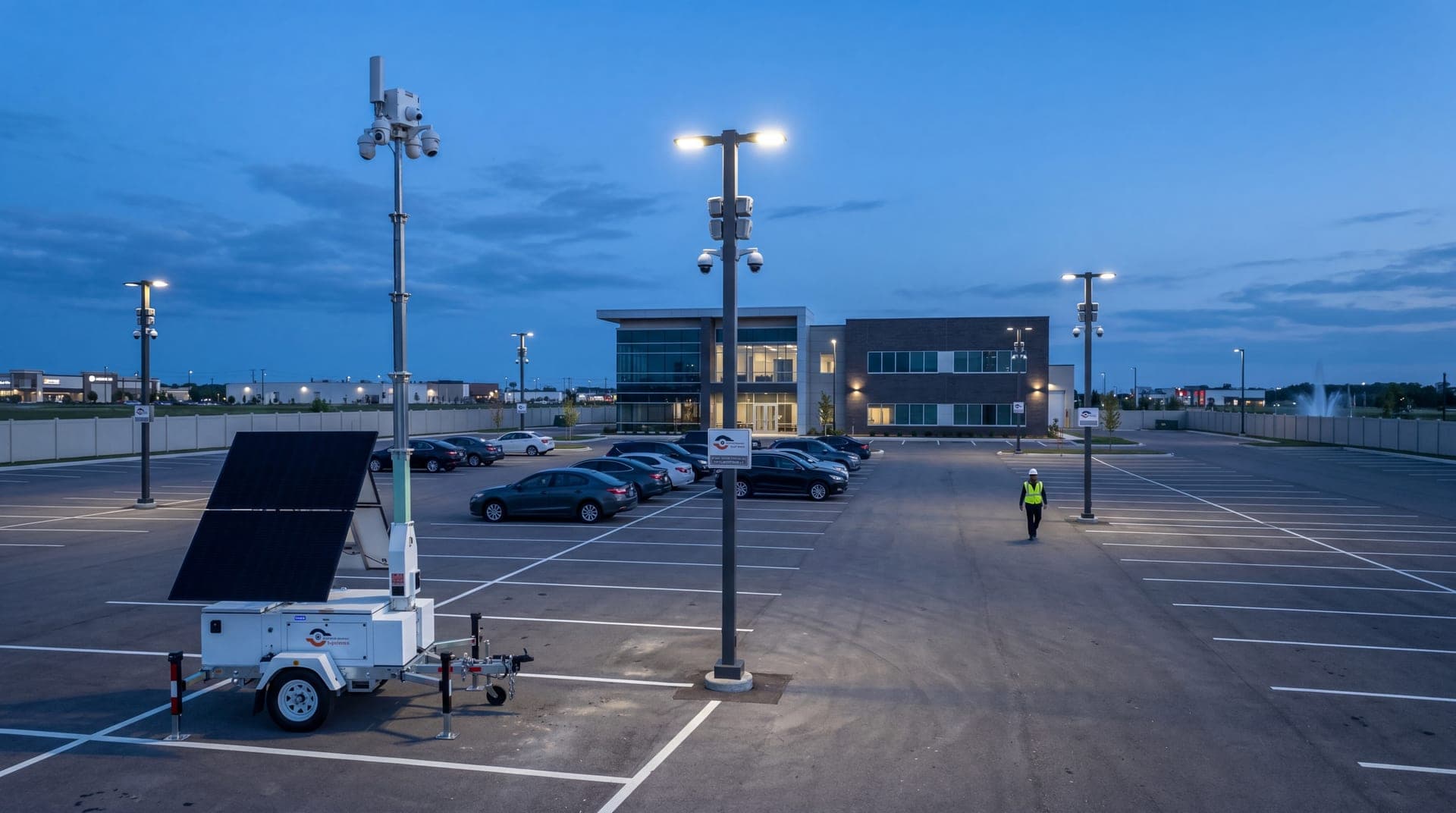
This guide covers 2026 pricing for parking lot camera systems across every major configuration, from small surface lots to large covered garages.
This page is the cost guide. If you're weighing what a monitored service actually does around the clock, see parking lot surveillance cameras for 24/7 monitoring; for retail-specific coverage priorities, see mall parking lot security.
The Major Cost Components
Parking lot camera costs have five primary components, and understanding each helps you decode vendor quotes and make meaningful comparisons:
Camera hardware: The cameras themselves, varying by resolution, lens type, weatherproofing rating, and night-vision capability. Commercial-grade options run $200–$1,500 per camera.
Mounting infrastructure: Poles, conduit, wall brackets, or ceiling mounts. Surface lot cameras typically mount on 12–20-foot poles, which cost $300–$800 each installed. Garage cameras may mount directly to structure.
Cabling and networking: Ethernet cable, conduit, junction boxes, and networking equipment to connect cameras to a recorder or cloud uplink. In large lots, this can be a significant portion of total cost.
Recording and storage: Network video recorder (NVR), server hardware, or cloud storage subscription. Local NVRs range from $300–$3,000. Cloud storage typically costs $50–$200 per camera per month for 30–60 day retention.
Monitoring service (optional): Remote monitoring with live operators adds $500–$2,000 per month depending on monitoring intensity. This is optional but transforms the system from passive documentation to active deterrence.
Cost by Lot Size: 2026 Ranges
| Lot Size | Spaces | Camera Count | Installed Hardware Cost | Monthly Monitoring |
|---|---|---|---|---|
| Small surface lot | 20–50 | 2–4 | $5,000–$15,000 | $400–$800 |
| Medium surface lot | 50–150 | 4–8 | $15,000–$35,000 | $600–$1,500 |
| Large surface lot | 150–500 | 8–20 | $35,000–$80,000 | $1,000–$2,500 |
| Covered garage (2–4 levels) | 200–600 | 15–35 | $60,000–$150,000 | $1,500–$3,500 |
| Large mixed-use garage | 600+ | 35+ | $150,000+ | Custom |
These ranges assume commercial-grade equipment with professional installation. DIY installation with consumer cameras is possible at significantly lower hardware cost but typically produces inferior coverage quality, less reliable equipment, and no monitoring capability.
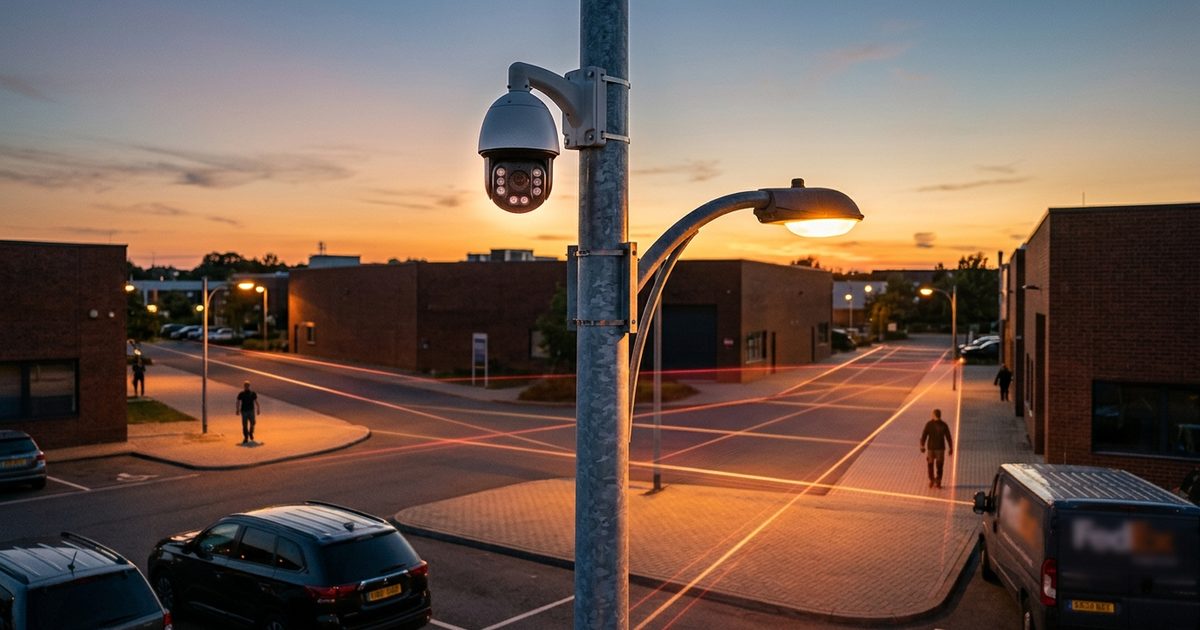
Camera Types for Parking Applications
Not all cameras are equally suited to parking environments. The main types used in parking security:
Dome cameras are the most common choice for parking lots. Their vandal-resistant housing, wide viewing angle, and weather-rated enclosures make them practical for both surface and garage applications. A 4MP varifocal dome camera with 100-foot IR range ($300–$600) covers approximately 50 surface parking spaces from a pole mount.
Bullet cameras provide longer-range coverage and are ideal for capturing footage across large open areas. A telephoto bullet camera positioned at one end of a long lot can provide useful detail across 200+ feet. Less practical in garages due to narrower fields of view.
Fisheye cameras provide 180° or 360° panoramic views from a single unit. One fisheye camera mounted at the center of a covered garage level can provide overview coverage of the entire level—though detail quality at the edges drops. Best used in combination with directed cameras at high-priority zones.
PTZ cameras add flexible coverage capability for large lots with active monitoring. A single PTZ can be directed to any area in the lot by monitoring operators responding to an alert. Not a replacement for fixed cameras but a useful supplement for large facilities with staffed monitoring.
LPR (License Plate Recognition) cameras are specialized units for access point lanes, not general coverage. Every parking facility with a vehicle entry/exit point benefits from LPR at that lane, providing a complete record of vehicle activity regardless of incident.
Surface Lots vs. Covered Garages: Different Challenges
Surface lots and covered garages have meaningfully different camera requirements:
Surface lots benefit from elevated camera positions (12–20-foot poles) that provide long sightlines across the lot. Lower camera counts with wide-angle lenses can cover significant areas. Night vision capability is critical, as is weatherproofing for outdoor exposure.
Covered garages have several complications:
- Structural columns create sightline obstructions requiring more cameras per square foot
- Low-light conditions even during the day on interior levels
- Ramp transitions between levels require dedicated camera coverage
- Entry/exit lanes have specific LPR requirements
- Stairwells, elevator lobbies, and pedestrian areas have high incident frequency and need dedicated coverage
A covered garage typically requires 1.5–2× the camera count of an equivalent surface lot for equivalent coverage quality.
Tip: When planning a garage system, map each level separately. Column spacing and structural features vary by level, and coverage plans developed for one level often don't apply directly to others.
Lighting Requirements and Camera Interaction
Night vision performance in parking environments depends heavily on existing lighting conditions and camera specifications:
Well-lit surface lots: Standard cameras with color night vision produce useful footage. IR cameras in lit environments often produce overexposed images from reflective surfaces. Check camera WDR (Wide Dynamic Range) specifications.
Poorly lit surface lots: IR cameras with 100+ foot range are required. Consider whether improving lighting is cost-effective versus adding IR illuminators to cameras. Motion-activated LED lighting at $200–$600 per unit often produces better footage improvement per dollar than camera upgrades.
Covered garages: Interior lighting controls camera performance significantly. Cameras positioned facing lighting sources (uplight fixtures) typically produce backlighting challenges. Positioning cameras facing away from bright light sources, or using high-WDR cameras, resolves this.
Note: Parking garage lighting regulations in many jurisdictions specify minimum foot-candle levels for safety. Compliance with lighting requirements often satisfies the ambient light requirements for camera performance without additional illumination investment.
Monthly Costs: Monitoring and Maintenance
Hardware purchase is the upfront cost, but parking lot camera programs have ongoing monthly costs that affect total cost of ownership:
Cloud storage: $30–$150/camera/month for 30–60 day retention. A 10-camera lot with cloud storage costs $300–$1,500/month in storage fees alone.
Remote monitoring: $500–$2,500/month depending on monitoring intensity. Active monitoring with live operators and response protocols reduces incident rates meaningfully. Passive alert monitoring (notifications sent to owners) costs less but requires your team to respond.
Maintenance contract: Professional camera systems should include annual maintenance agreements covering cleaning, adjustment, firmware updates, and hardware replacement. Budget $500–$2,000/year for a small to medium lot.
Cellular connectivity (for wireless cameras): $20–$60/camera/month if cameras use cellular rather than wired networking.
Cost is only one variable. For the full layered approach, read how to secure a parking lot with 12 proven measures, and compare mobile security towers vs. surveillance trailers before choosing a form factor.
When Mobile Surveillance Is the Right Approach
Permanent camera installation makes sense for established facilities. But several parking scenarios are better served by mobile surveillance solutions:
- Temporary event parking that operates at a venue a few times per year
- Construction site parking adjacent to active job sites
- Seasonal parking operations that don't justify permanent infrastructure
- Supplemental coverage during high-risk periods at established facilities
- New facility evaluation before committing to permanent infrastructure placement
Mobile surveillance trailers with remote monitoring provide complete, professional parking lot coverage at $1,800–$3,500/month with no capital investment—making them cost-effective for any deployment under approximately 18–24 months.
The VDS team helps parking operators choose between permanent installation and mobile surveillance based on facility type, usage patterns, and budget. Contact us for a site-specific recommendation and quote.