
What a tracker actually does
A tracker is a small device attached to a machine or trailer. It uses satellite positioning to find its location and a cellular or other radio link to report it. Depending on the model, it may also report movement, ignition state, engine hours or a boundary crossing.
That is valuable. When a machine is moved, an alert plus a live location gives police something to act on. Trackers also help with routine operations, such as knowing which site a unit is at and when it was last used.
What a tracker does not do
A tracker does not stop a theft. It reports one. By the time the alert reaches you, the machine may already be on a trailer and moving. Recovery then depends on how fast you reach law enforcement, whether the device keeps reporting, and whether the thieves find it.
Signal is another limit. A device needs a view of the sky and a cellular connection to report. Inside a metal container or a building, or in a poor coverage area, reporting can be unreliable. Some thieves also know where trackers are commonly hidden and look for them, so a tracker is a recovery aid, not a guarantee. Ask any provider how its device behaves when signal is lost and whether it tells you about a tamper or battery problem.
What cameras do
A camera records what happens in front of it. With AI detection on a monitored system, it can recognize a person or vehicle in an area where none should be and alert trained operators, who verify the event on video. That changes the timeline. Instead of learning about a theft the next morning, someone sees the approach while it is happening.
Cameras also capture evidence a tracker cannot, such as faces, clothing, vehicles, license plates and the method of entry. Footage can show whether a machine was driven, towed or loaded, which helps investigators. Our post on what remote video monitoring is explains the monitoring side.
What cameras do not do
A camera sees only what is in its view. If a machine leaves the frame, the camera cannot follow it down the road. A recording-only system shows what happened after the fact, which is useful as evidence but does not interrupt anything. Published research reflects this difference. A 2019 systematic review of 76 studies found that actively monitored systems were associated with about a 15% crime reduction, while passive recording-only systems showed no significant effect.
Cameras also depend on lighting, line of sight and power. Placement matters, and a camera behind a stack of materials is not covering much.
Side by side
| Question | GPS tracker | Monitored camera |
|---|---|---|
| Tells you where a machine is | Yes, when it has signal | Only while in view |
| Can interrupt a theft in progress | No | Yes, through verification and talk-down |
| Shows who was involved | No | Often yes |
| Works after the machine leaves the site | Yes, if it keeps reporting | No |
| Covers many assets at once | One device per asset | One view can cover many assets |
| Depends on signal and power | Yes | Yes |
| Helps with insurance and police reports | Location history | Video and timeline |
The table shows why the question is rarely either-or. Each covers the gap in the other.
How they work together
Think in a timeline. Before a theft, physical measures and visible cameras make the target less attractive. During an attempt, a monitored camera detects the intruder and operators can speak to them through a loudspeaker (see live talk-down audio deterrence) or call police with video. If the machine leaves anyway, the tracker gives police a live location and the footage shows who and what to look for.
This is why the layered approach shows up in most good security plans. See our post on equipment rental yard security for how rental fleets combine the layers.
Questions to ask before you buy either
For a tracker, ask how often it reports, what happens when it loses signal, how long the battery lasts, how it signals tampering and who receives the alerts. For a monitoring service, ask who watches the cameras, during which hours, how an event is verified, what the operator does next and how quickly police are contacted.
Also ask how each fits your existing equipment. A tracker that does not suit a particular machine, or a camera that cannot be placed where the equipment sits, solves nothing. The answers will tell you where the gaps are.
Choosing where to spend first
Match the tool to the loss pattern, and be honest about where your losses really happen. If your machines travel between sites, spend on trackers for the high-value units because the cameras at each site may differ. If your losses happen at one yard or one project, coverage of that location may reduce more risk per dollar. If you have both patterns, use trackers on the machines and monitored cameras on the places they rest.
Whatever you choose, test it. Walk the site at night, review a few alerts with the people who receive them, move a tracked machine and see whether alerts arrive and who receives them. Confirm what a person does at 2 a.m. when one fires.
Where VDS fits
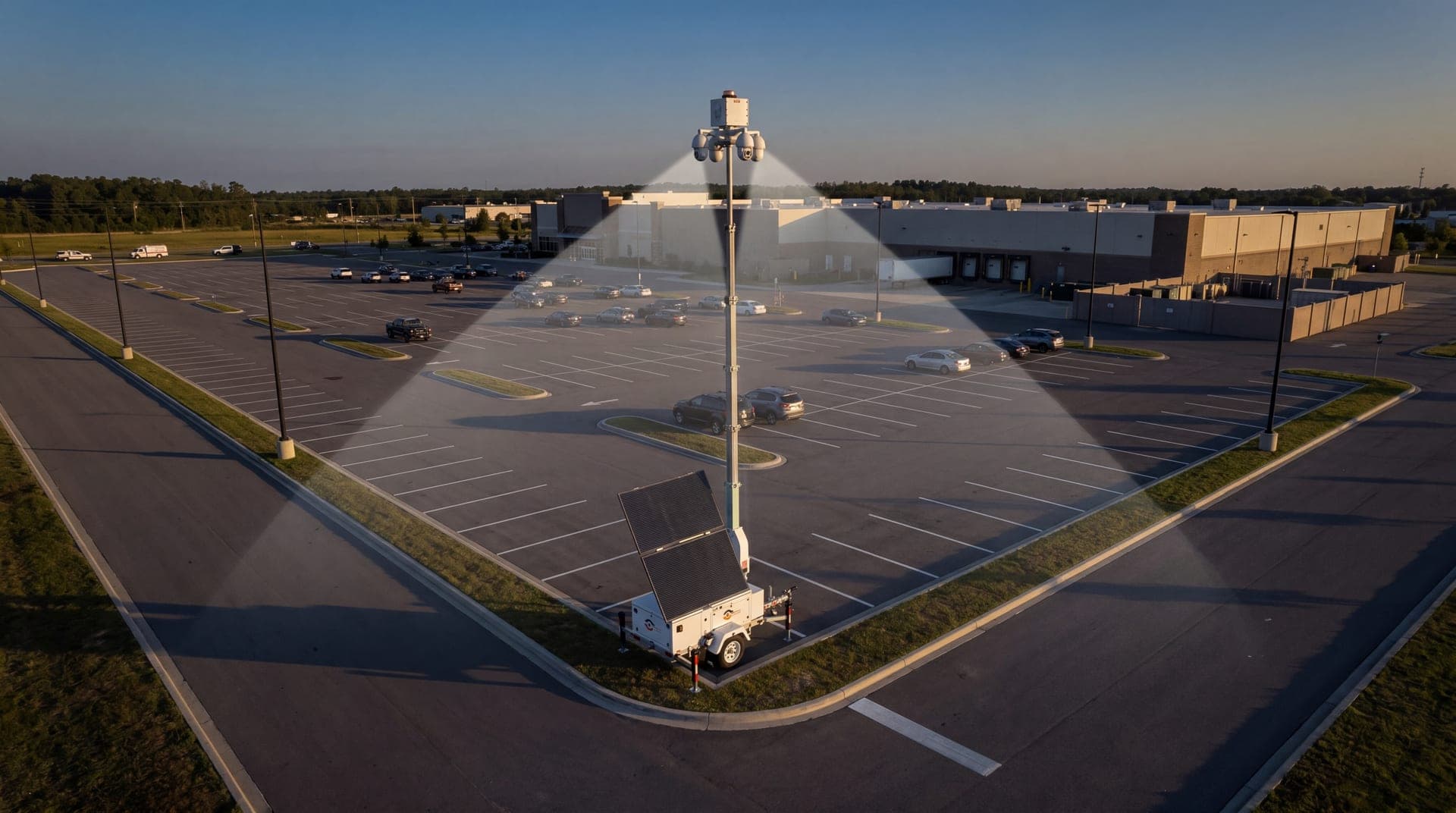
VDS builds solar-powered mobile surveillance units, so cameras can go where equipment sits even without site power, internet or trenching. A 5MP PTZ camera with 25x optical zoom and three 8MP wide-angle cameras on a 22 ft telescopic mast cover a yard, with AI detection of people and vehicles. A US-based 24/7 security operations center verifies events, uses live talk-down through a loudspeaker and escalates to police dispatch with video. VDS does not make trackers, and they pair well with the units you may already own. Learn about remote monitoring or talk to our team. For tool-level controls, see jobsite tool theft prevention.
Sources
- Piza, E. L., Welsh, B. C., Farrington, D. P., & Thomas, A. L. (2019). CCTV surveillance for crime prevention: A 40-year systematic review with meta-analysis. Criminology & Public Policy, 18(1). onlinelibrary.wiley.com