
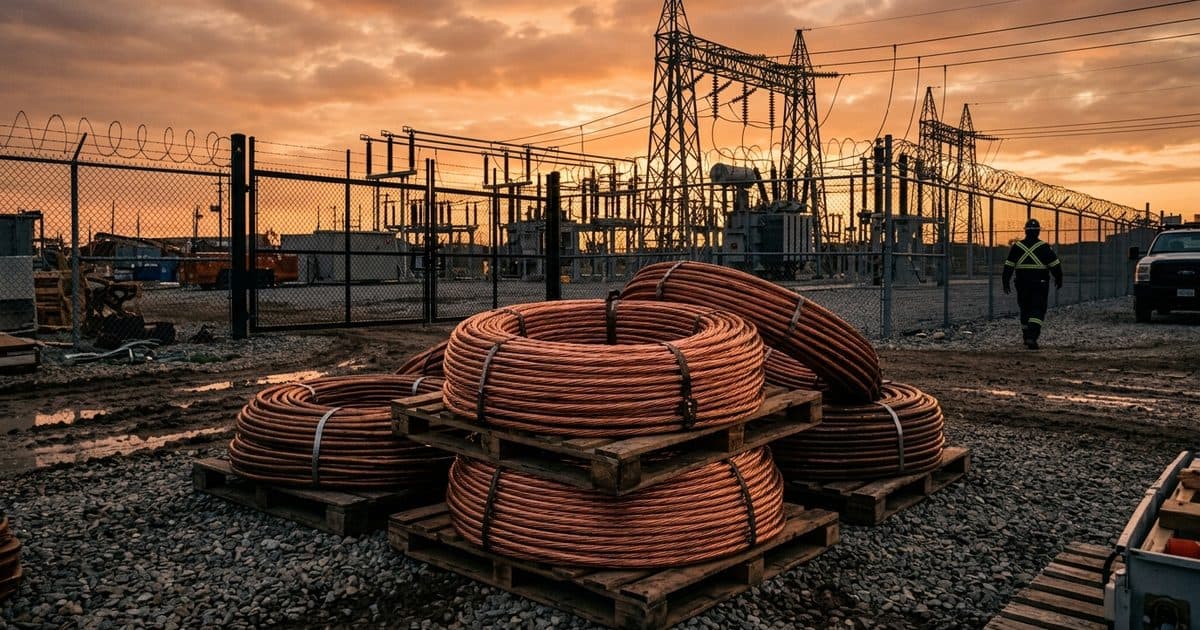
This isn't a seasonal myth. Verisk CargoNet, which tracks supply chain theft across the U.S. and Canada, has historically recorded more theft in the fourth quarter and into the new year, and copper made up 34 of the 63 metal thefts it logged in the third quarter of 2026. Copper wire, grounding bars, and HVAC coils stay at the top of the list because they're easy to strip, sell, and move fast.
Why Winter Creates the Perfect Conditions for Copper Theft
Daylight hours shrink dramatically in winter, which means more of a 24-hour cycle happens in the dark. A site that used to have six hours of low-visibility risk now has ten or twelve. Thieves don't need much time once they're on-site—a few minutes to cut and pull wire is enough.
Cold weather also slows down foot traffic. Construction crews work shorter days or pause entirely during freezes. Facility managers visit less often. Fewer people around means fewer eyes on equipment, panels, and exposed wiring—exactly the gap copper thieves look for.
Price is the other driver. With copper near record highs in 2026, USTelecom's June 2026 report on attacks against communications networks links the rise in cable theft directly to scrap resale value. Its members reported 18,327 theft and vandalism incidents in 2025, up 59% from 2024, affecting 11.8 million customers. Higher payouts give thieves more reason to hit idle sites before spring construction resumes.
Where Copper Thieves Target Sites Most Often in Winter
Not every site carries equal risk. Thieves go where copper is exposed, accessible, and unguarded for stretches of time.
- Construction sites: Idle during holiday shutdowns, with wiring and grounding systems already run but not yet enclosed.
- Substations and utility yards: Grounding copper and transformer components sit in open, often unmonitored lots.
- Cell towers: Remote locations with minimal foot traffic make for easy, low-risk targets.
- Vacant or seasonal commercial buildings: HVAC units and electrical panels left exposed during off-season closures.
- Rail yards and cargo facilities: Signal wiring and switching equipment run long, exposed stretches that are hard to patrol on foot.
Our breakdown of copper theft prevention at substations covers why utility sites in particular need a layered coverage plan rather than a single fence line or camera.
The Real Cost of Winter Copper Theft
The price of the stolen copper itself is rarely the biggest expense. Repair costs, project delays, insurance claims, and in critical infrastructure cases, service outages, dwarf the scrap value of what was taken.
A single grounding theft at a substation can knock out protective systems and trigger an expensive emergency repair, sometimes with regulatory reporting requirements attached. A construction site hit mid-build can lose days waiting on replacement materials and re-inspection. These costs compound when the same site gets targeted more than once in a season, which happens often once thieves identify a weak spot.
The U.S. Department of Energy puts the cost of copper theft to high-risk industries at about $1 billion a year, as reported by T&D World, and repair bills often run far higher than the value of the metal taken. The same USTelecom report counts 13 states that passed new scrap metal or infrastructure theft laws in 2026 alone.
How Short Days and Long Nights Favor Thieves
Winter solstice conditions mean some regions see darkness fall before 5 p.m. That's a direct extension of the window where a site sits unwatched, unlit, and unattended by staff who've gone home for the day.
Weather adds another layer. Snow and rain reduce camera visibility if units aren't built for the conditions, and storms create cover noise that masks the sound of cutting tools or equipment being moved. Sites in regions with harsh winters should factor seasonal visibility and storm patterns directly into their security planning, not just their construction schedule.
This is also when staffing tends to be thinnest. Guard shifts get cut back during slow seasons, construction crews shrink over the holidays, and facility teams run leaner through January. Fewer people on-site means fewer deterrents and slower response if something does trigger an alert.
What Actually Stops Copper Theft This Winter
Fences and signage alone don't stop a motivated thief who's already decided a site is worth the risk. What works is a coverage plan built around visibility, verified response, and fast deployment—especially for sites that only carry elevated risk during a defined window like winter shutdown.
Mobile surveillance trailers are built for exactly this kind of seasonal risk. They deploy to open lots, substations, or construction sites without waiting on permanent infrastructure, and they can relocate as risk shifts between phases or sites. Combined with remote video monitoring, a verified alert triggers real escalation instead of a recording nobody reviews until the damage is already done.
Retention and export workflows matter just as much. If copper does get taken, usable footage with the right retention window is what turns a loss into a documented case law enforcement and insurance can act on. Our guide on utility copper theft breaks down what a full coverage plan looks like for exposed infrastructure sites, and our copper theft trends report covers the data shaping this year's risk patterns.
Construction teams dealing with seasonal slowdowns should also look at construction site security options built around phased deployment, since risk changes as a project moves from framing to finishing. Cell tower operators facing the same remote-location exposure can review our breakdown of cell tower security and copper theft for site-specific recommendations.