
How bad was cargo theft in 2025? The headline numbers
The 2025 total would be alarming in any year, but it lands on top of a record. Verisk CargoNet's 2024 analysis reported $454.9 million in losses for 2024, itself an all-time high, with incidents up 27% over 2023. Two consecutive record years, with the loss curve steepening, is the pattern security managers should plan around.
The incident count tells a quieter story than the dollar figure. Confirmed theft events grew from 2,243 in 2024 to 2,646 in 2025, an 18% increase per the same Verisk CargoNet release. Meaningful growth, but nowhere near enough on its own to explain a roughly 60% jump in losses. The difference sits in what thieves took, not how often they struck.
Retail data points the same direction. The National Retail Federation's Impact of Retail Theft & Violence 2025 report found cargo theft up 50% among retailers that track it. Keep in mind these are reported and estimated figures from different datasets, so exact totals vary by methodology. The direction, however, is consistent everywhere analysts look: sharply up.
Cargo theft in 2024 vs 2025: the numbers side by side
The year-over-year comparison makes the strategic shift visible. All three figures below come from the CargoNet analyses cited above.
| Metric | 2024 | 2025 | Change |
|---|---|---|---|
| Total losses | $454.9 million (reported) | ~$725 million (estimated) | Up ~60% |
| Confirmed theft events | 2,243 | 2,646 | Up 18% |
| Average value per theft | $202,364 | $273,990 | Up 36% |
Read the third row twice. If incident growth were the whole story, average value per theft would have stayed roughly flat. Instead it rose by more than $71,000 per event in a single year. Thieves did not simply steal more often. They stole better.
Why losses surged: thieves are picking targets, not opportunities
The commodity mix explains the jump in value per theft. CargoNet's Q3 2025 trend analysis put stolen-goods value at $111.88 million for the quarter alone, driven by enterprise computing hardware, crypto-mining equipment, and copper. These are not impulse targets. A trailer of enterprise servers or a staged load of copper takes planning to identify, planning to steal, and an established fencing channel to convert into cash.
That profile points to organized groups doing homework before they act: researching what moves through a facility, watching schedules, and timing entries for when freight sits unattended and response is slowest. A thief who knows exactly which trailer holds six figures of hardware will not be discouraged by a fence sign or a dummy camera. The economics are too good.
Copper deserves its own mention because it cuts across industries. The same market pressure driving copper theft from loads also drives it at rail facilities and substations, a problem we cover in depth in our guide to rail yard security and copper theft. If your operation stages metals in any form, 2026 is the year to treat them like the high-value freight they have become.
Where strategic cargo theft happens: yards, cross-docks, and drop lots
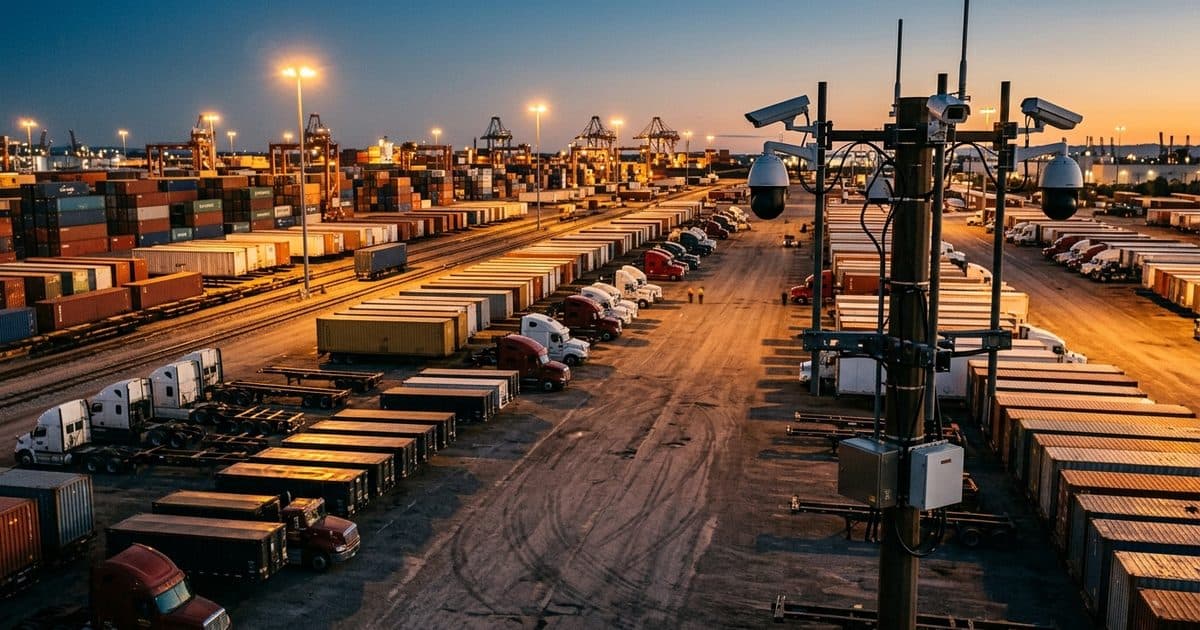
Freight at rest is freight at risk, and the CargoNet numbers reflect targets that sit still long enough to be studied. Trailer yards, cross-docks, and unattended drop lots concentrate exactly the conditions strategic thieves want: predictable dwell time, wide perimeters, limited staffing overnight and on weekends, and enough routine traffic that an unfamiliar tractor or box truck draws little attention.
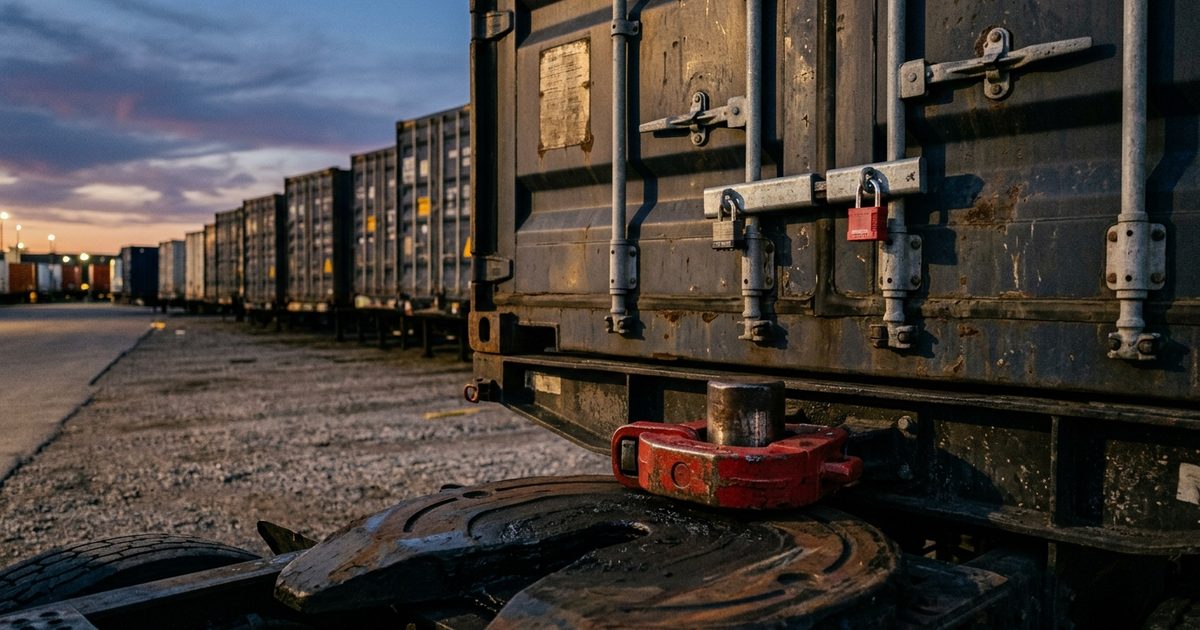
Drop-and-hook operations widen the exposure. A loaded trailer dropped Friday evening may not move until Monday, and every hour in between is an opportunity for someone who already knows what is inside. Our breakdown of truck yard cargo theft security walks through how these windows get exploited and how to close them.
Docks and warehouses face a related but distinct problem: the handoff points. Gates, staging lanes, and dock doors are where fraudulent pickups and misdirected loads happen, and where camera coverage plus verification procedures pay off fastest. See our guide to warehouse security cameras and remote video monitoring for how facilities layer those defenses. The same logic applies to any operation that stages valuable assets outdoors, from container yards to the equipment rental yards that face parallel targeting of machinery and attachments.
What CORCA means for supply chain security in 2026
Washington has noticed the trend. The Combating Organized Retail Crime Act, H.R. 2853, passed the House 348 to 60 on May 12, 2026 and is now pending in the Senate. The bill's supply-chain provisions matter for logistics operators: it would establish federal coordination for investigating and prosecuting organized theft rings whose activity crosses state lines and spans retail, cargo, and online resale channels.
That coordination addresses a real gap. Organized cargo theft groups deliberately operate across jurisdictions, which has historically fragmented investigations and kept individual incidents below prosecution thresholds. Federal case-building could change the risk calculus for the groups driving the value-per-theft surge.
Two cautions, though. First, the bill is not law yet, and Senate timing is uncertain. Second, even after passage, enforcement works after the fact. CORCA may help dismantle rings and recover goods, but it will not stop a crew from entering your yard on a Saturday night. Prevention and rapid response remain the operator's job.
From generic deterrence to verified live response
The 2025 data argues for a specific change in posture. Generic deterrence, meaning fences, signage, and unmonitored cameras, works reasonably well against opportunists. It works poorly against organized groups that have already scouted a facility and priced the payoff at $273,990 per successful theft. Against strategic actors, the defensive goal is to detect entry in minutes and put a verified, real-time response in motion before a trailer leaves the gate.
A layered plan for 2026 looks like this:
- Verify identity at the gate. Match driver, tractor, and pickup number against the appointment before releasing a loaded trailer. Fictitious-pickup fraud depends on rushed gate checks.
- Tighten staging discipline. Track which trailers hold high-value freight, position them in the most visible and best-covered parts of the yard, and minimize loaded dwell over weekends and holidays.
- Monitor the perimeter and drop lots live. Camera coverage that only produces footage after the fact documents your loss; remote video monitoring with human verification turns the same cameras into a response tool.
- Define the escalation path. Decide in advance who gets called when an operator verifies an intrusion, in what order, and with what information, so minutes are not lost improvising.
- Audit and adjust quarterly. Theft patterns moved fast between 2024 and 2025. Review incidents, near-misses, and coverage gaps on a schedule.
This is where monitored mobile surveillance fits the cargo problem specifically. Vision Detection Systems deploys solar-powered mobile surveillance units that cover yards, cross-docks, and drop lots without trenching or fixed infrastructure, backed by a 24/7 monitoring center that verifies alerts and escalates real intrusions immediately, so people, yours or your security partner's, handle verified incidents instead of chasing false alarms. Because the units are mobile, coverage can follow the freight as staging patterns and seasonal volumes change.
The bottom line for 2026
The cargo theft statistics for 2026 planning are blunt: an estimated $725 million lost in 2025, on top of a record $454.9 million in 2024, with average value per theft up 36% in a single year. The thieves driving those numbers are selective, informed, and patient, and they concentrate on freight that sits unattended in yards, docks, and drop lots. Federal help may arrive if CORCA clears the Senate, but no bill secures a fence line. Operators who verify at the gate, stage with discipline, and back their cameras with live human response will be the hard targets in a year when soft targets are getting expensive.