
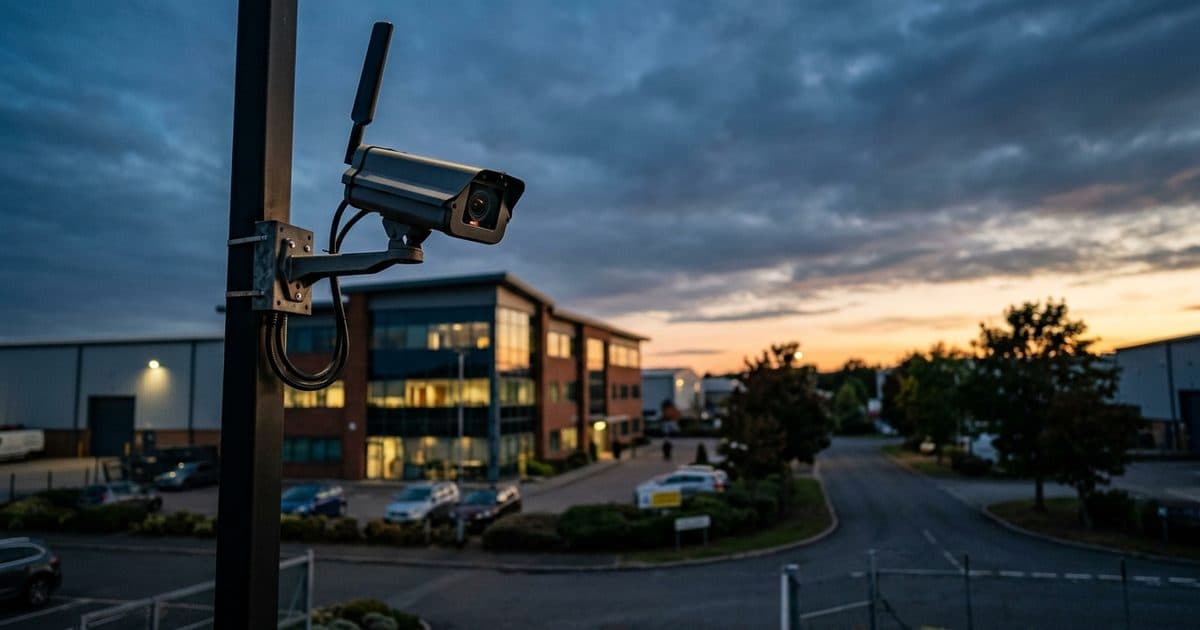
How does a Wi-Fi jammer blind a security camera?
A Wi-Fi jammer is a small radio transmitter that floods the 2.4 GHz and 5 GHz bands with noise. Nothing gets hacked and no password gets cracked. The jammer simply makes the channel so noisy that a wireless camera can no longer hold its connection to the router, the same way a shouting crowd can make a conversation impossible without anyone touching the speakers.
That single disruption defeats most consumer camera systems because everything they do depends on that one link. Cloud cameras record off-device, so if the upload never happens, the evidence never exists. Motion alerts travel over the same connection, so nobody's phone buzzes. Many wireless alarm and door sensors communicate on the same or nearby bands, so they can be suppressed by the same device.
The failure is also silent. When a jammed camera drops offline, the companion app shows the same generic "camera offline" state it shows during a router reboot or a power blip. Owners see that message often enough that it triggers no urgency, which is exactly what an intruder wants.
Where have jammer burglaries actually happened?
This is not a theoretical attack. The Los Angeles Police Department warned residents after a series of burglaries in which crews used Wi-Fi jammers to disable cameras and smart doorbells, and published a security checklist in response, as reported by Tom's Hardware. Nearby, Glendale police issued their own public warning about burglars using jammers to knock out alarms and cameras, covered by ABC7 Los Angeles.
The pattern is not limited to California. In December 2025, a burglary crew in Bellaire, Texas used a Wi-Fi jammer to disrupt a home's security cameras during a break-in, according to KPRC Click2Houston.
Most of the reported cases are residential, but the technique transfers directly to any business protected by consumer-grade wireless gear, including laydown yards, dealerships, self-storage lots, and small retail sites. It also fits how burglars already work. In a 2013 UNC Charlotte study of 422 incarcerated burglars, about 83 percent said they would try to determine whether an alarm was present before attempting a break-in. Crews that scout for cameras are exactly the crews most likely to bring a tool that defeats them.
Are Wi-Fi jammers illegal?
Yes, unambiguously. Under federal law it is illegal to market, sell, import, or operate a signal jammer in the United States, and the FCC's jammer enforcement program backs that up with substantial fines, equipment seizure, and potential criminal prosecution. The prohibition covers Wi-Fi, cellular, and GPS jamming alike, with no exception for use on your own property.
Illegality matters, but it is not a defense strategy. Cheap jammers still reach US buyers through overseas marketplaces, and enforcement happens after the fact. A burglary crew already committing felonies is not deterred by an FCC violation. The practical takeaway for a business owner is different: design for interference, and never test your own system with a jammer, because merely operating one is illegal and the interference does not stop at your property line. There are legal ways to test resilience, covered below.
Why consumer Wi-Fi cameras fail under interference
Consumer wireless cameras share a design assumption that network loss is benign, and that assumption is what jammer crews exploit. Four properties make these systems fragile:
- A single wireless path. One camera, one Wi-Fi link, one router. Deny that link and the camera is an unplugged sensor.
- Cloud-dependent recording. Many models store nothing locally, so blocked upload means no evidence, not delayed evidence.
- No offline alerting. Signal loss produces a passive app status rather than an escalated alarm, so the system's failure mode looks like normal life.
- Aggressive power saving. Battery cameras sleep between events and rely on network wake-ups, so a jammed camera may never even attempt to record.
None of this means consumer cameras are worthless. They deter opportunists and document plenty of incidents. But against a prepared crew with a jammer, a Wi-Fi-only system fails exactly when it matters, and it fails quietly.
What does a jam-resilient security architecture look like?
Honest framing first: no system is unjammable, and any vendor claiming immunity is overclaiming. Resilience is layered. Each layer makes interference cost the attacker more and gain them less, until jamming stops being worth the risk.
Cellular backhaul instead of Wi-Fi
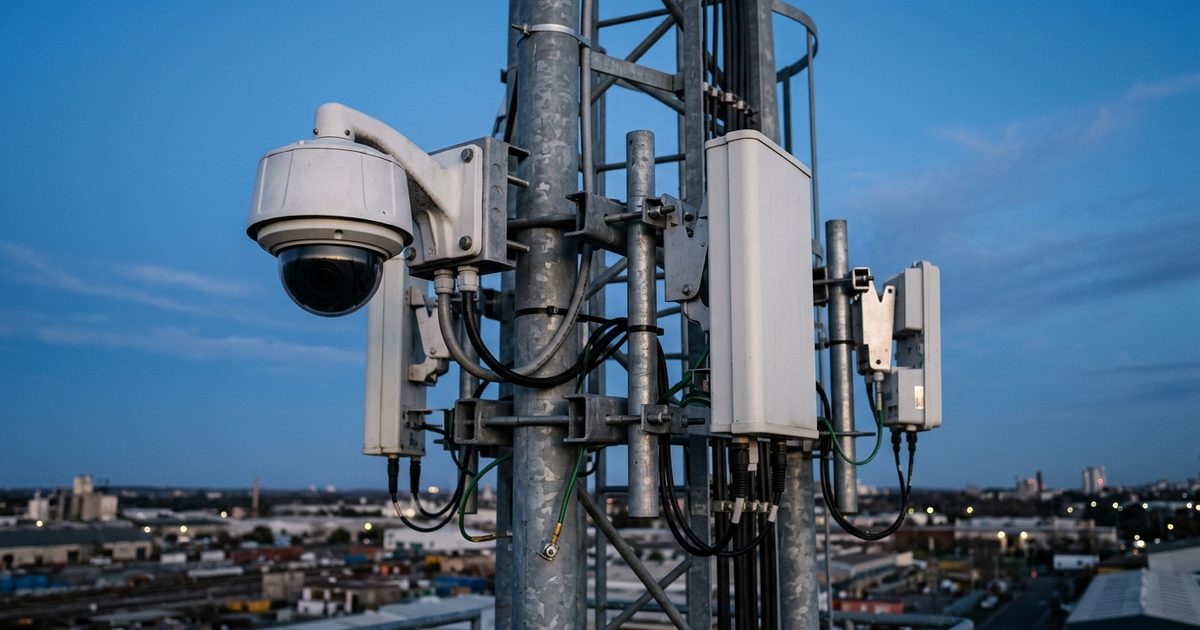
Commercial-grade surveillance units transmit over cellular networks rather than a site's Wi-Fi. Cellular operates on licensed spectrum across multiple frequency bands, served by carrier towers with far more transmit power and geographic diversity than a $40 pocket jammer can meaningfully suppress. Disrupting it is harder in practice, and attempting it carries the same federal prohibition. Cellular is not immune to interference, but it removes the cheap, low-skill attack that defeats Wi-Fi cameras.
Local edge recording that survives an outage
Recording should happen on the device, not only in the cloud. On-board storage keeps capturing video through any network interruption, so even if an attacker suppresses the uplink, the evidence exists and uploads once the connection returns. The interference window itself becomes evidence: footage of a crew arriving, followed by a documented signal anomaly, is a compelling timeline for police and insurers.
Connection health and tamper monitoring
A resilient system watches itself. Cameras and units send regular heartbeats, and a missed check-in raises a health event within minutes rather than sitting as a gray icon in an app. Platforms built for commercial monitoring treat signal loss, power anomalies, and physical tamper indicators as first-class alerts with their own escalation paths.
A staffed SOC that treats a dropped feed as an event
Architecture only pays off if someone acts on it. With 24/7 remote video monitoring, a security operations center sees a feed drop, reviews the last frames and site context, and escalates so that people, whether yours or your security partner's, respond to verified incidents. Human verification also keeps health events useful instead of noisy, the same discipline that reduces false alarms in video analytics. To an unstaffed system, jamming is silence; to a staffed one, it is a tripwire.
Power independence
Jamming is only the newest denial tactic; cutting power is the oldest. Units that run on solar with substantial battery reserves keep operating through grid loss, storms, or a cut line. Understanding how long solar camera batteries actually last is part of the same resilience conversation.
Here is how the layers compare:
| Layer | Typical consumer Wi-Fi camera | Commercial monitored unit |
|---|---|---|
| Backhaul | Single Wi-Fi link to an on-site router | Cellular on licensed, multi-band spectrum |
| Recording | Cloud-only; blocked upload means no footage | Local edge storage keeps recording during interference |
| Signal loss | Passive "offline" status in an app | Health alert escalated to monitoring staff within minutes |
| Power | Wall outlet or small battery | Solar generation with multi-day battery reserve |
| Response | Owner notices later, if at all | SOC operators verify and escalate in real time |
How can you tell if your current system would survive a jammer?
Do not test with a jammer; operating one is illegal in every circumstance. There is a legal proxy that reveals most of what you need to know: disconnect your own router or disable its wireless network for ten minutes, then answer two questions. Did every camera keep recording somewhere you can retrieve? Did any person or service get notified that the system went dark?
If the answer to either is no, ask your vendor these questions before an intruder asks them for you:
- Does each camera record locally when the network drops, and for how long?
- Is there a non-Wi-Fi path, such as cellular, for video or at least for alerts?
- Who is notified when a camera stops checking in, and how quickly?
- Are physical tamper and power-loss events alerted, or only motion?
- How is connection health verified on an ongoing basis?
That last point deserves a routine, not a one-time check. Signal health, storage health, and battery condition belong on the same recurring schedule as lens cleaning and firmware updates; a practical security camera maintenance checklist should include all of them.
Where monitored mobile surveillance fits
For businesses that need this architecture without building it themselves, monitored mobile surveillance units bundle the layers into one deployable package. VDS units combine cellular backhaul, on-board edge recording, solar power with battery reserve, and 24/7 SOC monitoring that treats a lost feed as an incident to investigate, not a gray icon to ignore. The choice between a surveillance trailer and fixed cameras comes down to site conditions, but the resilience principles are the same either way.
The jammer burglary wave is best understood as a stress test that consumer wireless systems fail by design. You do not need an unjammable system, because none exists. You need a system where blinding one path leaves three others working, where the evidence survives locally, and where going dark makes your site louder, not quieter.