
Why used lots are a target
A used lot is easy to understand from a thief's point of view. Dozens of vehicles are parked in rows, many with sale stickers that show exactly what each one is worth. Fences are often low or absent so customers can browse freely. Staff leave at a predictable time, and the lot may stay quiet until morning.
Independent lots usually have fewer layers than franchised stores. There may be no dedicated security team, no gated service area, and a small office with a key cabinet that holds the entire inventory. That combination makes a lot attractive for theft of whole vehicles, parts, and anything left inside them. For a broader look at the category, see our guide to car dealership security cameras.
Common losses and what addresses them
Different losses call for different tools. This table matches the most common problems at a used lot to the controls that tend to help.
| Loss | How it usually happens | What helps most |
|---|---|---|
| Whole-vehicle theft | Stolen key or key box, or a vehicle driven through an unsecured exit | Key control, exit barriers, live monitoring of entrances |
| Parts and wheel theft | Thieves work in dark back rows | Even lighting, camera coverage of rear rows |
| Break-ins | Items or accessories visible inside vehicles | Clear sightlines, lighting, quick response |
| Vandalism | Scratching, smashed glass, graffiti after hours | Visible cameras, talk-down audio, prompt police dispatch |
| Fraudulent test drives | Fake identity or no record of the driver | Photo ID copies, plate capture at the exit |
Key control comes first
On a used lot, keys are often the real vulnerability. A cabinet in an unlocked office or a lockbox near the door can turn a locked lot into an open one. Practical steps include:
- Store keys in a locked cabinet inside a space that is itself covered by a camera
- Keep a log of who took which key and when, including test drives
- Never leave keys in vehicles overnight, even in the back row
- Limit after-hours access to the key cabinet to named staff
- Review key logs when inventory counts do not match
Cameras cannot fix poor key habits, but they can show who accessed the cabinet and when, which supports both prevention and investigation.
Lighting and camera coverage
Good lighting does two jobs. It makes a lot less appealing to anyone planning to work unseen, and it gives cameras a usable picture at night. Aim for even coverage rather than a few bright spots. Shadows between rows are where wheels and parts disappear.
For cameras, think in terms of purpose rather than count:
- Entrances and exits. Capture every vehicle and person who enters or leaves, including plates where possible.
- Each row of inventory. Make sure no row sits outside a camera's view, especially the back rows.
- The office and key cabinet. Cover the doors and the area around stored keys.
- Fence lines and blind corners. These are the usual entry points when a lot is not fully fenced.
A pan-tilt-zoom camera can inspect a distant row on demand, while fixed wide-angle cameras keep continuous coverage. Higher mounting widens the view but reduces facial detail, so many lots use a mix. Our guide to loitering detection cameras explains how analytics can flag people who linger in the back rows.
Why recording alone falls short
A recorder tells you what happened. It does not stop it. A 2019 systematic review of CCTV research found that actively monitored systems were associated with about a 15% reduction in crime, while passive recording-only systems showed no significant effect. The same review found parking lots were among the settings with the strongest results, at about 37%.
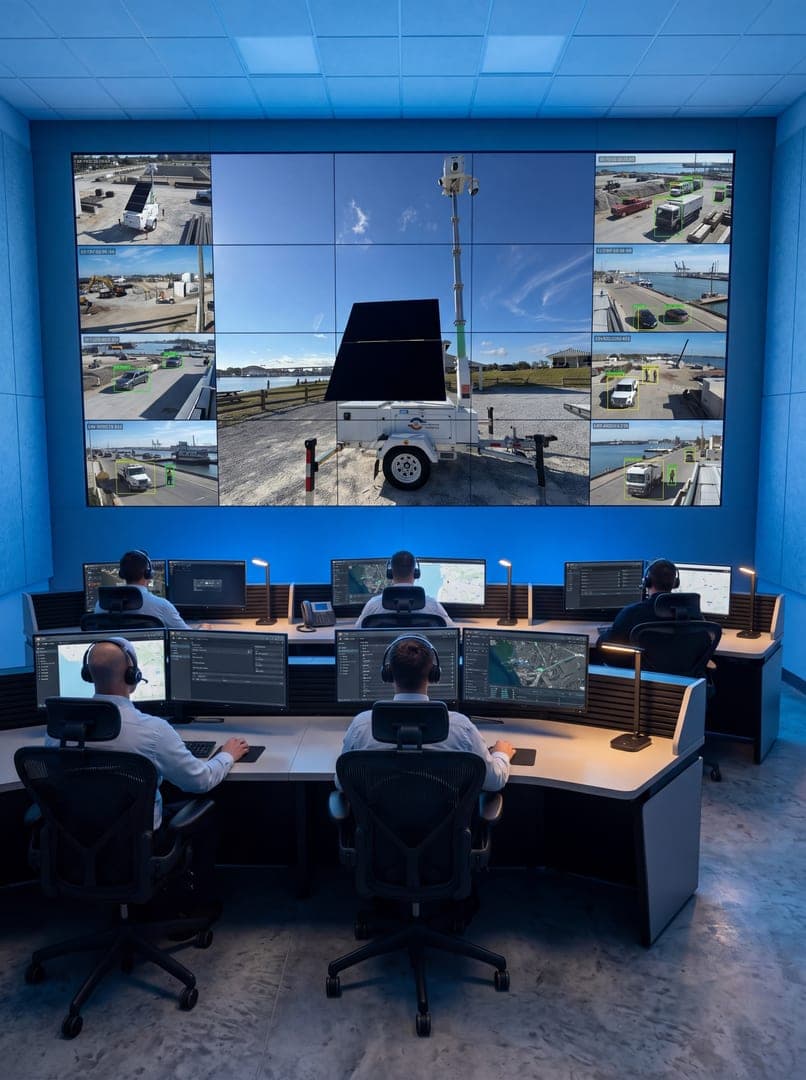
For a used lot, that difference is practical. If a thief is cutting a lock at 2 a.m., footage reviewed at 9 a.m. documents the loss. A monitoring team that sees the activity live can issue a warning over a loudspeaker and send police with video evidence while the person is still on the property. Read more about this in our piece on live talk-down audio deterrence and in our overview of after-hours security for businesses.
The goal is not to remove people from the process. The cameras and analytics do the watching so people, yours or your security partner's, handle verified incidents.
Securing a lot with no power or internet
Many used lots sit on leased land, a former gas station site, or a gravel overflow lot with no trenching and no reliable wired network. Installing fixed poles and cabling may not be practical or allowed by the landlord.
In those cases a mobile surveillance trailer can cover the lot without construction. It brings its own power and its own connection, can be positioned to see the most vulnerable rows, and can move if the lot layout changes. See our general guide to parking lot security for more on layout decisions.
A simple after-hours routine
Technology works best when it sits on top of a routine. A short closing checklist keeps the basics from slipping, and it makes gaps obvious when something is missed.
- Walk the lot before locking up and confirm all vehicles are parked in their assigned rows
- Lock the key cabinet and confirm the office door and any side gates are secured
- Check that every light is on and every camera shows a clear picture
- Confirm who is on call if the monitoring team needs to reach someone about an alarm
- Log any unusual vehicle, person or damage noticed during the day
Many lots also record unusual activity from the previous night each morning. Reviewing those notes weekly can show whether incidents cluster at a certain hour, row or corner, which tells you where to add lighting or move a camera.
How VDS fits
VDS builds solar-powered mobile surveillance trailers. Each unit carries a 5MP PTZ camera with 25x optical zoom and three 8MP wide-angle cameras on a 22 ft telescopic mast, with a 30 ft mast available. A 900W bifacial solar array charges an 11.8 kWh LiFePO4 battery bank with reserve for 3-5 consecutive cloudy days, and dual-SIM 4G/5G cellular means no site power, internet or trenching is needed.
AI detection flags people, vehicles, loitering, objects and license plates. A 24/7 US-based security operations center verifies events, responds with live talk-down through a loudspeaker, and then dispatches police with video if needed. Hardware is NDAA Section 889 compliant. Most deployments go from signed quote to live monitoring in about a week, and on-site setup takes one person under 20 minutes. Rental, month-to-month and term subscriptions are available. Learn more about the mobile surveillance unit, or talk to our team about your lot.
Sources
- Piza, E. L., Welsh, B. C., Farrington, D. P., & Thomas, A. L. (2019). CCTV surveillance for crime prevention: A 40-year systematic review with meta-analysis. Criminology & Public Policy, 18(1). onlinelibrary.wiley.com