
Why exhibits are an easy target
An exhibit is a temporary business in a building you do not control. Hundreds of unfamiliar people move through the hall, badges are scanned loosely or not at all during busy periods, and a booth full of laptops, tablets, samples and demo units sits unattended after hours. Exhibitors are often distracted, tired and travelling, and equipment is packed, shipped, unpacked and repacked by several parties.
Thieves understand this. Small, valuable and easily resold items, such as electronics, tools, sample products and collectible giveaways, are the usual targets. So are the crates and cases that carry them, because a crate looks like it contains something worth taking.
Phase 1: Move-in
Move-in is chaotic by design. Freight arrives, forklifts run, trucks queue at the dock and exhibitors carry equipment through side doors. Vehicles come and go with minimal checking.
Practical controls:
- Keep an inventory of what ships and a photo of each crate packed and sealed.
- Use numbered seals and record the numbers.
- Have a named person receive each shipment and sign for it.
- Do not leave freight unattended at the dock or in an aisle.
- Confirm the schedule for your freight window with the organizer so nothing sits overnight outside a secured area.
If the show has an outdoor staging yard, treat it like any yard with valuable material and limited access control. See temporary security cameras for how short-term coverage typically works.
Phase 2: Show hours
During open hours, the booth is staffed, and the most common problems are opportunistic grabs when staff turn away, bag and laptop thefts and the occasional distraction technique. Basic discipline helps more than technology.
- Keep a person at the booth at all times, with a defined handoff at breaks.
- Place valuable demo items out of easy reach and, where practical, cable or lock them.
- Keep personal bags and cases out of public view.
- Brief staff on how to report suspicious behavior to the organizer's security desk.
Many halls have their own cameras and security staff, and they are the best source of footage if something goes wrong. Ask where to report an incident before the show opens, not after.
Phase 3: After hours
The overnight window is where exhibit loss concentrates. The hall is closed to the public but not empty. Contractors, cleaners, venue staff, other exhibitors and anyone who has found a way past a door all have access, and your booth may be left with its contents on the floor.
Make a decision for each valuable item before close, and write it down.
| Item | Overnight option | Notes |
|---|---|---|
| Laptops, tablets, phones | Remove from booth or lock in secure storage | Never leave on the table |
| Demo units and samples | Lock in cabinet or return to crate | Seal and record the seal number |
| Brochures and signage | Leave in place | Low resale value |
| Empty crates | Store as directed by the organizer | Label to avoid mix-ups at move-out |
| Cash or high-value inventory | Do not leave on site | Take with you or use venue storage |
Ask the organizer whether overnight security is provided, who is on duty, and whether they patrol booth aisles or only the entrances. Do not assume that "security is present" means your booth is covered. Our guide to after-hours security for businesses explains how unattended periods get exploited and how monitoring fills the gap.
Phase 4: Storage and move-out
Empty crates and cases are stored somewhere for the duration of the show, often in a corner of the hall or an outdoor lot. They are also the first thing to be misplaced at move-out, when everyone is trying to leave quickly.
Practical controls include labeling each crate with your company and booth number, photographing storage placement, and checking the contents against your packing list before the freight leaves your control. Count crates at pickup and keep the carrier's receipt.
At move-out, repeat the move-in controls. People looking for a chance to walk away with a case tend to appear at exactly this moment.
What organizers and venues can do
If you run the show, a few measures reduce losses for everyone and reduce the number of complaints you receive. Give exhibitors clear information about who provides security and when. Control entry and exit during move-in and move-out. Provide a secure overnight storage option for valuables. Make an incident desk easy to find. Ask for an accurate record of who has access to the hall after close.
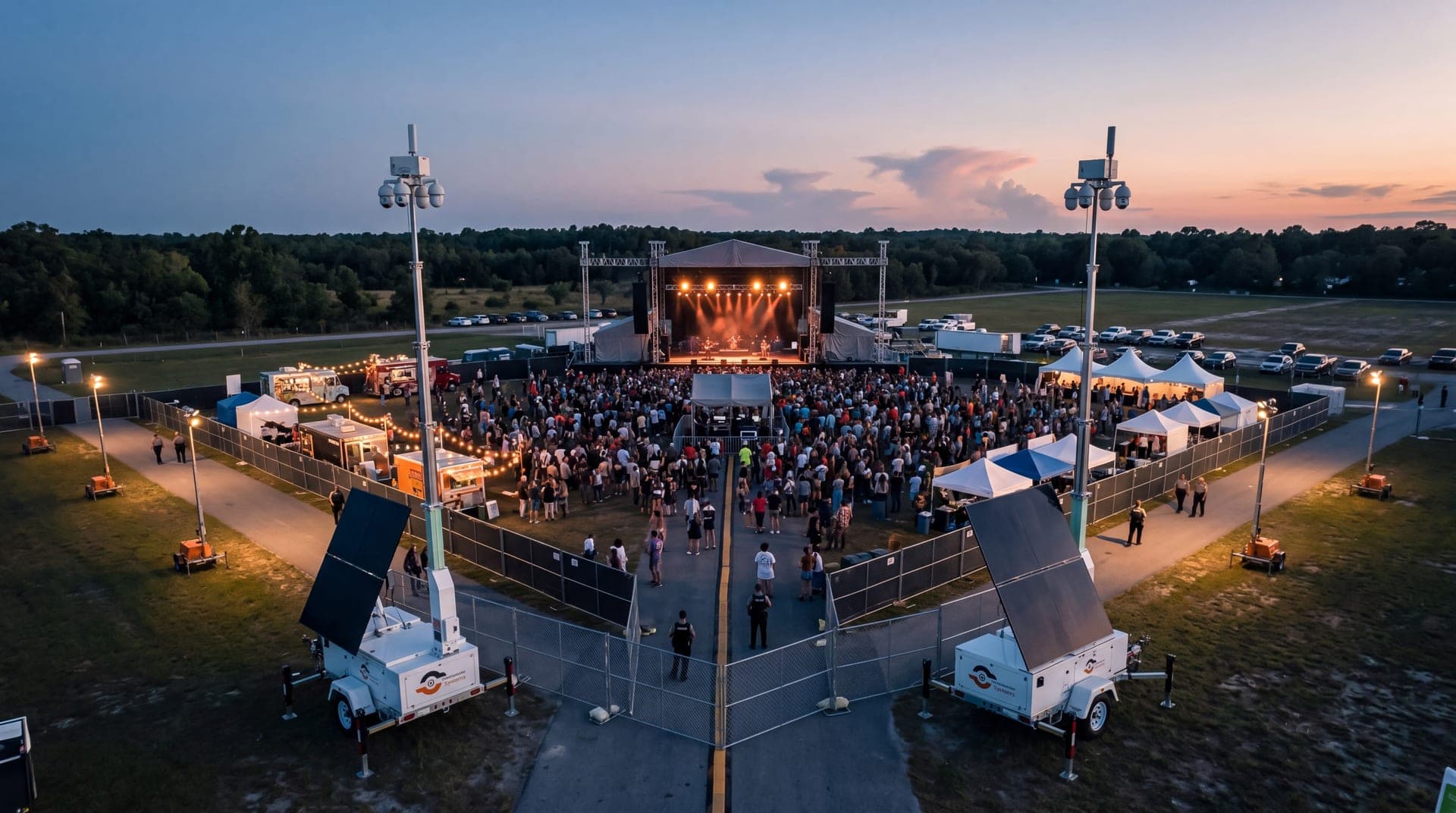
For outdoor staging, parking and loading areas, consider monitored cameras and a clear incident procedure. Our page on mobile surveillance trailers for events covers the outdoor side, and the event and temporary sites industry page gives an overview.
Where cameras help, and where they do not
Cameras add the most value at the edges of an event, where there are no walls and no staff: loading docks, container yards, parking areas and fence lines. They give a record of who entered the staging area and when, and a monitored system lets someone act in real time instead of reviewing footage days later.
Indoors, camera rules belong to the venue. Many halls restrict or prohibit outside equipment, and exhibitors should ask before bringing any. Footage you do collect can raise privacy questions. Rules on recording and notice vary by state, so confirm with counsel.
How VDS fits
VDS does not secure the interior of an exhibit hall. The fit is outdoors: loading docks, crate staging yards, container storage and parking lots at trade shows and exhibits. VDS builds solar-powered mobile surveillance trailers that need no site power, internet or trenching, with a 5MP PTZ camera with 25x optical zoom and three 8MP wide-angle cameras on a 22 ft telescopic mast and dual-SIM 4G/5G cellular.
AI detects people, vehicles, loitering, objects and license plates. A 24/7 US-based security operations center verifies events, can use live talk-down through the loudspeaker and sends video to police dispatch when needed, so people, yours or your security partner's, handle verified incidents. Rental, month-to-month and term subscriptions are available, and most deployments go live in about a week from signed quote. Review the mobile surveillance unit or talk to our team at (410) 401-1986.