
The Occupied Building Problem
A new building site starts empty. A tenant improvement site does not. The building has other tenants, a property manager, existing access control and neighbors who notice who comes and goes. The contractor is a guest in someone else's property.
That creates three kinds of risk. The first is theft from the project, such as tools, materials and fixtures. The second is access risk for the building, since contractors enter spaces with keys, codes and elevators, sometimes after hours. The third is conflict, where a security measure that suits the project disturbs the building.
Plan for all three with the property manager from the start. The overview of security cameras for property management shows how managers think about these questions.
After-Hours Contractor Access
Renovation crews often work nights and weekends to avoid disturbing tenants. That is exactly when the building is least staffed and an unusual visitor is hardest to spot.
A clear access agreement should cover:
- Approved work hours and how to request a change.
- Named workers and vehicles, with a sign-in process.
- The entry route, including which doors, elevators and stairs are allowed.
- Which areas are off limits, such as other tenants' suites and mechanical spaces.
- Who the contractor calls when something goes wrong, and who the building calls about the contractor.
Share the schedule with whoever monitors the property. When the monitoring team knows that a crew is expected from 6 to 10 on a given night, they can tell planned activity from a real problem. The article on after-hours security for businesses covers why those windows matter.
Tool Storage and Staging
Tools and materials are the most common loss on an occupied-building project. Crews carry them in and out through the same doors as everyone else, and storage is often improvised in an unused room or a corridor.
| Item | Risk | Practical approach |
|---|---|---|
| Hand and power tools | Easy to carry out, easy to resell | Locked storage, end-of-day removal of high-value items |
| Materials staged at the dock | Visible from the street | Short staging time, coverage at the dock |
| Materials stored inside | Moved by others, damaged or taken | A locked, designated room with a log |
| Fixtures and appliances | High value, delivered late | Deliver close to installation, count on receipt |
| Contractor vehicles and trailers | Tools in vehicles, parking lot theft | Parking in a covered lot view, lock and empty at night |
The guide to jobsite tool theft prevention goes through marking, storage and inventory habits that apply directly here. Get approval for the storage space in writing from the property manager, since the contractor may be occupying common or tenant space.
What Exterior Monitoring Can Do
Interior work is mostly controlled by the building's own systems. The exterior, though, is where the project meets the public. The loading dock, the lot, side doors, the dumpster area and any temporary staging space are all places where thefts start.
Remote monitoring of those areas lets a team verify who is entering after hours and confirm that the people at the dock are the delivery they expected. The explanation in what is remote video monitoring describes how operators review video events and act on them. In an occupied building, that response can include a loudspeaker message to a person who should not be there, and notifying the property manager or police if the situation warrants.
A temporary exterior unit is often easier to approve than altering the building's permanent system. See the guide to temporary security cameras for the tradeoffs.
Permissions, Privacy and Recording Rules
An occupied building has more parties with a stake in what gets recorded. The owner controls what can be installed on the property. Tenants may object to cameras that capture their entrances or their customers. Employees of the contractor may have rights about recording too.
Rules on recording video and audio differ by state, and some places have additional restrictions for areas where people expect privacy. Read the overview of business security camera laws and confirm your plan with counsel. Get written approval from the owner or property manager, post signage where appropriate and aim cameras at the project's exterior areas, not at tenants.
Closeout and Handover
The risk does not disappear at substantial completion. During closeout, many people have access, punch-list items are being finished and new fixtures and equipment are in place. Keys and codes change hands, and contractors who no longer need access may still have it.
At handover, collect keys and badges, deactivate codes issued to the crew and confirm that the property manager now controls access. Keep video from the project for a period that matches your retention policy and your insurer's guidance, in case a dispute or loss is discovered later.
Working Well With the Property Manager
The property manager is the contractor's most important ally. Hold a short security briefing at kickoff that covers the access plan, camera locations, who gets alerts and how footage requests are handled. Ask what the building's own system records and whether any of it can support your project.
Keep communication simple after that. Send a weekly schedule of after-hours work, report any lost key or badge the same day and notify the manager if tool storage changes. Small, steady updates keep the relationship cooperative and prevent surprises.
How VDS Fits
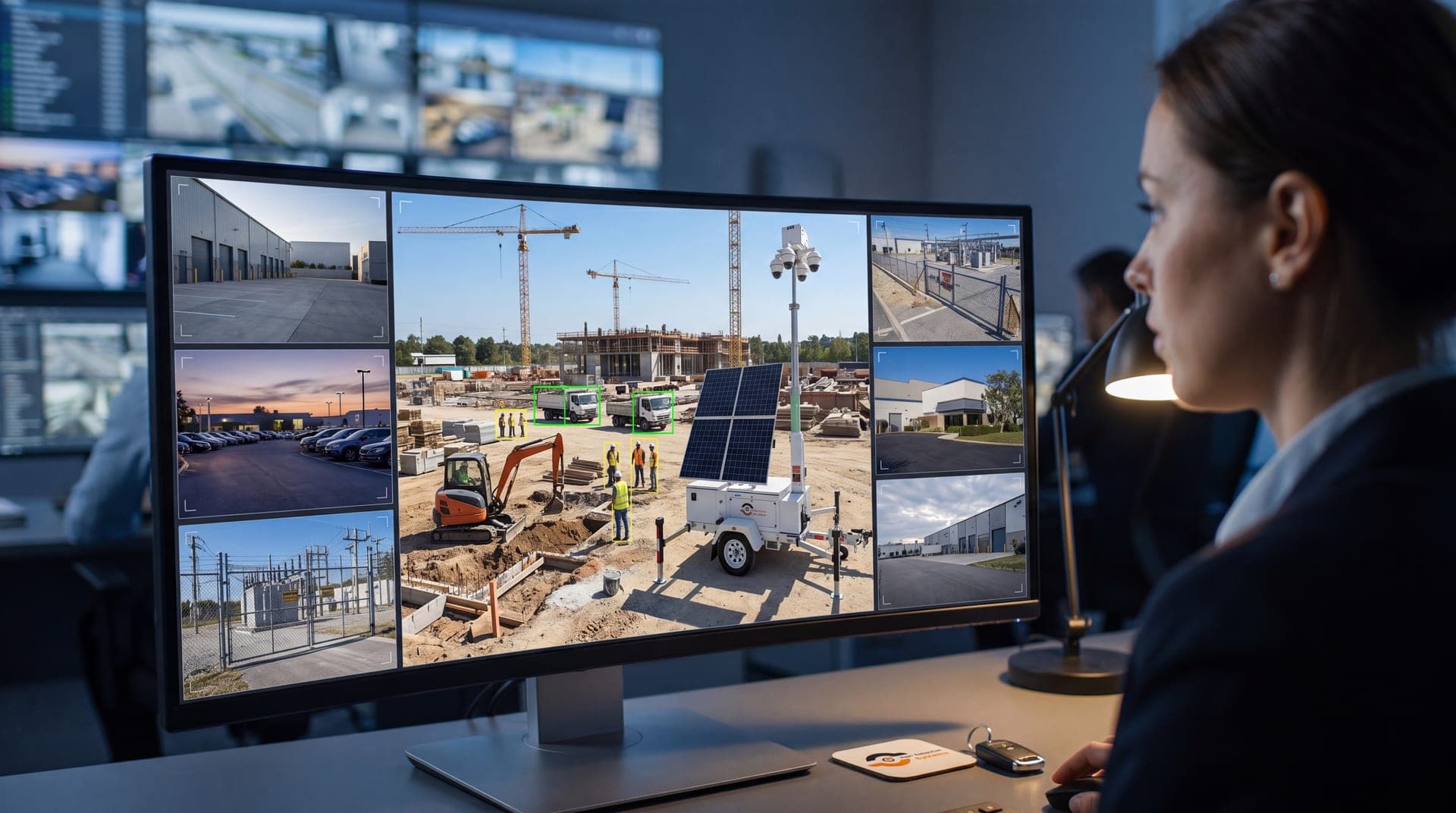
For the exterior of a tenant improvement or renovation project, a VDS mobile surveillance unit can be placed at the lot, loading area or staging space without any building power, internet or trenching. Each solar-powered trailer carries a 5MP PTZ with 25x optical zoom and three 8MP wide-angle cameras on a 22 ft telescopic mast, with dual-SIM 4G/5G connectivity that is separate from the building's network.
AI detection covers people, vehicles, loitering, objects and license plates. A 24/7 US-based security operations center verifies events, can speak through a loudspeaker and sends police dispatch with video when needed, so people, yours or your security partner's, handle verified incidents. Most deployments go live in about a week, and rental, month-to-month and term subscriptions fit the length of a renovation. Explore the mobile surveillance unit or talk to our team about your building.