
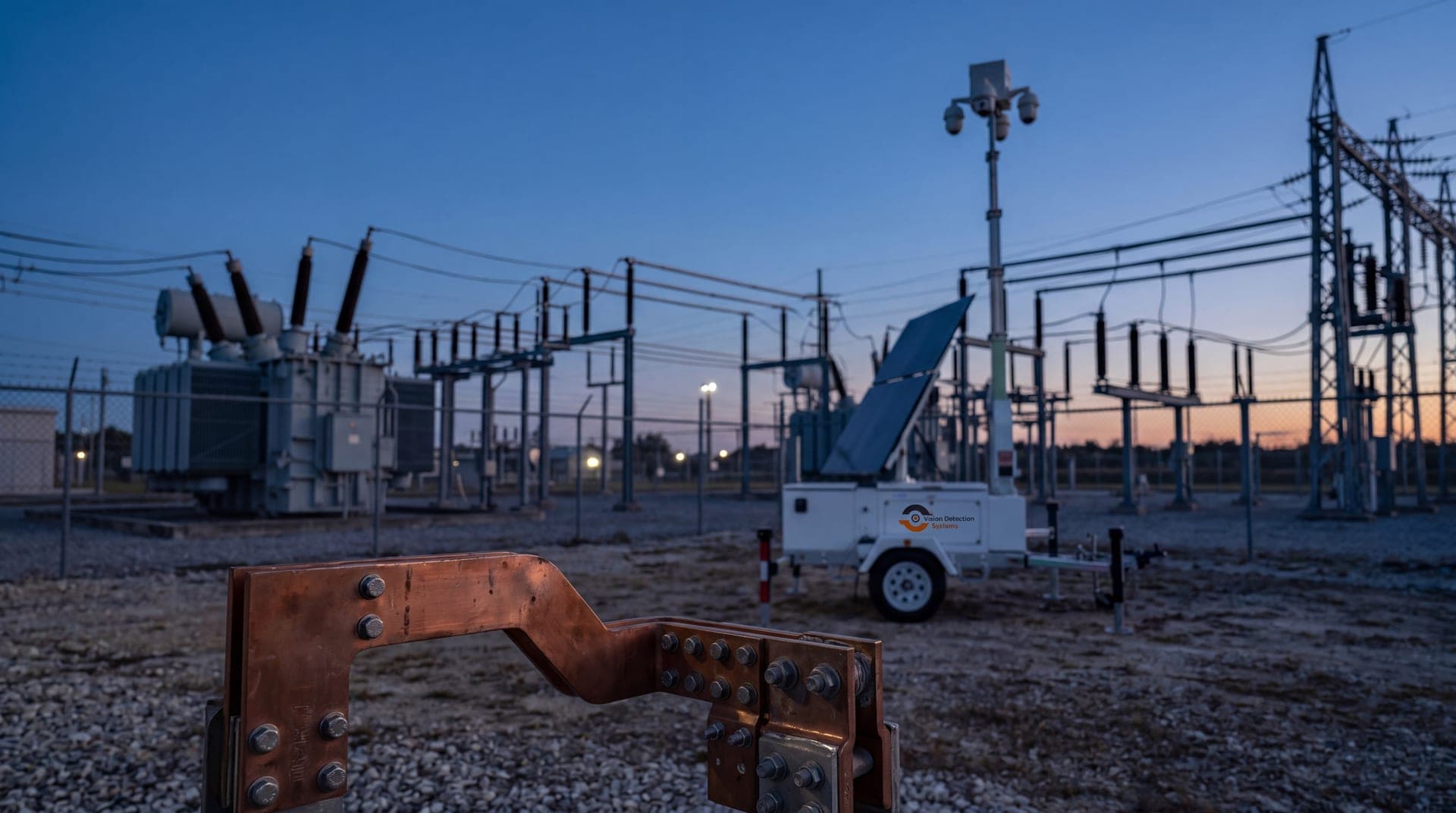
What makes this setting different
An ordinary construction site has one concern, theft or damage to project material. A substation project adds two. The first is safety, since people working next to energized equipment must follow strict rules, and anyone who strays is at risk. The second is reliability. A substation supports a large part of the electric system, so interference, intentional or not, matters well beyond the site.
Construction also creates change. Fences are moved or opened to bring in equipment, temporary roads and gates appear, and contractors who have never been on site arrive in numbers. For permanent facilities, we cover the baseline in substation physical security. The construction period needs its own plan, because the usual protections are partly disabled.
Separate the construction zone from the permanent facility
The most useful single step is to create a clear physical separation. Where the project is beside an energized yard, define a construction zone with its own fence, gate and parking. Keep laydown, deliveries and crews inside it, and keep them out of the energized area unless escorted and authorized.
Where the work is inside the existing yard, the utility's rules govern, and these normally require qualified personnel, escorts and documented clearances. Your contribution as a contractor is to make sure the boundary is clear to every crew member and visibly marked, so a mistake is less likely.
Access control for crews and vehicles
Many subcontractors rotate through a substation project, and some arrive for a single task. A written, current access list helps, but it only works if there is somewhere to enforce it.
- Single entry point. Deliveries and crews use one gate, with sign-in.
- Credential check. Verify identification against the access list before entry.
- Escort rules. Any visitor or new crew works with an authorized escort until cleared.
- Vehicle controls. Record plates and keep unauthorized vehicles outside the work area.
- After-hours rule. Nobody enters outside work hours without prior notice to the site manager and utility.
Cameras at the gate support each of these by keeping a time-stamped record. Combined with AI detection, they can flag an after-hours arrival.
Protecting copper and other metal
Substations contain a lot of copper in grounding grids, conductors, bus and cable. During construction, more is delivered than will be installed, and some gets left in the open. Metal theft is also dangerous, since cutting into energized or partially connected equipment can kill or injure.
Reduce the opportunity. Store spare conductor, cable and grounding material in a locked, lit and monitored area inside the construction zone. Count it on receipt and at the end of each phase. Do not leave cut ends of grounding conductor in the open overnight. Our guide to copper theft prevention at substations goes deeper on the metal itself.
Warn all site staff never to approach or touch cut equipment, since it may be energized. Call the utility and police if you find evidence of an intrusion.
Detection and response around the zone
Because the construction zone is temporary, cameras should be too. A standalone mobile unit placed just outside the fence can view the gate, the laydown area and the perimeter of the work zone without any connection to the substation's own systems.
| Question | Why it matters | What to do |
|---|---|---|
| Is the camera connected to utility systems? | A connection can create cybersecurity and approval issues | Run a standalone system unless the utility approves |
| Is it inside the energized area? | Work there follows strict safety rules | Place units outside, in the construction zone |
| Who responds to alerts? | Unverified alerts create noise | Use verified response with clear escalation steps |
| Who sees the video? | Utilities may restrict access to sensitive areas | Agree on viewing rules and camera angles in advance |
| What happens at night? | The highest risk is when nobody is present | Set after-hours detection with talk-down and police dispatch |
Cybersecurity is part of the same review. See security camera cybersecurity for what to ask about encryption, accounts and updates, and note that the utility may have its own requirements.
Inspection, commissioning and handover
The late stages of a substation project carry their own risks. As equipment is tested and energized, the boundary between the construction zone and the live facility moves, and so does the list of people who should be where. Review access rules at each milestone, retire contractor credentials when their work ends, and make sure the cameras and signs reflect the new boundary. Surplus material and demobilization are also moments of loss, since crews are leaving, counts are rushed and metal scrap is created. A final reconciliation of conductor, cable and grounding material, checked against the camera record of what left the site, closes the loop before handover.
Talk-down and escalation
When a person is detected in the zone after hours, a loudspeaker message that tells them they are on camera and that police are being called ends many attempts quickly. Live talk-down also gives an operator the chance to confirm whether the person is an authorized worker who forgot to notify anyone.
Agree on an escalation path before the project starts. Decide who at the utility, the contractor and the monitoring provider gets contacted at each step, and in what order. Include a plain statement that site staff do not confront intruders.
How VDS fits
VDS builds solar-powered mobile surveillance units that run independently of site power and wired internet, which makes them suitable for the outside edge of a construction zone. Each unit carries a 5MP PTZ camera with 25x optical zoom and three 8MP wide-angle cameras on a 22 ft telescopic mast, with a 30 ft mast available. A 900W bifacial solar array charges an 11.8 kWh LiFePO4 battery bank with reserve for 3-5 consecutive cloudy days, and dual-SIM 4G/5G cellular carries video. Hardware is NDAA Section 889 compliant.
AI detection covers people, vehicles and loitering. A 24/7 US-based security operations center verifies events, uses live talk-down through a loudspeaker, and dispatches police with video, so your team or your security partner handles verified incidents. For staging areas, see utility laydown yard security, or talk to our team about your project.