
Choose references that resemble your site
Ask each vendor for references that match your situation: a similar type of site, a similar scale and a similar length of service. A reference from a customer with one small site tells you little if you operate several large ones. Ask for at least one customer who has been with the vendor for a while, since early service often looks better than service after the novelty fades.
Ask to speak with the person who works with the vendor day to day, not only the executive who signed the contract. That person knows how alerts, support and equipment behave in practice. If a vendor limits access to a short list of hand-picked contacts, note it. The guide on choosing a video monitoring provider explains how to set up the process.
Questions about the relationship
Start with the basics so you can place the answers in context.
- How long have you worked with this vendor, and how many sites do they cover for you?
- Why did you choose them, and what alternatives did you consider?
- How was the setup, and did it match what was promised?
- Has the vendor changed anything about its service or contract since you signed?
- Would you choose them again, and what would you do differently?
The last question is often the most useful. Pay attention to hesitation and to details a reference volunteers without being asked.
Questions about incidents and response
Ask for specifics. A reference who can describe a real event, step by step, gives you more information than one who says everything is fine.
- Tell me about a recent incident. What happened and how was it handled?
- How quickly were you told, and by what channel?
- Was the alert accurate, and how often do you get alerts that turn out to be nothing?
- Did the vendor take action, such as live audio or contacting police, and was it appropriate?
- Did you get video and a written record afterward?
- Have you had a missed event, and how did the vendor respond to it?
How a vendor handles a mistake says as much as how it handles a success. Ask whether the vendor took responsibility and changed something.
Questions about equipment and reliability
Equipment that works when you are not looking is the baseline. Ask how often units have gone offline, how you found out, and how long they stayed down. Ask who handled repairs and how long they took.
Ask about weather, power and connectivity, which are the usual causes of trouble at remote sites. For mobile units, see the guide to surveillance trailer uptime for what affects reliability and what to ask about it. Ask whether the vendor told the reference about problems before the reference noticed them.
Questions about support and commercial terms
Support is part of the product. Ask how easy it is to reach a person, what hours are covered, and how quickly issues are resolved. Ask whether billing has been clear and whether there have been surprises.
Ask about changes during the contract: moving a unit, adding a site, ending early or extending. The reference's experience with these requests shows how flexible the vendor is. For help weighing options, see the comparison framework in what to look for in a mobile surveillance trailer.
Use a pilot to test what references cannot
References tell you about other sites. A pilot tells you about yours. Run one at a single location with a defined length and a short list of measures set in advance, such as coverage, alert quality, response and reliability. Our pilot program guide walks through the setup.
During the pilot, ask the vendor the same questions you asked references. Keep a log of events, alerts and response times, and review it weekly with the vendor.
Build the evaluation scorecard
Decide the categories and weights before you start calling. Use the same scale for every vendor and have two or three people score independently. A table keeps the comparison honest.
| Category | What to assess | Weight (set your own) | Vendor A | Vendor B |
|---|---|---|---|---|
| Fit for site | Coverage, power, connectivity | |||
| Detection quality | Accuracy, false alert handling | |||
| Response process | Verification, escalation, records | |||
| Reliability | Uptime, outage alerts, repairs | |||
| Support | Access, hours, resolution | |||
| Compliance | Hardware sourcing, data handling | |||
| References | Quality and consistency | |||
| Commercial terms | Clarity, flexibility, exit terms |
Score each category from 1 to 5 using notes from the calls and the pilot, then multiply by your weights. Review the totals together, and discuss any category where scorers disagree. The comparison of mobile surveillance companies offers additional criteria.
Red flags to watch for
Some patterns in reference calls and pilots deserve a closer look. A reference who cannot describe a single specific incident may not have much experience with the service. Repeated mentions of slow support, surprise charges or units that went offline without notice point to process problems, not one-time bad luck.
Watch how the vendor behaves too. Be cautious when a vendor discourages you from calling customers, offers only brand-new accounts, avoids putting service commitments in writing or answers technical questions with general claims. A vendor that cannot explain how an alert is verified, who sees it and what happens next may not have a defined process.
Treat a good reference as one data point and a pilot as the confirmation. If an answer worries you, ask for a follow-up conversation or a second reference, and write down what you were told. A fair vendor will welcome the scrutiny and answer plainly.
How VDS fits
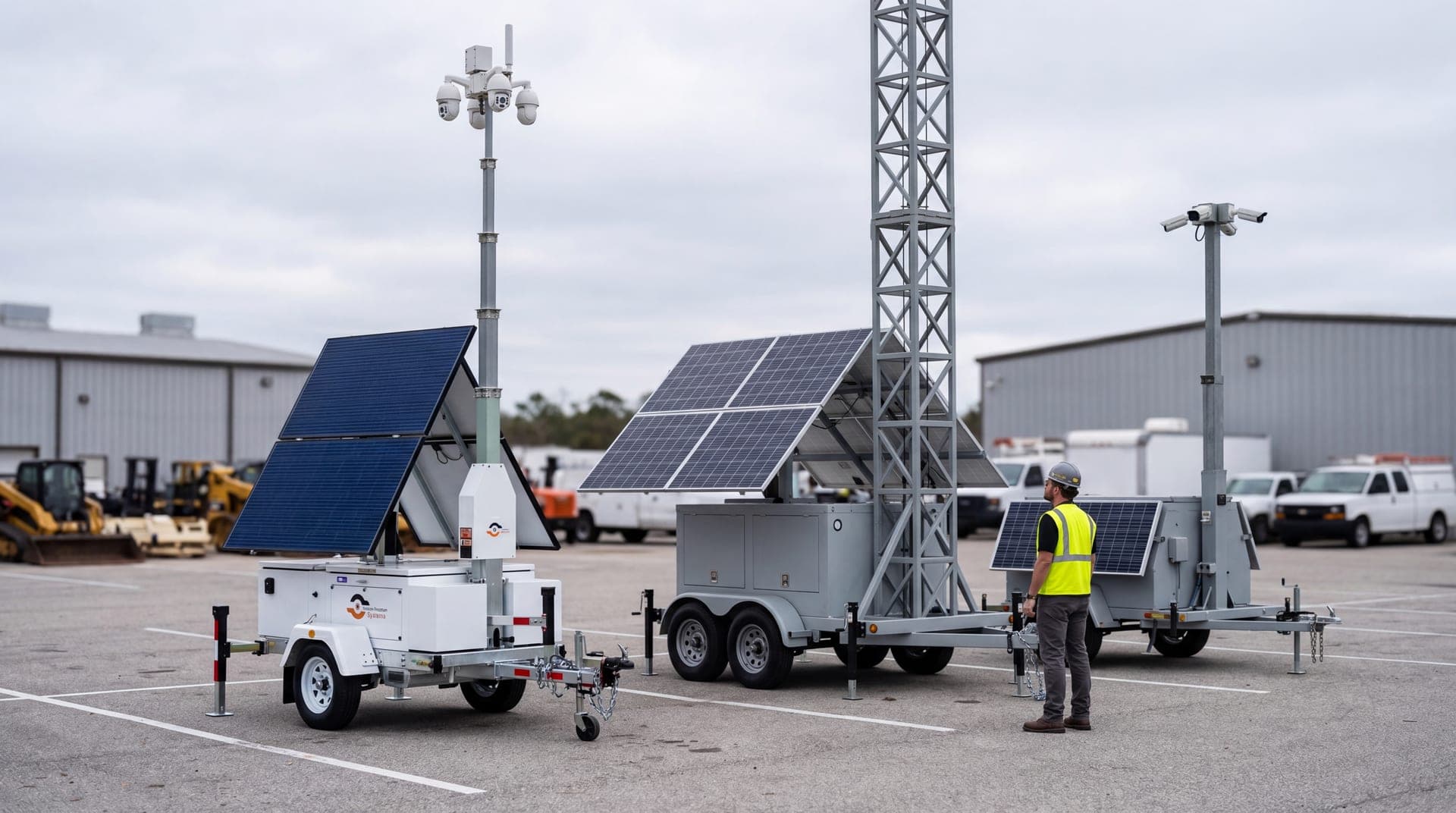
VDS builds solar-powered mobile surveillance units. Each has a 5MP PTZ with 25x optical zoom and three 8MP wide-angle cameras on a 22 ft telescopic mast, powered by a 900W bifacial solar array and an 11.8 kWh LiFePO4 battery bank with reserve for 3-5 consecutive cloudy days. Dual-SIM 4G/5G cellular means no site power or internet is needed.
A 24/7 US-based security operations center verifies events, responds with live talk-down, and dispatches police with video. Hardware is NDAA Section 889 compliant. Rental, month-to-month and term subscriptions are available, so a pilot can fit your plan. See remote monitoring or talk to our team.