
For the full reasoning behind each control, read the logistics yard and cargo theft prevention guide. This post is the working checklist.
Why this year's numbers change the checklist
Cargo theft in 2026 is less frequent and much more costly per incident. Verisk CargoNet recorded 547 incidents across the U.S. and Canada in the third quarter, down 33% from a year earlier, while estimated losses rose 12% to $230.1 million. Through September, the average value per theft climbed about 72%, from $261,115 to $448,456. Nineteen thefts in the quarter were worth $1 million or more, against nine a year earlier.
Two details shape the checks below. First, deception is a growing share of the problem: fictitious pickups made up about 25% of reported incidents in the quarter, up from 18%. Second, the losses are concentrated. California alone had 182 incidents, about a third of the total, and California, Texas, New Jersey, and Illinois together accounted for 57%.
A yard that plans only for a cut fence is planning for last decade's theft. The checklist starts at the gate for that reason.
Gate and pickup verification
1. Record every vehicle in and out
Put license plate recognition on each working entry and exit so every truck and trailer has a timestamped record. A plate record does not stop a theft by itself. It removes anonymity, and it gives investigators a verified vehicle when a load goes missing.
2. Verify the pickup, not just the paperwork
A fictitious pickup succeeds when the gate accepts documents at face value. Confirm carrier, driver, and load details through a channel you already trust, such as the phone number on file, before a trailer leaves. Verisk recommends stronger identity verification and shipment visibility for exactly this reason.
3. Close the gates you do not use
Most yards have one or two functional entry points and several that exist on paper. Lock or block the rest for the closure period, and make sure the ones left open are the ones covered by cameras and plate capture.
Yard layout
4. Break up predictable parking
If high-value trailers sit in the same rows every night, a crew that watches the yard for two evenings knows where to go. Rotate rows, keep the most valuable loads away from the fence line, and park trailers door to door where the layout allows.
5. Walk the fence line and the lighting
Look for cut or sagging sections, gaps under gates, and lights that are out or aimed at nothing. Lighting only helps when someone is watching what it shows, so match the lit areas to the camera views.
6. Cover overflow and temporary lots
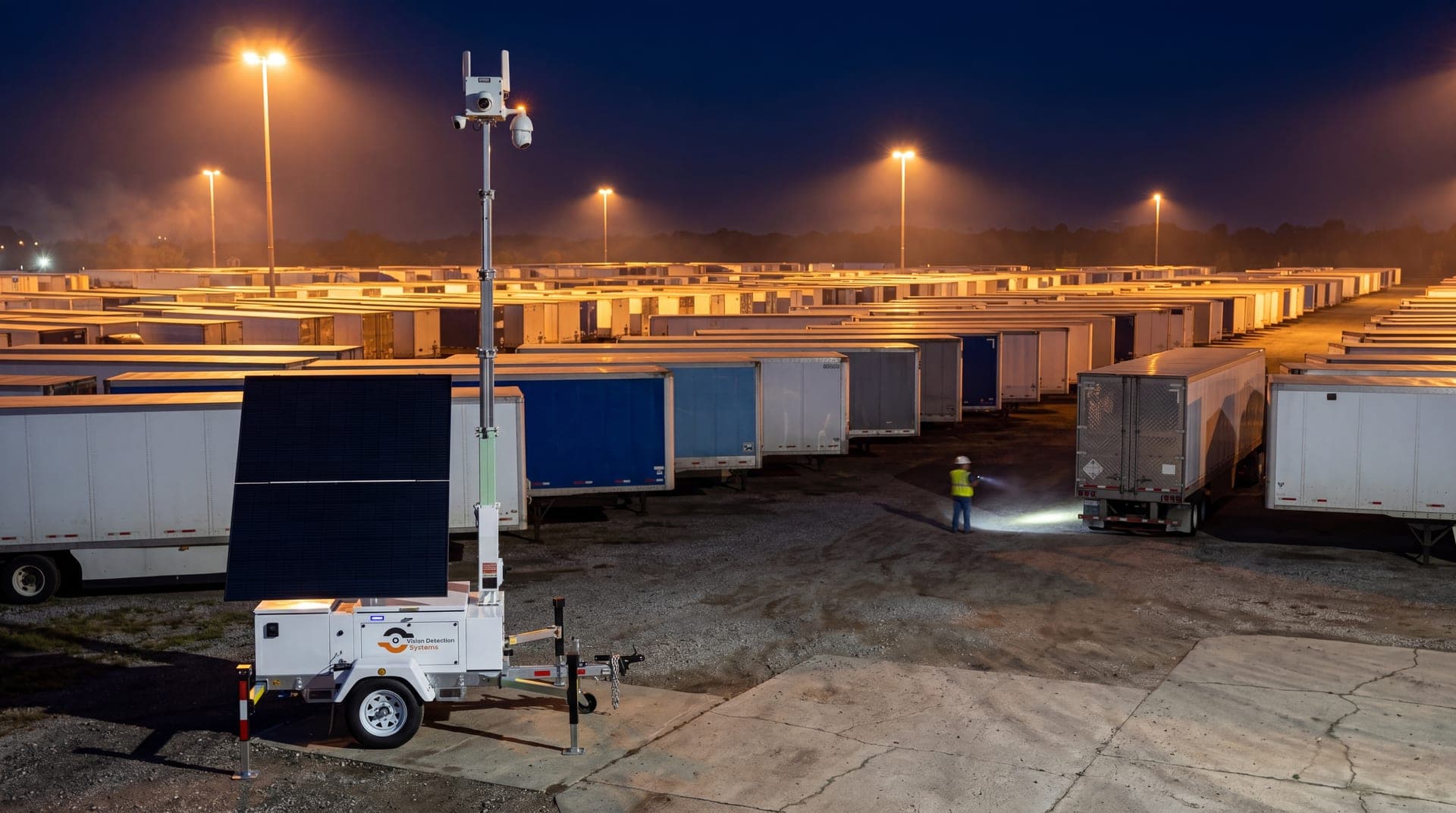
Peak season pushes trailers into lots that were never built for security. A mobile surveillance unit covers an overflow lot or a fencing gap without a construction project, and it moves when the trailers do. See how this works at cargo yards and drop lots.
Monitoring during dead hours
7. Make sure someone reviews alerts live
Recording without review means the first person to see the break-in is whoever pulls the footage after the loss is reported. Remote video monitoring puts a trained operator on each alert during the hours the yard is empty, so your team or your security partner responds to verified activity instead of a morning discovery.
8. Write the escalation path down
Decide now who gets the call at 2 a.m. on a holiday, in what order, and when law enforcement is contacted. An alert that lands in an inbox nobody checks during a closure is the same as no alert.
9. Tune zones to the yard's real traffic
Default motion detection across a whole lot buries real events under false alarms. Set zones and schedules around actual movement: gate lanes, trailer rows, and the fence line, with different rules for closure days than for working shifts.
Evidence
10. Check retention and practice an export
Confirm footage is kept long enough to outlast your longest closure plus the time it takes to notice a loss, then pull one clip as a drill. If an export takes days, it will slow an insurance claim and a police report. Our guides on how long security cameras should keep footage and using camera footage as evidence cover the details.
The checklist at a glance
| Check | Owner | Done before |
|---|---|---|
| Plate capture on every working gate | Yard or security manager | Start of peak season |
| Pickup verification through a trusted channel | Dispatch and gate staff | Start of peak season |
| Unused gates locked or blocked | Yard manager | Each closure |
| High-value trailer parking rotated | Yard manager | Weekly |
| Fence line and lighting walked | Facilities | Each closure |
| Overflow and temporary lots covered | Security manager | Before trailers arrive |
| Live alert review during dead hours | Monitoring provider | Each closure |
| Escalation contacts confirmed | Security manager | Each closure |
| Detection zones and schedules tuned | Monitoring provider | Each closure |
| Retention checked and export drill run | Security manager | Quarterly |
Where to go next
For trucking terminals and drop lots specifically, see truck yard and cargo theft security. For the year's data in more depth, see cargo theft statistics for 2026. For how coverage fits a yard running a 24-hour dock schedule, see logistics yard security.