
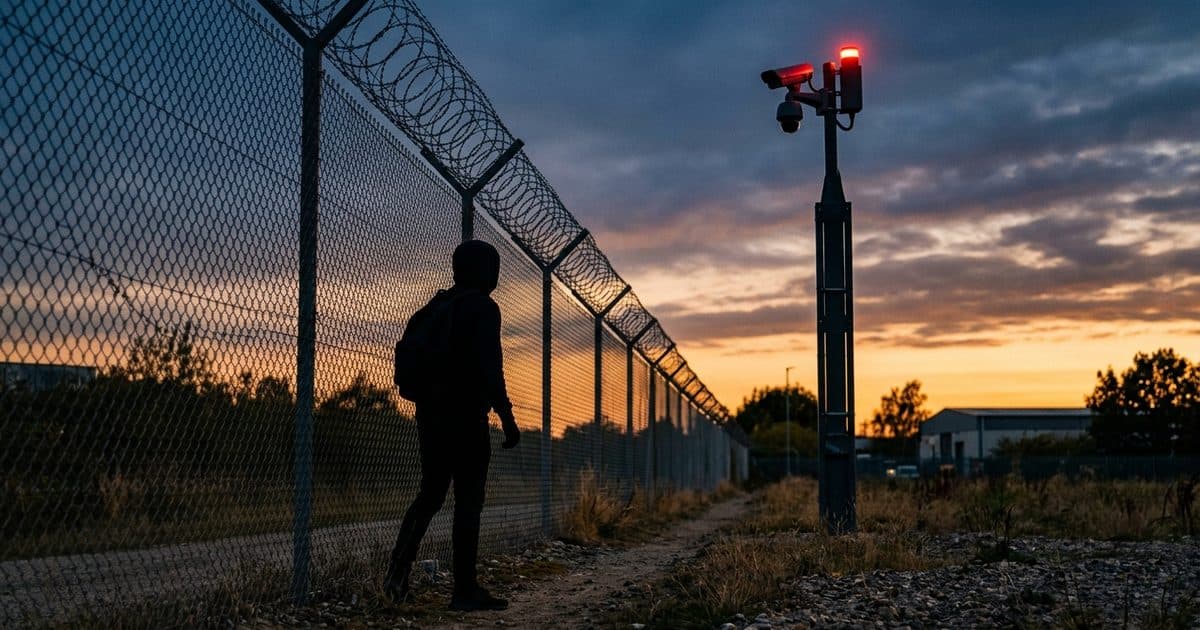
Myths about what cameras can do
These two come up first in almost every purchase conversation.
Myth 1: A camera on a pole stops crime by itself
What is true: Cameras can reduce crime. A 2019 systematic review of 76 studies found CCTV associated with roughly a 13% reduction in crime in target areas, with larger effects in parking lots, about 37%.
What is missing: The same review found that actively monitored systems were associated with about a 15% reduction, while passive recording-only systems showed no significant effect. A camera that nobody watches is a record, not a deterrent. For a fuller treatment, see do security cameras deter crime.
Myth 2: Higher resolution always means better evidence
Resolution is one input among several. A sharp sensor behind a dirty lens, in a dark spot, aimed at a wide field, will not show a plate or a face. Placement, lighting, shutter speed and compression all matter. Pixels on target is the useful measure, meaning how many pixels cover the person or object you need to identify. Our security camera resolution guide explains how to match resolution to the job.
Myths about motion detection and AI
Analytics are the part of a system most often oversold, in both directions.
Myth 3: Motion detection and AI are the same thing
Basic motion detection reacts to pixels changing. Wind, rain, shadows, insects and headlights all trigger it. AI video analytics classify what is moving, such as a person, a vehicle or an animal, which cuts down on nuisance alerts. Neither is perfect, though. The comparison in motion detection vs video analytics shows where each approach fits.
Myth 4: AI is always right
AI makes mistakes. It can miss a person in poor light, flag a shadow, or confuse an animal with a person at distance. Accuracy depends on camera placement, lighting, scene complexity and tuning. The safe assumption is that AI is a filter that reduces the number of events a person must review, not a final judge. Human verification is what keeps false alarms from becoming bad responses. Read more in video analytics accuracy explained.
Myths about power and connectivity
Remote sites are where these two matter most.
Myth 5: Solar cameras fail when it is cloudy
Solar systems fail when they are undersized, not because clouds exist. A properly designed system has a battery bank sized to carry the equipment through several cloudy days, and panels sized to recharge it in your location. Winter, latitude and shading all change the math, so ask any provider how they size for your site. For the concepts, see solar security camera battery life.
Myth 6: You need Wi-Fi or a wired connection
Cameras need a network path, but that path does not have to be Wi-Fi or a buried cable. Cellular modems carry video from sites with no internet. The planning questions are signal quality, carrier coverage and data usage, since video can use a lot of data if it is streamed continuously. Our guide on cellular security cameras covers what to check.
Myths about monitoring and visibility
The last group covers what monitoring is and what it is not.
Myth 7: Monitoring just means paying someone to watch a screen
Good remote monitoring is not a person staring at dozens of feeds. AI flags events, a monitoring center verifies them on video, and an operator responds by voice or by contacting police with a clear picture of what is happening. The point is to send people to real incidents, not to chase every alert. The article on the benefits of remote video monitoring describes the workflow.
Myth 8: Monitoring replaces security officers
Technology does the watching so that people, yours or your security partner's, can handle verified incidents. Officers still make the decisions that need judgment, presence and authority. Video helps them arrive informed and pick the right incidents to attend.
Myth 9: Hidden cameras catch more than visible ones
For deterrence, visible cameras do the work. A person who sees a camera, a light or a sign may decide to move on. Hidden cameras can help in investigations, but they do not stop an incident that has not begun. Signage rules and notice requirements vary by state, so check with counsel.
Myth 10: Once cameras are installed, the job is done
Cameras drift. Lenses get dirty, spiders build webs across infrared illuminators, trees grow into the view and clocks lose time. A camera that was perfect at installation can be useless a year later. Build a simple routine: check that every camera is recording, review a sample of footage, clean lenses and confirm that alerts still reach the right people. A site that skips this routine often discovers the problem only when it needs the footage.
Quick reference
| Myth | Short answer |
|---|---|
| Cameras alone stop crime | They help most when monitored and combined with other measures |
| More megapixels is always better | Only if placement, light and lens support it |
| Motion detection equals AI | AI classifies objects, motion detection reacts to pixel change |
| AI never misses | It makes errors, so human verification matters |
| Solar fails in clouds | Not when battery reserve and panels are sized right |
| No Wi-Fi means no cameras | Cellular works without site internet |
Where VDS fits
VDS builds around the facts above. A mobile surveillance unit is a solar-powered trailer with a 5MP PTZ camera with 25x optical zoom and three 8MP wide-angle cameras on a 22 ft telescopic mast. A 900W bifacial solar array charges an 11.8 kWh LiFePO4 battery bank with reserve for 3 to 5 consecutive cloudy days, and dual-SIM 4G/5G cellular means no site power, internet or trenching. AI detection feeds a 24/7 US-based security operations center that verifies events, responds with live talk-down and dispatches police with video. See the mobile surveillance unit or talk to our team.
Sources
- Piza, E. L., Welsh, B. C., Farrington, D. P., & Thomas, A. L. (2019). CCTV surveillance for crime prevention: A 40-year systematic review with meta-analysis. Criminology & Public Policy, 18(1). onlinelibrary.wiley.com