
Why chemistry matters for cameras
A surveillance system on solar power cycles its battery every day. The panels charge it by day, and the cameras, modem and lights drain it by night. Over a year that is a lot of cycles, and the battery that handles them best keeps the system online with the fewest service visits. Chemistry also sets how much of the nameplate capacity you can actually use, how the bank behaves in a hard freeze and how heavy the trailer ends up.
If you are still working out the basics of how much power a site needs, start with the load and the solar array. The chemistry question comes after the load and the array are understood.
Cycle life
Cycle life is the number of full charge and discharge cycles a battery can deliver before capacity falls noticeably. LiFePO4 is known for a long cycle life, commonly several times that of typical lead acid batteries under the same use. Lead acid wears faster, especially when it is routinely discharged deeply or left partly charged for long periods.
For a system that cycles every day, this gap compounds. A chemistry that wears out sooner means replacement visits and downtime. Ask any vendor for the rated cycle life, the depth of discharge it assumes and the end-of-life capacity it is measured to. Ratings are only comparable when those conditions match.
Depth of discharge and usable capacity
Depth of discharge is how much of the battery's capacity you draw down before recharging. Lead acid batteries last longest when discharged only partway, so a designer has to buy more nameplate capacity to get the usable energy the load needs. LiFePO4 accepts much deeper discharge without the same damage, so a smaller bank can deliver the same usable energy.
This is why comparing batteries by nameplate kilowatt-hours alone is misleading. Always compare usable capacity. A lead acid bank and a lithium bank with different nameplate sizes can deliver similar usable energy, and the lead acid bank will be the larger and heavier of the two.
Cold weather behavior
Both chemistries lose some effective capacity in the cold, because the reactions inside the cell slow down. The difference is in how each is damaged. Lead acid can be harmed if it sits deeply discharged in freezing weather. LiFePO4 can be damaged if it is charged while below its rated temperature limit, because the cells cannot accept charge safely.
Well-designed lithium systems manage this with a battery management system that blocks charging when the cells are too cold, and in some designs with a heating element or an insulated enclosure. If your site sees hard winters, ask how the system handles cold charging, and read about surveillance trailers in winter for the other cold-weather factors.
Weight and trailer design
Lead acid banks are heavy for the energy they store. On a trailer, that weight raises the tongue and axle loads, affects towing and handling and limits how much else the platform can carry. Lithium chemistry packs more usable energy into less weight, which gives designers room to add array capacity or reserve days without overloading the chassis. Stability on site also depends on where the weight sits, and a low, well-placed battery bank helps keep a tall mast steady.
Side-by-side comparison
| Factor | LiFePO4 | Lead acid |
|---|---|---|
| Cycle life | Long, commonly several times lead acid | Shorter, wears faster with deep discharge |
| Usable share of nameplate | High | Lower, bank is often oversized |
| Weight for usable energy | Lighter | Heavier |
| Cold charging | Needs temperature protection | Tolerates charging but loses capacity |
| Upfront cost | Higher | Lower |
| Maintenance | Low, managed by electronics | Varies by type, may need checks |
| Best fit | Daily-cycling, long-term, weight-sensitive | Small, short-term, tight upfront budget |
The upfront cost row favors lead acid, but total cost of ownership depends on how many replacements the project will need over its life. For a long-term deployment, fewer replacements often outweigh the higher purchase price. For a short project, the math can go the other way.
Safety and protection electronics
LiFePO4 is regarded as one of the more stable lithium chemistries, but any lithium bank still needs a battery management system. That electronics layer protects against overcharge, over-discharge, over-current and temperature extremes, and it balances the cells. Ask whether the system has one, what it protects against and how faults are reported remotely. Remote visibility into battery state is valuable, because it lets a provider spot a weak bank before it causes an outage, which ties directly to surveillance trailer uptime.
Lifespan, replacement and total cost
Purchase price is only one line in the cost of a battery. A bank that fails early forces a service visit, a replacement and possibly a gap in coverage. Over a multi-year deployment, those events usually cost more than the difference in sticker price between chemistries. When you compare quotes, ask the vendor to state the expected service life under your conditions, including the climate and the daily depth of discharge, and what the warranty actually covers.
Disposal and recycling also belong in the plan. Both chemistries are recyclable, and a responsible provider should be able to explain how end-of-life batteries are handled. For short projects of a few months, a cheaper chemistry may be perfectly reasonable, because the bank will not reach the end of its life. For deployments meant to run for years without attention, long cycle life and low maintenance matter more.
What VDS uses
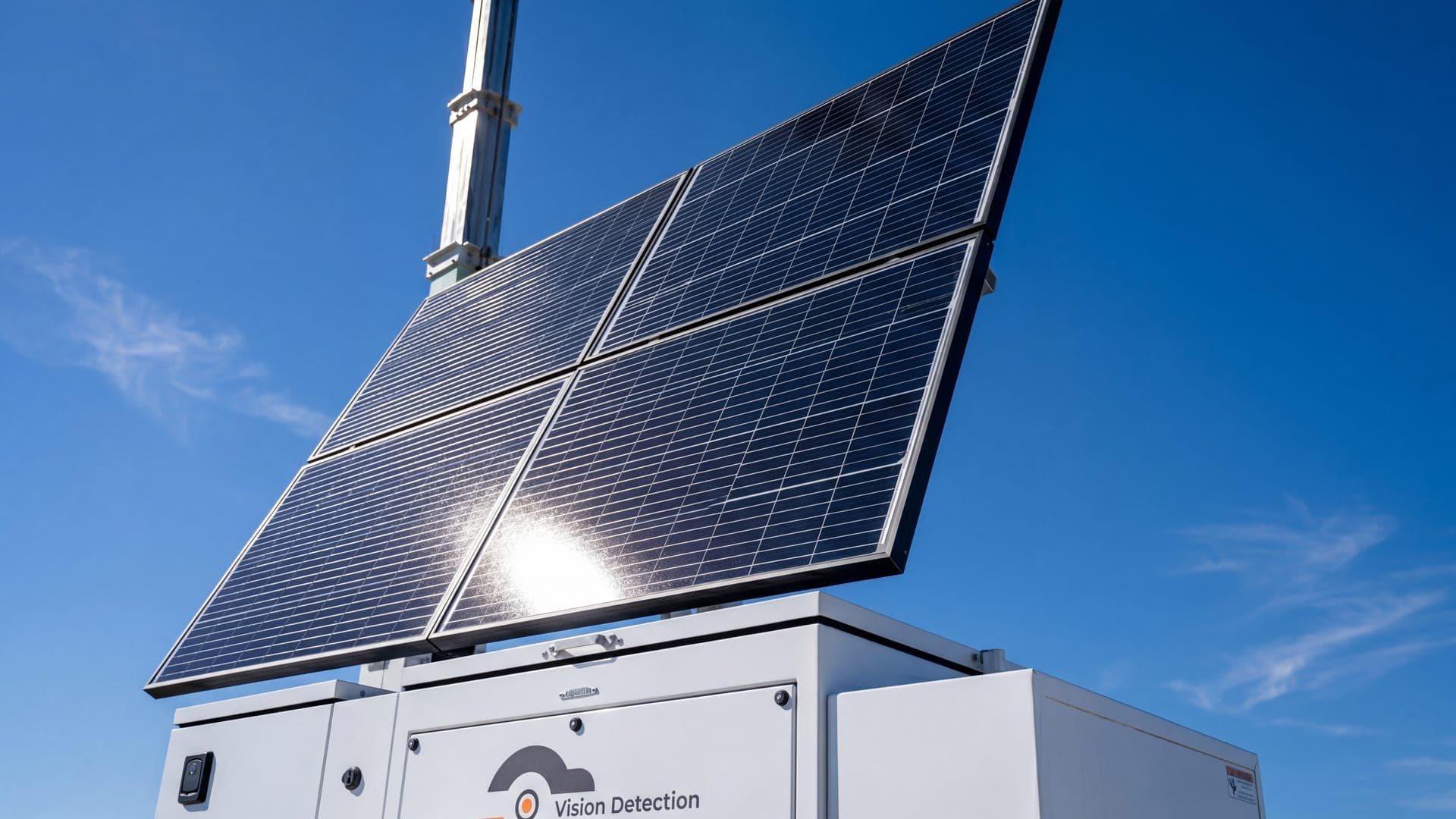
The VDS mobile surveillance unit uses an 11.8 kWh LiFePO4 battery bank charged by a 900W bifacial solar array, with reserve for 3-5 consecutive cloudy days. It runs a 5MP PTZ camera with 25x optical zoom and three 8MP wide-angle cameras, and it needs no site power, internet or trenching. More on the design is in the solar surveillance trailer guide and on the mobile surveillance unit page.
Questions to ask about any battery
- What is the chemistry, and what is the usable capacity?
- What cycle life is rated, and at what depth of discharge?
- What are the charge and discharge temperature limits?
- Is there a battery management system, and can it be monitored remotely?
- How much does the bank weigh, and where is it mounted?
- What does the warranty cover, and for how long?
If you are comparing off-grid options and want a second opinion on a quote, talk to our team.