
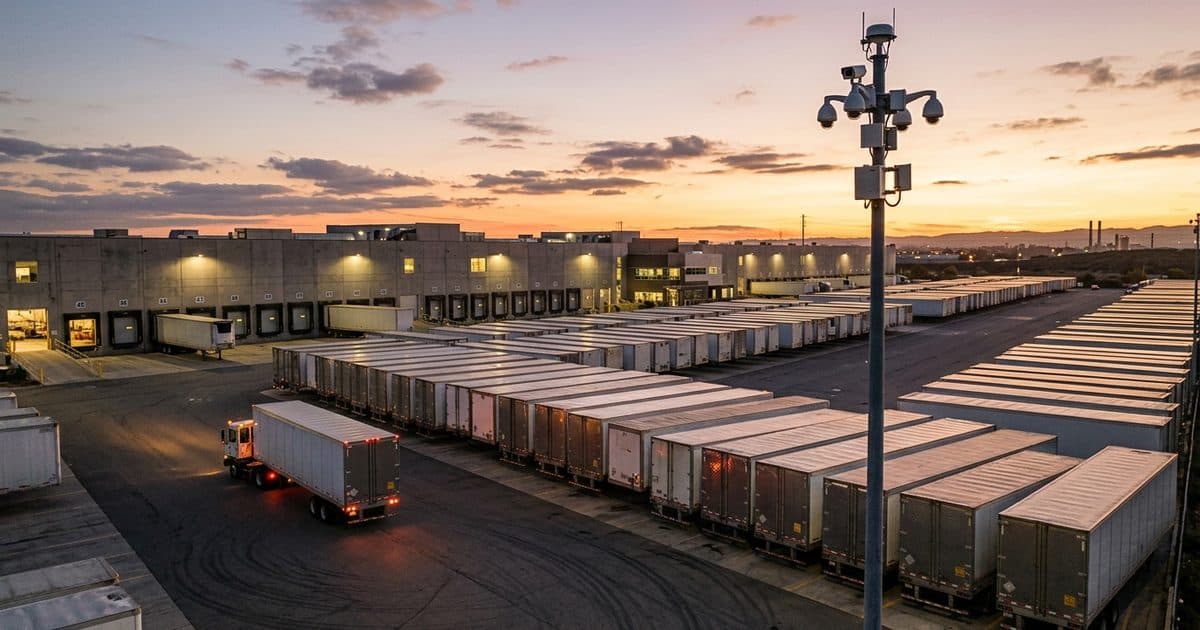
Think in zones, not cameras
A distribution center looks like one property but behaves like several. The gate has its own risks, the yard has others, and the docks and the building have still more. Planning by zone keeps each part of the site from being overlooked and makes it easier to assign responsibility.
| Zone | Main exposure | Core controls |
|---|---|---|
| Gate | Unauthorized vehicles and drivers | Access control, plate capture, driver check |
| Trailer yard | Trailer and cargo theft, tampering | Wide camera coverage, trailer log, lighting |
| Dock doors | Unauthorized loading or unloading | Door control, cameras, schedule checks |
| Building interior | Pilferage, after-hours entry | Cameras, alarms, access control |
| Employee parking | Vehicle break-ins, personal safety | Lighting, cameras, monitoring |
| Perimeter | Fence breach, dumping | Fence, lighting, detection |
Our logistics yard cargo theft prevention checklist takes the yard in more detail. Use this article for the full site view.
The gate is where control starts
Every vehicle enters through a small number of points, which makes the gate the best place to apply control. A sound gate process records who arrives, what they are carrying or picking up, and when. That usually means a driver check, a plate read and a time-stamped image of the vehicle. Our guide to automated gate access with license plate recognition describes how a plate-based system can work.
Plan for exceptions. Drivers arrive early, late and without paperwork, and a gate that cannot handle exceptions will be bypassed by staff trying to keep trucks moving. Give the gate team a quick way to verify a visitor and a log for every override.
The yard needs its own coverage
The trailer yard is usually the largest part of the site and the hardest to watch. Rows of similar trailers, vehicles moving at all hours and wide spaces between structures all work against casual observation. Cameras with a wide view, and with the ability to zoom, help a monitoring team follow an incident across the yard. A 2019 systematic review of CCTV studies found parking lots showed about a 37% reduction in crime, which is relevant to open lots and yards, though a freight yard differs from a parking lot.
Support the cameras with lighting and a trailer log. A log that records which trailer is in which door or space gives the monitoring team a way to tell a normal movement from a suspicious one. Our truck yard cargo theft security guide goes into specific yard threats.
Dock doors and the building
Dock doors are where cargo leaves the building, and where legitimate and illegitimate loading can look similar. Control who can open doors and set a schedule that matches loads. Place cameras so that each door, the trailer at it and the area in front are in view. Review exceptions, such as a door open outside a scheduled load or a trailer arriving without a booking.
Inside the building, the focus moves to high-value areas, controlled access between zones and after-hours entry. See warehouse security cameras for interior layout.
Monitoring through the night
Distribution centers run long hours but still have quiet periods when the site is thin on staff. Those are the hours when a yard or a fence line is least watched. Recorded video helps an investigation afterward, but it does not interrupt anything. Live monitoring does. A trained operator who receives an alert, looks at the video and speaks to the person on site can end an event before freight leaves. The same 2019 review found actively monitored systems were associated with about a 15% reduction in crime, while passive systems showed no significant effect.
Decide how monitoring and your guard force work together. Cameras watch continuously, and people, yours or your security partner's, handle verified incidents. Document who gets which alert and what they are expected to do.
People, procedures and lighting
Technology works only if the daily routine supports it. Train gate and dock staff on what to do when something looks wrong, and make sure they know who to call. Control driver access to the building, so that visiting drivers use a defined waiting area and restroom instead of wandering through the facility. Keep keys and trailer seals under a documented process, and check seal numbers against paperwork at the gate.
Lighting turns cameras from daytime tools into round-the-clock tools. Light the gate, the dock aprons and the lanes between trailer rows, and check the coverage on a dark night. Dark gaps between lights are where people choose to work. Review lighting and camera aim after any change to the yard layout, since new trailer rows can block both.
Temporary and overflow areas
Peak season often brings overflow trailer lots, temporary staging areas and new buildings under construction. These areas rarely have permanent power or network. A mobile solar-powered unit can cover them quickly, and it can move when the surge ends. This is also useful at a new facility during build-out, when freight and equipment arrive before the permanent security systems are installed.
Evaluate the whole site
Before changing anything, review last year's incidents by location, time and type. Look for patterns, such as a particular door, a particular shift or a specific part of the yard. Then match controls to those patterns, starting with the highest exposure. See the logistics industry page for how VDS approaches the sector.
How VDS fits
VDS builds solar-powered mobile surveillance trailers that need no site power, internet or trenching. Each unit carries a 5MP PTZ camera with 25x optical zoom and three 8MP wide-angle cameras on a 22 ft telescopic mast, with dual-SIM 4G/5G cellular. AI detection covers people, vehicles, loitering, objects and license plates.
A 24/7 US-based security operations center verifies events, uses live talk-down through a loudspeaker, then dispatches police with video. Hardware is NDAA Section 889 compliant. Most deployments go from signed quote to live monitoring in about a week. Rental, month-to-month and term subscriptions are available. See the mobile surveillance unit or talk to our team.
Sources
- Piza, E. L., Welsh, B. C., Farrington, D. P., & Thomas, A. L. (2019). CCTV surveillance for crime prevention: A 40-year systematic review with meta-analysis. Criminology & Public Policy, 18(1). onlinelibrary.wiley.com