
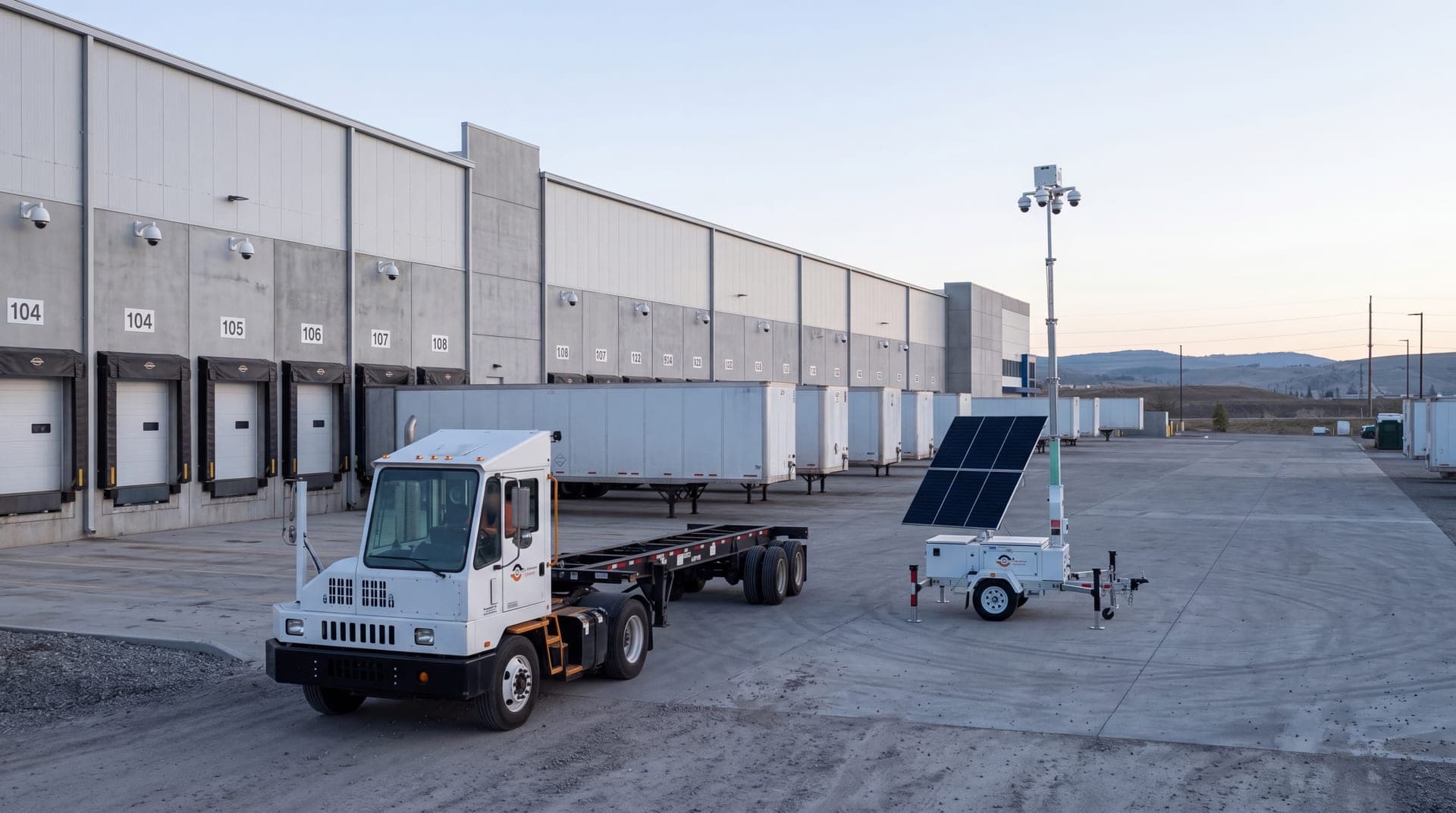
Why warehouse environments break standard security camera setups
Distribution centers operate under conditions that make typical commercial surveillance ineffective. Ceiling heights of 25-40 feet create coverage gaps, while forklifts and high inventory stacks constantly shift sightlines throughout the facility.
Loading docks present the biggest vulnerability window. Trailer positioning blocks camera views, and the transition between secured warehouse space and open truck access creates natural blind spots where cargo theft occurs. Most facilities discover missing inventory days or weeks after the actual incident.
After-hours operations compound these challenges. Skeleton crews working overnight shifts mean fewer eyes on the floor when most external threats materialize. Without real-time monitoring and escalation protocols, your warehouse security cameras become expensive storage devices that document problems nobody knows happened.
Camera types that actually work for warehouse operations
Security cameras for warehouses require specific configurations to handle unique operational demands. Wide-angle cameras mounted at optimal heights provide floor coverage that adapts to changing inventory layouts and equipment movement patterns.
PTZ (pan-tilt-zoom) cameras cover exterior yards and perimeter areas where traditional fixed cameras can't track vehicle movement or personnel activity across large distances. These units respond to motion detection and can follow suspicious activity while maintaining evidence-ready documentation.
License plate recognition (LPR) cameras at entry and exit points create automatic logs of all vehicle traffic. This capability proves critical during cargo theft investigations and provides accountability for driver check-in/check-out procedures that manual logs often miss.
Mobile surveillance trailers address temporary coverage needs during facility expansions, overflow storage periods, or construction projects. These units deploy within hours and provide the same monitoring capabilities as fixed installations without waiting for infrastructure upgrades.

Remote monitoring vs. recording-only systems
Most warehouse incidents happen between 10 PM and 6 AM when minimal staff coverage leaves facilities vulnerable to external threats. Recording-only camera systems document these incidents but provide no real-time intervention or verified response protocols.
Remote video monitoring combines camera coverage with human verification and escalation workflows. When motion detection triggers in restricted areas, trained operators review live footage and initiate appropriate response — law enforcement dispatch, on-site security deployment, or management notification based on threat assessment.
This approach transforms warehouse security cameras from passive recording devices into active deterrent and response tools. Verified alarms reduce false dispatch charges while ensuring real incidents receive immediate attention rather than next-day discovery during inventory checks.
The documentation advantage matters for liability protection. Slip-and-fall claims, worker compensation disputes, and cargo theft investigations require specific footage with verified timestamps and chain-of-custody protocols that standard DVR systems don't provide.
Building an effective warehouse coverage plan
Warehouse surveillance cameras work best when deployed as part of a structured coverage plan that addresses specific operational zones. Perimeter monitoring establishes the first security boundary, with cameras positioned to eliminate blind spots around building exteriors and vehicle staging areas.
Entry point coverage documents all personnel and vehicle access through designated checkpoints. This includes employee entrances, visitor access, and loading dock activity where the majority of liability incidents and theft opportunities occur.
Floor zone coverage adapts to your facility layout and inventory management system. High-value storage areas receive priority camera placement, while general warehouse floor coverage focuses on main traffic patterns and equipment operation zones.
Fixed mounted surveillance units provide consistent coverage for permanent operational areas, while mobile units handle seasonal expansion zones or temporary storage areas that shift based on inventory cycles.
Evidence-ready documentation and retention planning
Distribution centers face frequent subpoenas for footage related to cargo theft, workplace incidents, and liability claims that can occur months after the actual event. Warehouse security cameras must capture footage that meets legal standards and remains accessible through proper retention planning.
Resolution requirements vary by coverage zone — loading dock cameras need sufficient detail to identify faces and license plates, while general floor coverage focuses on documenting movement patterns and incident timelines. Poor night performance or inadequate lighting integration often renders footage unusable when incidents occur during off-hours.
Retention planning involves more than storage capacity. Fast clip export capabilities matter when law enforcement requests specific incident footage or legal teams need documentation for liability cases.
Common warehouse security camera mistakes
- Inadequate loading dock coverage — Many facilities position cameras too high or too far from dock doors, creating blind spots when trailers park. Proper dock coverage requires cameras positioned to maintain sightlines regardless of vehicle positioning.
- No escalation workflow for after-hours alerts — Installing cameras without defining who responds to alerts and how creates expensive equipment that nobody monitors. Effective warehouse security requires clear escalation protocols for different threat levels.
- Ignoring seasonal coverage changes — Warehouse operations expand and contract based on inventory cycles, but camera coverage often remains static. Mobile surveillance options address temporary blind spots during peak periods or facility expansions.
- Insufficient integration with access control — Warehouse security cameras work best when integrated with badge readers, vehicle gates, and inventory management systems. Standalone camera systems miss context that helps identify normal operations versus suspicious activity.
- Poor retention and retrieval planning — Many warehouses discover their camera systems can't export usable footage when needed for investigations or legal proceedings. Evidence-ready documentation requires specific technical capabilities and retention workflows.