
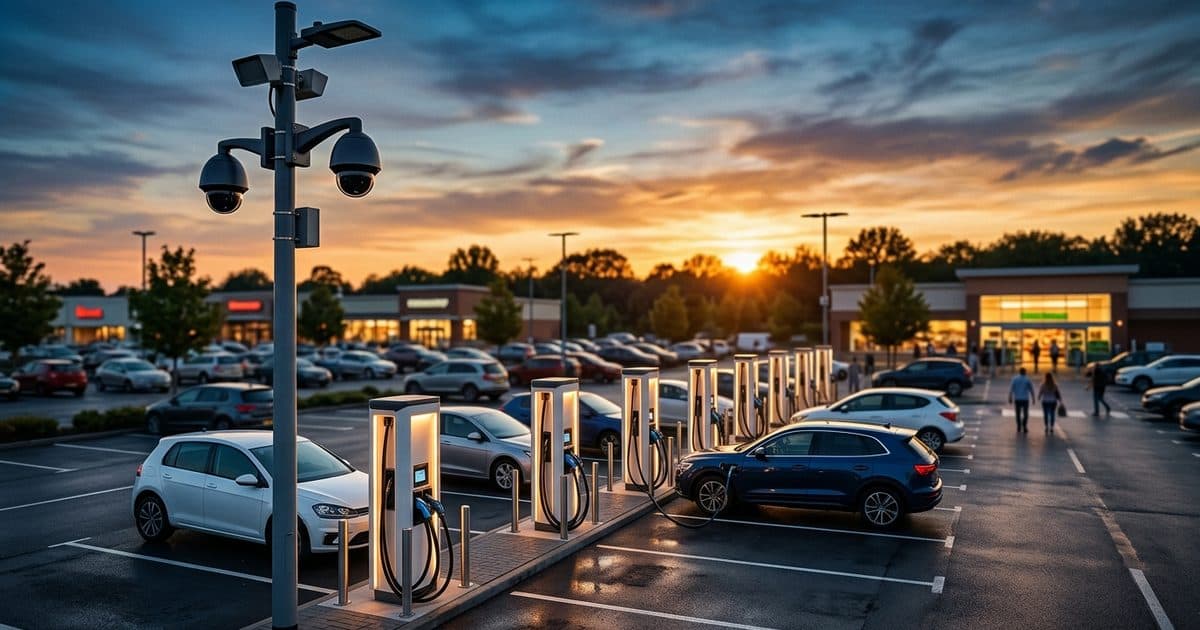
Why depots are attractive targets
A depot concentrates value. Dozens of vehicles may be parked together overnight, many with batteries, catalytic converters, tools and fuel that can be sold quickly. The yard is often large, the lighting uneven and the staff gone by early evening. Thieves know the shift pattern as well as the managers do.
Electrification adds new items to the list. Charging cabinets contain copper and electronics. Cables and connectors can be cut or stolen, and a damaged charger takes vehicles out of service, which costs more than the hardware. Our article on EV charging station security covers the public charging side. A private depot has the same exposure plus the fleet parked next to it.
What to protect, in order of consequence
Rank each asset by what its loss would stop, not only by resale value.
- Vehicles in service. A vehicle that cannot leave in the morning disrupts a route, a delivery or a service call.
- Charging equipment. Chargers, cabinets, cables and the electrical gear feeding them.
- Fuel. Tanks, dispensers and any mobile fuel storage. See diesel fuel theft prevention for common methods.
- Parts and tools. Batteries, tires, catalytic converters and tool cages. The article on catalytic converter theft prevention explains why vehicles on a lot are an easy mark.
- Records and access control. Keys, fobs, and the gate system.
Cover the gate, the rows and the equipment
Good camera planning starts with purpose. Different spots need different cameras.
The gate. Identification matters here. A camera aimed at the entry lane, with correct angle, shutter speed and lighting, can capture plates and vehicle details. Our license plate recognition camera guide lists the setup values that make plates readable.
The vehicle rows. Wide coverage with people and vehicle detection helps notice someone walking between parked vehicles at night. A PTZ camera can then zoom in on the person after the wide view flags them.
The charging area. Place cameras so they see the cabinet doors, the connectors and the cable runs. Light the area so night video is usable.
The fuel area. Cover the tank, the dispenser and the approach, because fuel theft often happens at the edge of the yard where activity is least visible.
Mounting height matters. Higher mounting widens the view but reduces facial detail, so use a mix of wide and close views rather than a single high camera.
Quick reference
| Area | Common loss | Camera priority |
|---|---|---|
| Gate | Unauthorized entry, tailgating | Plate and vehicle capture |
| Vehicle rows | Parts, batteries, converters | Wide view with people detection |
| Charging area | Cable and copper theft, vandalism | Cabinet and connector detail |
| Fuel storage | Siphoning, tank tampering | Close view plus perimeter |
| Tool and parts storage | Tool and part theft | Door and approach coverage |
Make nighttime coverage active
Most depot losses happen when nobody is there. That is why after-hours security for businesses matters as much for a depot as for any other site. A systematic review of closed-circuit television research found that actively monitored systems were associated with a larger crime reduction than passive recording-only systems, which showed no significant effect.
In practice, active monitoring means a trained team watches detection events from the cameras, confirms what is happening, and speaks to the person through a loudspeaker. If the person stays, the team can contact police and share video. This lets your own staff, or your security partner, handle verified incidents rather than driving to every alarm. The resource on remote monitoring explains how the process works from event to resolution.
Keep records that support claims and investigations
When something goes missing, the first questions are what happened, when and who was involved. Keep gate logs, camera clips and incident notes in one place, and label clips with the date, time and camera. Decide in advance how long footage is kept and who can export it. Clear records help with insurance, with police reports and with internal reviews of whether a process failed. Retention and privacy rules vary by state, so confirm your policy with counsel.
Plan for a depot under construction or expansion
New depots, especially EV conversions, are vulnerable before the permanent system is online. Material, conduit and equipment sit in open yards while the fence, power and network are unfinished. A self-powered trailer with cellular connectivity can cover that stage, and it can be moved as the build advances. The same idea applies to a temporary overflow yard during peak season. See truck yard cargo theft security for related yard practices.
Reduce false alerts so alerts get acted on
A depot sees headlights, shadows, blowing debris and animals. If every one triggers an alert, people stop reacting. Ask any provider how the system tells a person from a shadow, how it handles headlight glare and what a typical alert contains. The goal is fewer, better alerts, each with a video clip and a clear next step.
Also define who owns the response. Write down who is called first, who has the keys, when police are contacted and what the monitoring team can do without waiting for approval. A short written plan removes arguments at two in the morning.
How VDS fits
VDS builds solar-powered mobile surveillance trailers for yards and depots. Each unit carries a 5MP PTZ camera with 25x optical zoom and three 8MP wide-angle cameras on a 22 ft telescopic mast (30 ft available). A 900W bifacial solar array charges an 11.8 kWh LiFePO4 battery bank with reserve for 3 to 5 consecutive cloudy days, and dual-SIM 4G/5G cellular carries the video. No site power, internet or trenching is needed.
AI detection covers people, vehicles, loitering, objects and license plates. Our 24/7 US-based security operations center verifies events, uses live talk-down through a loudspeaker, then dispatches police with video. Hardware is NDAA Section 889 compliant. Most deployments go from signed quote to live monitoring in about a week, and on-site setup takes one person under 20 minutes. Rental, month-to-month and term subscriptions are available. See the mobile surveillance unit, get in touch, or call (410) 401-1986.
Sources
- Piza, E. L., Welsh, B. C., Farrington, D. P., & Thomas, A. L. (2019). CCTV surveillance for crime prevention: A 40-year systematic review with meta-analysis. Criminology & Public Policy, 18(1). onlinelibrary.wiley.com