
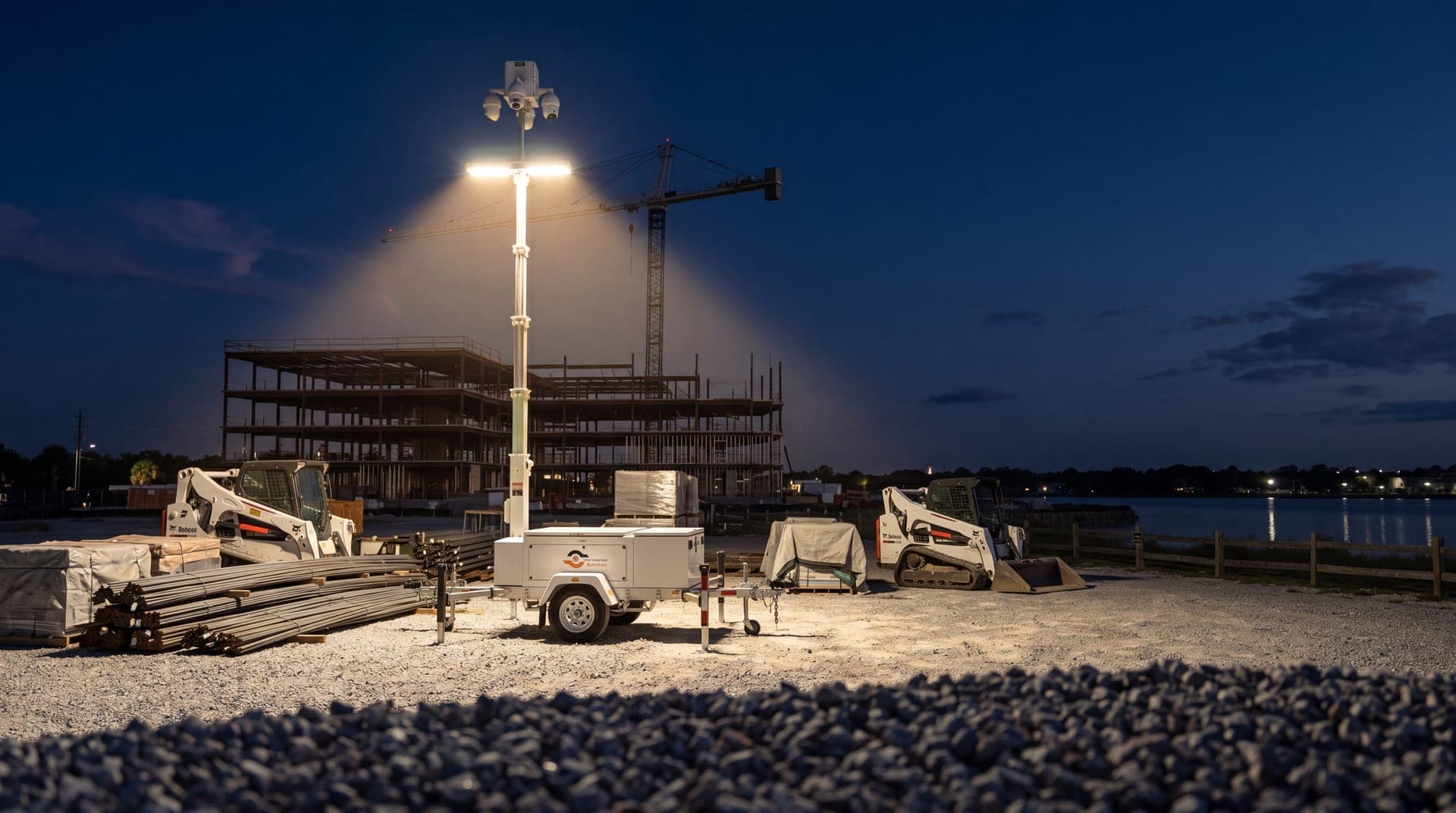
Thieves target construction sites because they offer high-value, easily movable assets with minimal security. Copper wire, tools, heavy machinery, building materials, and fuel create irresistible opportunities for organized theft rings operating across multiple states.
The real cost extends beyond replacement value. Project delays, insurance deductibles, premium increases, and lost productivity compound the financial damage. Some contractors report theft incidents costing 3-5 times the stolen item's value when accounting for project disruption.
Why Construction Sites Are Prime Targets
Thieves choose construction sites over other commercial properties for specific reasons. Sites operate on predictable schedules with long periods of inactivity. Valuable equipment sits unguarded overnight, weekends, and holidays.
Remote locations make theft easier. Many sites lack nearby foot traffic or security presence. Poor lighting and multiple access points create blind spots and escape routes.
High-value, portable items concentrate in small areas. A single trailer might contain $50,000 worth of tools. Copper wire and steel rebar offer quick resale value with minimal traceability.
Construction materials rarely have serial numbers or identifying marks. Unlike automobiles with VIN numbers, lumber, concrete, and aggregate blend seamlessly into legitimate supply chains once stolen.
Most Commonly Stolen Construction Items
Understanding what thieves target helps prioritize security investments. The National Insurance Crime Bureau tracks construction theft patterns across major metropolitan areas.
Heavy equipment tops the list. Excavators, bulldozers, skid steers, and compact loaders disappear from sites nationwide. GPS tracking helps, but sophisticated thieves disable tracking devices or strip equipment for parts.
Copper materials generate quick cash. Wire, piping, and HVAC components bring $3-4 per pound at scrap yards. A typical commercial building contains thousands of dollars worth of copper in various forms.
Power tools move fast through online marketplaces. Cordless drills, saws, and specialty equipment retail for hundreds but resell quickly at discounted prices.
Fuel and consumables offer immediate utility. Diesel fuel, hydraulic fluid, and lubricants transfer easily between containers and avoid serial number tracking.
Strategy 1: Control Site Access Points
Limiting and monitoring access reduces theft opportunity significantly. Most sites have too many entry points that go uncontrolled during off-hours.
Install 8-foot chain link fencing with three strands of barbed wire around the entire perimeter. Temporary fencing works for short-term projects, but permanent fencing provides better security for longer builds.
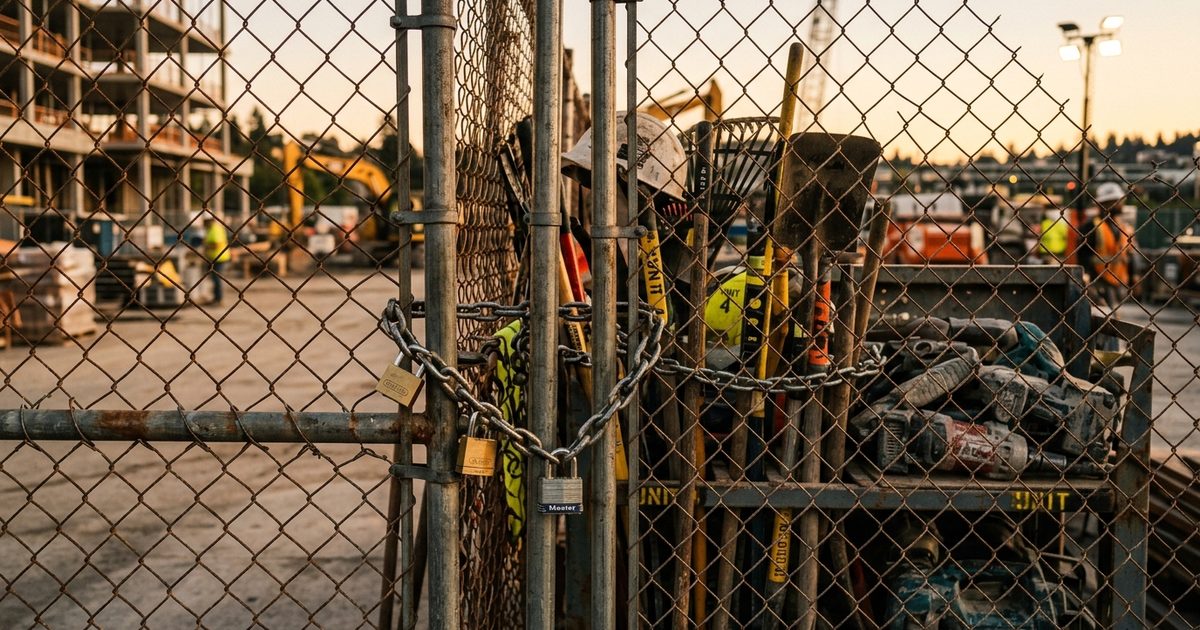
Create single-point entry with lockable gates. Multiple access points invite trouble and make monitoring impossible. Position gates away from public roads to reduce visibility and discourage opportunistic theft.
Use heavy-duty locks and security hardware. Standard padlocks fail quickly under bolt cutters. Industrial locks with hardened steel shackles resist cutting tools and provide better deterrence.
Strategy 2: Implement Perimeter Lighting
Darkness enables theft. Well-lit perimeters eliminate hiding spots and make thieves visible from nearby roads or buildings.
Solar lighting systems work well for remote sites without electrical infrastructure. Motion-activated lights conserve battery power while providing bright illumination when needed.
LED floodlights mounted on temporary poles create coverage across large areas. Position lights to eliminate shadows near equipment storage areas and material stockpiles.
Tip: Use lights with timers rather than motion sensors for high-traffic areas. Constant illumination prevents thieves from learning activation patterns.
Strategy 3: Secure Equipment and Materials
Physical security makes theft time-consuming and obvious. Most thieves abandon attempts when faced with multiple security layers.
Chain high-value equipment to immovable objects. Connect multiple machines together to prevent single-item theft. Use hardened steel chains that resist cutting tools.
Store small tools and materials in locked containers overnight. Job boxes, storage trailers, and gang boxes protect valuable items from weather and theft simultaneously.
Remove keys from all equipment at day's end. Store keys in a secure location away from the job site. Consider electronic locks that require PIN codes rather than physical keys.
Strategy 4: Install GPS Tracking
GPS tracking enables rapid recovery when theft occurs. Modern systems provide real-time location data and theft alerts through smartphone apps.
Install tracking devices in hidden locations on heavy equipment. Obvious placement invites tampering, while concealed units continue operating after theft.
Use multiple tracking devices per machine when possible. Professional thieves check for and disable obvious tracking locations. Secondary devices provide backup coverage.
Register equipment with the National Equipment Register database. Law enforcement agencies check this database during recovery operations and equipment inspections.
Note: GPS tracking works best as recovery assistance, not prevention. Combine tracking with other security measures for comprehensive protection.
Strategy 5: Use Security Signage
Visible warning signs deter opportunistic thieves and create legal documentation for prosecution. Signs cost little but provide psychological deterrence value.
Post signs at all access points warning of surveillance cameras, alarm systems, and security patrols. Generic signs work, but specific warnings about monitoring services create stronger deterrence.
Include contact information for security companies or law enforcement. Thieves avoid sites with obvious security partnerships and rapid response capabilities.
Place signs in multiple languages if working in diverse communities. Spanish and English combinations reach broader audiences in many metropolitan areas.
Strategy 6: Establish Security Patrols
Regular security presence interrupts theft attempts and creates unpredictable monitoring patterns. Thieves avoid sites with active security measures.
Schedule patrols at random times rather than fixed intervals. Predictable patterns allow thieves to plan around security gaps.
Coordinate with local law enforcement for increased patrol presence. Many police departments provide extra attention to construction sites experiencing theft problems.
Train site supervisors to conduct security checks during regular visits. Document unusual activity, missing items, or signs of attempted break-ins.
Strategy 7: Deploy 24/7 Surveillance Cameras
Monitored surveillance cameras provide the highest return on investment for construction site security. Unlike static cameras that only record incidents, monitored systems enable real-time response and verified threat assessment.
Traditional security cameras miss most theft because incidents happen during unmonitored hours. Thieves operate knowing footage won't be reviewed until items are already gone.
Mobile surveillance trailers offer rapid deployment without infrastructure requirements. Solar-powered units operate independently with cellular connectivity for remote monitoring.
Professional monitoring services distinguish between false alarms and genuine threats. Human verification prevents unnecessary emergency responses while ensuring real incidents receive immediate attention.
Modern surveillance systems integrate thermal imaging, motion detection, and audio capabilities. Multi-sensor approaches reduce false alarms while improving detection accuracy.
Construction live monitoring services provide 24/7 coverage with escalation protocols. When cameras detect movement, live operators assess the situation and coordinate appropriate response.
Evidence-quality footage supports insurance claims and criminal prosecution. High-definition cameras capture license plates, faces, and identifying details that lead to successful convictions.
Use the construction site security checklist to confirm each of these measures is actually in place before the first weekend the site sits empty.
Common Mistakes That Increase Theft Risk
Relying only on insurance coverage: Insurance doesn't prevent theft or eliminate project delays. Deductibles and premium increases cost more than prevention measures.
Using consumer-grade security equipment: Residential cameras and alarms fail quickly in construction environments. Industrial equipment withstands weather, vibration, and tampering.
Ignoring internal theft: Employee and subcontractor theft accounts for significant losses. Background checks and accountability measures reduce internal theft risk.
Inconsistent security protocols: Security works only when consistently applied. Occasional lapses create opportunities for organized theft rings.
Poor equipment documentation: Missing serial numbers, photos, and ownership records complicate recovery efforts and insurance claims.
Delayed incident reporting: Waiting until the next morning or Monday to report weekend thefts reduces recovery chances and may void insurance coverage requirements.
Addressing these common mistakes alongside the seven strategies above creates a comprehensive theft prevention framework that protects projects from start to completion.