
What Is the Combating Organized Retail Crime Act?
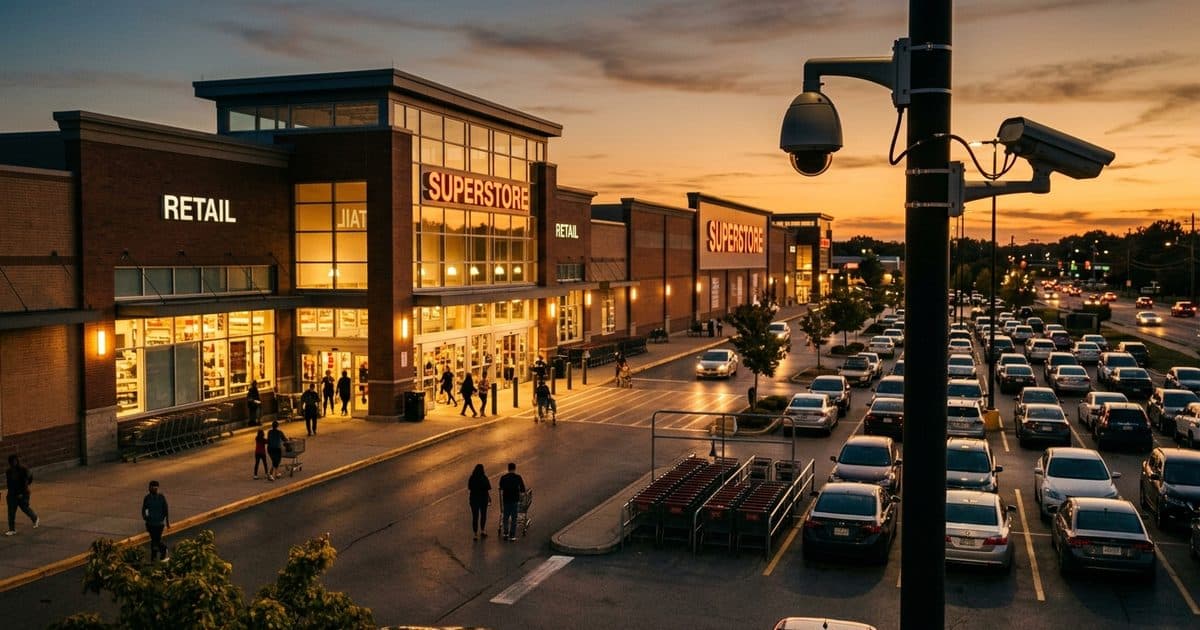
CORCA is a federal bill aimed at the organized, multi-jurisdiction side of retail theft: crews that hit stores, distribution centers, and cargo in transit, then move stolen goods through fencing operations and online marketplaces. It is not aimed at individual shoplifting, which remains a state and local matter.
The bill has two pillars that matter to loss prevention practitioners. First, it would establish a national coordination center to bring federal agencies, state and local law enforcement, and retail industry investigators into one structure for sharing intelligence on organized retail crime and supply chain theft. Second, it would update federal criminal statutes so prosecutors can charge organized retail crime as the interstate enterprise it usually is, including aggregating the value of related thefts rather than treating each incident as an isolated event.
The lopsided 348–60 House vote signaled broad bipartisan support, a point the bill's Senate sponsor emphasized after passage, per Sen. Grassley. Bipartisan margins of that size are rare for crime legislation, and they reflect how consistently retailers across the country have reported the same pattern: professional crews operating across jurisdictions faster than any single agency can follow.
Where Does CORCA Stand as of August 2026?
CORCA has passed the House and is pending before the Senate, where it sits with the Judiciary Committee and has also been filed as an amendment to the National Defense Authorization Act, giving it two potential paths to passage, per Congress.gov. Neither path is guaranteed, and no Senate floor vote had occurred as of this writing in August 2026.
Loss prevention teams should treat the bill as likely-but-not-law. That distinction matters for planning. You cannot yet hand a federal prosecutor an aggregated CORCA case, but you can build the evidence practices that would feed one, and those same practices already pay off in state-level prosecutions today. Check the bill's status on Congress.gov before citing it in any policy document, because pending legislation can change quickly through amendment, passage, or stall.
What the Aggregation and Interstate Provisions Actually Change
Organized retail crime crews have long exploited two structural gaps in enforcement. They keep individual thefts below felony thresholds, and they spread activity across jurisdictions so no single agency sees the full pattern. A crew that takes a modest amount of merchandise from twelve stores in three states has committed a substantial theft, but each police department sees only its own small slice.
CORCA's aggregation provisions attack the first gap: the value of related thefts could be combined across incidents and locations to meet federal charging thresholds. Its interstate provisions and the coordination center attack the second, giving cross-border patterns a single federal home instead of a dozen disconnected case files.
Here is the practical consequence: aggregated cases are assembled from many small, well-documented events. A prosecutor building one needs to prove that incident A in one state and incident B in another were committed by the same enterprise. That proof comes from evidence retailers control, which is why the bill effectively rewards evidence quality.
Why Evidence Quality Now Matters More Than Deterrence
Most retail surveillance programs were designed to deter and to document single incidents. Aggregated, interstate prosecution demands something different: evidence that connects incidents to each other. Three categories do most of that work.
| Evidence type | Role in an aggregated ORC case |
|---|---|
| License plate captures | Link the same vehicles to incidents at different stores, dates, and states |
| Timestamped, verified video | Establish who did what and when, with clocks accurate enough to sequence events |
| Standardized incident documentation | Tie people, vehicles, methods, and merchandise together across locations |
License plate capture at entrances, exits, and parking areas is often the single strongest connector, because crews change clothes and rotate personnel more readily than they change vehicles. Our guide on license plate recognition cameras covers placement, angles, and lighting for reliable reads.
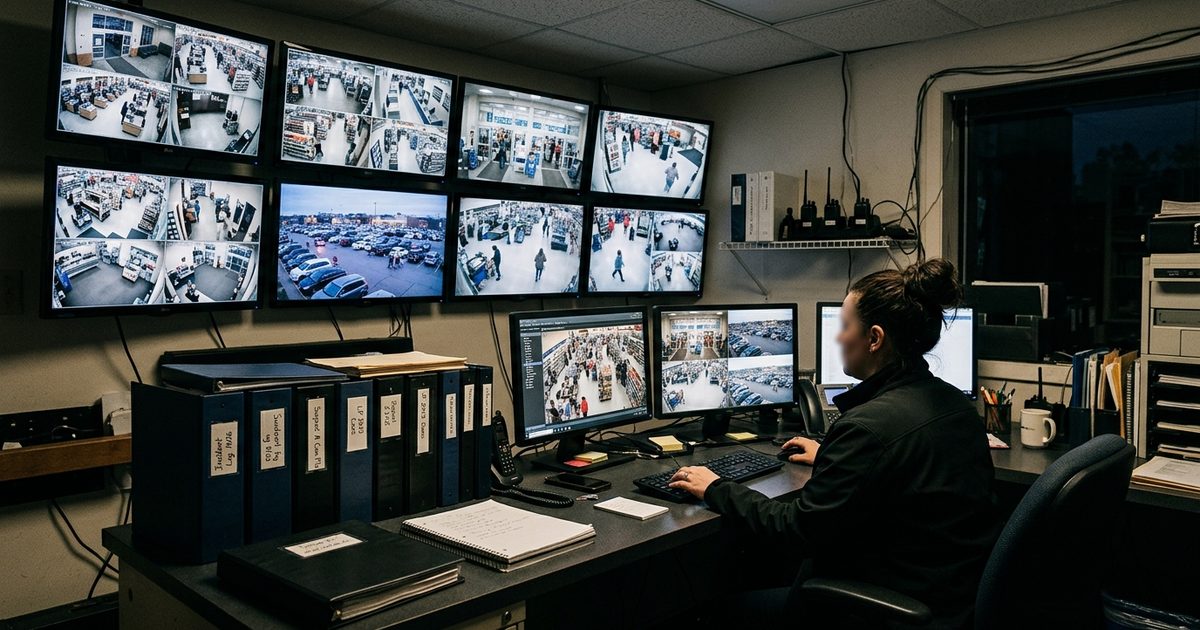
Video only earns its place in a case file if it survives scrutiny. Accurate timestamps, sufficient resolution, an intact retention chain, and a documented export process separate usable evidence from footage a defense attorney can challenge. The practices in our piece on security camera footage as evidence apply directly here: if CORCA passes, footage handling standards become the difference between contributing to a federal case and watching your incidents get excluded from one.
This also changes which cameras matter. Interior shelf cameras document the taking; parking lot and receiving dock cameras document the enterprise, capturing vehicles, load-outs, and hand-offs. Coverage principles from mall parking lot security apply to any retail property: the lot is where crews are most identifiable and most connectable across incidents.
The State Landscape: Task Forces and Active Bills
Federal action is arriving on top of substantial state momentum, not in place of it. Per ICSC, 17 states now have attorney-general-level ORC task forces, and 13 states opened 2026 with 22 active ORC bills targeting the problem.
For loss prevention teams, the state layer has two implications. First, evidence pipelines already exist: a well-documented cross-store pattern can go to a state task force today, without waiting on the Senate. Second, if CORCA passes, those task forces become the natural on-ramps to the federal coordination center, so the relationships you build with your state task force now will likely carry forward into any federal structure.
State aggregation rules and felony thresholds vary widely, which is exactly the inconsistency the federal bill is meant to smooth over. Until it does, retailers operating in multiple states should know which of their states have task forces and route cross-jurisdiction patterns to them.
What the Numbers Say About Organized Retail Crime
The legislative momentum tracks what retailers are measuring. Among retailers tracking it, organized in-store shoplifting is up 52%, and 67% of surveyed retailers report involvement by transnational criminal groups, per the NRF Impact of Retail Theft & Violence 2025 report. The transnational figure matters for the policy debate: crime that crosses national borders is hard to answer with city-by-city enforcement.
The supply chain side is deteriorating at least as fast. The same NRF report found cargo theft up 50% among retailers tracking it, and Verisk CargoNet estimated cargo theft losses at roughly $725 million in 2025, up about 60% year over year. That is why CORCA covers supply chain crime alongside store-level theft, and why receiving docks, trailer yards, and distribution centers belong in the same evidence strategy as sales floors.
One caveat worth keeping in mind: several of these figures come from retailers who track the specific crime type, so they describe trends among engaged reporters rather than a census of all retail. The direction is consistent across sources, but treat precise percentages as indicative.
How Loss Prevention Teams Can Prepare Now
Whether CORCA passes this session or next, the preparation is the same, because state task forces already reward the identical evidence practices.
- Audit exterior coverage first. Map camera coverage of parking lots, receiving docks, and trailer yards, where vehicles and crews are most identifiable. Prioritize gaps at the locations with repeat incidents.
- Add license plate capture at choke points. Entrances, exits, and dock approaches produce the vehicle evidence that connects incidents across locations.
- Standardize incident documentation across stores. Use one template covering date, time, personnel descriptions, vehicles, methods, and merchandise, so patterns are visible when files from different locations sit side by side.
- Verify timestamps and retention. Sync camera clocks, confirm retention windows are long enough to support multi-incident investigations, and document your export process.
- Build task force relationships. Identify your state ORC task forces, learn their submission requirements, and route cross-location patterns to them now.
- Close the response gap with monitoring. Remote video monitoring turns exterior cameras into a live capability: trained operators verify activity in real time, capture the details investigators need, and escalate so people, yours or your security partner's, handle verified incidents. Our companion piece on responding to organized retail crime with remote monitoring walks through how verified alerts and documentation work together in ORC cases.
For coverage of the exterior zones CORCA makes newly valuable, monitored mobile surveillance units are a practical fit. VDS deploys solar-powered camera units with license plate capture and 24/7 monitoring across retail properties, producing the timestamped, exportable video and plate records that aggregation-based cases are built from, and repositioning as hot spots move between lots, docks, and yards.
The bottom line for loss prevention leaders: CORCA is not law yet, but its logic is already the direction of enforcement at the state level. Teams that treat every camera placement and incident report as potential prosecutorial input, not just deterrence, will be ready on the day the Senate acts, and better protected on every day before it.