
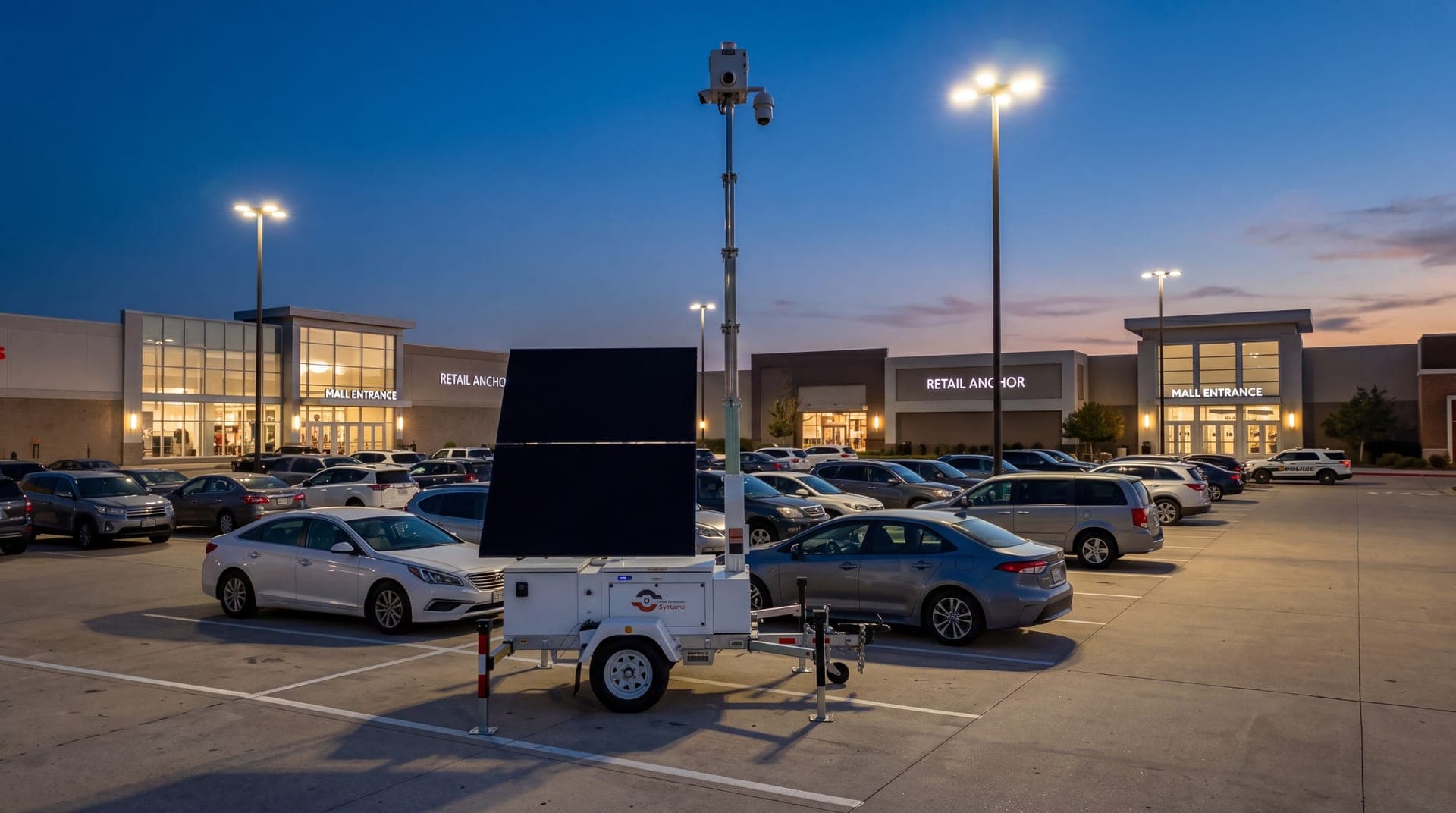
This guide gives you a practical priority order, a checklist your team can follow, and a simple way to decide when monitoring, mobile deployments, or LPR should be added.
This guide is retail-specific. For system pricing across lot types, see parking lot security camera cost; for how round-the-clock monitored coverage works, see parking lot surveillance cameras for 24/7 monitoring.
Why Mall Parking Lot Security Is Different
Malls introduce complexity that breaks “standard” camera approaches:
More pedestrian corridors and crosswalks, which increases liability and incident volume
Multiple entrances/exits and outparcel edges that create more approach and escape routes
Loading/service corridors that become frequent targets for theft and unauthorized access
Higher nighttime risk and more headlight glare, which causes evidence quality to collapse
Risk that concentrates in specific corners or rows during peak hours rather than evenly across the lot
If you don’t prioritize zones, you end up with wide shots that show “something happened” but don’t prove who did it or where they went.
Quick Mall Parking Lot Security Checklist
Use this to get aligned before you change a single camera:
Identify the top 3 incident zones from reports, tenant feedback, and security logs
Map entrances/exits, main drive lanes, pedestrian corridors, loading zones, and dark corners
Prioritize coverage for approach, action, and exit in each high-risk zone
Validate nighttime evidence readiness using real clips, not assumptions
Define alerting and escalation so issues are acted on quickly
Confirm footage retrieval is fast enough for real incidents and claims
Plan for temporary surveillance coverage when risk is seasonal or infrastructure is delayed
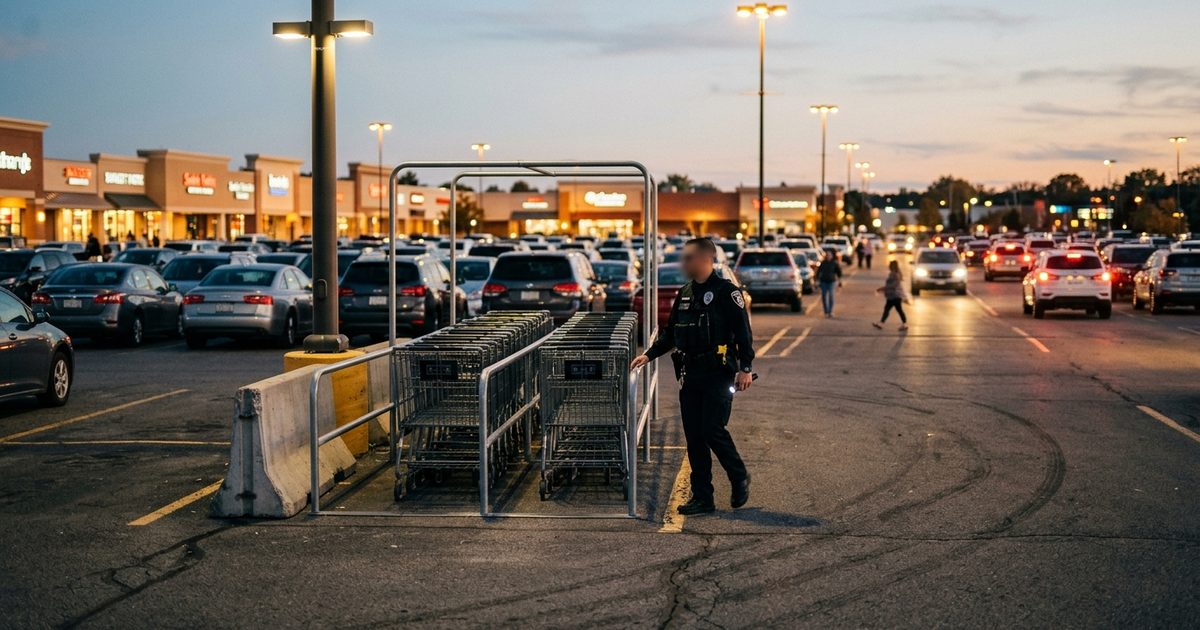
What to Cover First in a Mall Parking Lot
The highest-performing mall parking lot coverage plans start with chokepoints and repeat movement areas. These are the zones that help you identify, track, and document incidents.
Priority 1: Entrances and Exits
Why this is first:
Most vehicles must pass through entrances/exits
You can often control angles and speed better than inside the lot
It’s the strongest place to connect a vehicle to direction of travel
What to cover:
Vehicles entering and exiting with enough detail to identify the vehicle and track the path
A clear view of lane approach and lane departure
Overlap coverage so you don’t lose detail due to trucks, glare, or weather
If you plan to add license plate recognition, entrances/exits are usually the best capture points when lane design and lighting support it. Learn more about license plate strategy..
Priority 2: Main Drive Lanes and Chokepoints
Why this is second:
Incidents and disputes happen in motion
Suspicious looping and repeat passes happen on main drive lanes
Hit-and-runs often only have 10–20 seconds of usable capture window
What to cover:
The primary lanes connecting entrances to parking rows and storefront approaches
Lane intersections where vehicles slow down
“Approach + action + exit” views so incidents can be reconstructed
Avoid designing lane coverage as a single wide camera. Wide context views are helpful, but they rarely provide evidence of detail without a secondary angle.
Priority 3: Pedestrian Corridors and Storefront Approaches
Why this is third:
Pedestrian movement creates liability and incident volume
Many disputes happen on sidewalks, crosswalks, cart returns, and entrances
The most common failure is camera angles too high or too wide to identify people
What to cover:
Sidewalks and crosswalks between high-traffic rows and entrances
Storefront approaches where foot traffic compresses
Cart returns and corridor pinch points where incidents repeat
If you can’t identify a person’s face or clothing details at night in these zones, the footage is operationally weak.
Priority 4: Loading Zones, Service Alleys, and Back-of-House Doors
Why this is fourth:
These areas are frequent targets for theft and unauthorized access
They’re often low visibility and less staffed after-hours
Access patterns are predictable, which makes coverage design easier
What to cover:
Dock approaches and door activity
Vehicle approaches to loading areas
Overlapping views to reduce blind spots created by parked trucks
This is also one of the strongest areas for a defined monitoring workflow if after-hours issues are common.
Priority 5: Dark Corners, Outparcel Edges, and “Known Problem Rows”
Why this is fifth:
Incidents cluster in low-visibility zones
These areas are easiest to “cover poorly” with a wide shot that lacks detail
What to cover:
Edges where escape routes exist
Dim corners and rows with repeated issues
Any zone with obstruction risk such as landscaping, signage, or seasonal displays
These zones must be validated with nighttime test clips. If you can’t identify at night, the system is not evidence-ready.
Coverage Design That Prevents Blind Spots
Mall parking lots create predictable blind spots unless you plan around how the environment changes.
Coverage design rules that work:
Map zones by function, not by “where cameras can be installed”
Entrances/exits
Main drive lanes
Pedestrian corridors
Storefront approaches
Loading and service areas
Dark corners and perimeter edges
Design each priority zone for approach, action, and exit
Approach shows how someone arrived
Action shows what happened
Exit shows where they went next
Use overlapping views
Reduce single-point failure from trucks, crowds, glare, or weather
Plan for obstructions
Assume tall vehicles, temporary displays, and signage will block views
Validate with real clips, not a diagram
Test day and night before declaring the zone “covered”
If you’re upgrading an existing lot, run a retrieval drill similar to the process in our tips for video surveillance maintenance using exported clips from real incidents and high-risk hours.
Nighttime Evidence Readiness for Mall Parking Lots
Night performance is where mall parking lot security either becomes useful or becomes security theater. Headlights and fixtures create washout, low-light zones hide detail, and “motion visible” is not the same as “identification possible.”
Night validation steps:
Pull 30–60 seconds of night footage from each priority zone
Confirm faces, clothing detail, and vehicle identifiers are visible enough for claims and investigations
Look specifically for:
Headlight washout
Glare from fixtures
Overexposed reflective surfaces
Motion blur that removes detail
Dark zones where people become silhouettes
Operational best practice:
Run a monthly night check for critical cameras
Re-check after seasonal lighting changes, fixture repairs, or layout changes
What “24/7 Monitoring” Should Mean for a Mall
Many malls have cameras but no operational system. “24/7” needs to be defined so you buy the correct solution.
24/7 recording
Footage is reviewed after an incident occurs
Works for lower-frequency incidents
Fails when response time matters or when evidence is needed quickly
Live monitoring
A person is actively watching feeds in real time
Can be expensive and difficult to staff
Often replaced by verified response workflows
Verified response workflows
Alerts trigger review, an operator verifies the issue, then escalates based on rules
Reduces false alarms and improves time-to-awareness
Often the best match for mall environments with after-hours risk
If your mall needs defined escalation and reporting, explore our professional remote video surveillance services.
Mall Parking Lot Security by Scenario
Seasonal spikes and peak weekends
Increase coverage on entrances/exits and pedestrian corridors
Add monitoring during peak risk hours
Consider temporary deployments for known hot zones
Repeat incidents in one row or corner
Fix coverage design rather than “adding more cameras everywhere”
Add overlapping views and validate night performance
Build an escalation workflow for repeat offender patterns
Tenant turnover or changing traffic patterns
Re-map pedestrian corridors and new store approaches
Audit blind spots created by new signage or landscaping
Re-run retrieval drills to ensure evidence is usable
Active construction near the mall
Add temporary coverage near disruption zones
Consider mobile deployments when the environment is changing quickly
Align with construction security workflows if equipment and access points are being impacted
When Mobile Surveillance Trailers Make Sense for Mall Parking Lots
Some mall security problems are temporary or concentrated. A permanent rebuild isn’t always the fastest path.
Mobile surveillance trailers are a strong fit when:
You need coverage quickly without permanent installation
Risk is concentrated in one zone and you need rapid deterrence
Construction or infrastructure delays prevent permanent work
You want to validate “where the risk really is” before designing a permanent system
If that matches your situation, use mobile surveillance trailers as the deployment option for rapid coverage.
How LPR Fits into Mall Parking Lot Security
License plate recognition can be valuable for specific mall use cases, but it has to be deployed correctly.
LPR works best when:
It’s placed at entrances/exits or controlled chokepoints
Speed and direction are predictable
Lighting supports plate capture
The watchlist and escalation workflow is defined
LPR struggles when:
You expect it to read plates deep inside the lot with turning vehicles
Lighting and glare are uncontrolled
There is no operational plan for what to do with detections
For LPR planning, start with the system overview of our license plate recognition solutions.
What Affects Cost and Scope for Mall Parking Lot Security
Budget is driven by operational needs more than “camera count.”
Key drivers:
Lot size and layout complexity
Identification detail vs general context coverage
Night performance requirements and lighting conditions
Monitoring needs and reporting expectations
Multi-entrance coverage and outparcel perimeter edges
Multi-site oversight requirements (if you manage multiple properties)
If monitoring is part of the scope, align it early with remote monitored surveillance so the system is designed around operations, not only hardware.
Mall Parking Lot Security FAQs
What should mall parking lot security cameras cover first?
Start with entrances/exits, main drive lanes, and pedestrian corridors, then add loading zones and known dark corners. These zones create the highest leverage for identification and incident reconstruction.
Why do mall parking lot cameras fail at night?
Most failures are caused by glare from headlights and fixtures, overexposure, or footage that’s too dark for identification. Night validation with real clips is the fix.
Do malls need 24/7 monitoring?
Not always. If incidents are frequent after-hours or response time matters, verified response workflows often deliver the best results. Learn more about remote monitored video surveillance.
Are mobile surveillance trailers useful for mall parking lots?
Yes when you need rapid coverage in a specific zone, when risk is temporary, or when permanent installation is delayed.
Can license plate recognition work for malls?
Yes, especially at entrances/exits and chokepoints when placement and lighting support it and when watchlist and escalation workflows are defined.
For a property-agnostic version of this playbook, see our 12 proven parking lot security measures, which cover lighting, CPTED, LPR, live monitoring, and mobile towers.
Mall Parking Lot Security: Next Steps
If you want mall parking lot security that holds up in real incidents, start with a coverage plan that prioritizes entrances/exits, drive lanes, and pedestrian corridors, then validate nighttime evidence readiness with real clip