
Why seasonal lots are different
A seasonal lot is usually a parking lot corner, a vacant parcel, or a patch of ground borrowed from a larger property. It opens for a few weeks, holds a lot of valuable inventory in the open, and closes when the season ends. Owners often run it with a small team and a trailer or small booth for cash.
That setup creates a few predictable challenges.
- Inventory is stored outside overnight, often with no fence
- Cash is handled in a small booth with limited privacy
- Staff may work alone, especially in evenings
- Power and internet are not available on site
- Everything has to be set up and taken down quickly
These constraints rule out the usual solutions. Wired cameras are not practical on a lot that will exist for a month, and many landlords will not allow permanent installations. Our guide to temporary security cameras explains why mobile and temporary options exist for exactly this reason.
Risks by type of seller
Different seasonal businesses face different risks, though the basics overlap.
| Seller | Main risks | Special considerations |
|---|---|---|
| Christmas trees | Overnight inventory theft, vandalism, cash | Long evening hours in winter, dark conditions |
| Pumpkin patches | Inventory theft, trespassing on larger sites | Larger footprints, families and children on site |
| Fireworks stands | High-value regulated inventory, theft, safety | Strict local rules on storage and supervision |
| Holiday markets and pop-up shops | Theft, cash handling, crowds | Short setup time, shared spaces |
Fireworks stands in particular are heavily regulated, and requirements vary by state and locality. Confirm storage, supervision and security rules with local authorities and counsel before relying on any camera setup.
Protecting cash and staff
Cash handling is often the highest-stakes part of a seasonal lot. A few habits go a long way.
- Keep only a small amount of cash in the booth and make regular drops.
- Vary drop times and routes rather than following a pattern.
- Avoid counting cash in view of the public.
- Use a lockable box or safe that is hard to carry away.
- Keep a charged phone within reach and know who to call.
- Avoid leaving one person alone late at night when possible.
Cameras help with cash risk in two ways. A visible camera and a loudspeaker warning discourage people who are considering a robbery or theft. Recorded video also helps with later investigations. Check local rules on posting notices and recording, since requirements vary by state.
Inventory overnight
When the lot closes, the inventory stays. Trees, pumpkins, stacked fireworks cases and tools are all easy to take if nobody is watching. Basic steps include arranging stock so it is visible from a central point, keeping valuable items in locked containers where allowed, and lighting the lot so cameras can see at night.
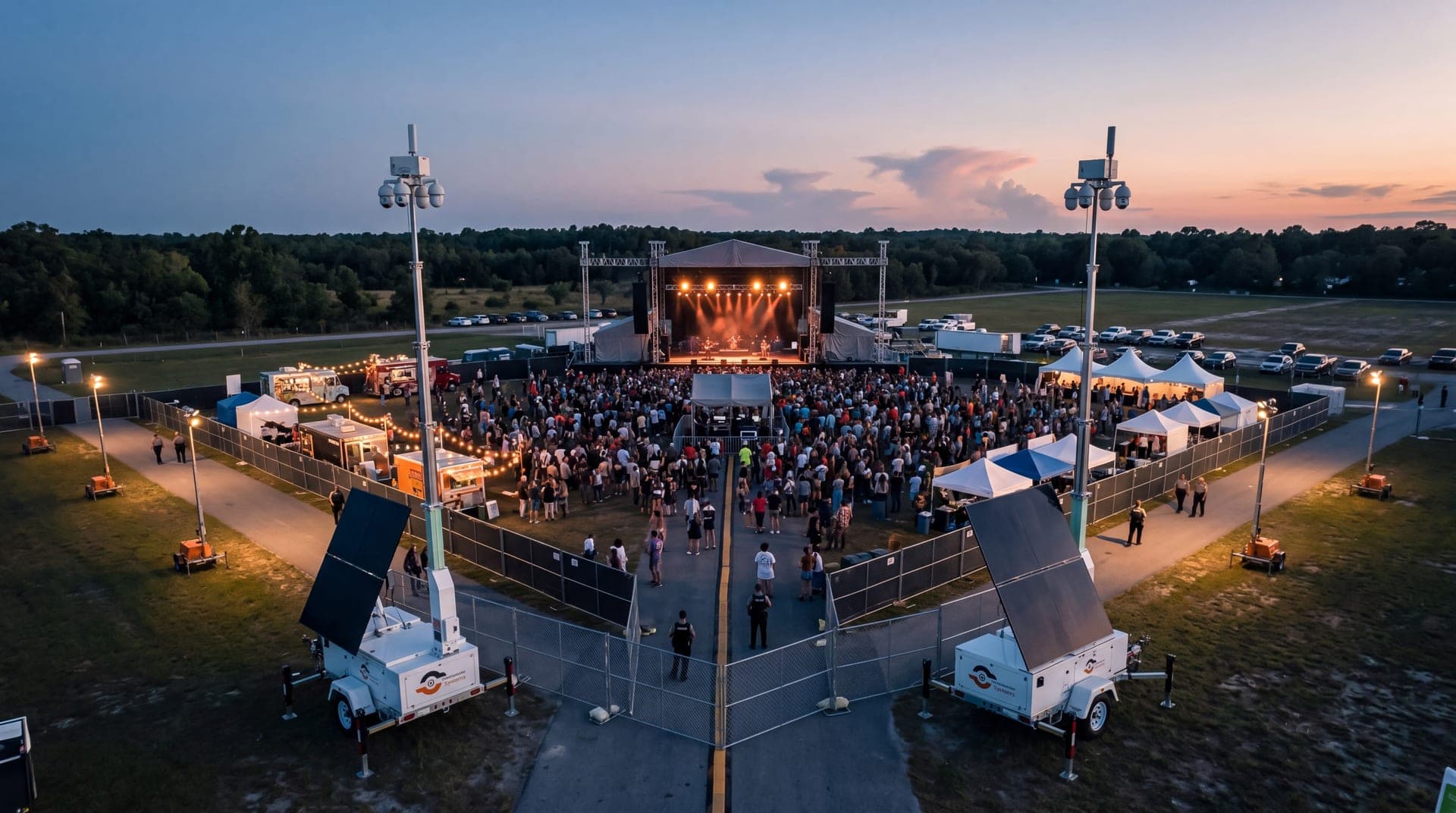
Because the site is temporary, security needs to be quick to set up. A solar-powered trailer can be delivered, raised and live in a short time. That matches the pace of seasonal operations, where days of setup are not realistic. Our article on security cameras without wifi or power covers how power-free systems work.
Power-free cameras in winter
Trees are sold in the darkest, shortest days of the year, so solar performance is a fair question. Battery capacity and reserve matter more than panel size alone. A system sized with several days of reserve can keep running through cloudy stretches. Read our guide on solar security camera battery life for how to evaluate it. If you want to understand the format better, our guide to mobile surveillance trailers for events covers short-term deployments.
Monitoring when no one is there
A camera that only records is a weak deterrent on a lot with no fence. If someone walks in at 2 a.m. and starts loading trees into a truck, footage in the morning documents the loss but does not stop it. A monitoring team that sees the activity can verify it, speak through a loudspeaker and send police with video.
The 2019 systematic review of CCTV research found that actively monitored systems were associated with larger reductions in crime than passive recording-only systems. The goal is not to remove people from the process. Cameras and analytics do the watching so people, yours or your security partner's, handle verified incidents.
Renting for the season
Buying equipment for a four-week season rarely makes sense. Renting is the more practical choice, and month-to-month terms let you match coverage to your actual season. See our overview of mobile surveillance trailer rental or our event and temporary industry page for more on temporary use.
Permission, signage and neighbors
Temporary lots usually sit on someone else's land, so start with permission. Get written approval from the property owner for any security equipment, confirm where it can be placed and agree on who pays for it. Check whether the municipality requires a permit for the stand, for lighting or for fireworks storage.
Post signs that state the lot is under video monitoring. Let neighbors and nearby businesses know who to contact if they see activity at night. Share your emergency contact with local police and give them the lot address and hours. Finally, set a clear teardown plan so equipment and any leftover inventory leave the site when the season ends, which also helps keep relations with the landlord good for next year.
How VDS fits
VDS builds solar-powered mobile surveillance trailers. Each carries a 5MP PTZ camera with 25x optical zoom and three 8MP wide-angle cameras on a 22 ft telescopic mast, with 30 ft available. A 900W bifacial solar array charges an 11.8 kWh LiFePO4 battery bank with reserve for 3-5 consecutive cloudy days, and dual-SIM 4G/5G cellular means no site power, internet or trenching is needed.
AI detection covers people, vehicles, loitering, objects and license plates. A 24/7 US-based security operations center verifies events, responds with live talk-down through a loudspeaker, then dispatches police with video. The hardware is NDAA Section 889 compliant. Most deployments go from signed quote to live monitoring in about a week, and setup takes one person under 20 minutes. Rental, month-to-month and term subscriptions are available. Talk to our team about your season.