
Where the term comes from
Software moved from boxed licenses to subscriptions years ago, and physical security has followed the same path. Traditionally, a business bought cameras, a recorder, cabling and perhaps an access system, hired an integrator to install them, and then ran everything itself or paid for a separate maintenance contract and a separate monitoring contract. Every piece had its own vendor, its own invoice and its own point of failure.
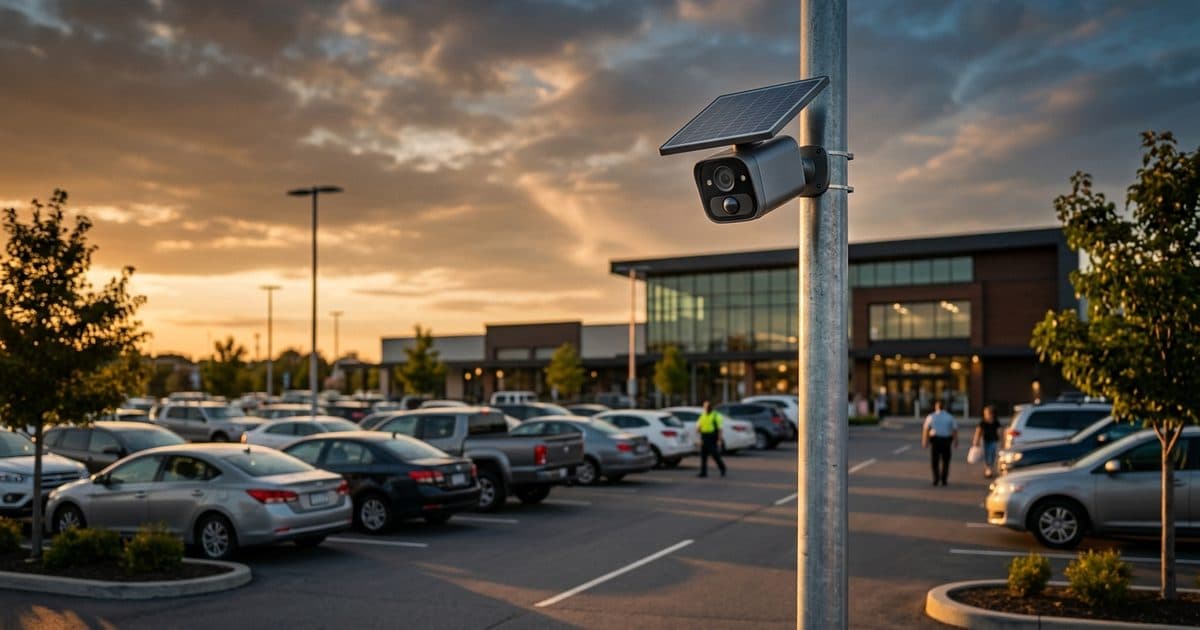
PSaaS bundles those pieces. The provider owns or manages the equipment, keeps it working and supplies the people or software that make use of it. The customer pays on a recurring basis and typically gets a defined level of service. The label is loose, and providers use it for a wide range of offerings, so the useful question is never whether something is called PSaaS but what exactly it includes.
What is typically included
Scope varies, but a complete service usually covers five things.
- Hardware. Cameras, mounting, power and enclosures, supplied rather than bought.
- Connectivity. The link that carries video from the site, often cellular for temporary or remote locations.
- Software and storage. The platform for viewing live and recorded video, plus retention of footage for an agreed period.
- Monitoring. People or analytics that watch for events and act on them.
- Maintenance. Inspection, repair and replacement of failed equipment, plus updates.
The biggest difference between offerings is the fourth item. Some services stop at hardware and cloud storage, which leaves you to watch and respond. Others include a monitoring team that verifies events and takes action. Our overview of video surveillance as a service looks at the camera-focused version, and what remote video monitoring is explains the watching part.
How it differs from buying equipment
The contrast with ownership comes down to who carries what.
| Question | Buying equipment | PSaaS |
|---|---|---|
| Who owns the hardware? | You | Usually the provider |
| How is it paid for? | Upfront capital purchase | Recurring subscription |
| Who maintains it? | You or a service contract | Typically included |
| Who watches the video? | You, or a separate contract | Depends on the service, confirm in writing |
| How are upgrades handled? | You decide and pay | Often part of the service |
| What if needs change? | You hold the asset | Scale or end per the agreement |
| What are the exit terms? | Not applicable, you own it | Defined by the contract, read carefully |
Neither model is better in every case. Ownership suits permanent sites with staff who can maintain equipment and a monitoring plan already in place. A service model suits temporary work, multiple sites, remote locations or organizations without a security operations team.
What a PSaaS agreement should spell out
Because you are buying a service, the contract is the product. Before signing anything, get answers in writing to the following.
- Scope of monitoring. Hours covered, what counts as an event, who verifies it and what actions the operator may take.
- Response steps. What happens after verification. Who is contacted, in what order, and whether police dispatch is part of the service.
- Uptime and fault response. How the provider handles a unit that goes offline and how fast.
- Data and video. Where footage is stored, how long it is kept, who can access it and how you export it.- Term and exit. Minimum term, notice period, equipment return and what happens to your data when you leave.
- Compliance. Whether the hardware meets any funding or procurement rules that apply to you, such as Section 889 of the National Defense Authorization Act for federally funded work.
Our guide on how to choose a video monitoring provider gives a longer question list, and it applies equally to a PSaaS provider.
Where the model works best
A subscription tends to pay off in a few specific situations.
Temporary or project-based sites. Construction phases, events, seasonal lots and vacant properties all have an end date. Paying only for the period of need is cleaner than owning equipment that sits idle afterward.
Remote sites. Locations without power or internet are hard for conventional camera systems. A provider that supplies self-powered, cellular-connected units removes the infrastructure work.
Multi-site operators. Managing one vendor relationship across many locations is simpler than coordinating a mix of integrators, recorders and contracts.
Organizations without security staff. If no one on your team can maintain field equipment or watch video at 2 a.m., a service that includes both fills a real gap.
Cases that need a flexible start and stop. Some agreements run month to month, while others use a term, and that choice affects flexibility and the terms you can negotiate.
Watch for the gaps
Because the term is loose, a few red flags are worth knowing. Be cautious when a service promises monitoring but does not describe what monitors actually do, when equipment is labeled as included but maintenance is billed separately, or when a minimum term is long and exit terms are vague. Ask how false alerts are handled, since a service that sends your team every passing animal creates noise rather than value. Ask for a plain description of how the provider filters events before anyone is contacted.
Finally, a service is only as good as the people behind it. Ask where the operations center is based, whether it operates all hours and whether you can speak with a reference customer.
How VDS fits
VDS delivers physical security for outdoor sites as a monitored service built around solar-powered mobile surveillance trailers. Each unit has a 5MP PTZ camera with 25x optical zoom and three 8MP wide-angle cameras on a 22 ft telescopic mast, a 900W bifacial solar array and an 11.8 kWh LiFePO4 battery bank, and dual-SIM 4G/5G cellular. It needs no site power, internet or trenching.
AI detects people, vehicles, loitering, objects and license plates. A 24/7 US-based security operations center verifies events, speaks through the loudspeaker for live talk-down and sends video to police dispatch when needed, so people, yours or your security partner's, handle verified incidents. Rental, month-to-month and term subscriptions are available, and most deployments go live within about a week of a signed quote. Learn more about remote monitoring, review the mobile surveillance unit, or talk to our team at (410) 401-1986.
Sources
- Section 889 of the National Defense Authorization Act prohibits federal funds being used on covered telecommunications and video surveillance equipment from certain manufacturers.