
What is video surveillance as a service?
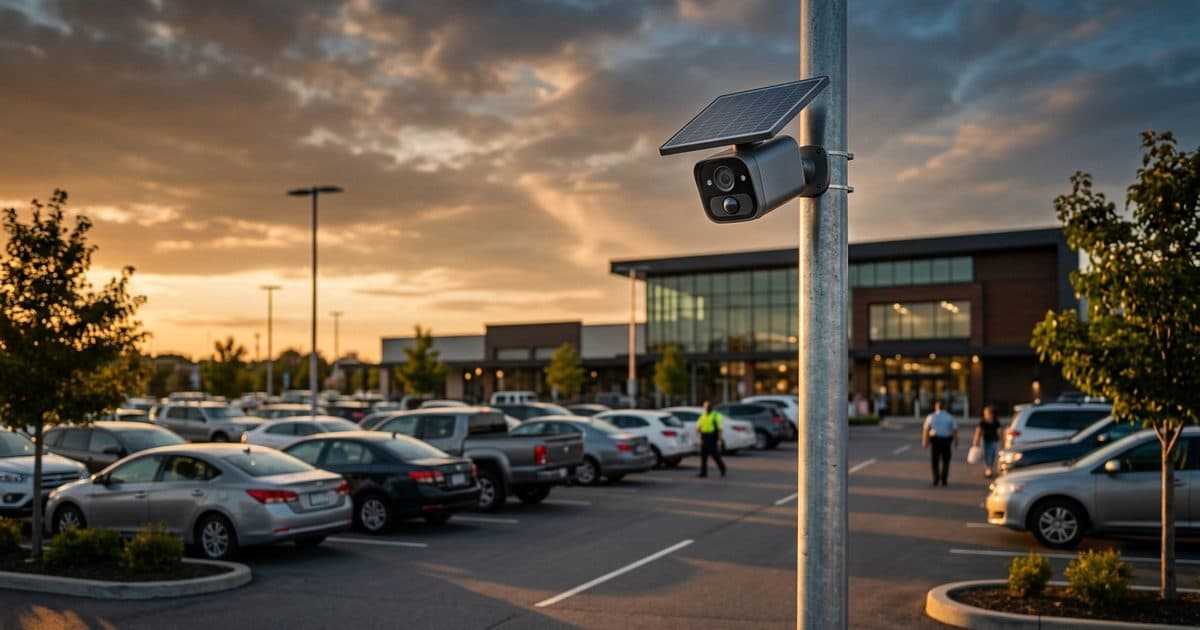
VSaaS shifts video surveillance from equipment you own to a service you subscribe to. Instead of buying cameras, a network video recorder (NVR), and video management software upfront, you pay a monthly fee per camera. The provider hosts the video management system in the cloud, stores footage offsite, pushes firmware and security updates automatically, and staffs the support desk.
The defining technical difference is the absence of on-premises recording hardware. Traditional CCTV routes every camera to an NVR or DVR in a server closet, and that recorder becomes a single point of failure that intruders increasingly grab on the way out. VSaaS cameras stream directly to the provider's cloud, where footage is encrypted, indexed, and viewable from any browser or mobile app. If someone takes the camera, the evidence has already left the building.
It is worth separating true VSaaS from hybrid setups that merely back up an on-site recorder to the cloud. In a hybrid system you still own, power, and patch a recorder; in VSaaS the provider owns the recording layer end to end, and your side of the system is reduced to cameras and a network connection.
Commercially, VSaaS converts a capital expense into an operating expense. There is no large system purchase to depreciate, and adding a camera means adding a line to the subscription rather than re-engineering a recorder. That flexibility is a big part of why the category is growing at roughly 15% per year in Mordor Intelligence's projection, well ahead of traditional surveillance hardware sales.
How much does VSaaS cost per camera?
Cloud VSaaS is priced per camera per month, and published market comparisons such as TetherX's provider roundup put typical subscriptions in the $10–$50 per camera per month range. Where a deployment lands inside that market-published range depends on four variables:
- Video retention. Thirty or ninety days of cloud storage costs the provider far more than seven, and retention is usually the single biggest price lever.
- Resolution and frame rate. Sharper, smoother video consumes more bandwidth and more storage, and pricing tiers reflect it.
- Analytics tier. Person and vehicle detection, license plate reading, and smart search are typically premium add-ons. The same Mordor Intelligence report finds AI-ready VSaaS subscriptions growing faster than standard packages, at roughly 17% per year.
- Hardware model. Some providers bundle cameras into the subscription; others require you to buy compatible hardware upfront, which changes the true monthly cost of an otherwise low rate.
Read quotes carefully. A low per-camera rate paired with purchased hardware, paid installation, short retention, and analytics surcharges can cost more over a project than a higher all-inclusive rate. Every figure above also assumes the site already has power and internet, an assumption that fails on exactly the kinds of sites that need surveillance most. We come back to that gap below.
What are the benefits of VSaaS?
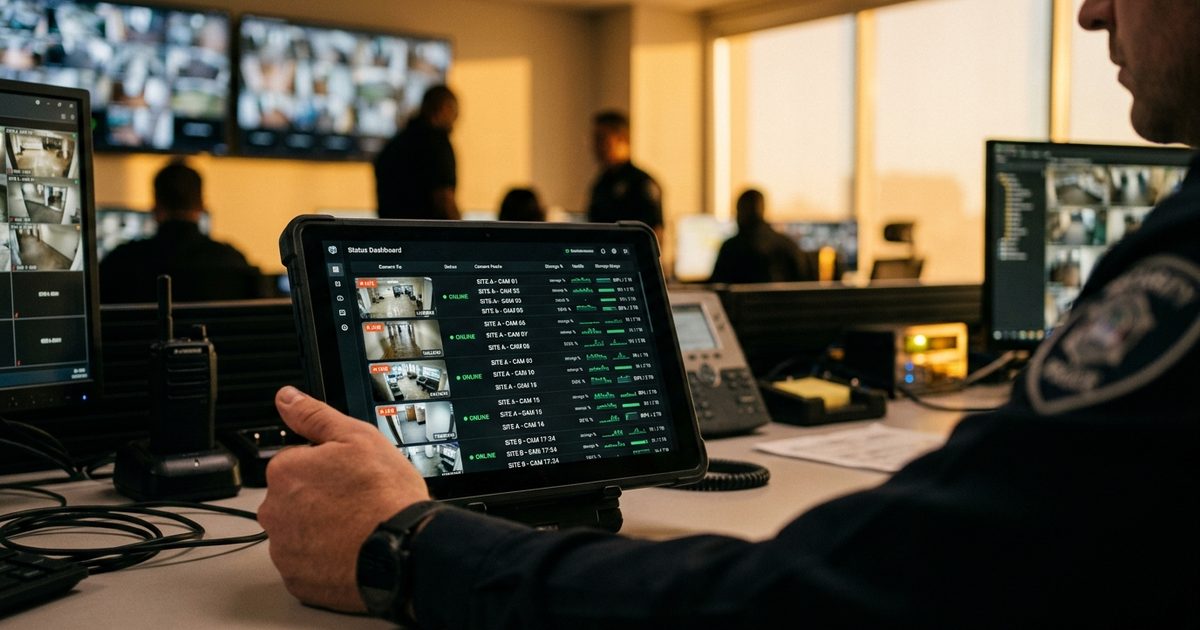
Offsite evidence is the headline benefit. Because footage lives in the cloud from the moment it is captured, vandalism, fire, or theft at the site cannot destroy the recording. The tradeoffs between cloud and on-site recording go deeper than evidence survivability, and our guide to cloud vs. local video storage walks through the retention, bandwidth, and cost differences in detail.
Maintenance moves to the provider. Firmware patches, storage hardware refreshes, and video management software upgrades happen in the background instead of waiting for an annual service visit. That matters for security as much as convenience, since unpatched cameras are a common entry point for network attacks.
Multi-site visibility improves too. A regional operator can watch every location in one cloud dashboard with consistent user permissions and audit trails, instead of dialing into a different recorder at each address.
Finally, the subscription scales cleanly. A retailer opening three locations or a property manager adding a lot can extend the same platform without configuring another recorder, and a predictable monthly cost is easier to budget than periodic capital replacements.
Where does standard VSaaS fall short?
Standard VSaaS assumes infrastructure. A fixed cloud camera needs mains power at the mounting point and enough upstream bandwidth to push continuous or event-based video to the cloud. Sites with weak connectivity face a hard choice between lower-quality streams and gaps in coverage.
It is also, by default, a recording service rather than a response service. A camera that uploads a burglary to the cloud in real time still only documents it unless someone is watching. Most VSaaS platforms offer motion alerts, but unverified push notifications at 2 a.m. get ignored quickly; human-verified remote video monitoring is what turns footage into intervention.
Retention costs can also creep. Per-camera pricing looks small until a compliance requirement pushes retention from seven days to ninety across forty cameras, at which point the storage tier, not the hardware, drives the bill.
Cloud dependence cuts both ways as well. An internet outage can interrupt uploads unless cameras buffer locally, and putting video in the cloud makes the provider's security practices part of your attack surface, a topic we cover in our security camera cybersecurity guide.
Why do outdoor and temporary sites break the fixed-camera model?
Most VSaaS content quietly assumes a building. Construction sites, laydown yards, equipment storage lots, special events, auto dealerships mid-expansion, and utility rights-of-way often have no power drops, no network closet, and no walls to mount cameras on. Trenching temporary power and data out to a jobsite perimeter can cost more than the surveillance itself, and the perimeter may move in six months anyway.
Duration compounds the problem. A per-camera cloud subscription makes sense across a five-year lease; it makes far less sense when the install and removal costs of fixed infrastructure are amortized over an eight-month project. That is why temporary sites gravitate toward mobile surveillance trailer rental, where the infrastructure arrives on a chassis and leaves the same way.
The environment is harsher too. Outdoor units face heat, dust, storms, and deliberate tampering that indoor cloud cameras never see, so somebody has to maintain solar panels, batteries, and mounts in the field. Under a true service model, that somebody is the provider, not your project team.
What does "as a service" mean when the whole unit is the subscription?
On infrastructure-free sites, the service model expands from software to the entire system. Solar panels and batteries replace the electrical panel, multi-carrier cellular replaces the wired network, a mast on a trailer replaces the wall mount, and the provider maintains all of it for the life of the deployment. The subscription covers an outcome, a monitored perimeter, rather than a software license.
| Layer | Standard fixed-site VSaaS | Full-unit service for temporary sites |
|---|---|---|
| Cameras | Customer-mounted fixed cameras | Mast-mounted cameras on a mobile unit |
| Power | Building electrical | Solar array with battery reserve |
| Connectivity | Wired internet or site Wi-Fi | Cellular, with onboard recording as failover |
| Software and storage | Cloud VMS subscription | Cloud VMS included with the unit |
| Monitoring | Optional add-on | 24/7 human-verified monitoring |
| Maintenance | Camera firmware and cloud platform | Entire unit, including panels, batteries, cameras, and connectivity |
Monitoring belongs in that bundle. On a remote site there is no receptionist to notice a prowler on a screen, so trained operators verify events, issue live audio warnings, and escalate real incidents so people, yours or your security partner's, handle what is verified instead of chasing false alarms. Guard teams often pair with monitored units this way, using camera coverage as a force multiplier across perimeters too large to patrol continuously.
Maintenance is the quiet differentiator. When a battery bank degrades or a cellular carrier weakens in one corner of the site, a full-unit provider detects it through health telemetry and fixes it, because uptime is their deliverable. In a bring-your-own-hardware VSaaS model, that troubleshooting lands on whoever bought the cameras.
What should you ask any VSaaS or mobile surveillance provider?
Whether you are evaluating a fixed-camera VSaaS platform or a full-unit service, the same six questions expose most of the differences between quotes:
- Whose hardware is it? Federal projects and many state contracts prohibit cameras from FCC Covered List manufacturers such as Hikvision and Dahua. Ask for the camera's origin in writing, and see our NDAA compliance overview for why it matters even on private work.
- How long is footage retained, and who owns it? Confirm retention length, export formats, and whether you can retrieve evidence after the contract ends.
- What happens when connectivity drops? Look for onboard buffering or recording that backfills the cloud once the connection returns.
- Is monitoring human-verified or alert-only? Unverified alerts shift the 2 a.m. burden back to you; verified monitoring should come with a documented escalation path.
- How are updates and security handled? Ask about patch cadence, encryption in transit and at rest, and the provider's vulnerability disclosure history.
- What does the all-in monthly number include? Hardware, installation, retention, analytics, monitoring, and maintenance should all be itemized before you compare providers.
How VDS delivers surveillance as a service for temporary sites
Vision Detection Systems applies the full-unit model described above: solar-powered mobile surveillance trailers with cameras, cellular connectivity, cloud video access, 24/7 human-verified monitoring, and field maintenance delivered under one subscription, deployed in days and removed when the project ends. There is no NVR to install and no infrastructure for you to build or maintain. Plans are scoped to the site rather than sold per camera; the pricing overview explains what each plan includes and how to get a quote matched to your perimeter and timeline.
VSaaS earned its growth by making surveillance simpler for buildings. The same logic, paying for a maintained, monitored outcome instead of owning depreciating hardware, applies even more strongly to sites with no power and no walls. Match the service model to the site, and the subscription delivers what it promised.