
Cameras and optics
| Term | Definition |
|---|---|
| PTZ | Pan, tilt and zoom, a camera that can rotate, tilt and zoom under remote or automatic control (more on PTZ cameras). |
| Fixed camera | A camera locked on one field of view that does not move. |
| FOV (field of view) | The width of the scene a camera can see, usually expressed as an angle. |
| Optical zoom | Magnification done by the lens itself, which keeps image detail, unlike digital zoom. |
| Digital zoom | Enlarging part of the image in software, which reduces detail rather than adding it. |
| Resolution | The number of pixels in an image, which sets how much detail a camera can capture. |
| Megapixel (MP) | One million pixels, a common way to describe sensor resolution. |
| Pixels on target | The number of pixels covering the person, plate or object you need to identify. |
| Frame rate (fps) | The number of images recorded each second, which affects how smooth motion appears. |
| Shutter speed | How long the sensor is exposed to light for each frame, where faster speeds freeze moving objects. |
| Lux | A unit of light level, often used to state the minimum light a camera needs for a usable image. |
| IR (infrared) | Invisible near-infrared light that lets a camera produce a black and white image in the dark. |
| Thermal | Imaging that detects heat differences instead of visible light, so it can work in total darkness. |
| WDR (wide dynamic range) | Processing that balances very bright and very dark areas in one scene (more on WDR). |
| Bullet, dome and turret | Three common camera housings, each with different mounting, vandal resistance and visibility traits. |
Video, recording and storage
| Term | Definition |
|---|---|
| Bitrate | The amount of data used per second to encode video, which affects both image quality and storage. |
| Codec | The method used to compress and decompress video, such as H.264 or H.265. |
| H.264 and H.265 | Two widely used compression standards, with H.265 generally producing smaller files at similar quality (compared here). |
| Bandwidth | The data capacity of a network connection, which limits how many video streams it can carry. |
| NVR | Network video recorder, a device or server that records video from IP cameras over a network. |
| DVR | Digital video recorder, an older type of recorder that works with analog cameras. |
| Retention | How long recorded video is kept before it is overwritten or deleted. |
| Edge recording | Storing video on the camera or a nearby device instead of sending everything to a server or the cloud. |
| Export | Saving a clip of video, often with a time stamp and verification data, for review or sharing. |
Network, power and standards
| Term | Definition |
|---|---|
| PoE (Power over Ethernet) | A way to deliver power and data to a camera over a single network cable. |
| ONVIF | An industry standard that helps cameras, recorders and software from different makers interoperate (more here). |
| RTSP | Real Time Streaming Protocol, a common way to pull a live video stream from a camera. |
| IP camera | A camera that sends digital video over a network. |
| Cellular (4G/5G) | A mobile data connection that lets cameras send video from sites without wired internet. |
| Dual-SIM | A modem with two SIM cards so it can use a second carrier if the first has poor signal. |
| Latency | The delay between something happening and the viewer seeing it. |
| API | An interface that lets software systems exchange data, such as sending camera events to another platform. |
Compliance, analytics and monitoring
| Term | Definition |
|---|---|
| NDAA Section 889 | A provision of the National Defense Authorization Act that prohibits federal funds from being used on covered telecommunications and video surveillance equipment from certain manufacturers (buyer's guide). |
| Video analytics | Software that detects and classifies events in video, such as people or vehicles. |
| LPR or ALPR | License plate recognition, technology that reads vehicle plates from video. |
| Loitering detection | An analytic that flags a person or vehicle staying in an area longer than expected. |
| False alarm | An alert triggered by something that is not a real incident, such as wind, animals or shadows. |
| SOC (security operations center) | A staffed facility where operators review alerts, verify events and respond. |
| Video verification | Confirming on live or recorded video that an alert is a real event before escalating. |
| Talk-down | A live voice message delivered through an on-site speaker to tell a person to leave. |
How to use these terms in a purchase conversation
Definitions help most when you attach them to a question. If a provider says a camera has 25x zoom, ask whether it is optical or digital. If a spec sheet lists a resolution, ask how many pixels will land on a face or a plate at your real distance. If someone says a camera is compliant, ask which standard and how they document it. If the quote mentions monitoring, ask who reviews alerts, how quickly, and what they can do in response.
Standards such as ONVIF and RTSP matter if you plan to mix equipment from several makers or feed video to other software. Compression and bitrate matter when your connection is limited, which is common on cellular sites. Retention matters when incidents are discovered days after they happen.
Terms that are often confused
A few pairs trip people up. Optical zoom and digital zoom sound alike but behave very differently, because only optical zoom adds real detail. Resolution and pixels on target are not the same, since a high-resolution camera pointed at a distant scene may put few pixels on a face. A DVR and an NVR both record, but they differ in the cameras they support. A false alarm is an alert with no real incident, while an unverified alert is one nobody has checked yet. Keeping these straight helps when comparing quotes from different providers.
Where VDS fits
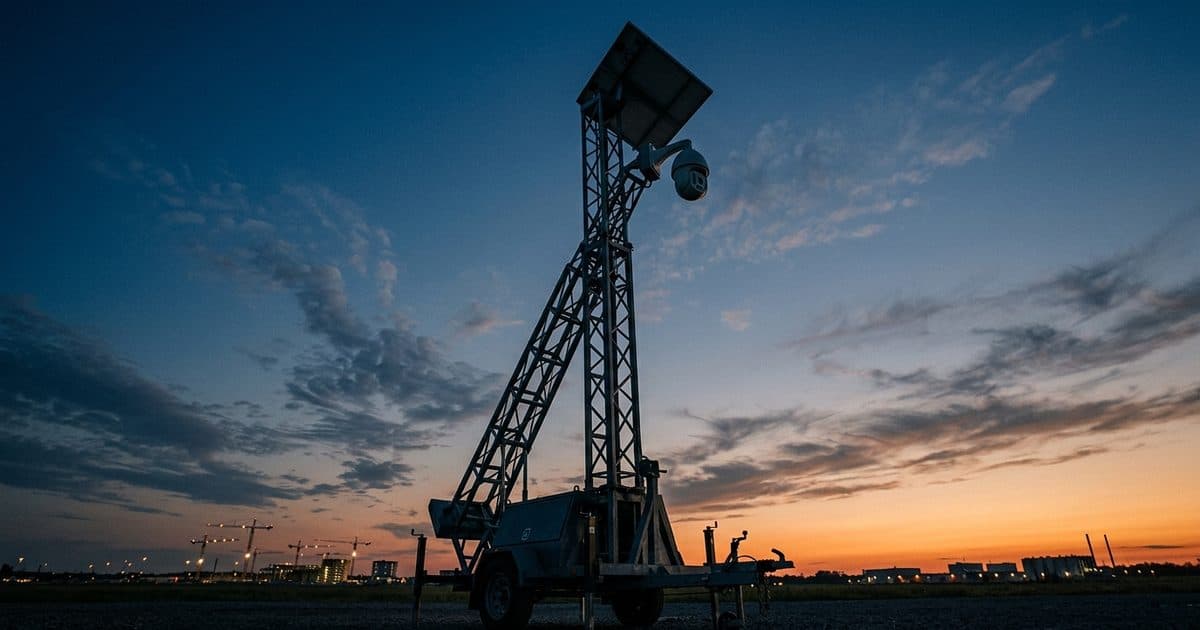
A VDS mobile surveillance unit puts many of these terms into practice. It is a solar-powered trailer with a 5MP PTZ camera with 25x optical zoom and three 8MP wide-angle cameras on a 22 ft telescopic mast, with dual-SIM 4G/5G cellular. AI detects people, vehicles, loitering, objects and license plates, and a 24/7 US-based SOC verifies events, uses live talk-down through a loudspeaker and dispatches police with video. The hardware is NDAA Section 889 compliant. See the mobile surveillance unit or talk to our team.