
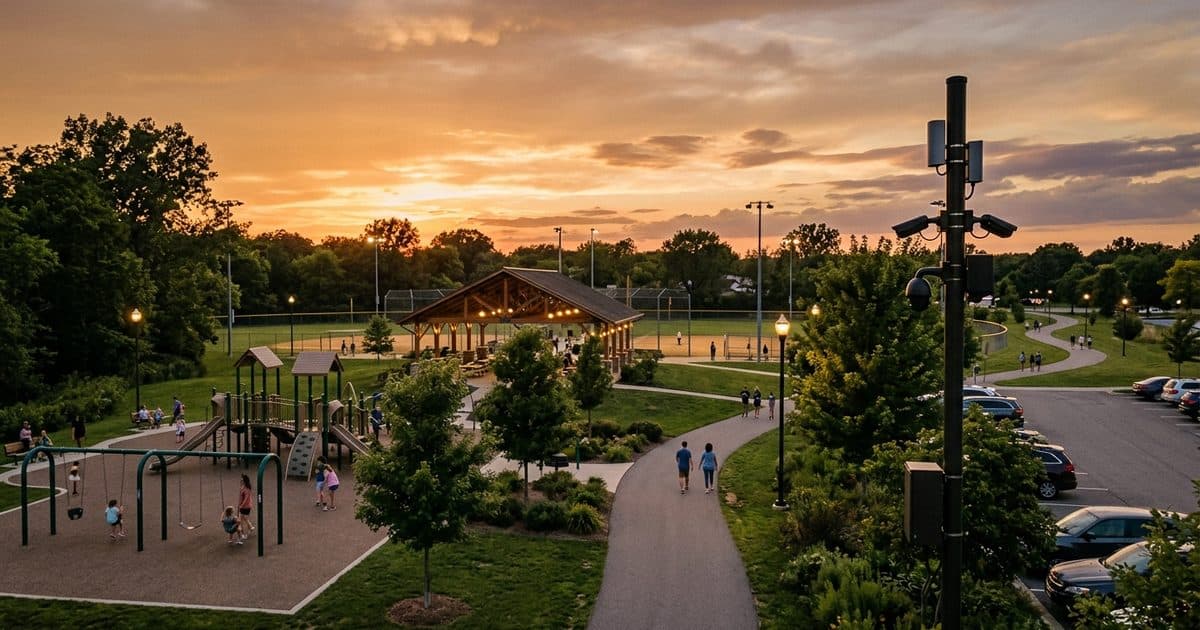
Acres of park. No one on site after dark.That's when it gets hit.
Parks, trailheads, boat ramps, sports complexes, and public plazas sit wide open after the gates close, with no power at the tree line and no staff past sundown. Vandalism, graffiti, illegal dumping, after-hours parties, and vehicle break-ins at the trailhead lot happen across acreage no fixed camera near the visitor center ever reaches. VDS deploys solar-autonomous surveillance wherever the problem is this month, reads plates at the lot, and puts a live SOC operator on every alert — no trenching through turf, no hardwired power required.
A public park is designed to be open, and everything hard about securing one follows from that. The assets that draw damage — restrooms, pavilions, playgrounds, dugouts, trailhead and boat-ramp lots — are scattered across acreage with sightlines broken by tree cover and terrain, and the property empties at dusk while staying trivially easy to enter on foot. Vandalism, illegal dumping along access roads, and late-night gatherings all happen inside that unattended window, and the department usually learns about them from a maintenance crew the next morning, when the only remaining question is what the repair will cost. Because damage is discovered rather than interrupted, the same pavilion or restroom gets hit again and again.
Fixed cameras rarely change this, because they get installed where conduit already runs — the visitor center, the main office — while the activity migrates to the corners of the property nothing is wired to reach. Recorded footage, where it exists at all, documents a tagged wall after the fact; it does not clear a group off the pavilion while the party is still forming. What changes outcomes is verification in the moment: an elevated camera seeing across fields and lots, analytics flagging people in a closed area after hours, and a live operator acting on it immediately.
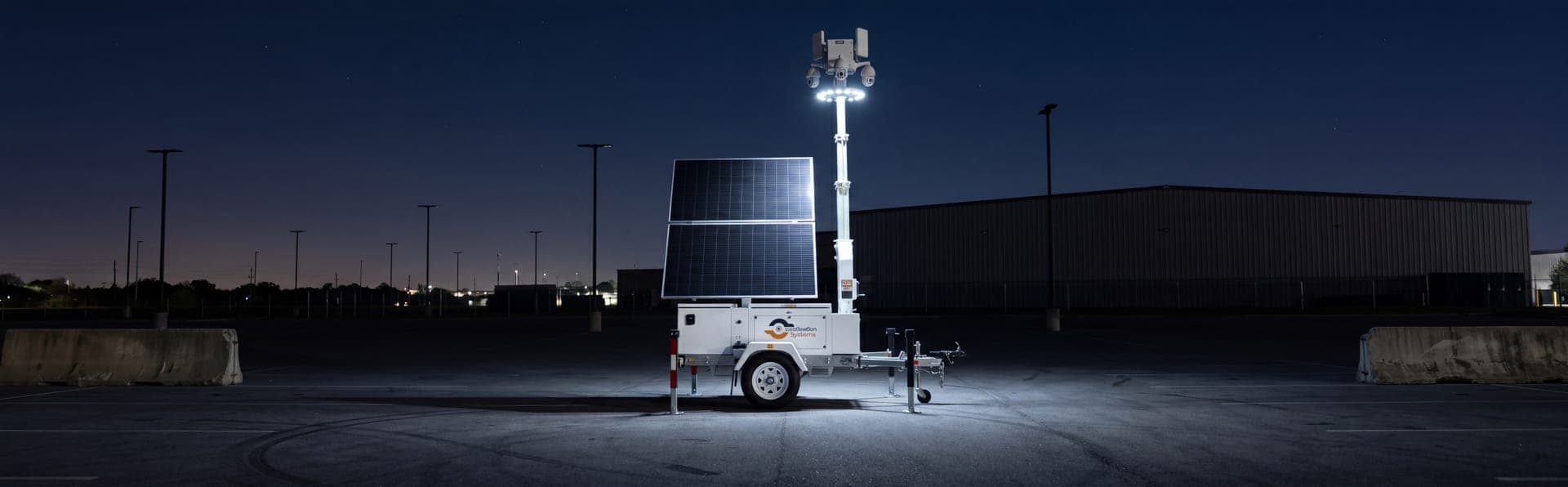
Solar-powered mobile surveillance units suit public land precisely because they ask nothing of it — no trenching through turf, no conduit run to a remote lot, no permanent structure. A unit stands at whichever trailhead lot or ballfield complex is being hit this season, reads plates at the entrance, and moves when the problem moves. When VDS park security cameras flag after-hours activity, a live SOC operator verifies it, delivers an audio warning through the unit that disperses most groups on the spot, and escalates to local law enforcement with footage when it does not.
The sections below break down the vandalism, dumping, trespass, and trailhead break-in threats parks face, the configuration VDS builds for parks and recreation departments, the outcomes departments have reported, and the questions municipal buyers ask before funding monitored coverage for public land.
Exposed sites.
High-value targets with no one watching.
Minimal staffing, sprawling ground, and valuable assets in the open — the conditions that turn a site into a soft target the moment everyone goes home.
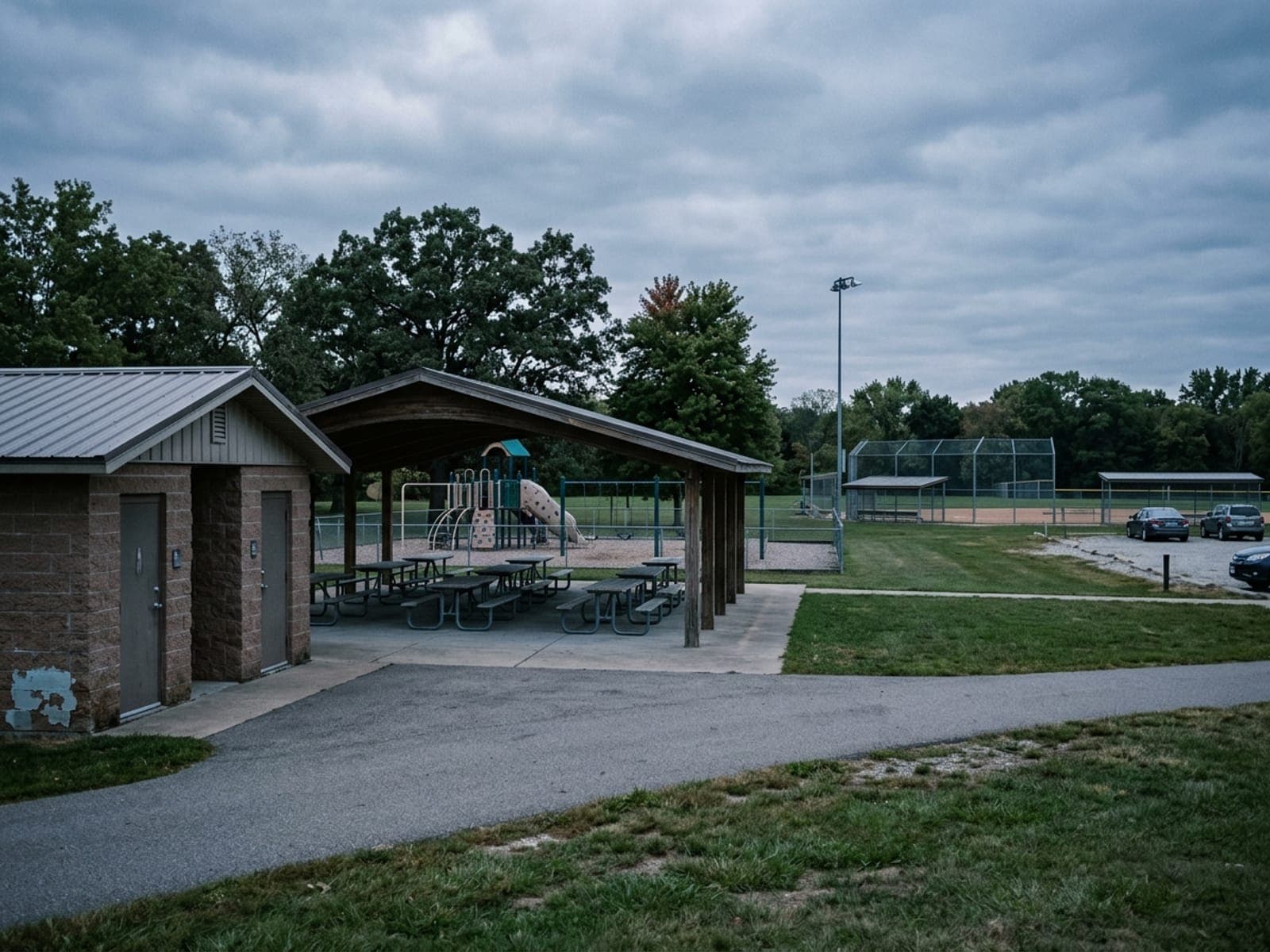
Vandalism and graffiti
Restrooms, pavilions, playgrounds, and sports facilities take repeated hits after close, with damage that outpaces the maintenance budget faster than it can be repaired.
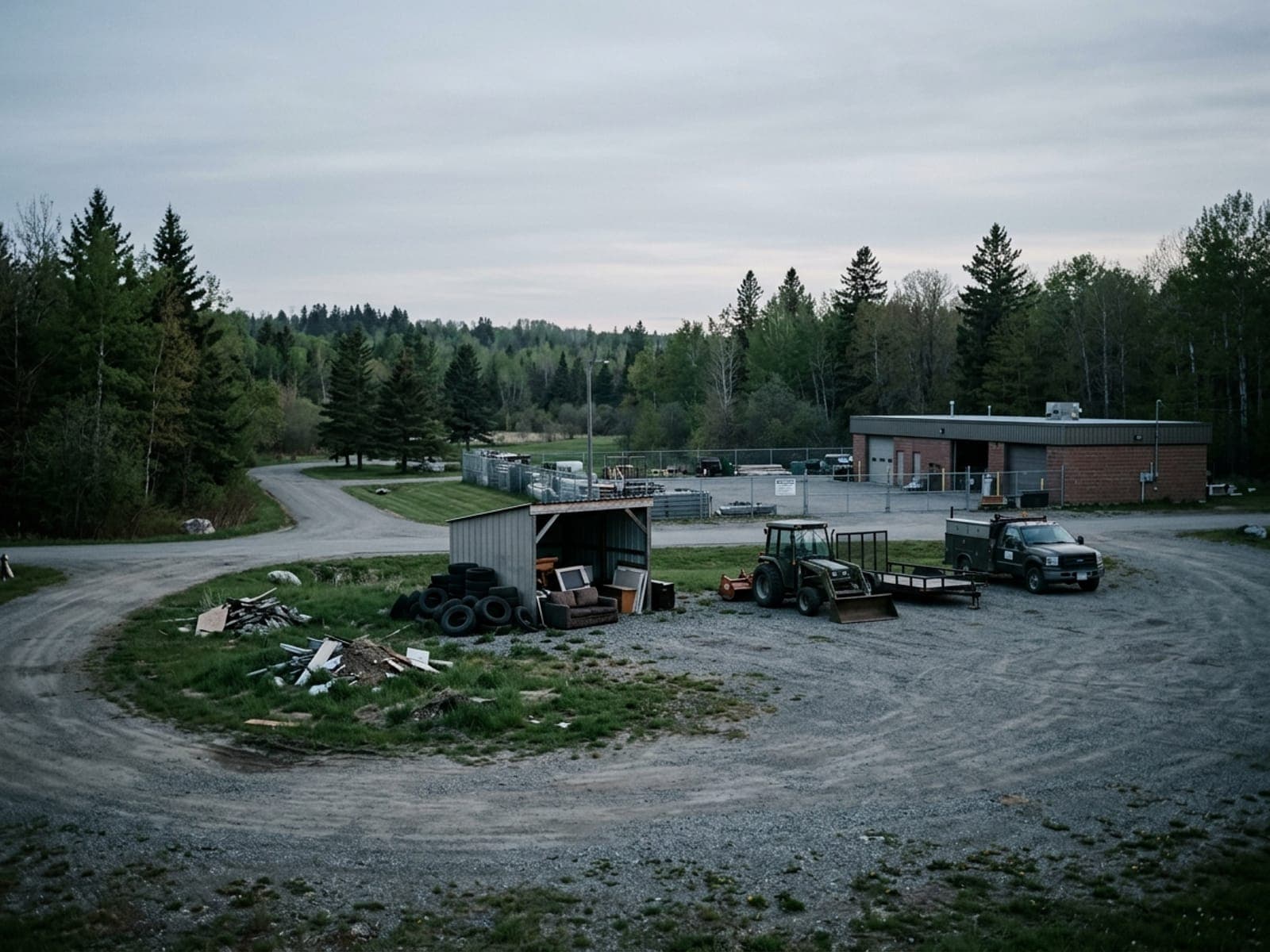
Illegal dumping
Access roads, gravel lots, and remote corners of public land become dumping grounds overnight, leaving the department to haul debris with no one identified to bill for it.
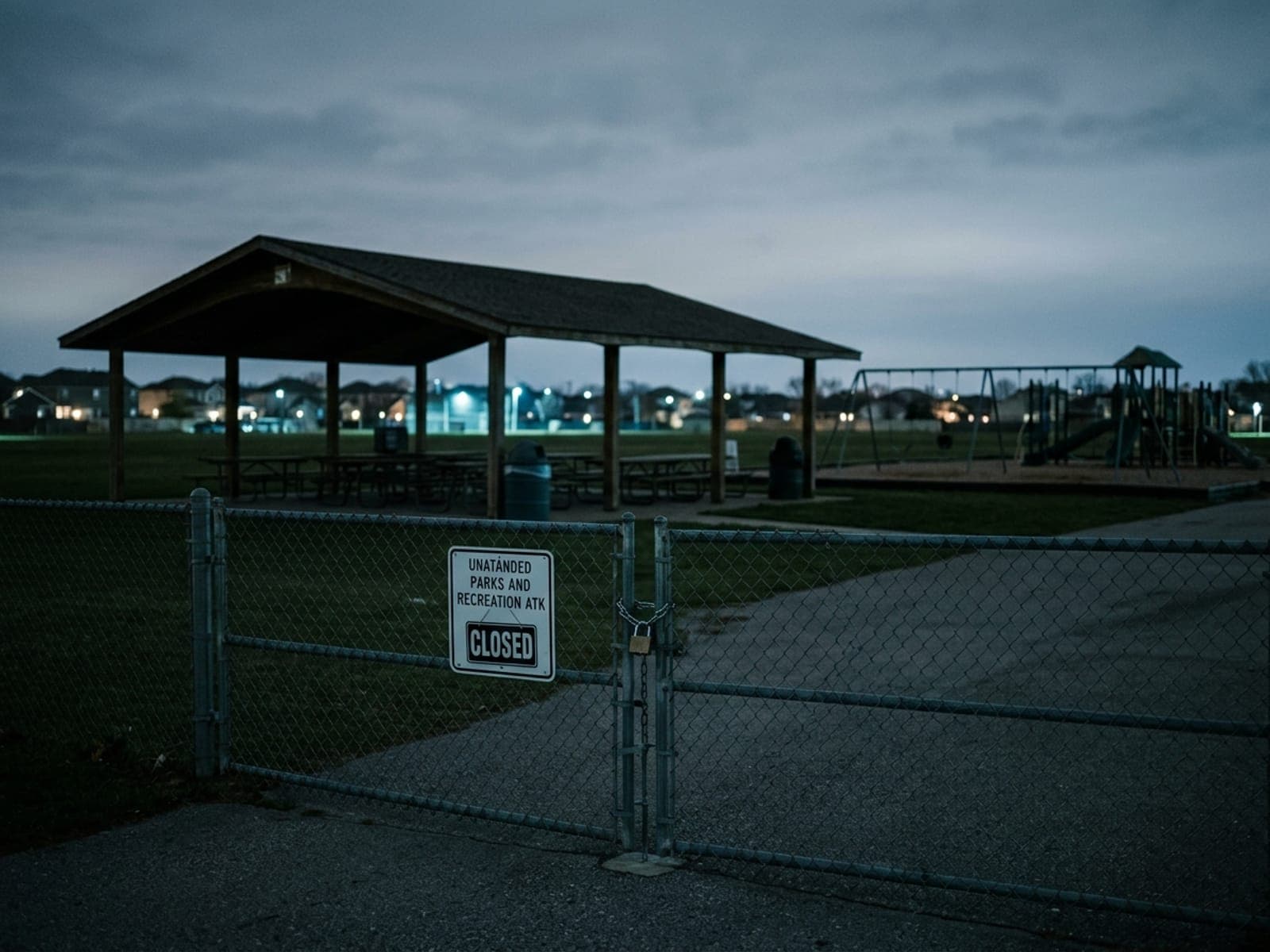
After-hours trespass and parties
Groups climb the fence or ignore the closed gate for late-night parties that leave trashed pavilions, broken fixtures, and noise complaints from surrounding neighborhoods.
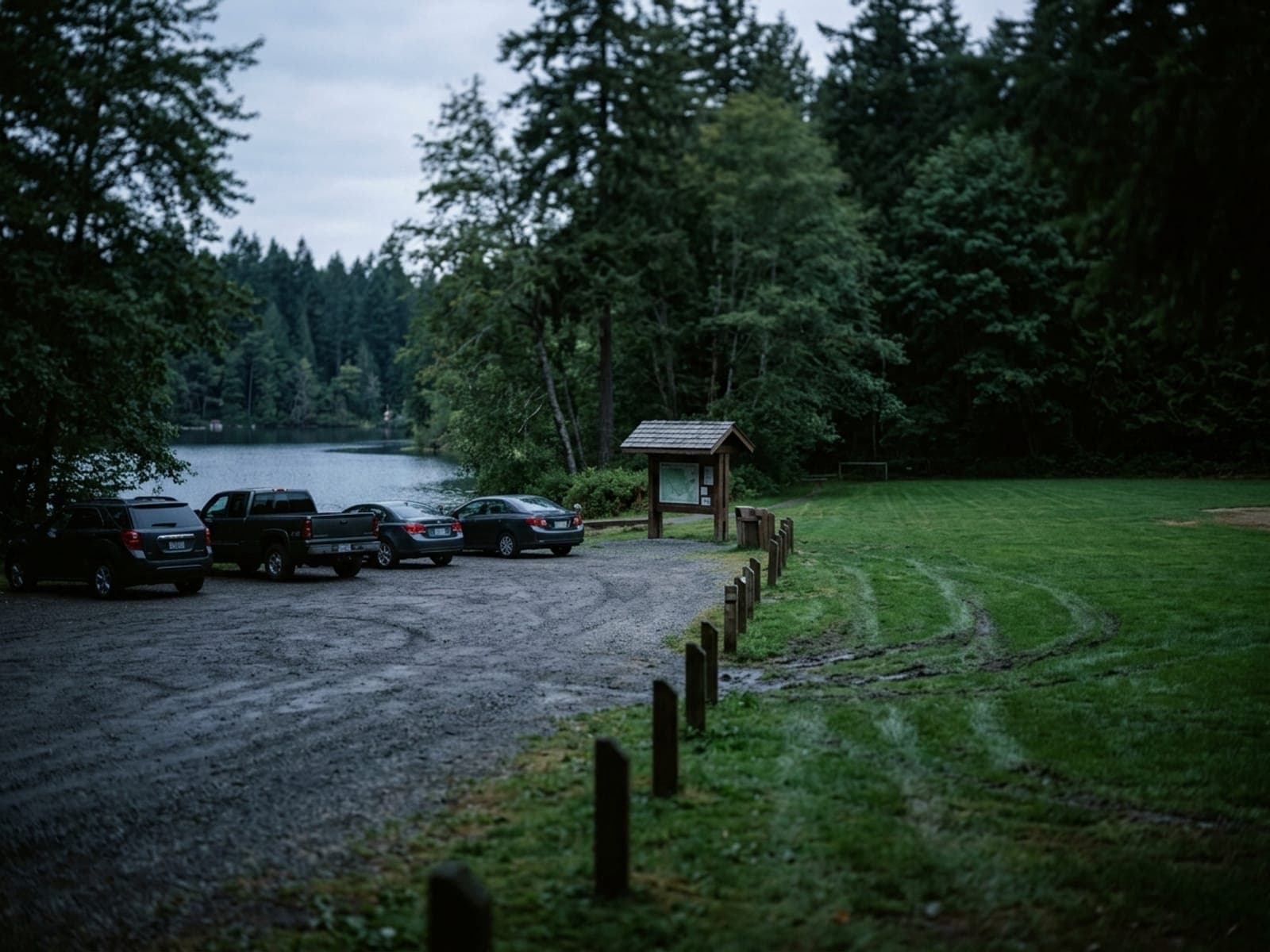
Trailhead break-ins and field damage
Unattended vehicles at trailhead and boat-ramp lots draw break-ins for gear left in plain sight, while vehicles driven onto turf tear up ballfields and green space.
Drop the trailer.
The SOC takes it from here.
Solar-autonomous surveillance with AI analytics and live SOC operators. No power, no internet, no staffed post required.
Every plate.
Every lot.
License plate recognition at trailhead lots, boat ramps, and park entrances logs every vehicle in and out, ties access to a time and a plate, and flags hotlisted vehicles — turning an open, unstaffed lot into a documented record for the municipality.
- Automatic plate capture at lots and entrances, day and night
- Entry/exit log tied to time and plate
- Hotlist alerts for flagged or repeat-offender vehicles
- Evidence packages for law enforcement and municipal reporting
 STEP 01
Acres of turf.
One virtual perimeter.
The MSU establishes camera coverage across pavilions, playgrounds, sports facilities, and access roads from an elevated mast. AI classifies people versus vehicles and flags movement in closed areas after hours, before a wall gets tagged or a field gets torn up.
- Elevated coverage across fields, pavilions, and access roads
- AI human and vehicle classification
- After-hours movement alerts in closed sections
- Works in zero-light across the whole property
 STEP 02
No overnight staff.
A live operator instead.
Every alert routes to a live SOC operator who verifies it, issues a real-time audio warning through the on-unit speaker to disperse an after-hours group, and escalates to law enforcement — the deterrence of a park ranger without the overnight payroll.
- Live operator verification on every alert
- Real-time voice-down warnings to disperse groups
- Escalation to law enforcement with footage
- Documented incident reporting for the department
 STEP 03
No power at the trailhead.
No problem.
Solar power and 4G/5G cellular mean coverage goes where the problem is — the trailhead lot, the boat ramp, the pavilion that keeps getting hit — with no trenching through turf, no conduit, and no waiting on a utility crew.
- Solar-autonomous — no grid power required
- 4G/5G cellular backhaul, no hardwired internet needed
- Relocatable to whichever park or field is being hit this month
- NDAA-compliant hardware for public procurement
 STEP 04
Every asset on site.
One platform.
The MSU relocates to wherever the problem is this season. Here are the scenarios parks and recreation departments deploy for most often.
Trailhead & boat-ramp lots
Remote parking areas with no power and no staff, where vehicle break-ins and lot loitering happen out of sight of any road.
Sports complexes & ballfields
Fields, dugouts, and concession buildings that take vandalism hits between the last practice and the next morning's game.
Pavilions & restrooms
Fixed structures that draw repeated graffiti, damage, and after-hours parties once the park officially closes.
Playgrounds & plazas
High-visibility public spaces where after-hours misuse and vandalism erode the amenity the community actually uses by day.
Access roads & remote lots
Gravel roads and back corners of public land that become illegal dumping sites with no one around to see it happen.
Event weekends & seasonal parks
Tournament weekends, festivals, and summer-season parks that need a surge in coverage for a defined window, not a permanent install.
Real operators.
Real numbers.
Every metric below comes from a real VDS parks and recreation customer. Names protected per agreement.
Customer-reported outcomes from VDS deployments. Results vary by site conditions, monitoring configuration, and response protocols. How we measure →
We were repainting the same pavilion every month and hauling dumped debris off the access road. The trailer went up where it hurt most, and the audio warnings clear the lot before anything gets touched.
 MSU-A · FLAGSHIPLPR + SOC · PARKS & RECREATION
The Mobile Surveillance Unit.
Built for public land.
Trailhead LPR, site-wide coverage, and 24/7 SOC monitoring — all from a single solar-autonomous trailer that goes where the problem is this month, with no trenching through turf.
From assessment
to covered.
Most parks and recreation departments go from initial conversation to a live trailer on site inside 7 business days.
Site assessment
We review your parks system, the sites getting hit, lot and access points, and incident history. Fast quote turnaround.
Sensor configuration
Camera presets, LPR capture at lots and entrances, closed-area detection zones, and alert rules configured for each site.
Delivery & commissioning
Trailer delivered, mast raised, cameras and LPR calibrated. SOC monitoring begins immediately. No trenching, no utility work.
Monitoring & reporting
Documented incident reports for the municipality, access and vehicle logs, and system health delivered automatically. Trailer relocates as the season or the problem shifts.
Common questions.
How fast can VDS deploy at a parks & recreation site?
A mobile surveillance unit is live in under 20 minutes once it arrives — most parks & recreation sites go from first call to monitored coverage in days, not months. Most parks and recreation departments go from initial conversation to a live trailer on site inside 7 business days.
Do the units need power or internet at the site?
No. VDS units are solar-autonomous with battery storage and connect over cellular (4G/5G), so there is no trenching, no generator refueling schedule, and no dependence on site IT. That is what makes them practical for sites where fixed infrastructure is missing or still under construction.
What happens when the system detects someone after hours?
AI detection classifies the event and filters routine motion before a person ever sees it. A SOC operator verifies the live feed, challenges intruders by voice through 120 dB speakers with strobes, and — when it escalates — dispatches police with live video of the scene.
Which parks & recreation security problems does monitored surveillance address?
The most common incidents at parks & recreation sites are vandalism and graffiti, illegal dumping, after-hours trespass and parties, trailhead break-ins and field damage — the same exposure areas covered in the sections above. Monitored coverage addresses them by making the site actively watched instead of just recorded.
Can VDS work alongside our existing guards or security partner?
Yes — that is the standard model. Monitored surveillance carries the perimeter and after-hours watch, so people — yours or your security partner's — handle verified incidents instead of standing watch over empty hours. The SOC can route verified alerts to your team, your guard provider, or police dispatch.
Cover the park that's getting hit this week.
Tell us which sites, which season, and your biggest loss driver — we'll build the coverage plan and quote the deployment, fast.